
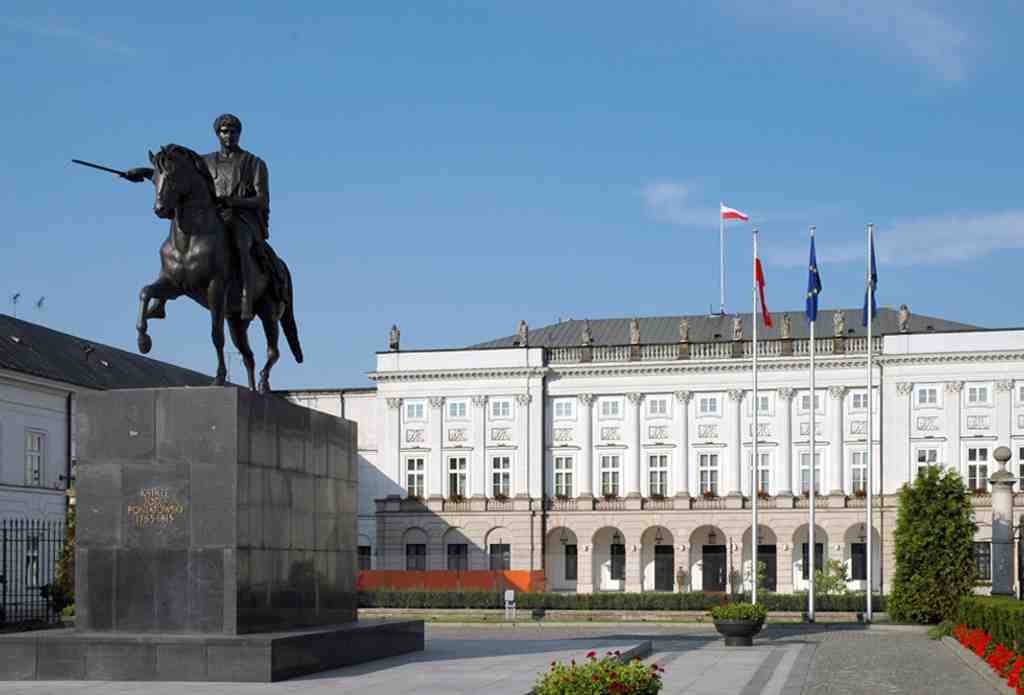
As you approach stop number 6, the Presidential Palace will be on your left. Look for a grand neoclassical building with a white facade and tall columns, topped with ornate sculptures. The building is fronted by a large, gated courtyard. You’ll also spot an impressive statue on horseback - that’s Prince Józef Poniatowski keeping watch!
Now, let’s dive into the fascinating history of the Presidential Palace, also known as Pałac Prezydencki. Originally built in 1643, this palace began as an aristocratic mansion and has undergone several transformations by prominent architects over the years. The current neoclassical look was completed in 1818.
This building has been right at the heart of many significant historical events. In 1791, it was the venue for the authors and advocates of the Constitution of 3 May 1791, the first modern European constitution. Not shabby for a building gig, huh?
By 1818, it had become the seat of the Viceroy of Congress Poland, starting its journey as a governmental hub. After Poland's resurrection post-World War I, it became the seat of the Council of Ministers. During World War II, it managed to survive the Warsaw Uprising intact and was used by German occupiers as the Deutsches Haus.
Fast forward to 1955, and the Palace hosted the signing of the Warsaw Pact inside its distinguished walls. Since July 1994, it has served as the official residence of the president of the Republic of Poland. Whew, talk about a building with a dynamic resume!
The palace’s first name, "Pałac Koniecpolskich," comes from its original owner, Crown Great Hetman Stanisław Koniecpolski. The vivid history and continual evolution of this landmark make it not just a building, but a live-in witness to centuries of Polish and European history. And you thought your house had seen a lot over the years!
Enjoy taking in the majestic sight of the Presidential Palace, a true masterpiece of historical architecture and significance.


