
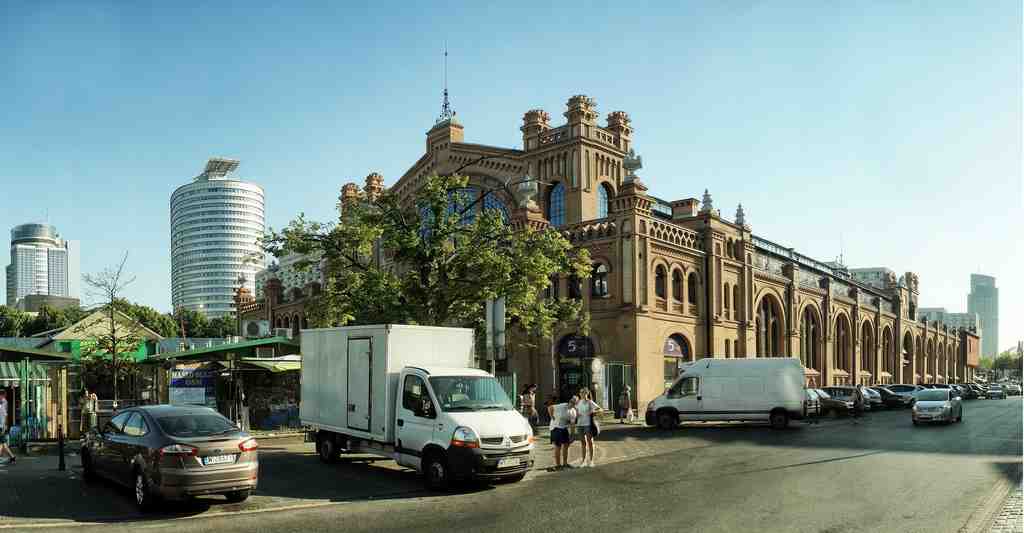
Ah, you've made it to the Mier Halls! You'll want to look to your right to spot them. You'll be able to see two impressive and identical market halls constructed with striking brickwork and detailed architecture that reflects their storied past. The structures have a series of large arched windows and intricate decorative elements, particularly noticeable above the entrances where you'll find symbols like the Mermaid of Warsaw.
The Mier Halls, or Hale Mirowskie as they're locally known, were built between 1899 and 1902. Originally the biggest commercial hub in Warsaw, they were designed to bring some order and hygiene to the marketplace madness-think of it as upgrading your kitchen with the latest gadgets! Named after Wilhelm Mier, a cavalry major general, these halls took over the spot of his deconstructed barracks.
The architects behind these halls were a dream team, Bolesław Miłkowski, Ludwik Panczakiewicz, Apoloniusz Nieniewski, and Władysław Kozłowski. They created two identical structures, each about the length of a football field. The iconic construction was so solid, it withstood quite a bit, until WWII hit.
Now, the nickname “stomach of Warsaw” starts to make sense, right? Before the war, this was the go-to place for fresh groceries and household items. During the war, it served various roles, including housing for makeshift hospitals and endless market stalls. The halls were heavily damaged in the 1944 Uprising but arose from the ashes to serve Warsaw once more, albeit with some dramatic post-war changes, including a stint as a sports haven.
So, as you stand here, imagine the hustle and bustle of vendors and buyers from a bygone era, only to transform into a sporting venue before settling back into its commercial roots. Quite the chameleon of a building, don't you think? Keep exploring and let’s get ready for our next stop!


