
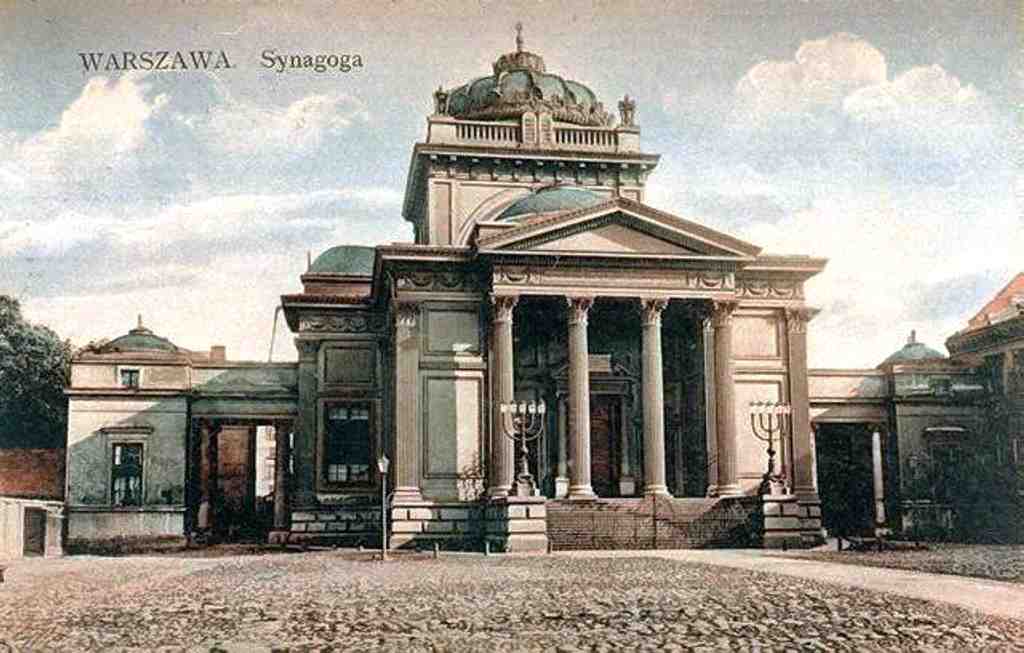
As you approach Tłomackie Street, look to your left. Imagine a grand neoclassical structure with sturdy columns and a large central dome that once dominated the area. The structure you envision is the magnificent Great Synagogue of Warsaw. Nowadays, the location is occupied by a tall, modern Blue Skyscraper, but let's revisit the history of what stood here before.
The Great Synagogue of Warsaw, once an architectural gem, embodied the spirit and resilience of the city's Jewish community. Designed by the talented Leandro Marconi, this neoclassical grand synagogue was completed in 1878. When it first opened its doors on September 26 in celebration of Rosh Hashanah, it was the largest Jewish house of worship in the world - pretty impressive, right?
This synagogue wasn't just about grand architecture. It served as a spiritual home to many in Warsaw's Jewish community, offering modernized services without drastically changing traditional liturgy. Imagine sermons in Polish, an all-male choir singing, and an organ playing during weddings - quite a mix of tradition and modernity!
However, this marvel met a tragic fate during World War II. On May 16, 1943, after the devastating Warsaw Ghetto Uprising, the Nazis, led by SS-Gruppenführer Jürgen Stroop, destroyed the building. Stroop saw the destruction as a "theatrical finale" to the suppression of the Jewish resistance - a horrific end to a vibrant symbol of faith and community.
Today, the site hosts the Blue Skyscraper, a modern office building. It's a stark contrast to the synagogue's former neoclassical beauty. For a glimpse into the past, you can visit the POLIN Museum of the History of Polish Jews where a scale model of the Great Synagogue is displayed.
As you look up at the Blue Skyscraper, you’re standing on historical ground. Take a moment to reflect on the rich history and resilience of the community that once gathered here.


