
50+ languages

 Kaunas · Lithuania
 Kaunas Audio Tours
Discover Kaunas with self-guided audio walking tours
headphones
2 tours
pin_drop
20 landmarks
translate
Top landmarks
The Kaunas everyone knows.
The landmarks in every guidebook — and the tours that tell you what guidebooks don't.
A few words on Kaunas
A capital for twenty years. Still dressing the part.
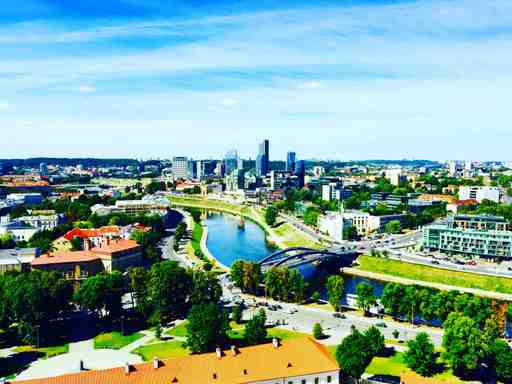
Kaunas became Lithuania's capital almost by accident. After Poland seized Vilnius in 1920, Kaunas was declared the temporary capital, and for the next nineteen years it proceeded to build with the confidence of a city that expected to stay important forever. More than 12,000 construction permits were issued during the interwar period, producing a modernist city center so coherent and ambitious that it was inscribed as a UNESCO World Heritage Site in 2023. The Laisves Aleja, a 1.7-kilometer pedestrian boulevard, was planned as the Champs-Elysees of the Baltic, and it still commands respect.
The architecture tells a specific story about a country trying to invent itself.
Lithuanian National Revival buildings sit alongside Bauhaus-influenced modernism, Art Deco apartment blocks, and the odd functionalist school. The Modernist Kaunas walking routes are particularly well-signposted, and the local museum dedicated to the style is one of the better architecture museums in northern Europe. What strikes visitors most is not any single building but the scale of it all: an entire city designed in a single generation, more or less simultaneously.
Kaunas
Kaunas FAQ
Before you walk.
Every Kaunas tour, in your language.
All 50+ languages, included with every booking.
🇬🇧 English🇫🇷 Français🇪🇸 Español🇩🇪 Deutsch🇮🇹 Italiano🇯🇵 日本語🇨🇳 中文🇰🇷 한국어+ 41 more
star AudaTours Unlimited
Visiting more than one city? Subscribe.
Unlock every Kaunas tour — plus thousands more worldwide. Cancel any time.
$4.99/week · Cancel anytime

More in Lithuania
Explore Lithuania arrow_forwardOther cities to walk in Lithuania.




Loved by travellersThousands of tours started.
Thousands of tours started.
Plenty of opinions.
4.8 across the App Store and Google Play. Here's a few we keep coming back to.
starstarstarstarstar
This tour was such a great way to see the city. The stories were interesting without feeling too scripted, and I loved being able to explore at my own pace.

Jess
Tbilisi Tourstarstarstarstarstar
This was a solid way to get to know Brighton without feeling like a tourist. The narration had depth and context, but didn't overdo it.

Christoph
Brighton Tourstarstarstarstarstar
Started this tour with a croissant in one hand and zero expectations. The app just vibes with you, no pressure, just you, your headphones, and some cool stories.

John
Marseille Tourdownload Get the app Pop your headphones in.


Pop your headphones in.
Step outside.
Free to download. Tours in every city. Start in 60 seconds — no account, no card.

headphones
~ 4 min until your first tour starts
public
1,000+ cities worldwide
all_inclusive
AudaTours
Unlimited
Every tour. Every city. One subscription.
3096 tours2272 cities138 countries50+ languages
$39 /year
all_inclusive Explore Unlimited