
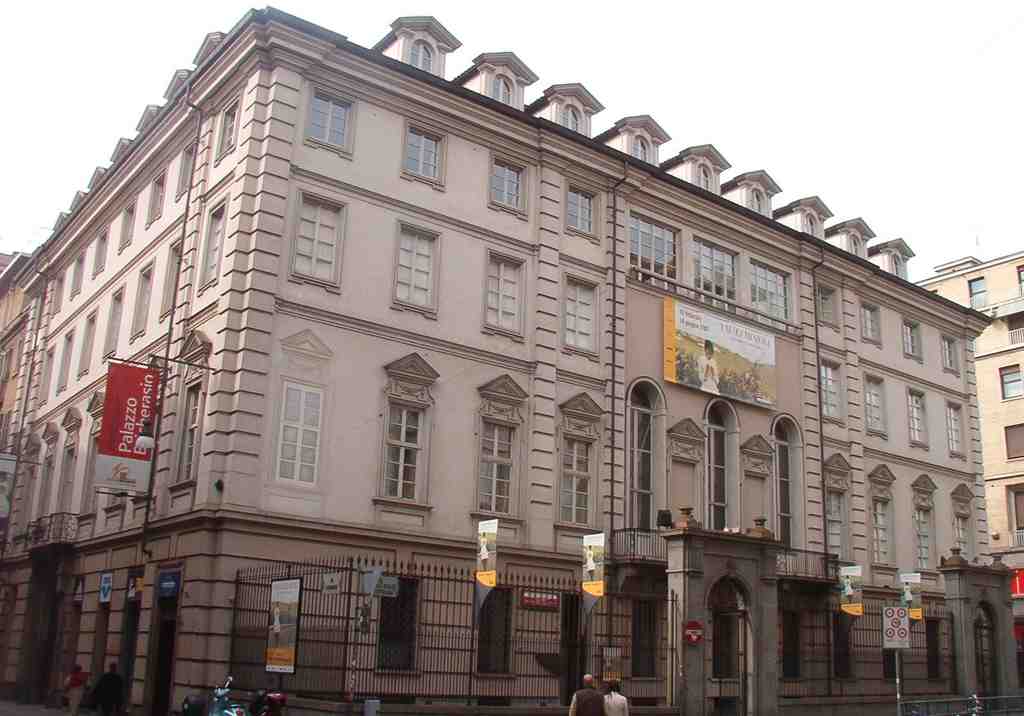
To spot the Palazzo Cacherano di Bricherasio, look for a stately, light-gray building with a grand entrance flanked by neoclassical windows topped with triangular pediments-standing right at the corner, its symmetric facade and rows of attic windows are hard to miss along via Lagrange.
Now, take a deep breath and imagine the sound of carriage wheels rattling down cobbled streets, the faint aroma of roasting chestnuts from a nearby vendor, and the building in front of you standing as it has since 1636-a silent witness to nearly four centuries of Italian history. Palazzo Cacherano di Bricherasio isn’t just an elegant structure; it’s practically Turin’s own time-travel machine. If these walls could talk, they’d probably ask you for a coffee and then spill 400 years of gossip!
Originally built as a noble home in the old Contrada dei Conciai, the palace became a hotspot for the city’s high society. Imagine the clatter of sabers and the rustle of silk dresses: the seventeenth-century halls were soon filled with the laughter and plotting of the counts Cacherano di Bricherasio. This family, now extinct, was quite something. Military heroes, patrons of the arts, philanthropists-they wore a lot of hats… probably very fancy ones.
The building’s look isn’t just about classical charm; over the years it’s picked up details like its neoclassical windows and the robust, slightly stern gate added by architect Annibale Rigotti in 1937. Once upon a time, there was a lovely garden here too-now gone-but you can still imagine ladies and gentlemen strolling beneath the trees, planning the next spectacular soirée or plotting world domination à la Turin.
Step into the 1800s for a second. If you had visited the palace around 1850 and knocked on the door, you might have met Giovanni Berchet-the famous Romantic poet and a man prone to exile, who took up residence here until his final breath in 1851. There’s even a plaque up there to remember him. Not your typical Airbnb guest: he brought big ideas and a lot of drama.
In 1855, the Bricherasio family took over for good, and things got busy. Count Luigi Baldassarre Cacherano di Bricherasio set about sprucing up the place-inside and out-with a touch of Neoclassical pizzazz. When Luigi died young, his daughter Sofia and son Emanuele became the palace’s new stars. Sofia was a talented painter and made Palazzo Bricherasio the cultural living room of Turin. Think of it: the city’s best and brightest gathered here for concerts, exhibits, and heated debates, including legendary guests like artist Lorenzo Delleani, writer Edmondo De Amicis, and even the conductor Arturo Toscanini. (Rumor has it, if you hum opera near the windows late at night, you might just hear a faint encore!)
But here’s where it gets wild: Emanuele, always the innovator, was so fascinated by the technological revolution that in 1899 he gathered Turin’s top minds right here at this palace and helped found the company that would become F.I.A.T.-yes, the famous automaker! The company’s founding document was even signed on the first floor. Picture it: silk cravats, the whiff of cigar smoke, and the birth of Italian motoring history.
As the world changed, so did the palace. Sofia, left as the last of her line, kept the spirit of charity alive, hosting a school for embroidery and then a technical institute, keeping the building buzzing with young energy even when the grandeur faded. After a few decades of slumber and structural wrinkles, the palace was revived in the 1990s as a bustling art center, hosting world-class exhibitions before finally settling down as the dazzling headquarters of Banca Patrimoni Sella & C. Even today, it opens its doors for the curious - and hey, coffee fans rejoice, there’s now a café tucked into a steel-and-glass structure right out front.
So as you stand outside, think of all those centuries: nobles and inventors, poets and pranksters, artists and bankers-all weaving their lives into this grand old building. Now, isn’t that a lot richer than just another bank?


