
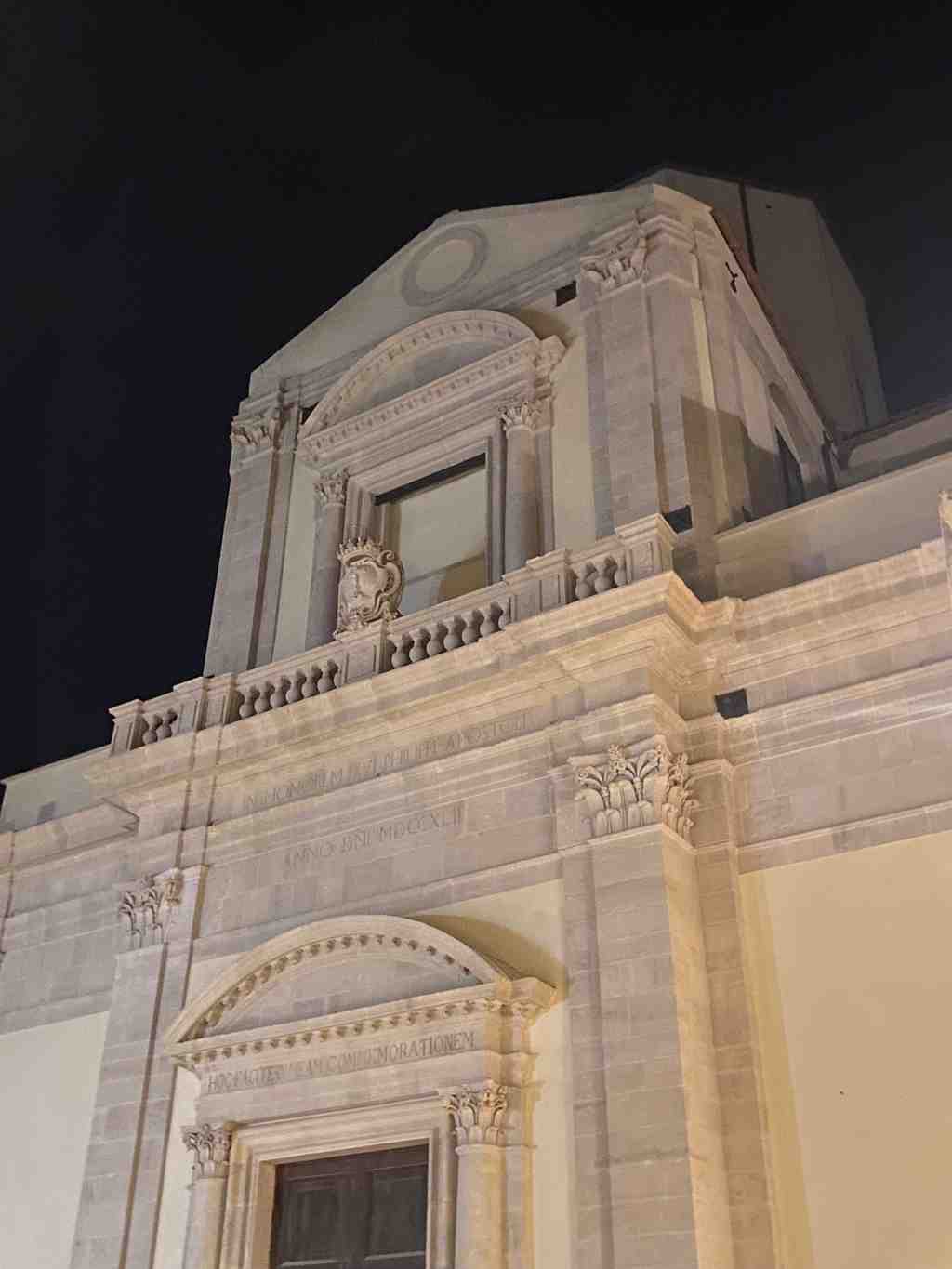
To spot the Church of St. Philip the Apostle, look for a tall, sand-colored Baroque façade with decorative columns, a large central doorway topped by a rounded pediment, and a series of elegant arches and stone carvings-just glance up and you can’t miss this stately structure rising in front of you.
Now, take a breath and let your mind travel through time as we uncover the layers of history beneath your feet and above your head. Imagine standing here almost three thousand years ago, when Greek settlers from Corinth first landed on Ortigia in 734 BC. Back then, the ground would have been loud with the as they dug quarries to build their first temples, and carved white limestone for the homes and shrines that would shape this island. The spot where the church now stands was once one of those quarries, echoing not with prayer, but with the shouts and sweat of ancient builders!
Move forward through the centuries-by the Middle Ages, this area became home to Syracuse’s Jewish community, so large and thriving that some say it might have been the biggest in Western Europe! Their synagogue is thought by many to have stood right here, and beneath the ground, they carved out a mysterious bath-what many now believe was a mikvah, a ritual Jewish bath, fed by the sweet groundwater far below the city. The hum of life back then must have come with laughter, chatter in many languages, and the splashing of water as families prepared for sacred rituals.
Everything changed in 1492 when a royal order forced Jews across Sicily to leave if they didn’t convert to Christianity. Imagine for a moment the sudden silence and sorrow that filled these streets as an entire community disappeared almost overnight. The ghostly presence of their lives still lingers in the underground chambers, waiting for curious visitors like you.
After that, the site became the domain of the Arciconfraternity of St. Philip. The old synagogue and its hidden spaces above and below began a slow transformation. Peep into the written records and you’ll find stories of the church being smaller and simpler, with just three altars and an unfinished masterpiece above the main one. But disaster struck in 1693, when a massive earthquake shook Syracuse to its bones. The old church was nearly lost, but the brave locals seized this as a chance to rebuild everything, and they hired two master builders to craft the elegant Baroque gem you see now.
Step back and look up-see how the dome isn’t tucked away at the usual crossroads inside, but instead sits boldly in the center? It’s a unique twist inspired by the famous Rosario Gagliardi, who left his mark on Sicilian Baroque. And even the columns by the entrance tell a tale-they're thought to be relics from Roman times, now supporting an exquisite organ built in 1757 by a local master, Pietro Santuccio. I’m afraid I can’t play it through your phone, but trust me, its music is legendary.
Inside, if you were to sneak past the doors (don’t worry, I won’t tell), you’d spot chapels filled with beautiful paintings, statues, and even relics like a centuries-old bust of St. Francis of Paola. There’s artwork from anonymous but talented hands, including a lovely “Madonna of the Letter,” and down the nave, touching memorials from the city’s prominent families. And if you have a detective’s spirit, the left side altar once held a portrait of the Madonna della Speranza, so treasured that it collected more gold and silver offerings than a pirate’s chest.
Beneath your feet lies a crypt, reserved for the burials of the church brotherhood-think of flickering candles, painted images of death, and quiet prayers for souls long gone. Dig deeper still, and that ancient mikvah-turned-mystery calls out to you: spiral steps carved around a shaft, dropping deep into the cool dark earth, windows to let in shafts of sunlight, and the age-old question-is it Jewish, is it Christian, or both? Scholars still debate!
If you hear echoes of bombs and shouting in the air, don’t be startled! The church was damaged by an air raid in World War II-on July 10, 1943, a bomb crashed through the roof -but the people of Syracuse stitched it back together, repairing the stucchi and rebuilding its foundations over the years.
By the 1960s, trouble was brewing again. Water leaks weakened the ground so badly the church had to close, but with grit (and a little Sicilian stubbornness), they removed and rebuilt the heavy dome with lighter materials, restoring this Baroque landmark to glory in 2010. Today, it’s alive again with Mass, music, and the guided footsteps of visitors exploring three underground worlds-the crypt, a WWII shelter, and the ancient bath.
So, think of St. Philip’s not just as a church, but as a secret time machine layered with human dreams, faith, upheaval, and survival-ready for you to discover!
For a more comprehensive understanding of the description, crypt or the miqweh, engage with me in the chat section below.


