
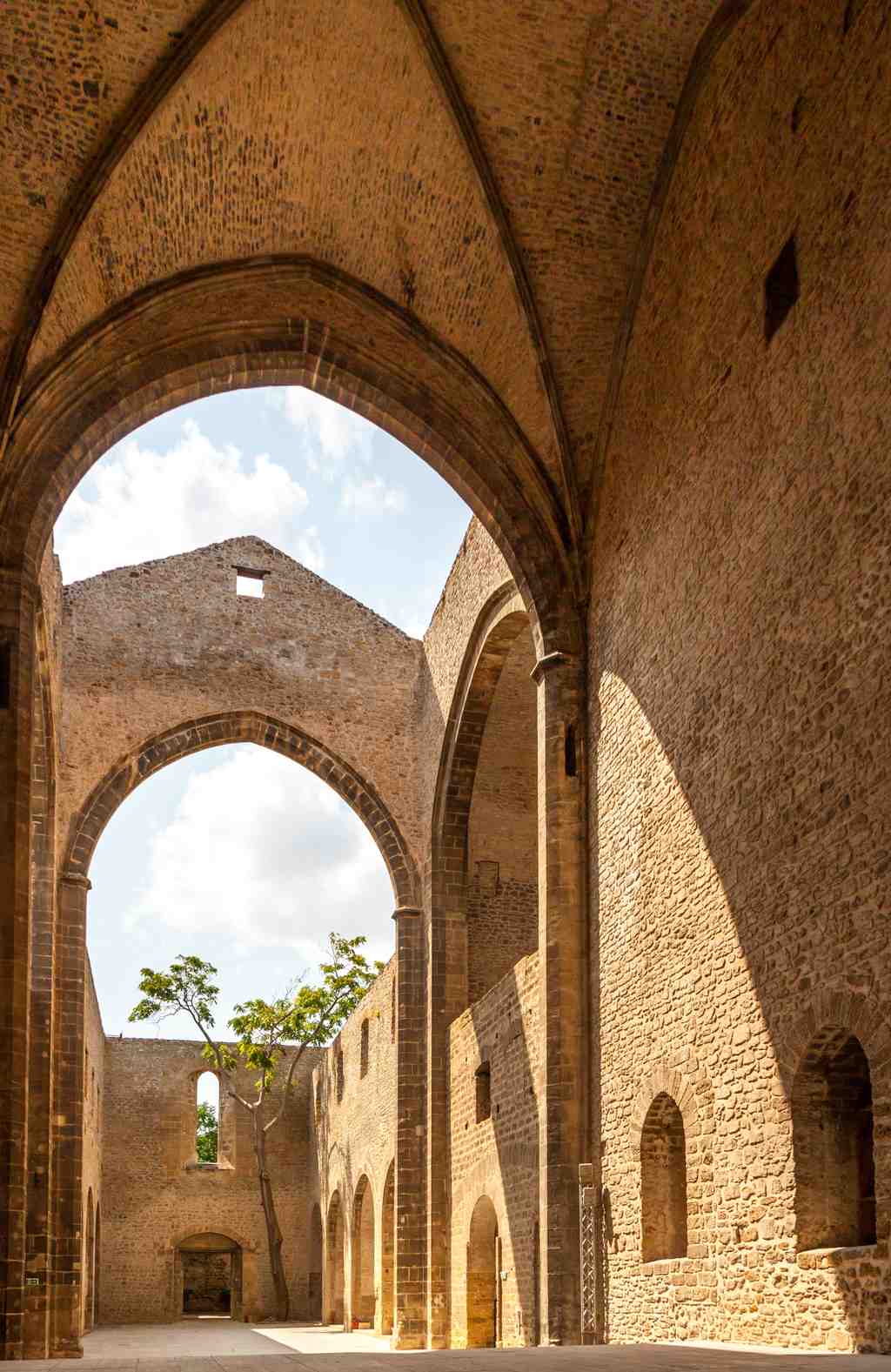
To spot the Church of Santa Maria dello Spasimo, look ahead for tall, weathered stone walls with soaring gothic arches and, quite mysteriously, no roof-just blue sky and sunlight pouring straight down into what once was the nave.
Now, get ready to step into a monument that’s as open to the sky as it is to your imagination! Right here in the Kalsa district, where the sea breeze still carries a touch of salt, imagine the year is 1509. Instead of the quiet, you hear the clatter of stones, shouts of workers, and the scratch of chisel on marble. A devoted man named Jacopo de Basilicò sets all this in motion, inspired by the sorrow of the Madonna watching Jesus stumble beneath the cross-a scene that gave the church its name, “Spasimo,” meaning anguish or heartbreak.
Jacopo, fulfilling his late wife Eulalia’s wish, hands over this patch of land to the Benedictine monks. The site practically buzzes with excitement from the birth of the Sicilian Renaissance-artists and craftsmen eager to fill the city with new beauty. Construction is whirlwind-fast, with Pope Julius II’s blessing speeding things along. The church rises with elegant late-Gothic arches and an atmosphere that mixes hope and solemnity. But, like any great drama, there’s a twist: as the walls soar, threats creep ever closer. Pirates and Turkish invaders threaten Palermo’s shores, forcing precious resources away from the nearly completed monastery and into city defenses. You can almost hear the thudding of picks and shovels as new moats and walls spring up around the church.
Inside the church, a miracle in paint appears-a masterpiece by Raphael, the “Spasimo di Sicilia,” capturing heartbreak itself: Mary’s devastated face as she sees Jesus fall. People gasp at its beauty; Vasari, the great art historian, calls it a marvellous and “divine thing.” It sits on a wondrous marble altar, also a work of art, for just a short time-before wars, epidemics, and crafty deals spirit it away to Madrid, where it still hangs in the Prado Museum. Yet, the Spasimo’s fame spreads, with copies popping up all across Sicily, as if people wanted to keep a little piece of its wonder for themselves.
The Spasimo is a survivor, but not untouched by history’s storms-literally and figuratively. Imagine this: by the late 1500s, public performances fill its soaring nave. Poetry and drama echo off the stone, and it becomes arguably Palermo’s first real theater. Marcantonio Colonna, a sort of early showbiz impresario, stages Tasso’s “Aminta” here. Not just a house of prayers, but now a stage for applause, laughter, and the occasional missed cue!
But tragedy strikes again. In 1624, the plague hits Palermo, and the church becomes a hospital for the sick, the shadows thick with whispered prayers for deliverance. Later, it becomes a grain store, then a warehouse. Midway through the 18th century, the central vault collapses-no more roof, just the sky. And so it remains, exposed to rain, sun, and bombs from yet another world war.
For almost two centuries, the Spasimo lies abandoned, the wind whistling through empty arches, the ground scattered with rubble, stories of former glory echoing across the stones. But this church has more lives than a Sicilian cat! In 1886, it becomes a hospice. By the 1980s, it is little more than a ruin and even briefly a dumping ground, until Palermitans-never ones to let a good story end with a whimper-rally together to save it.
Restoration work begins in the 1980s, and with a dramatic flourish, the church is reborn as an open-air theater in 1995. Since then, concerts, art shows, and jazz festivals fill the night air, laughter and music swirling where monks once prayed and actors once performed.
Now, as you stand here in the light and shadow, with no roof above, remember the art, the struggle, the sorrow, and the endless reinventions. The Spasimo is a monument to resilience, to beauty that endures even as the world changes around it. If you close your eyes for just a moment, you might hear the echo of monks chanting, actors declaiming, or a distant melody from a jazz saxophone. It’s proof that even a heartbreak can become a thing of wonder-one that stretches from the Renaissance all the way to your footsteps today.
Interested in a deeper dive into the basilicò chapel - altar of the "spasimo di sicilia", ansaloni chapel or the monastery of the olivetan fathers? Join me in the chat section for an insightful conversation.


