
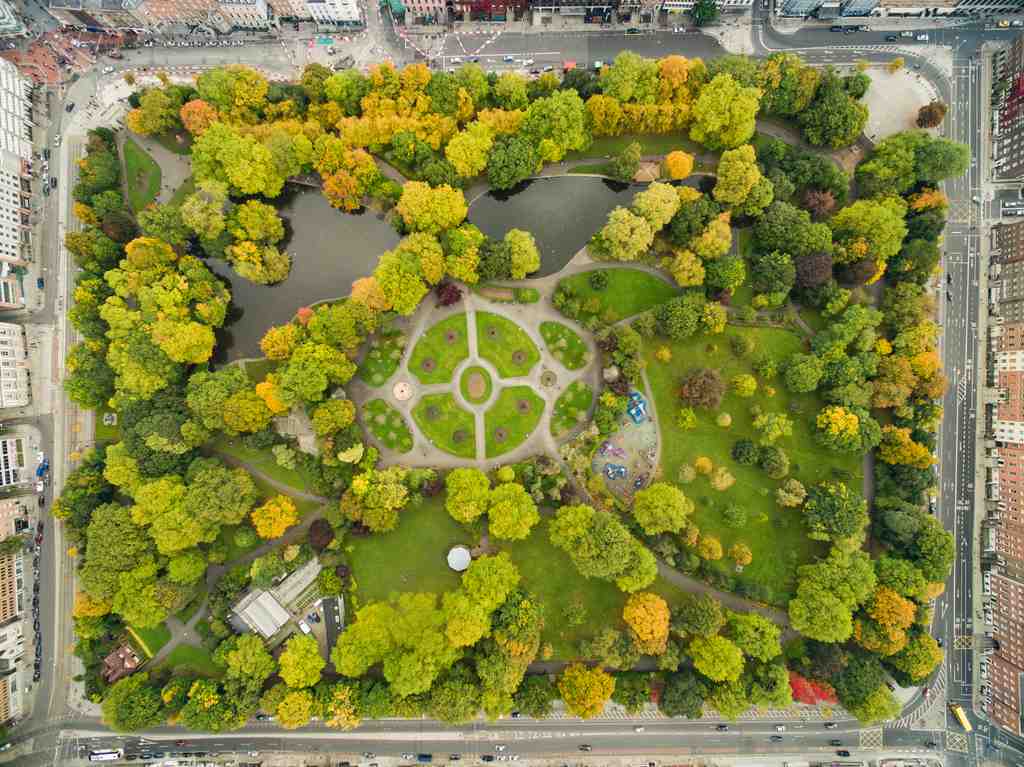
Look ahead for a large rectangular park, bordered by tree-lined paths and a patchwork of green lawns and winding water, with a small playground and a formal circular garden right at its heart-this beautiful oasis is St Stephen’s Green.
Welcome to St Stephen’s Green, where Dublin’s hustle and bustle suddenly gives way to a sea of leaves, laughter, and the sound of ducks splashing in their own private lake. If you let your mind wander, you might hear the distant echo of horses’ hooves or the rustle of silk skirts from many years ago-because this patch of green has been at the centre of city drama, joy, and the occasional duck-feeding ceasefire for centuries!
Can you believe that right where you stand, this was once a marshy, watery common on the edge of town? It was so soggy that only cows and the bravest (or most desperate) of Dubliners would trek across it. In 1663, the city decided to cash in: they fenced off the centre and sold those juicy bits around the edge to would-be homeowners. Suddenly, what had been a wandering ground for geese began its transformation into Dublin’s most fashionable address. People built houses-at first, small and simple, later increasingly grand as the century marched on. Imagine 18th-century elites strolling “Beaux Walk” to the north or gossiping on “Leeson’s Walk” to the south!
But, as can happen in cities, gates and fences went up, and unless you owned a plot or could pass as a resident’s distant cousin, you weren’t getting in. For two centuries it was a private garden, jealously guarded by the wealthy who looked out on its 27 acres of carefully planned perfection. It was only thanks to Sir Arthur Guinness-the famous brewer and, as it turned out, a champion of city dwellers’ rights-that the gates finally swung open to everyone in 1877. Three cheers for beer-not only does it refresh, but apparently it can also open parks!
As you stroll, look out for details that run deep with history. That statue of Lord Ardilaun, our park-opening hero, faces the Royal College of Surgeons. There’s a W.B. Yeats memorial garden, a bust of James Joyce staring back at his old university, and a tribute to Countess Markievicz, a revolutionary who, like the city itself, didn’t care much for taking “no” for an answer.
But don’t be fooled by the calm. In 1916, just past where those ducks glide, rebels of the Irish Citizen Army dug trenches and set up roadblocks during the Easter Rising. They thought the open park would give them the advantage-but the British Army thought otherwise and took sniper positions in the Shelbourne Hotel, which still towers at the northeastern corner. Eventually, the rebels withdrew, but not before both sides called a temporary truce... just so the park’s kindly groundskeeper could feed the ducks. Even in a revolution, Dubliners have their priorities!
Stand for a moment and let your senses take over. The perfume of a hundred different flowers drifts past, mixed with the earthy scent from the garden for the blind-where every plant is hardy enough to be touched and labelled in Braille. Catch the sound of city students laughing or a street musician’s notes drifting across the open lawns near the bandstand where crowds have gathered for generations.
If you notice some grand red-brick houses or even the odd modern office, you’re spotting the changing face of the Green. Many buildings date from Dublin’s Georgian heyday, others sprouted more recently-look out for the Stephen’s Green Shopping Centre, meant to look like a grand conservatory but often just known as “the big glassy one” by locals.
Around the edges, you’ll see reminders of the park’s legacy-memorials to rebels, famine victims, poets, soldiers, and even the ducks, who quite possibly, have the best-kept secret in Dublin. As you walk its winding paths lined with lime trees, think how this green heart of Dublin has meant everything from posh resort to rebel outpost to lunchtime escape.
So, take a breath, listen for history’s whispers, and if you hear quacking, be sure to give the ducks my regards. They, like the rest of us, are just enjoying the ever-welcoming St Stephen’s Green.
To delve deeper into the park, architecture or the transport, simply drop your query in the chat section and I'll provide more information.




