
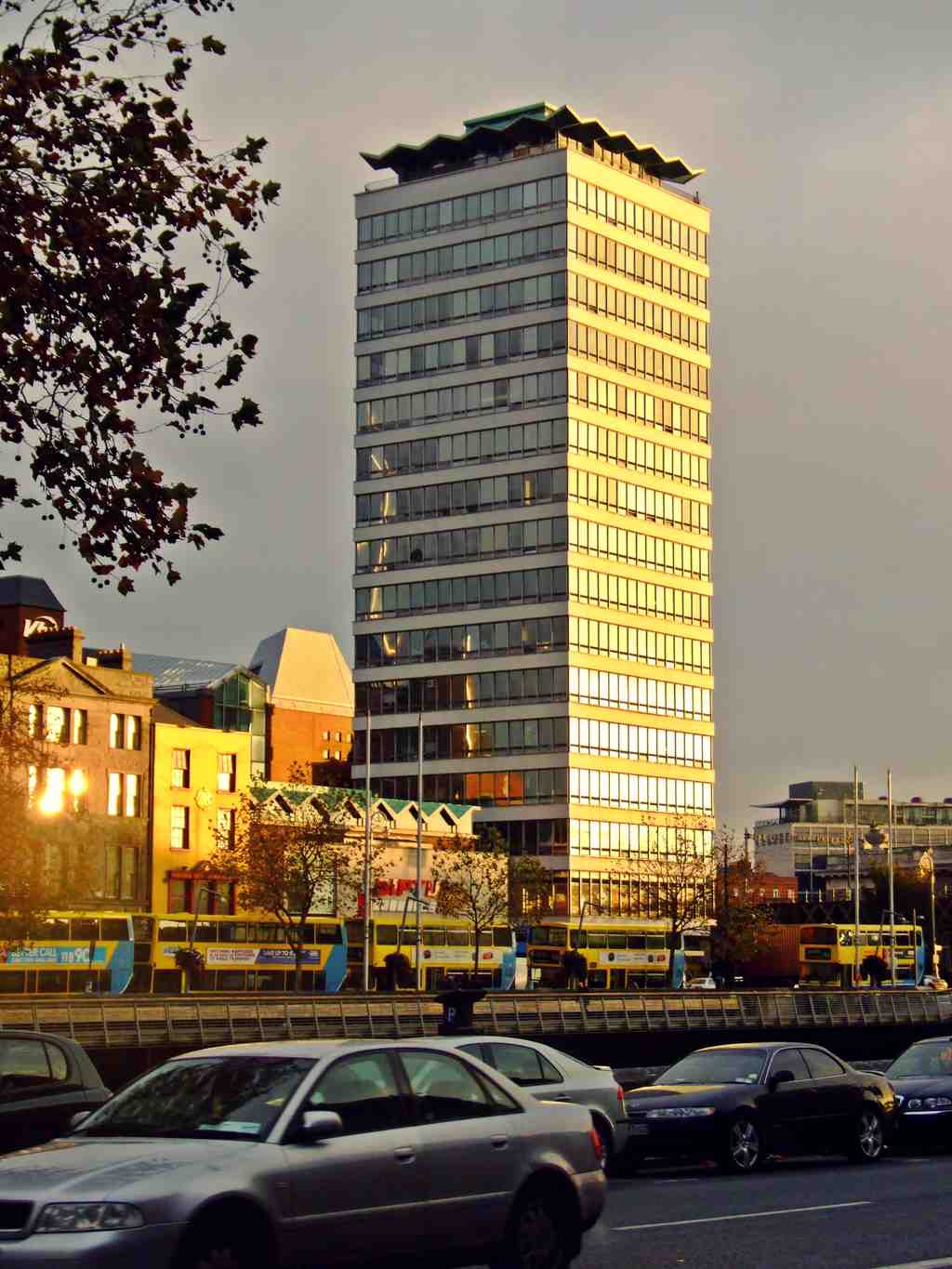
To spot Liberty Hall, look for a tall, boxy skyscraper with rows of shiny glass windows reflecting the sunlight-it’s the unmistakable building standing high above the rest just by the river, right across the road from the busy Eden Quay.
Now, as you stand here, let your imagination whisk you back in time, because Liberty Hall is no ordinary office block-it’s been at the epicenter of Irish drama, courage, and politics for over a century. Today, it’s the nerve center of the SIPTU union, but its roots stretch all the way back to the early 1900s, when this spot was humming with something a little more revolutionary than paperwork.
Once upon a time, before it shot up to be one of Dublin’s tallest buildings, this was the Northumberland Hotel. But soon, it became the bustling heart of the Irish Transport and General Workers Union and the Irish Citizen Army. Imagine the clang of footsteps, the low murmur of conspiratorial plans, and the smell of ink from “The Irish Worker” newspaper pressing hot off the machines, dripping with news the British administration would rather see silenced! That’s right-Liberty Hall was the secret printer of not just one, but three seditious newspapers, fueling defiance despite one ban after another. James Connolly himself edited “The Workers’ Republic” right inside, bravely penning the ideas that would change a nation.
Feeling a chill yet? Keep listening. In 1913, while other buildings carried on with business as usual, Liberty Hall was running a soup kitchen, its doors flung open by Maud Gonne and Constance Markievicz themselves. The air would be thick with the scent of hot broth and the sound of hungry children, their parents battered by the Lock-out but standing together in solidarity.
As the clouds of World War One gathered, a great banner was unfurled across the building’s face, declaring “We Serve Neither King nor Kaiser, But Ireland.” That took guts-maybe not as much as what happened next. Liberty Hall became a makeshift munitions factory, its rooms echoing with the clatter of makeshift weapons, all prepared for the 1916 Easter Rising. Picture the leaders of the Rising stepping out those very doors, the energy crackling as they marched off to the GPO, leaving only one man behind-Peter Ennis, the caretaker, holding the fort while Dublin erupted in revolt. The British, not realizing Liberty Hall was empty, shelled it first, shaking the ground you’re now standing on. The building was battered, but just like the spirit inside it, Liberty Hall was rebuilt.
Fast forward to the 1960s: a new Liberty Hall rose up, designed by Desmond Rea O’Kelly, scraping 59 meters into the air-Dublin’s tallest building at the time! Its original windows, meant to be crystal clear, were shattered in a UVF car bomb blast in 1972, replaced now with slightly mysterious, reflective glass.
So next time you see the sun bounce off its windows, don’t just think “office block”-think of all the secret meetings, the bans, the soup kitchens, the homemade bombs, and the stubborn, shining hope that once filled Liberty Hall, making it as mighty in spirit as in height. And hey, if it ever feels a bit out of place, just remember-Dublin tried to replace it in 2012, but Liberty likes to stick around. Some buildings just refuse to lose their story!




