
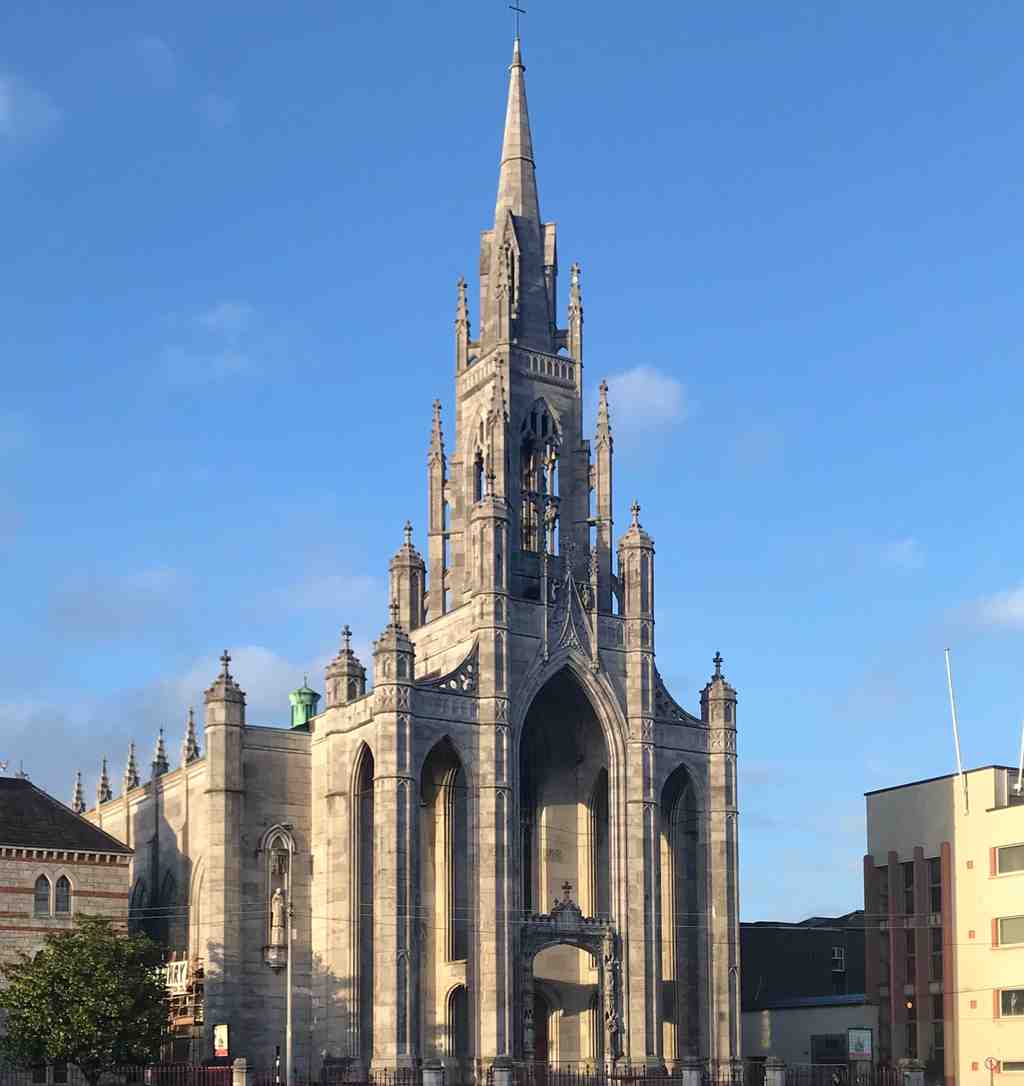
Look for a tall, pale limestone church right on the bank of the River Lee, with a soaring spire and pointy Gothic arches-its dramatic entrance and intricate stonework make it hard to miss!
You’re standing in the shadow of Holy Trinity Church, or as the locals say with a bit of pride, Father Mathew Memorial Church. Now, close your eyes for a second and picture Cork in the 1830s: bustling with carriages, merchants, and muddy quaysides. The Capuchin friars were wandering these very streets, dreaming of a new church grand enough to shelter the hopes and prayers of the local people. The previous chapel-well, let’s just say it was so small and humble, you’d be forgiven for mistaking it for someone’s oversized garden shed. Not exactly “grand design” material!
That dream became a mighty challenge. The marshy ground beneath your feet had to be drained before building could even begin. Imagine, workers trudging around in boots, trying desperately not to sink with each step, while the people of Cork passed by and wondered if the walls would ever rise. The chosen architect, a chap named George Richard Pain-famous for his love of pointy arches and dramatic facades-set out to create a masterpiece. He wanted a church that soared above the city, almost floating above the Lee, but things didn’t quite go to plan.
Money ran dry faster than a cup of tea at a Cork gossip session. With the Great Famine looming and a cholera outbreak to boot, even Father Mathew’s superhuman fundraising (and he was a bit of a superstar in his day, especially among the temperance crowd) couldn’t keep the stones piling up. There were arguments, cost quarrels, and poor Pain even passed away before the job was halfway done. For years, the building site stood still, just a ghostly shell by the river. Local legends say it was the best place to hide away when you were supposed to be at church but didn’t want to sit through another long sermon!
After the famine, things picked up. New architects stepped in, people rallied their coins, and at long last, Holy Trinity Church opened its doors. The grand opening in 1850 was so packed, you needed a ticket just to get in-imagine that for a church service! Still, even after the doors opened, there was a funny twist: the front of the church, the part you’re staring at now, wasn’t finished. For decades, it stood with a sort of “under construction” look. If you’d visited in the late 1800s, you’d have seen scaffolds, chisels, and the unmistakable sound of hammers--as craftsmen raced to finish before the 100th birthday of Father Mathew.
But finally, with local stonemasons working double time and limestone from the same old quarry, the facade was made complete just in time for a big centenary celebration. The inside of the church, too, is a jewel box. Don’t miss the stained glass: some of the finest were designed by the legendary Harry Clarke’s studio. There’s even a spectacular window dedicated to Daniel O’Connell, the great Irish liberator, and another showing Christ as the Prince of Peace, with Cork’s own skyline shining below.
Over the years, Holy Trinity has survived fires, near demolitions, and major renovations. Some suggested tearing it down entirely in the 1980s, but the city wasn’t having any of it-this church, with its flying buttresses and soaring gothic spire, was too much a part of Cork’s heartbeat.
Let’s not forget the friary next door, either-a Venetian Gothic masterpiece built in record time (maybe the only thing in this story that happened quickly!). The Capuchin friars here have looked after generations of Corkonians-not just their spiritual health, but their bellies and backs, running clothing drives and social gatherings, pantomimes, and charity concerts, drawing thousands through the church doors.
Take a breath now, and soak in the grand views: soaring stone, pointed spires, and a church that refused to give up, even when Cork’s world looked bleakest. Right here on the banks of the Lee, Holy Trinity stands as a blessing, a memory, and a little reminder that persistence-and maybe a bit of Cork stubbornness-can build wonders. And if you’re wondering, yes, even today, local jokes say you can spot a true Corkonian by whether they call it Holy Trinity or “Father Mathew’s”-either way, it’s the same spot where faith, hope, and a dash of humor have been ringing through the city for almost two centuries.
Want to explore the background, construction or the architecture in more depth? Join me in the chat section for a detailed discussion.


