
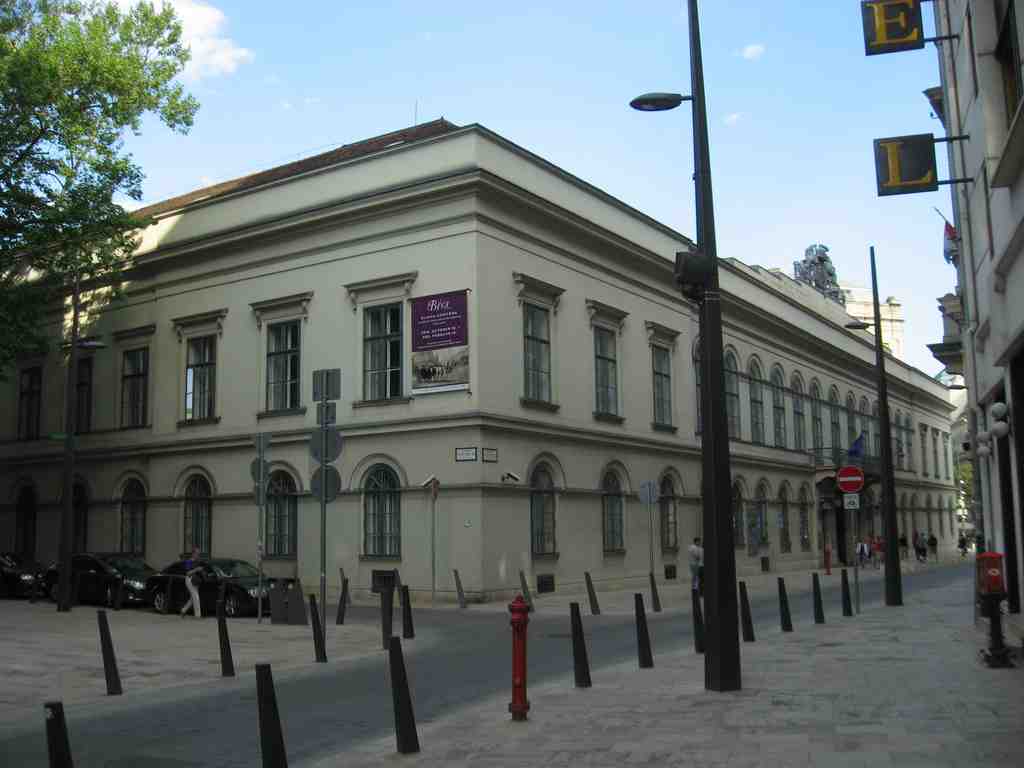
You’ll find the Károlyi Palace right here, a grand, pale yellow one-story building with classicist lines, tall windows with deep frames, and a sense of quiet dignity-just look for the long facade hugging the corner of Károlyi Street, surrounded by trees and shaded sidewalks.
Now, take a deep breath, because you’re standing in front of a place that has seen centuries of drama, extravagance, whispers, and garden parties-welcome to the Károlyi Palace, a slice of Budapest’s heart with a story longer than its list of windows! Let’s imagine the scene: it’s the 1830s, and Count György Károlyi decides Pest needs not just another stately home, but a refined palace, elegantly fashioned in the classical style. Back then, though, the area was a maze of winding street names-some sounded like Zucker Gasse, others like Uri Street. That’s a bit like waking up every day and your GPS giving you a new address, isn’t it?
The Károlyi Palace soon became the pride and joy of the city’s elite. It was a place where decisions that would shape Hungary were whispered over glasses of strong coffee and crumbly cakes. But the plot thickens-quite literally under your feet! During World War II, when a water reservoir was being dug in the palace garden for air-raid safety, workers stumbled upon skeletons and ancient relics. Imagine, beneath the roots of peaceful trees lay the bones and treasures of medieval Pest: belt buckles, bronze rings, a necklace, even a Roman coin with 'Fortuna Redux' engraved. Turns out the garden once doubled as a cemetery during the early days of Hungarian history-talk about having skeletons in the closet!
The garden has changed as much as the palace. Once, it was surrounded by walls, its fragrant acacias and rare orchids jealously guarded by the Károlyi family. In spring, the blooms would spill over the walls, tempting the whole city with promises of secret beauty. And though regular folk could only dream, the palace itself became known for its grand feasts and royal guests: Queen Maria Theresa herself once waved to crowds from the balcony, and later, the waltzing feet of nobles swept polished floors during dazzling balls.
Let’s not forget the drama of the 19th century. During the Hungarian Revolution of 1848, enemy soldiers marched into the palace and took up residence, guards posted at every door, the owners forced to watch as their beloved home became the HQ for foreign generals. Even the first Hungarian Prime Minister, Lajos Batthyány, was dragged away to prison from these halls! Then, when all seemed lost, the revolutionary hero Kossuth Lajos rode into Pest in a carriage decorated with ribbons made by the countess herself-triumph and heartbreak side by side.
Fast forward to the days of the Austro-Hungarian Empire, and the palace saw yet more parties, this time with visiting princes-yes, even the future King Edward VII of England dropped by to admire the palace’s lush garden and flawless flower arrangements. And if you’d been lucky enough to be the Károlyi gardener back then, you might have packed your bags for Parisian garden shows, gathering inspiration to transform Pest’s soil into velvet lawns and exotic beds.
But don’t let all that glamour fool you-the 20th century brought worries of bankruptcy and the threat that this whole estate would be carved up and sold, replaced by plain old apartment blocks. The family held on for as long as they could, throwing garden teas among blooming lilacs, but eventually, like so many grand homes in Europe, it passed into public hands. For a while it held the city’s famed art collections. After World War II, the city itself owned the palace, opening up the garden for concerts and laughter.
These days, if you’re curious about Hungary’s literary past, the palace now houses the Petőfi Literary Museum-though right now, its rooms are being carefully renovated, just as they’ve been time and time again. And as you gaze at its serene classicist face, remember: beneath its calm surface, this building has witnessed centuries of revelry, revolution, and rediscovery. You can almost still hear the whispers and music echoing through the corridors. And hey, with so much history under one roof, it’s no wonder the palace likes to keep its doors and its secrets wide open to anyone who cares to listen!




