
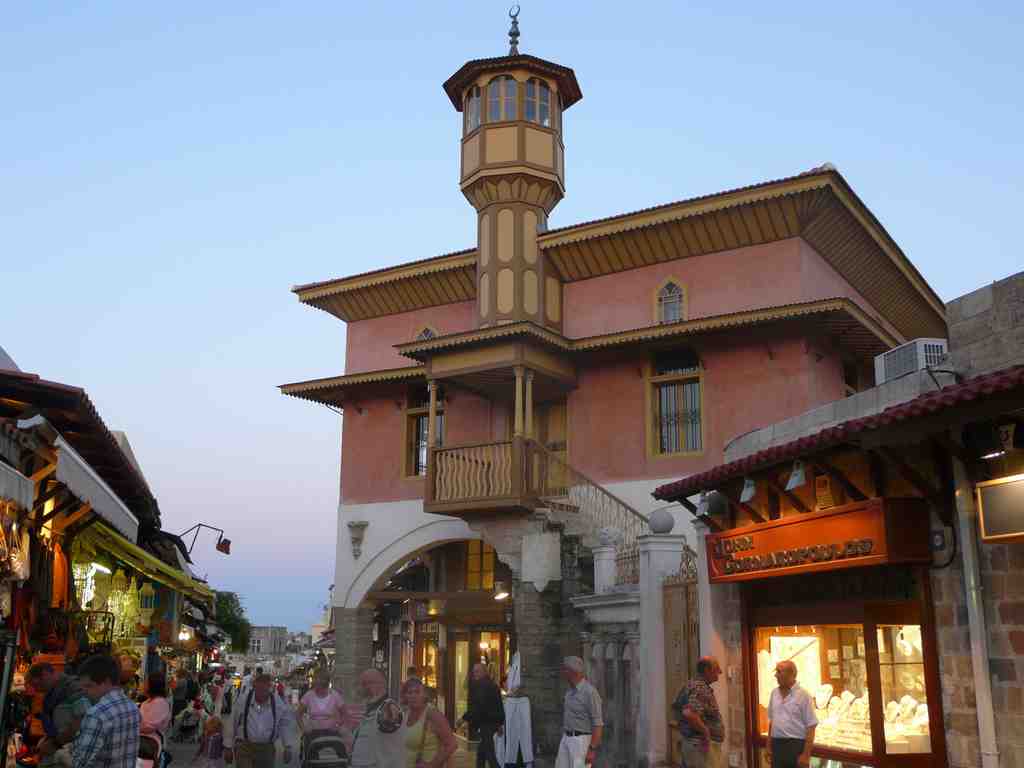
To spot the Mehmet Agha Mosque, just glance above the bustling crowd on Sokratous street and look for a striking pink-red building with a tall, polygonal wooden minaret and a balcony, standing proudly at a key intersection right above the street’s archway.
As you stand here, close your eyes for just a moment and let yourself drift back to the sizzling summer of 1819. Imagine traders calling out their prices, their voices bouncing off these walls of deep red tuff stone, and the sweet, herby smell of spices curling in the market air. This is where the Mehmet Agha Mosque was born-built right on the ruins of a much older, crumbled mosque left behind, like a forgotten idea, from centuries earlier. But then-bam!-an earthquake shakes things up in 1856, making everyone in the bustling medieval streets look up with wide eyes. The mosque had to be rebuilt-again. Fast forward a bit, and World War II bombs rain down, leaving another round of damage. Like a cat with nine lives, the mosque comes back with a face-lift in 1948, and again in 2004, when the wooden minaret and the balcony you see today were lovingly restored. It’s like this place refuses to quit!
And here’s a quirky twist-the mosque isn’t lined up square with the street. Built to face Mecca, it’s slightly rotated, which meant someone had to add a crafty little column right on the pavement to keep it all upright. The mosque’s wooden gable roof is unusual-no dome here, just timber beams creaking with stories. Walk up to the fountain in the yard and picture families pausing here, scooping cool water with their hands-one part prayers, one part refreshment, as this fountain was both for washing before prayer and as a lifeline for thirsty townsfolk. Each marble panel is decorated with pointed, arched symbols, echoing the medieval flair of the Knights Hospitaller who once built right here.
Today, the Mehmet Agha Mosque is like a friendly ghost in the heart of Rhodes-quiet, watching over the crowds on Sokratous street, its every stone humming with the laughter, drama, and resilience of Rhodes across centuries. If its walls could talk, oh the stories they’d shout!


