
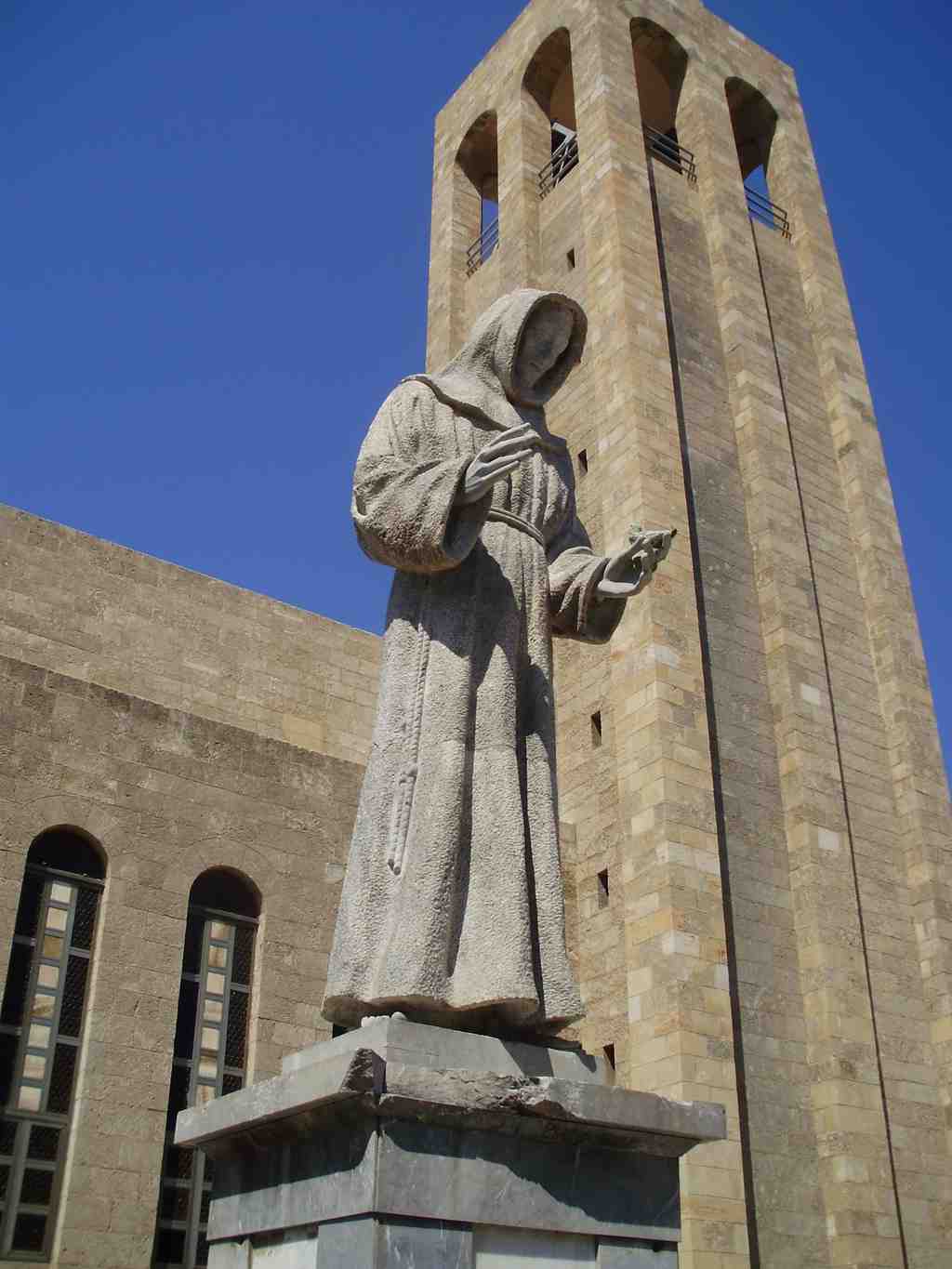
To spot the Archdiocese of Rhodes, look for a grand stone building with tall, narrow windows and a striking statue of a hooded friar in front of a rectangular bell tower-standing right ahead of you.
Right in front of you is the Archdiocese of Rhodes, a place whose wow-factor comes not just from its sturdy stone walls and towering presence, but from its epic journey through time. Imagine going back to around the year 200-yes, two thousand years ago, before Wi-Fi and even before pizza delivery! Back then, this very spot was the heart of a newly established Christian diocese, a beacon for every believer on the island. By the 400s, it had already been promoted to the status of Metropolitan Archdiocese, and if titles were given like candy, this one would’ve needed a very big bag.
Now, take a deep breath and picture the era of the mighty Knights Hospitaller arriving in 1308, fresh from their conquest of Rhodes, clanking around in their shining armor (well, probably not so shiny after a battle, but you get the idea). These knights made the Catholic Church here their spiritual HQ, filling the air with hope, prayer, and probably a fair share of sword-clanging. But history in Rhodes loves a plot twist! In 1523, after a dramatic siege, the Ottomans took over, and suddenly this mighty Catholic seat lost its official bishop. Instead, it became a "titular see,"-now that’s just a fancy way of saying it kept the title but didn’t have much happening inside.
Through centuries of change, the buildings around you saw it all: the former cathedral of “Our Lady of the Castle” transformed from a church, to a mosque, and finally into a museum-talk about changing careers! The cathedral of St. John switched from Catholic to Greek Orthodox, never letting the stones gather dust. Fast forward to 1928, with the world rapidly changing, the Vatican officially restored this Archdiocese, giving it new life and a fresh start.
So as you stand here, under the gaze of the friar’s statue and the soaring bell tower, you’re at the crossroads of empires, faiths, and stories. If only the walls could talk-they’d need more than one language!


