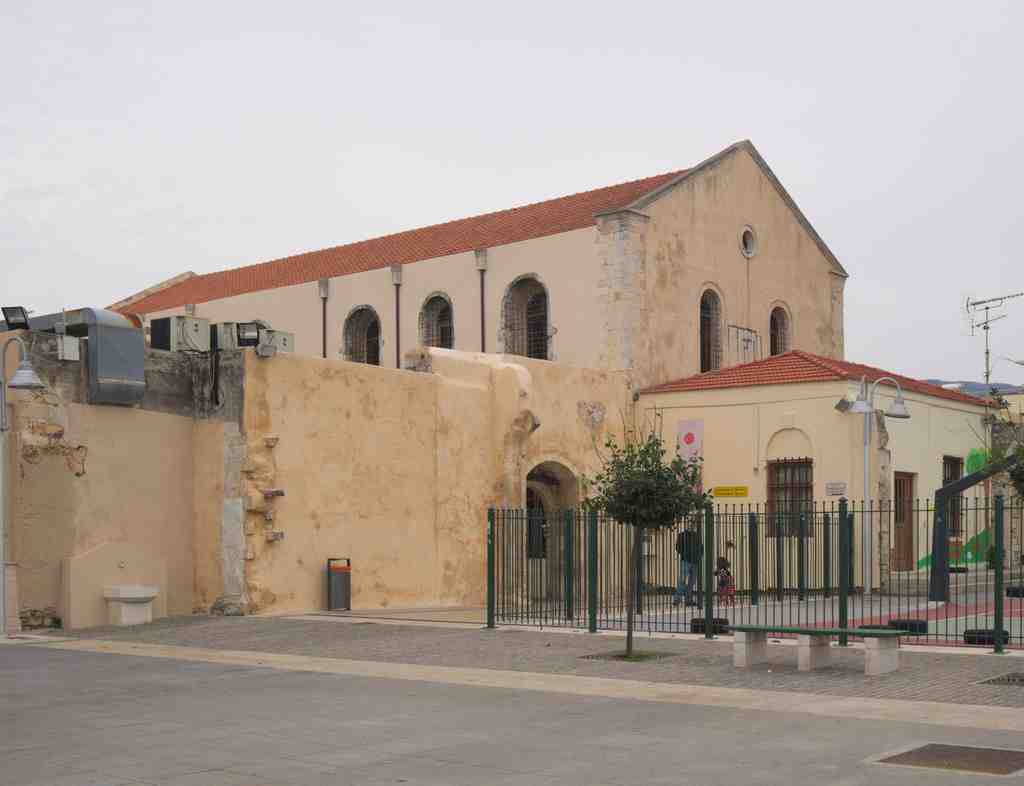
Look for the tall, pale beige building with high arched windows and a reddish tiled gable roof, sitting just behind a weathered stone perimeter wall.
Here we are again at the Archaeological Museum of Rethymno. Well, for now, anyway. As we noted earlier, it is currently housed in the former Church of Saint Francis. The museum itself, however, has been a bit of a nomad over the years. Its collection began coming together in the late nineteenth century in a different part of the old town. By 1954, it had moved into a Venetian administration building, and from 1991 to 2015, it sat in a pentagonal building right across from the Fortezza, the massive fortress we explored a little while ago.
Eventually, the city decided this vast collection needed a new, permanent, purpose-built home. While authorities figure out exactly how and where to build that, the artifacts are taking an extended vacation here in this restored sixteenth-century church.
Inside, you will find items spanning thousands of years, from Neolithic tools carved in 3500 BC right up through the Roman era. The sheer density of history packed into this temporary space is remarkable.
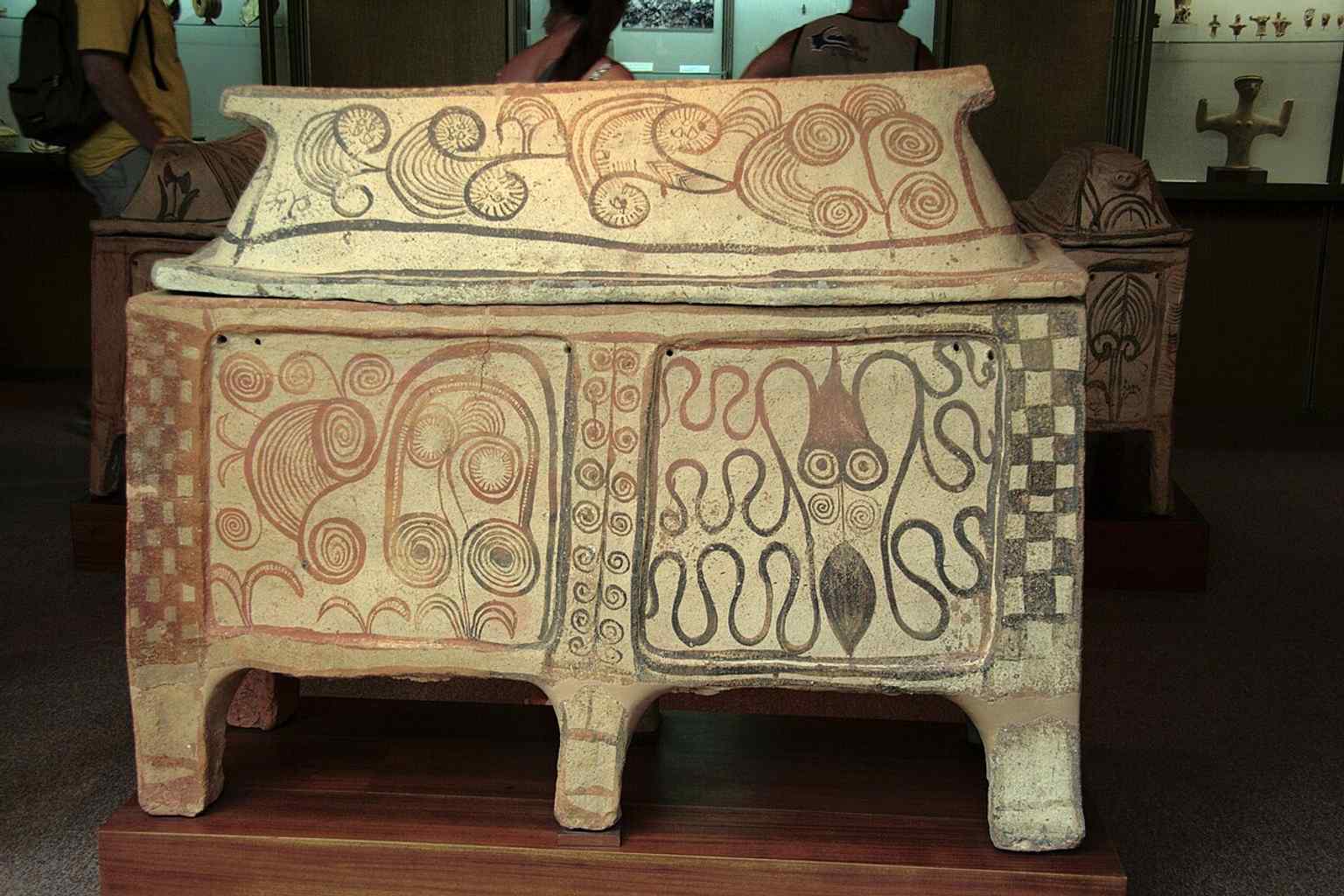
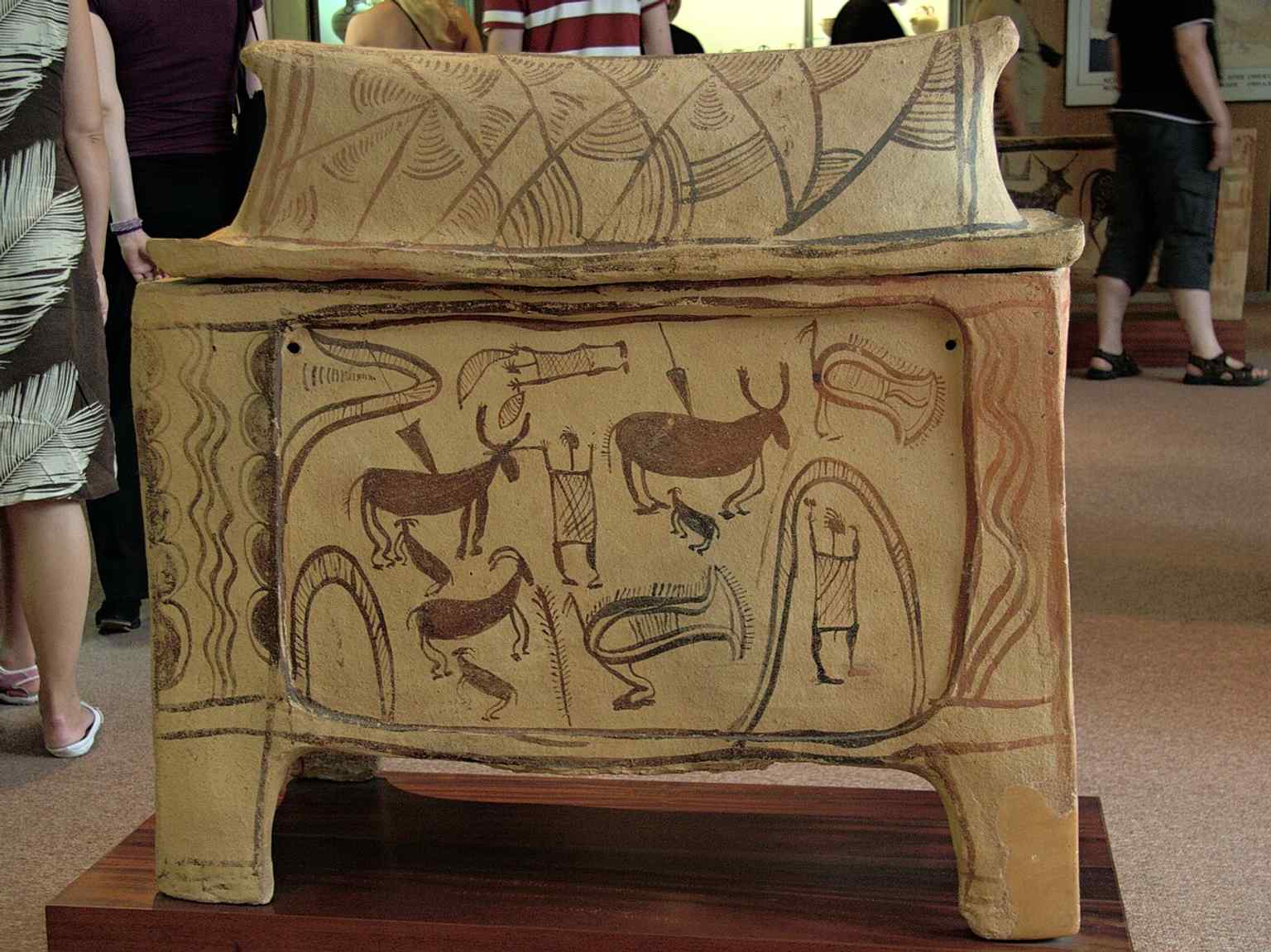
Take a look at your screen for a glimpse of one of the more fascinating pieces inside. This is a larnax, which is an ancient Minoan terracotta funerary chest used to hold remains. This particular one was unearthed at the Armenoi necropolis, a sprawling ancient cemetery, and dates back to roughly 1320 BC. Notice the vivid hunting scene painted across the side. It shows how the Minoans preferred to carry the action and vibrancy of their daily lives directly into the afterlife.
There are also artifacts that highlight the later classical periods of the island. Glance at your app one more time for a closer look at the marble statue of Aphrodite we saw earlier. Found in the ancient settlement of Lappa, it is actually a Roman copy of a much older Greek original, carved around 100 BC.
The museum also holds some true historical puzzles, like a stone ceremonial altar inscribed with Linear A. That is an ancient script used by the Minoans that modern scholars still cannot fully read. It is a quiet reminder that no matter how much we dig up, the past still keeps a few secrets.
Since this is the final stop on our walk, I will leave you here to explore the exhibits at your own pace. The museum is open Wednesday through Monday from 9 AM to 5 PM, and is closed on Tuesdays. It has been an absolute pleasure wandering through Rethymno with you today, take care.