
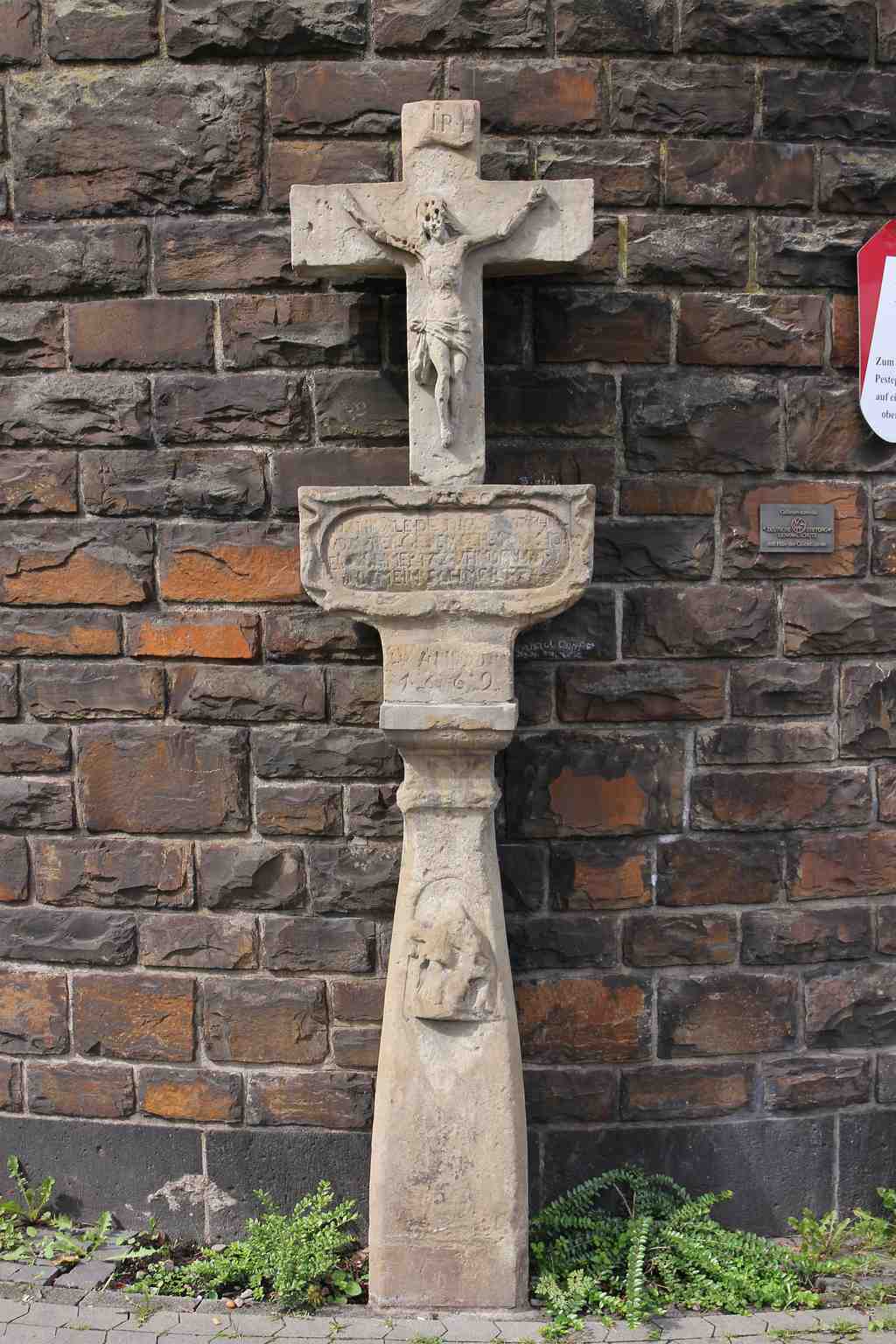
Before you stands a Baroque cross made of light sandstone, with a clearly sculpted figure of Christ and a relief of the Virgin Mary at its base - you'll find it right against the building wall, where its brightness stands out against the dark bricks.
Imagine standing here in 1669, when the streets of Koblenz were silent, and the air was heavy with the scent of fear and mourning. It is precisely at this spot, on the corner of Löhrstraße and Rizzastraße, that a memento of one of the city's most tragic periods - the plague epidemic - has survived. After wars that devastated Koblenz and brought death and famine, came years when residents had to fight not only poverty but also an invisible enemy. Plague and typhus repeatedly afflicted Koblenz, devastating homes and turning streets into places of horror. The worst wave came just before the erection of this very cross - the dead were buried en masse outside the city walls, not far from here, beneath the ground you walk on every day.
The plague cross was erected in 1669 as an almost silent cry of despair and remembrance for those who had passed away. The inscription was still legible then: 'Oh, all ye that pass by, behold, and see if there be any sorrow like unto my sorrow'. This simple plea for compassion makes an ordinary walk remind us of the fragility of life. For centuries, the cross was forgotten in one of Koblenz's courtyards, damaged by time and weather, until in 2011, thanks to people wanting to preserve memories, it was restored and re-erected here, where all residents and travelers heading to the station can see it.
As a monument and a piece of UNESCO World Heritage, the cross today is not only a symbol of mourning but also of survival - a testament to how the city's inhabitants managed to face the darkest times and find the strength within them to remember the past. Stand for a moment, feel the coolness of this sandstone, and think of those who once prayed here for their loved ones.




