
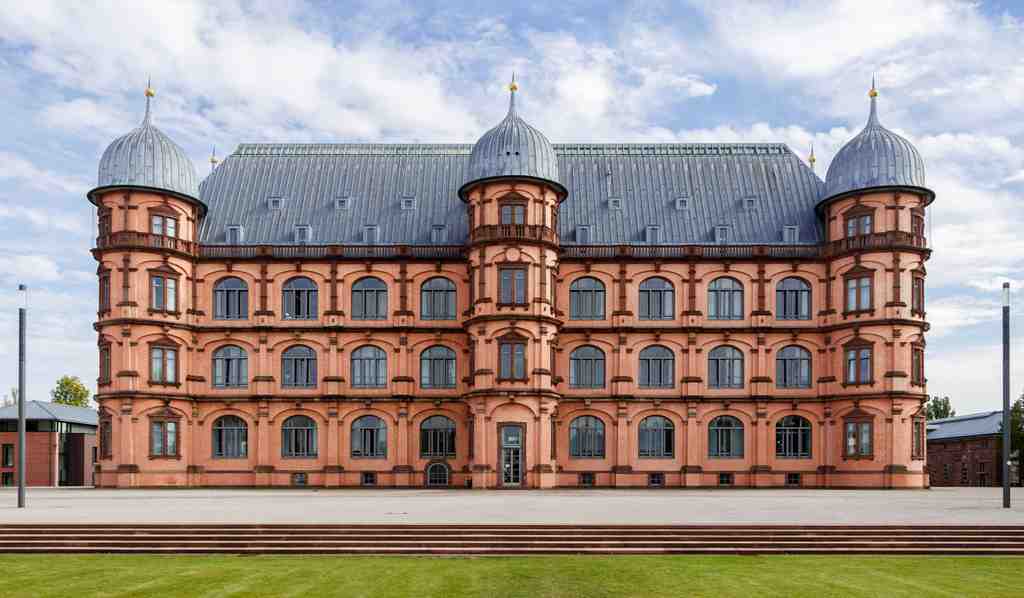
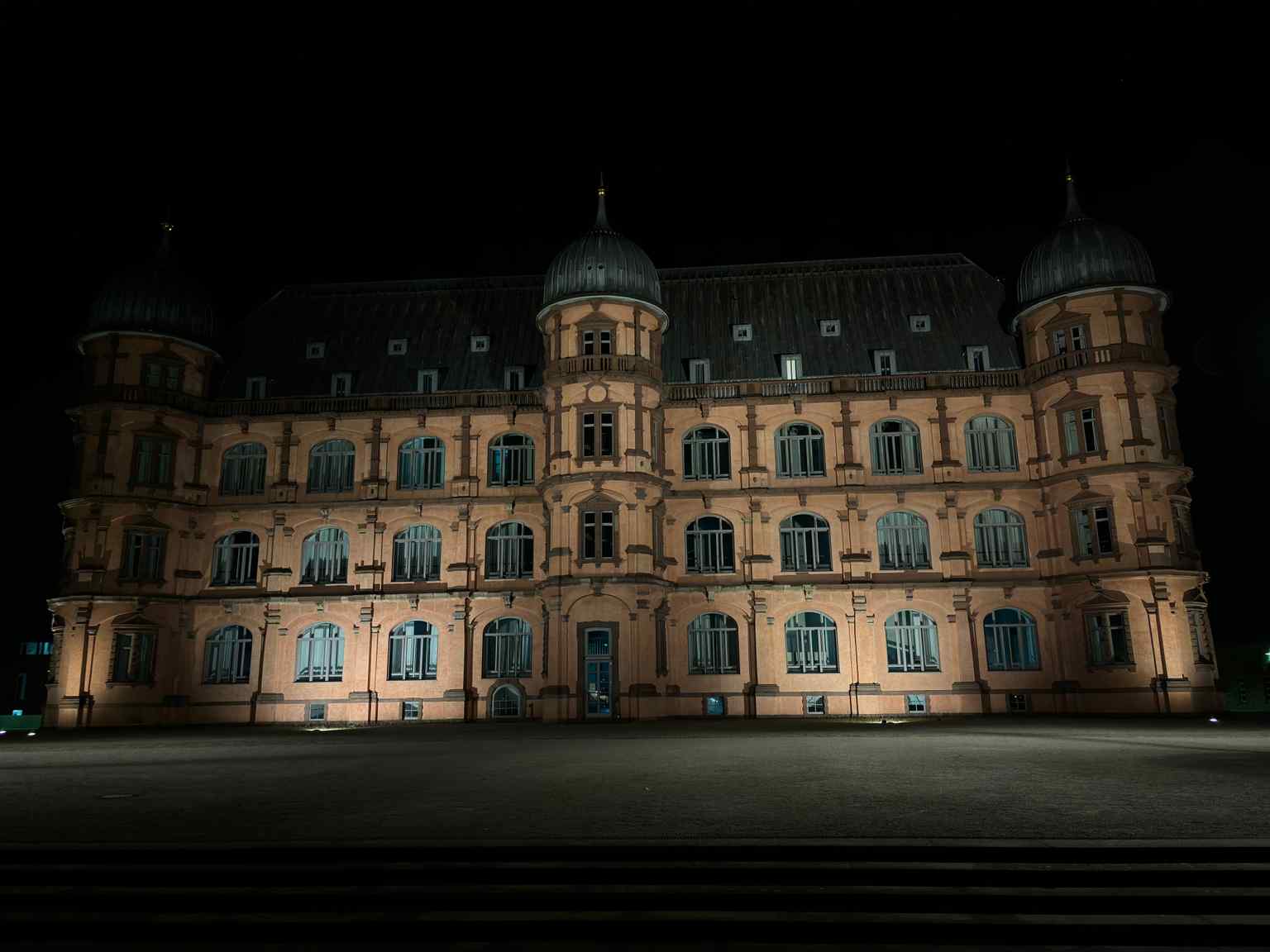
On your left stands a massive salmon-pink stone palace, defined by its symmetrical arched windows and a steep grey metal roof punctuated by prominent domed towers. This is Gottesaue Castle, a building that practically refuses to die.
Local legend claims the name Gottesaue, or God's Meadow, comes from an eleventh-century count who lost his young daughter in the dense woods, only to find her safe and attribute the miracle to the watchful eyes of God. Historians assure us this is completely fabricated, which tells you everything you need to know about historians.
The real story is far more chaotic. It began in 1094 as a Benedictine abbey, heavily influenced by the Hirsau Reform, a strict monastic movement that demanded total independence from secular, or non-religious, lords. But that pious start did not last. The monastery was plundered and burned during a peasant uprising in 1525. By 1588, a visionary architect named Johannes Schoch was hired to build a grand Renaissance castle on the ruins. He designed a fascinating architectural puzzle here, including the Schneckenturm, a highly complex spiral stair tower built seamlessly into the western facade.
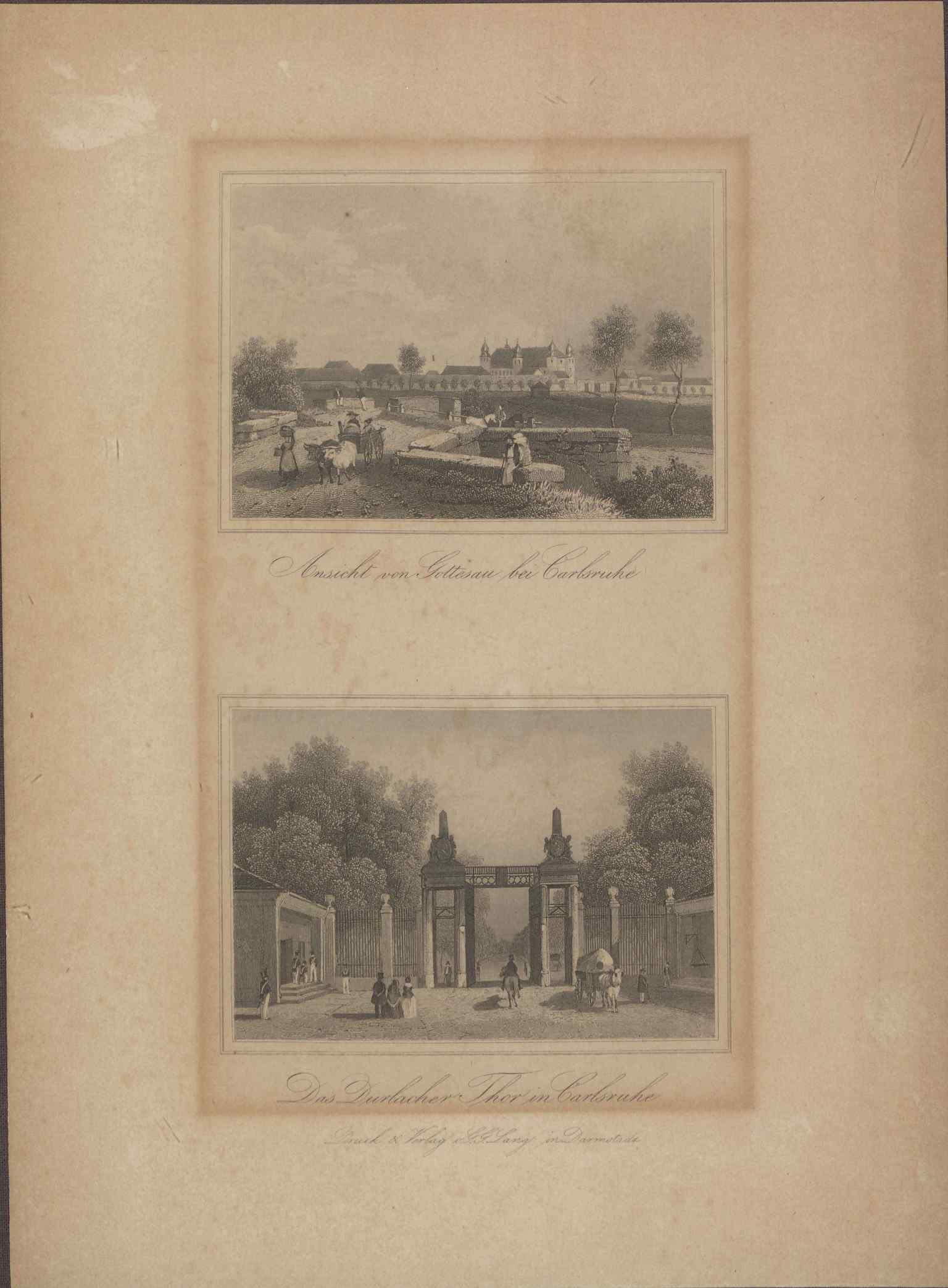
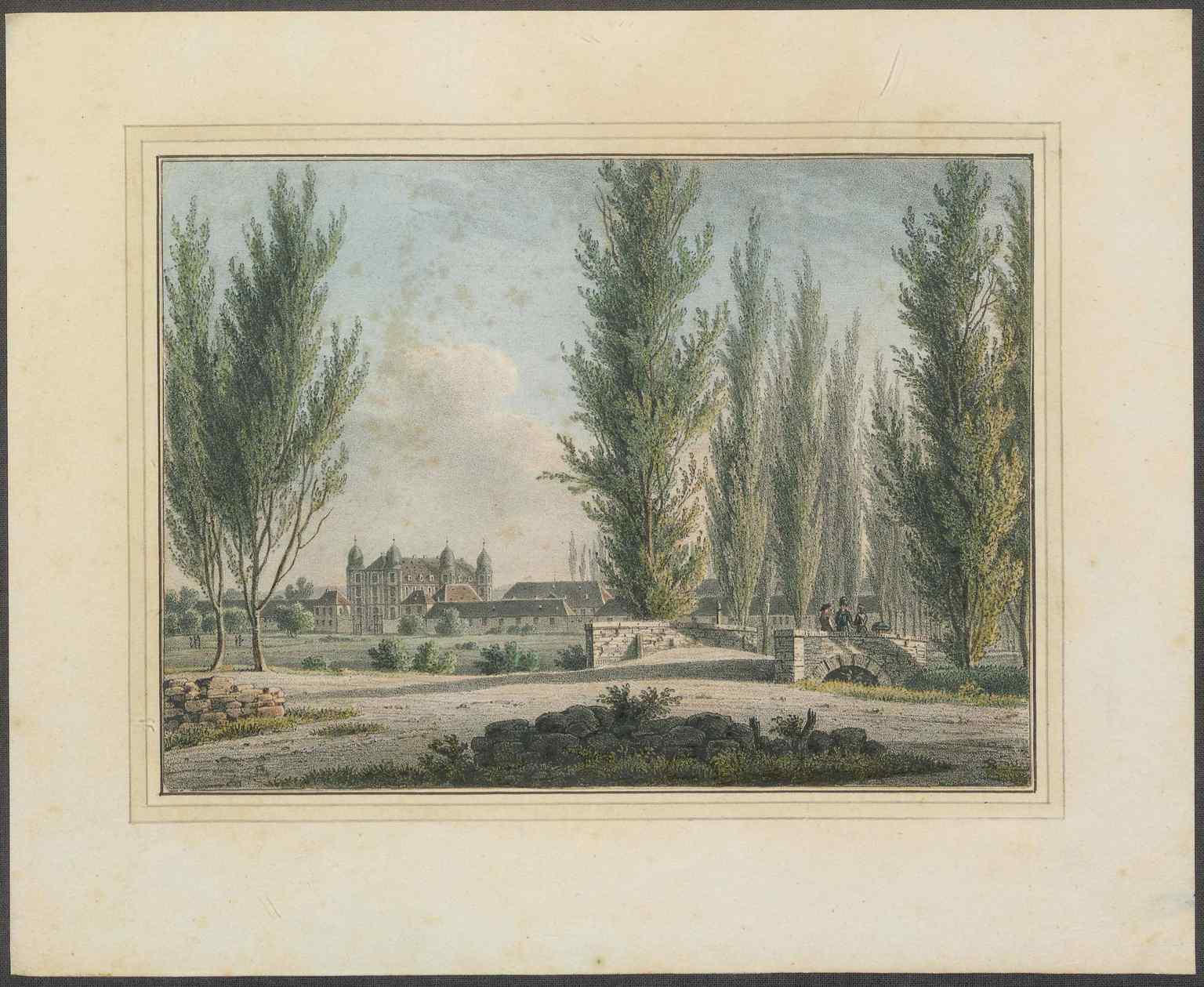
Then came the fires. It burned down in 1689. It burned down again in 1735. Each time, the city simply shrugged and repurposed the surviving shell. It became a granary, and by 1818, it was heavily modified to house military barracks. You can pull up the fourth image on your screen to see an 1840 drawing of the castle during its severely regimented military phase.
Its darkest moment arrived in 1944. An air raid rained incendiary bombs across the city, gutting the castle. The southern towers were left so unstable they had to be deliberately blown up. For nearly forty years, the site was a desolate shell standing as a bleak monument to the war.
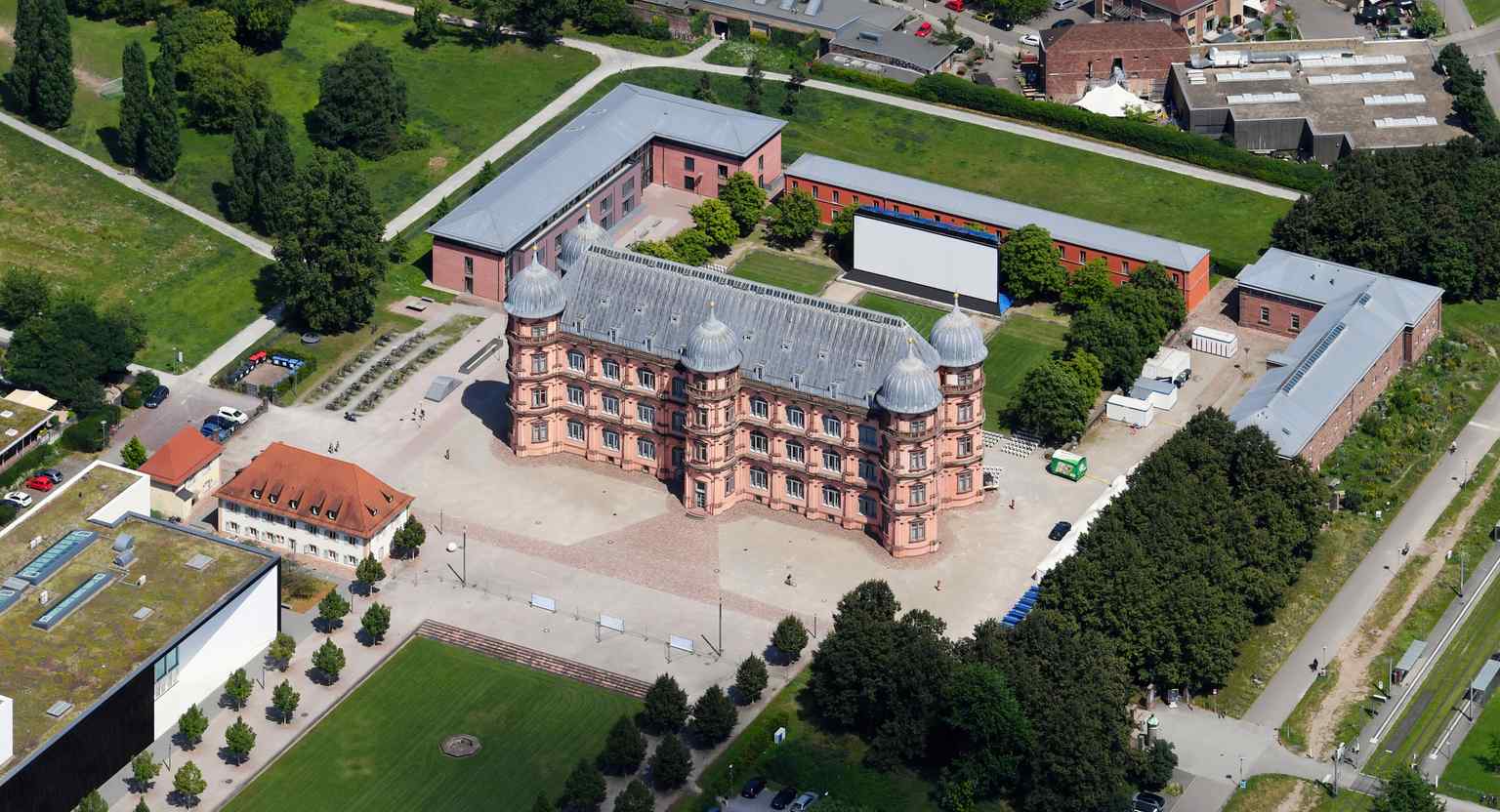
But in 1982, architect Barbara Jakubeit took on the massive task of rebuilding. She faced a classic architectural dilemma. Do you build a fake historical replica, or do you build something entirely new? Her solution was brilliant. She reconstructed the original sixteenth-century Renaissance exterior but boldly inserted modern materials inside, leaving the seams between old and new completely visible. Take a look at the third image in your app to see an aerial view of how this massive, multifaceted structure commands the grounds today.
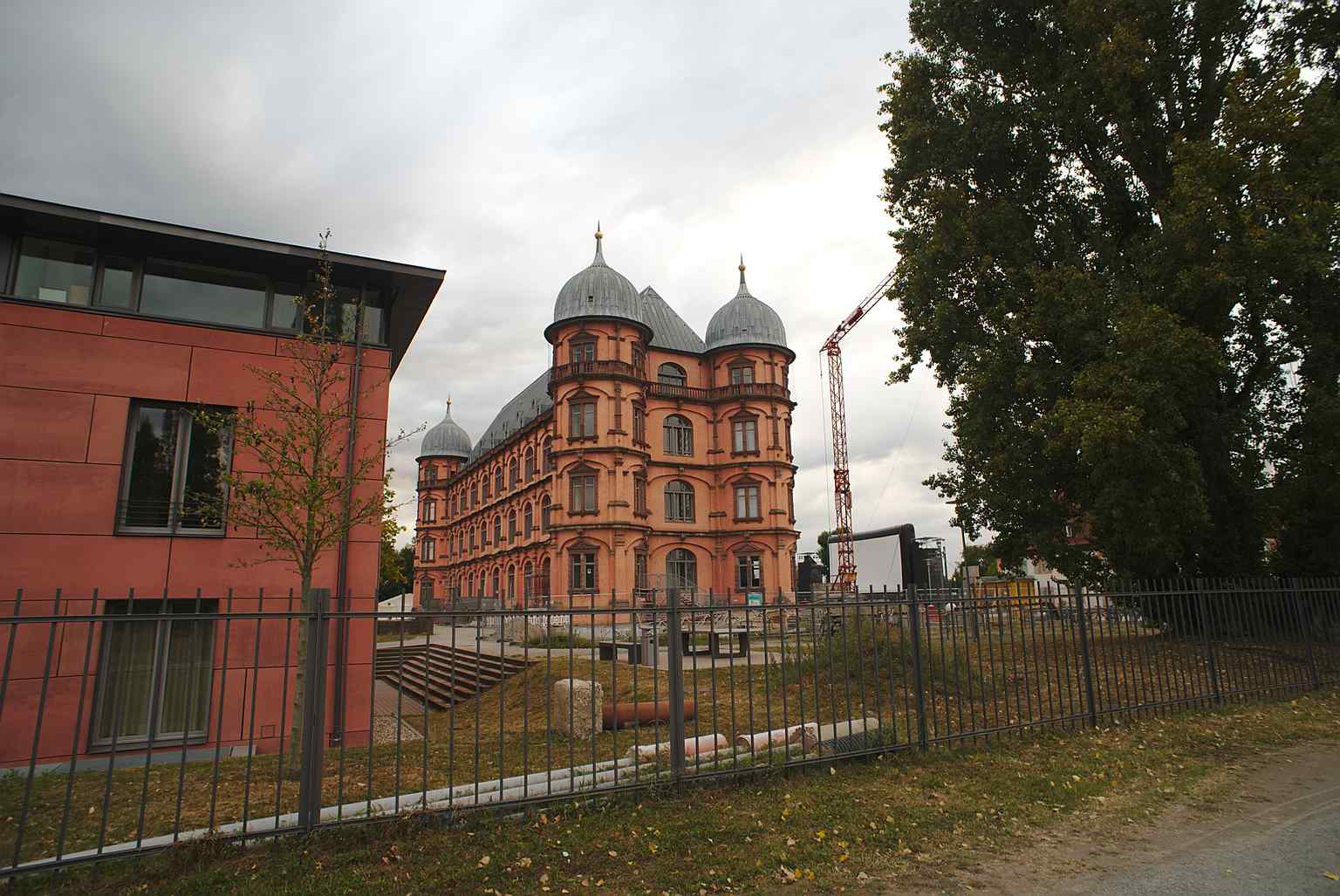
If you want a physical metaphor for how this district constantly pivots from rigid tradition to bold innovation, this is it. The stonemasons who worked on the modern reconstruction even left a few Easter eggs in the facade, reviving an old Renaissance tradition of hiding contemporary symbols in the masonry. If you look closely at the northern tower just under the cornice, you will find a carved stone Coca-Cola bottle, a telephone, and an actual space shuttle.
Today, the castle is home to the Karlsruhe University of Music, swapping military drills for orchestras. The grounds and building are generally open every day from 8:00 AM to 9:30 PM if you want to explore the campus. Now, let us move on to what is arguably the most dramatic urban transformation in the entire city, as we take a six minute walk toward the Old Slaughterhouse.





%20Gottesau%20und%20Durlacher%20Tor%20-%20LABW%20-%20Generallandesarchiv%20Karlsruhe%20S%20Thomas%20Kellner%20K%203%2C%2016%20b.jpg)
.jpg)


