
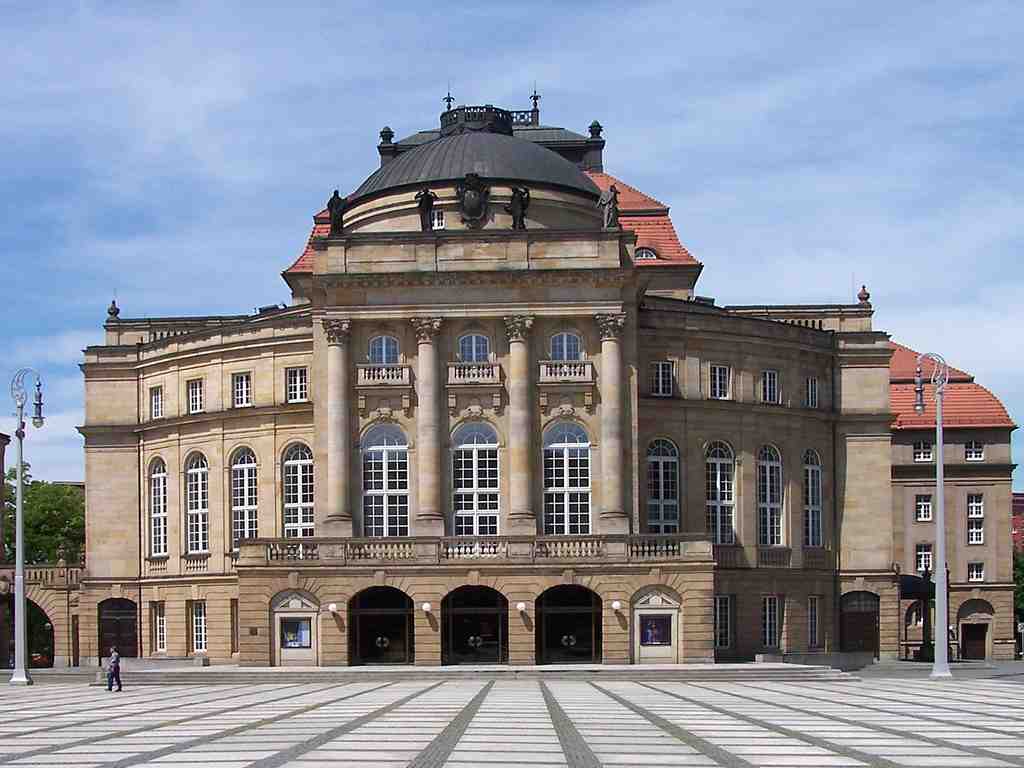
Right ahead, you’ll spot an elegant, sand-colored building with grand columns and a rounded façade topped by a striking black dome - that’s the Chemnitz Opera House, sitting proudly on Theaterplatz.
Picture yourself here in 1909, when crowds would have gathered in their finest clothes, gossiping under the glow of gaslights, eager to experience a night at the brand-new Stadttheater, thanks to the design of architect Richard Möbius. Imagine the excitement! This was Chemnitz turning itself into a real cultural hub, squeezed between the grand King Albert Museum and the dignified St. Peter’s Church. But drama wasn’t just on stage: during World War II, the opera house suffered heavy damage and the music nearly fell silent. Yet, from 1947, the city’s residents rolled up their sleeves - including a determined man named Kurt Hemmerling - and set to work rebuilding. By 1951, applause once again filled the hall.
From there, legends like Carl Riha took the director’s chair, infusing the place with flair and innovation for decades. The ’60s brought even more magic, with visionary minds like Harry Kupfer and Christine Mielitz pushing the boundaries of what opera could be. The house kept evolving, and from 2006, director Bernhard Helmich dusted off forgotten operatic treasures and placed them back in the limelight.
And let’s not forget those jaw-dropping technical feats: a twisting stage, lightning-quick changeovers, and enough space for 714 spectators (plus room for a few in wheelchairs-no concert left behind!). After a bold renovation at the turn of the 1990s by Peter Koch and later Günter Hauptmann’s team, the opera house became one of Europe’s showiest, most modern stages. Next time you see a set spinning wildly, you’ll know: that’s Chemnitz, keeping the curtain lifted on centuries of stories. And don’t worry-no one’s ever been upstaged by a fancy revolving platform… at least, not yet!


