
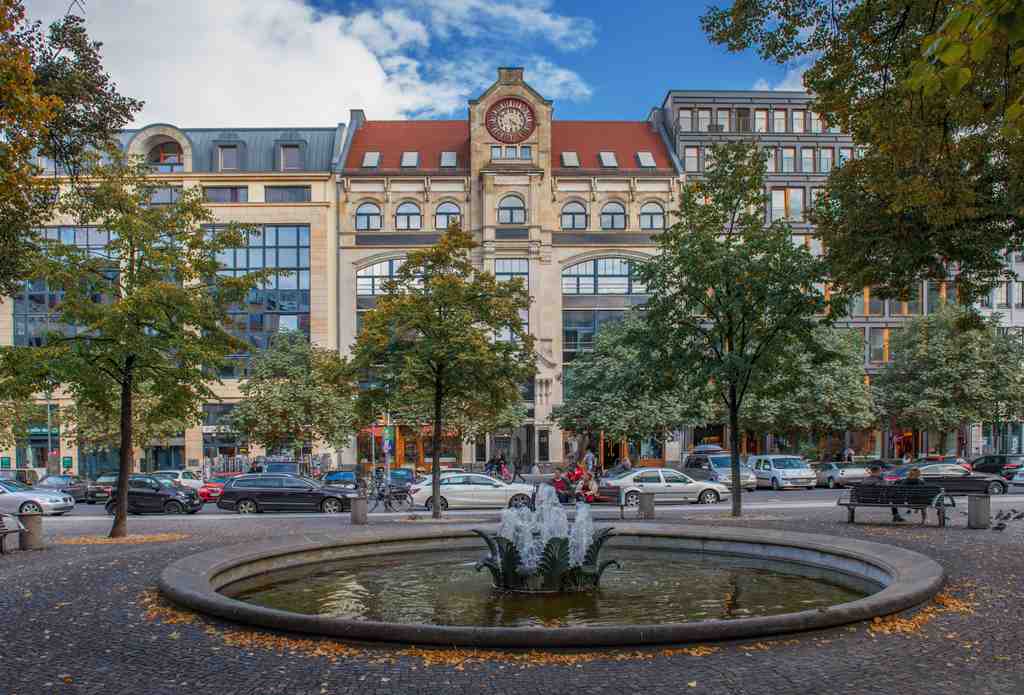
To spot Hausvogteiplatz, look for a small, triangular square with a classic fountain surrounded by trees and distinctive historic buildings, including one with a clock and arched windows straight ahead.
Welcome to Hausvogteiplatz-right at the intersection of fashion, history, and, once upon a time, a surprising amount of ham! No, really, locals used to call this place “Schinkenplatz,” not just because of its odd shape, but because meat was sold here, and perhaps for other reasons best left a mystery for your own imagination. You’re standing in a spot where Berlin’s past layers itself like fabric on a tailor’s table.
Close your eyes for a second and imagine the 17th century. Under your feet, there would have been massive fortress walls-eight meters high, with a deep, water-filled moat and battlements that protected the town from danger. But these fortifications didn’t last; as the city grew, traffic between the old medieval center and the bustling suburbs made them more of a nuisance than a defense. One by one, the walls came down and the area turned from military to mercantile, with markets beginning to spring up and life flowing where soldiers once patrolled.
The original Hausvogtei, or royal court prison, once stood right here, making this perhaps the least popular address in Berlin if you were a truth-teller in the mid-1800s. A famous saying back then was: “He who knows and freely speaks the truth, ends up in the Hausvogtei in Berlin.” And don’t laugh too soon-the last public shaming at the pillory happened in 1853, when a woman accused of perjury was tied up here for all to see. I guess not everyone wanted to visit Hausvogteiplatz for the latest trends back then!
But fashion was about to step onto the main stage. By the late 1800s, this was not just any square; it was the beating heart of Berlin’s ready-to-wear clothing industry. Picture the scene: fabric merchants hurrying through the streets, delivery boys darting in and out of four-story shops, the sounds of typewriters and the swish of new dresses. Big department stores and elegant townhouses popped up, and the whole place was buzzing with creativity. Berlin-made suits, dresses, and furs started traveling all over Europe, even across the Atlantic.
The stories behind these clothes were threaded with the traditions of Berlin’s Jewish community, who for generations had built a thriving textile trade here. In the golden years before the First World War, dozens, soon hundreds, of fashion firms made Hausvogteiplatz their home, with designers and buyers gathering to gossip at Café Schiller or share the latest Parisian looks at Reimann. Imagine the air thick with excitement during international buying trips, with the sense that you were at the very center of a global movement.
Of course, the tides turned. The Nazis rose to power in the 1930s, and the Jewish-led fashion industry, like so much of Berlin, suffered horrible persecution. Families fled or were forced to sell their businesses at terrible losses. More than 4,000 people connected to the trade were murdered during the Holocaust-a grim silence where once business had boomed and laughter filled the cafés.
So, as you stand near the fountain, take a look at the reflective stainless steel memorial shaped like dressing mirrors, close to the U-Bahn entrance. Step inside, and you’ll see yourself multiplied and distorted, much like the fractured memories of this place. Embedded in the pavement are the names, now partly lost to history, of the Jewish firms who once gave life and style to Hausvogteiplatz.
Today, the square has been revived, with modern buildings blending old and new, and the tradition of Jewish culture returning, even housing the only nationwide Jewish weekly newspaper here. You’re standing on what was once a catwalk for fashion-and now, maybe just for you and the pigeons! Don’t forget to toss a lucky coin in the fountain, and remember: fashion, history, and Berlin’s ever-mischievous sense of humor all walk hand in hand at Hausvogteiplatz.
Seeking more information about the designations of the square, development, ready-to-wear location or the memorials? Ask away in the chat section and I'll fill you in.


