
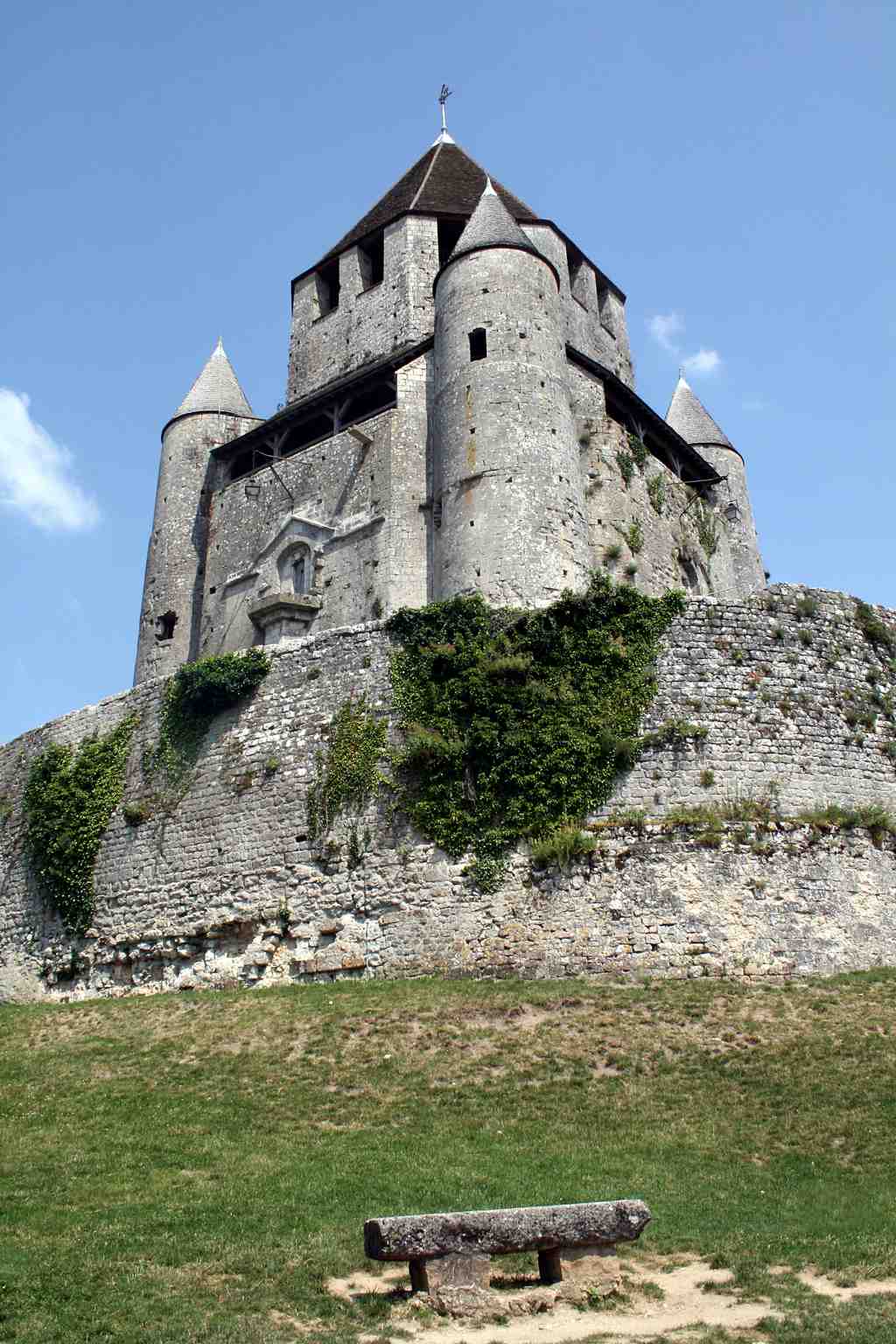
As you approach the Tour César, keep your eyes peeled for a large, imposing stone structure rising majestically from atop a hill. Look out for its distinctive square base transforming into an octagonal shape partway up, flanked by four turreted towers. The older stones and creeping ivy give it a historic charm, making it unmistakable!
Now, about the Tour César, let me take you back to the 12th century. This stout fellow was built on the summit of the hill in the upper town of Provins. It's quite the unique character, being the only known keep with an octagonal shape built on a square base. Handy for confusing any medieval prisoners or invaders, right? Speaking of prisoners, the tower also doubled as a rather uninviting dungeon.
During the Hundred Years' War, the English had a stint here, adding their own touches to its defenses. Since 1846, it has been officially recognized as a historic monument.
The site was occupied as early as the 9th century, initially hosting a grand palace with large halls, chapels, residences, and kitchens. The Tour César dominated this fortress complex, acting both as a stronghold and a prison from its inception. A legend has it that Julius Caesar himself built it, although there's no solid evidence that Caesar ever popped by for a construction project. More likely, its name symbolizes power (but don’t tell the Romans that).
Originally, the top of the tower was open and had crenellations until the 16th century. Modern additions include a roof from the 17th century and a couple of heavy, 17th-century bells, just to keep things interesting.
Ready to hear a bit of structural geekery? The Tour César is built on an artificial mound and integrated into the fortifications, serving mainly military purposes. Two walkways allowed guards to keep an eye out on the Brie plain below, while its square base and octagonal upper structure made it quite the architectural marvel.
Just imagine, back in the day, ascending narrow corridors hewn into thick walls to reach the dungeons. Up top, there were communication rooms, governor's quarters, and guardrooms, all centered around maintaining control and communication.
To top it off, the tower's bell has seen more drama than a soap opera, with its initial set of bells being melted down during the French Revolution. Today, only the biggest bell from 1511 and a smaller one from 1889 remain, resonating with history.
So there it is, the Tour César, a perfect blend of military might and medieval mystery!




