
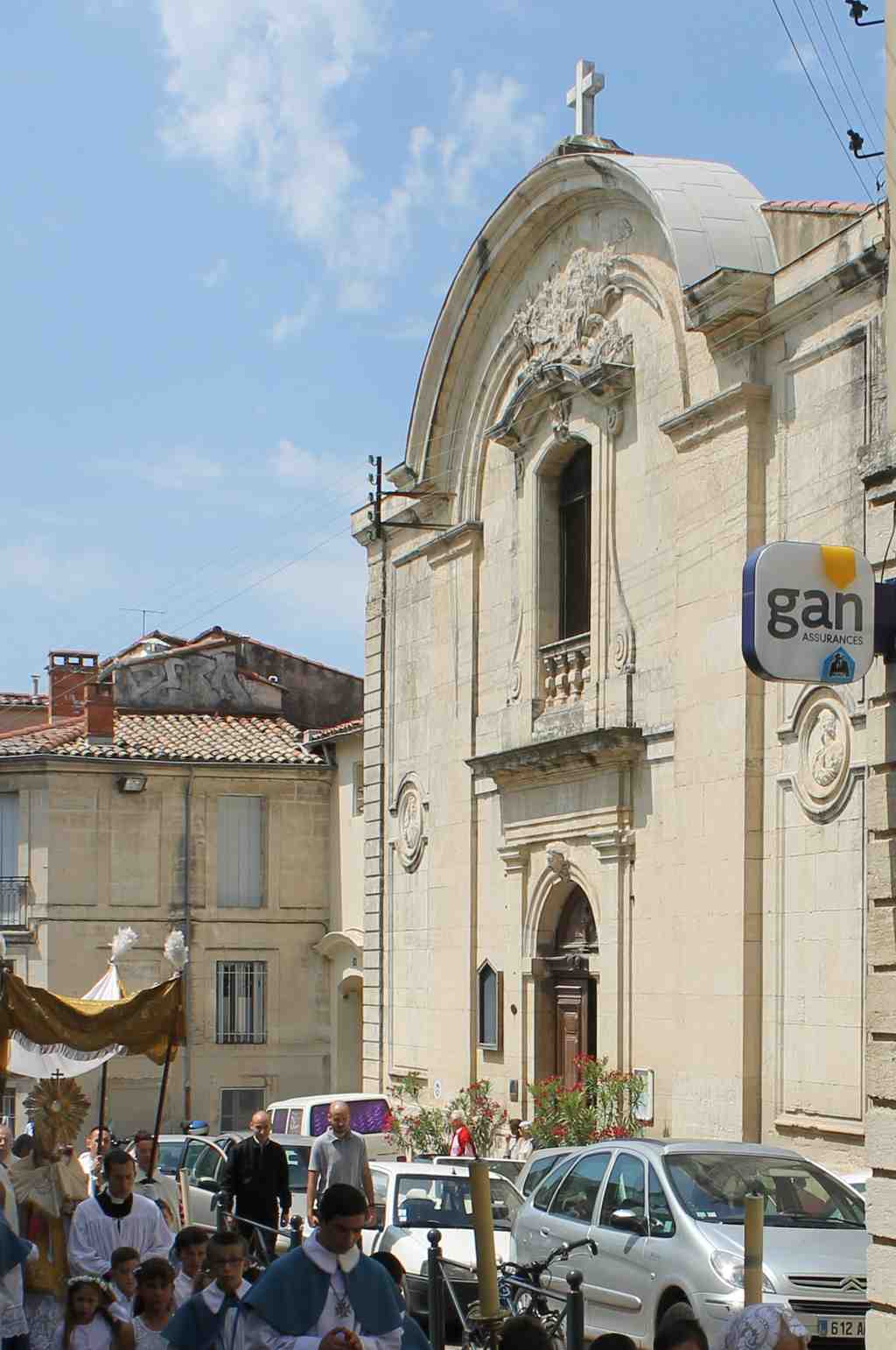
Alright, as you’re walking along rue La Merci, keep your eyes open for a light stone building with a gently curving front and a white cross perched right at the very top. That’s your target-Saint Eulalie Church! Look for its soft creamy façade, graceful archways, and just a touch of old-world elegance that pops out among the more modern buildings nearby. If you spot the ornate sculpted details above the door, you’ve found it. And hey, if you hear the faint sound of church bells, you’re definitely close!
Now, imagine yourself here in the heart of Montpellier, right beneath the shadow of the promenade royale du Peyrou and the regal Arc de Triomphe-pretty fancy neighbors for a church, don’t you think? Saint Eulalie isn’t just another old stone building. No sir! It’s got some serious stories tucked inside these walls.
For nearly six centuries, this was the chapel for the Mercedarian monks. These guys were sort of like action heroes from medieval times-their main gig was to rescue Christians who’d been captured and taken as slaves far away. Picture it: monks with heart, courage, and a mission. And the name “Merci” comes from “merced” (grace) in Spanish or “merces” (ransom) in Latin. Not bad for a word that also means “thank you” in French, right?
Picture medieval Montpellier, the countryside all around, and this chapel, freshly built near a busy old road. The monks moved fast-by 1261, Pope Urban IV himself declared the chapel finished. You’d have heard the chanting of monks, the echoes bouncing off the stone walls, and maybe, if you were lucky, the deep voice of the organ that’s still famous today.
But wait, here’s where the drama heats up-a massive civil war broke out in the 16th century. Suddenly, the very stones you’re looking at shuddered as mercenaries stormed the area. The church and most of the area were flattened, and the monks had to flee for their lives.
But Saint Eulalie wasn’t about to give up. Centuries later, the order returned, rebuilt on hope, and laid the stones you see today. Their numbers were never as large-only about a dozen monks remained by the 1700s-but they built big, hoping the crowds would come. They left us this beautiful wide nave and an organ built by the legendary Joseph Merklin & Schütze, fit for echoing music and the joyful sounds of community.
Even now, students and special groups fill Saint Eulalie with laughter and music for concerts and mass. If these walls could talk, they’d tell tales of bravery, devotion, destruction, and rebirth. So next time you walk by, don’t just look-listen. Who knows? Maybe you’ll catch a lingering note of the past carried on the breeze or the low hum of secrets kept safe for centuries. Now, onwards to our next adventure-just promise you won’t try to abseil off the top. That cross is strictly ornamental!
Eager to learn more about the la première église médiévale, la construction de l'église actuelle or the les différentes affectations entre 1787 et 1843? Simply drop your inquiries in the chat section and I'll provide the details you need.




