
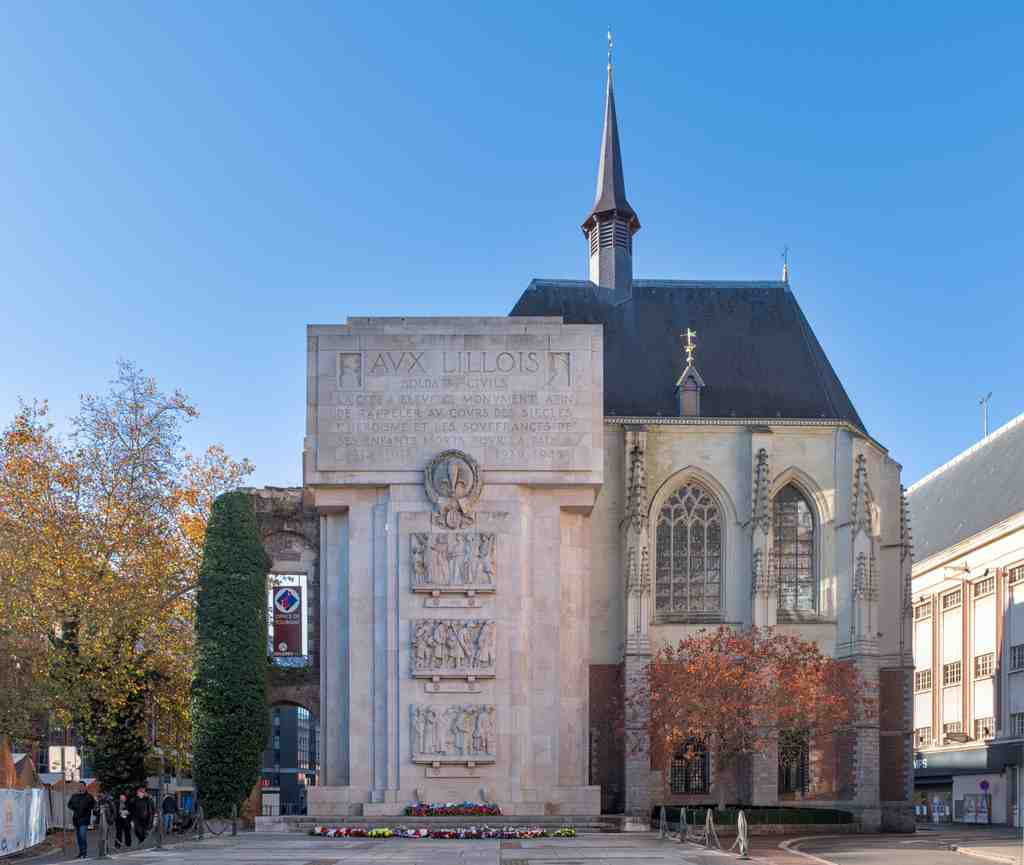
Rihour Square is easy to spot: look ahead for a wide, open plaza bordered by pale, grand buildings and the imposing medieval façade of the Palais Rihour to your right-its intricate stonework, arched windows, and a tall pointed spire make it unmistakable!
Imagine standing here in the very heart of Lille, your feet on ground that was once little more than soggy meadows and marshland. If you listen closely, you might almost hear the soft squelch of boots walking over wet grass, because long before these grand façades and bustling shops, this place was a humble tangle of alder trees, willows, and muddy fields. Lille’s history creeps up from the earth here, whispering secrets of a time when the canal-called the Poissonceaux-surrounded the region, splitting this very spot off from the busy Grand Place.
Now, here’s a little twist of fate: this square is named for its ancient landowner, Bérard Rihout-though back in 1248, when the name first appeared, nobody could quite decide if the land took his name or if he was named for the land! Over the next century, records of Rihour pop up again-someone’s selling a patch of soggy field to a local hospice, someone else is counting up taxes owed for the “riez,” a swamp nestled near an old city ditch. Not exactly the glamorous city center we see today!
Fast forward to the 15th century, and this spot becomes a building ground for the splendid Palais Rihour-a palace that eventually welcomed Lille’s magistrates. But with new prestige came some not-so-palatial drama. Picture the year 1664: a man named Charles de Renaucourt, infamous horse thief, stands trembling on these very stones. The townspeople gather, the gallows loom, and soon justice-harsh and swift by today’s standards-descends.
The square’s look kept changing. Eventually, it became home to Lille’s city hall until tragedy struck in 1916, when fire devoured the building, forever altering the landscape here. Before the blaze, the plaza was much smaller: just two narrow passages-nicknamed “contour de l’Hôtel-de-Ville” and “cour du Frêne”-let you slip by the old city hall into the heart of the city. Afterward, the space opened up, embracing a new era.
And the buildings around you? In 1687, the enterprising Anselme Carpentier, a lace merchant with a keen eye for style, ordered a tidy row of nine elegant houses here. To put the cherry on top, he even covered over the nearby canal trough at his own expense! This chic urban look became a model for Lille’s architecture, spreading to the Grand Place and beyond. The row of buildings you see today-especially those with even numbers from 2 to 24-are so treasured, they’re officially protected as historic monuments.
Of course, Rihour Square isn’t just about the past. Every September, the Braderie de Lille descends, filling the square with laughter, bargaining, and the irresistible aroma of street food. And when winter comes, more than 80 sparkling Christmas chalets appear here, as bustling shoppers sip hot chocolate and the sound of merriment rises through the chilly air.
This is Rihour Square-a place where marsh became majesty, where history crackles underfoot, and where, if you stand still, you can feel every age of Lille swirling around you.


