
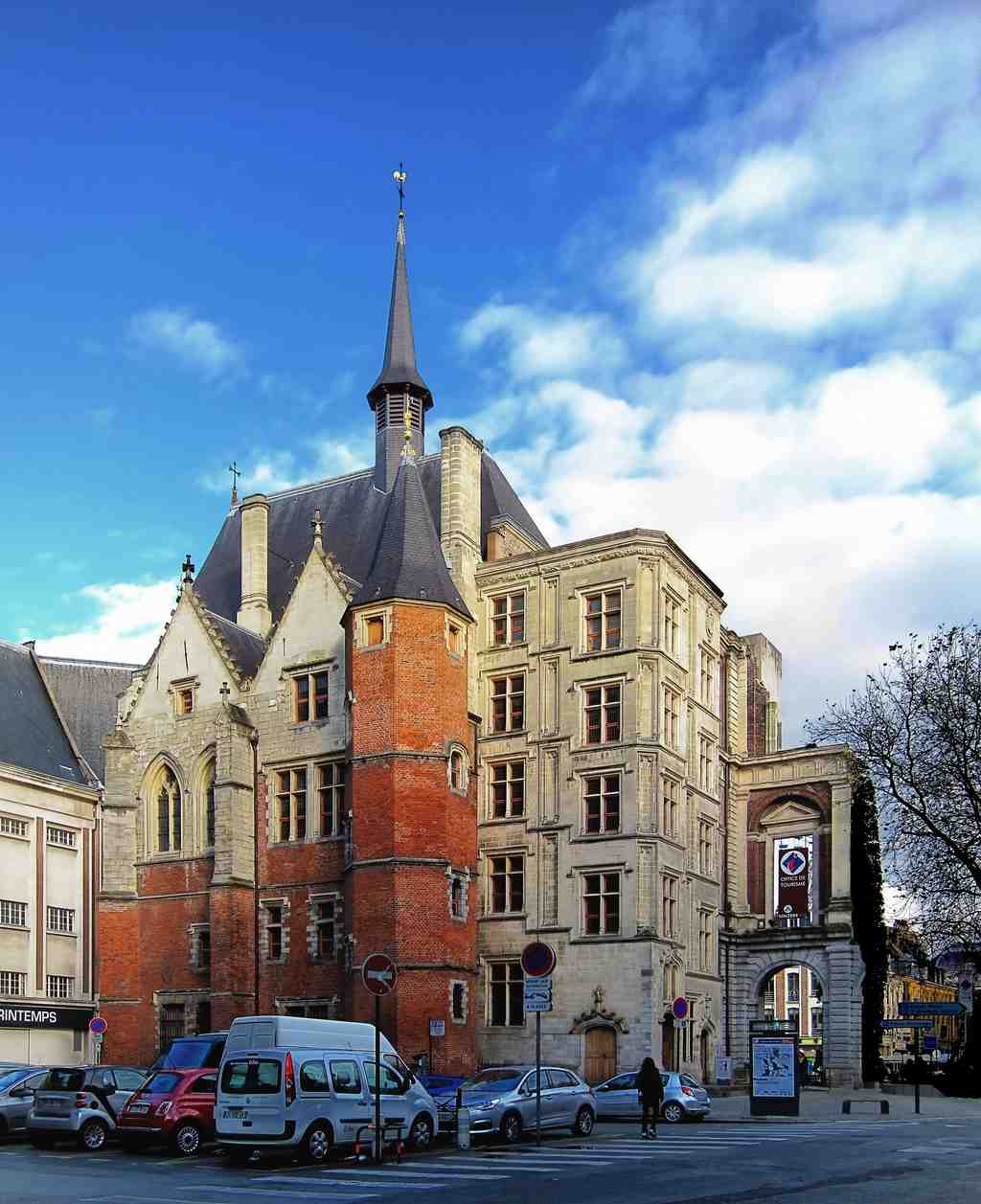
To spot the Rihour Palace, look ahead for a striking building with red brick walls, sharp gray slate roofs, tall chimneys, and a slender pointed turret rising above the stone façade-it stands out right beside the square.
Now, imagine you’re standing here in the heart of Lille, back in the 15th century. The city air is cool, and there’s a faint smell of marshland-because this whole area was once soggy, wild ground! Where cars and busy streets now stand, Duke Philip the Good of Burgundy had an ambitious dream: to build an elegant palace fit for a ruler. The only problem? He needed Lille’s money. After some sly negotiation, the Duke convinced the city’s council to hand over a hefty 6,000 pounds, spread over four long years. The city agreed-anything for a duke, right?
Construction began in 1453, led by the architect Evrard de Mazières. Workers had to wrestle stone and brick on marshy soil, their boots squelching through the mud. The ground shifted and buildings settled nervously, but twenty years later, under Charles the Bold, the palace finally opened its doors in spectacular late-Gothic style. Imagine four wings wrapped around a grand courtyard, the sound of clinking armor echoing under high archways. The rulers of Burgundy must have felt invincible-until the marshy land began causing cracks in the walls and headaches for architects!
By the way, the palace wasn’t all stone. Duke Philip-fancy as he was-insisted on using brick, which turned out to be a bit controversial! And for a short while, if you looked out front, you’d have seen an impressive wooden fence lined with eleven statues of lions and griffins, all keeping a very watchful eye on the comings and goings.
And who wandered these halls? Charles V, Holy Roman Emperor himself, once slept under this roof. Later, Louis XV paid a visit, though he didn’t stick around long. Apparently, royalty can be a little picky about their lodgings-even kings want good WiFi, I guess!
The city of Lille bought the palace from the King of Spain in 1664 for a whopping 90,000 florins (imagine the receipt on that one). They used it as Lille’s townhouse: the old city hall, or “maison de ville.” But the palace couldn’t catch a break. In 1700, disaster struck during a winter ball-the north wing caught fire in the night and had to be rebuilt in the style of the day. Then, in 1756, the west wing was lost to another blaze, and later still, the southeast suffered the same fate. The palace was patched up again and again, with repairs piecing together stone and brick like a medieval jigsaw puzzle.
After centuries of repairs, fires, and some hasty restoration here and there, the palace was transformed in the 1800s with a grand neo-Renaissance look thanks to architect Charles Benvignat. He added his own flair, but the building kept its ancient Gothic soul. The chapel and grand staircase were carefully preserved-piece by piece, the original staircase was turned 90 degrees and moved, like a giant game of Lego with a lot more sweating.
By the early 20th century, disaster hit once more. In 1916, during World War I, a late-night blaze swept through while the city hall was inside. With a curfew in place, firefighters were slow to arrive, and their hoses trickled with weak water pressure. They barely saved the finances and the famed conclave room, but the city’s precious archives and a chunk of the library disappeared in the flames. While much of the old palace was eventually knocked down, the chapel, staircase, and some red-brick arcades survived-bits of medieval Lille standing strong against the march of time.
Today, if you enter, you’ll find the old guards’ room is now the friendly Lille tourist office, and the former ducal chapel, once a place of stern justice and grand paintings, hosts special exhibits. Dive below the square, and you’ll find vaulted cellars stretching into the cool darkness beneath your feet. What a hidden world, right?
Over the centuries, the Rihour Palace has watched as kings, emperors, and armies came and went-sometimes with a bang, sometimes with a puff of smoke. Next time you walk into the square, listen closely. Maybe, just maybe, you’ll hear the whispers of knights, the moans of old bricks, and the happy sighs of tourists who made it here without getting lost in the marsh!


