
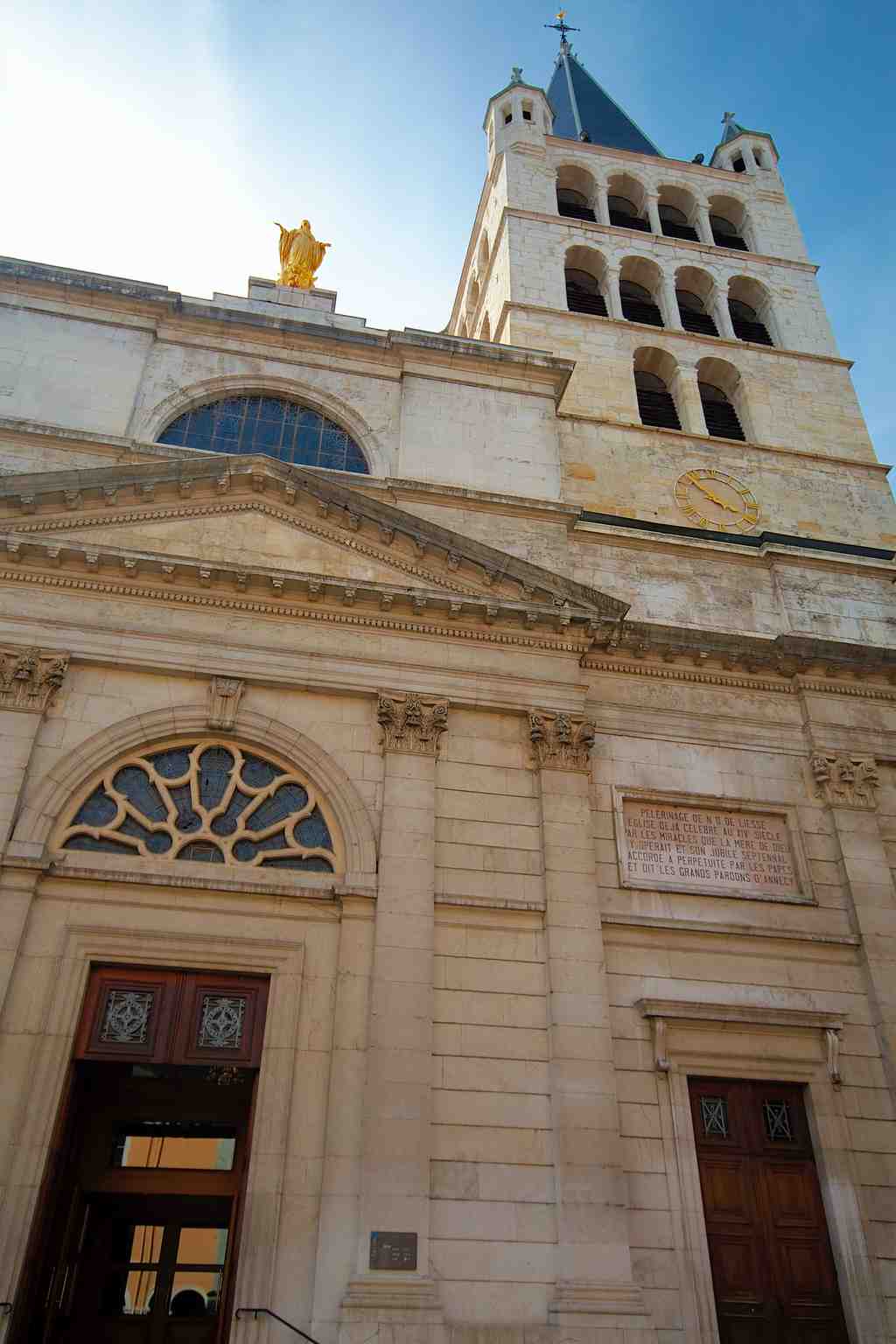
To spot the NO LADY-OF-LESSE CHURCH OF ANNECY as you walk, look for a striking cream-colored stone building with a tall, square tower featuring arched openings and a golden statue gleaming at the top, right above the wide wooden doors and the grand neoclassical façade.
Let yourself drift back in time as you stand before these solid stones-this place isn’t just a church, it’s a living storybook written in limestone and echoing with bells. The ground beneath your feet has shivered with centuries of footsteps. At first, this spot was simply a humble oratory, mentioned as far back as the eleventh century, where soft prayers rose like smoke in the cold mountain air. But in 1360, Amédée III, Count of Geneva, gazed on this very place with ambition and reverence. He imagined not just a church, but a grand sanctuary, a resting place for his powerful family. His vision left the medieval hospital and marketplace behind, raising up stone and faith in their place, and his kin, Count Robert, carried the dream to completion. In 1398 the sanctuary was finally consecrated, its walls heavy with hope and memory.
But like every great story, this church’s history has seen drama and disaster. During the fierce revolutionary days of 1793, revolutionaries, determined to summon the people into a new era, destroyed the original choir of the church to make room for a “place of liberty” on this very square. Imagine the noise, the anxiety-villagers watching as the old stones fell, the tower spared only a beheading: its sharp spire and watchful turrets lost forever. Instead, crowds gathered around the “tree of liberty,” turning the square into the very pulse of Annecy’s new politics.
Yet the old stories have a way of coming back. After the dust of revolution settled, the church rose again. In the 1800s, the return of the Savoy family prompted a grand rebuilding: between 1846 and 1851, the architects pieced the sanctuary back together, preserving that stubborn fourteenth-century bell tower and a lone gothic window that survived the chaos. Step inside and you’ll find a church shaped like a Latin cross, lined with sturdy columns and round Romanesque arches. The side naves shelter two altars, one for Saint Francis de Sales, another for Our Lady of the Rosary. The font is from 1852-the same water still glistens as it did all those years ago-and the grand altar comes from just two years later.
You might hear bells echoing above: the oldest dates all the way back to 1655, calling out its angelus faithfully every day, while another, even older, sits quietly retired since 1699. If you listen closely, maybe you can catch the mighty “La Salésienne,” a bell cast in 1878 that weighs as much as five cars-and if she rings, heaven and Annecy alike still shudder in delight.
Look around this square, surrounded now by cafes and little shops. Imagine egg, cheese, and vegetable sellers calling to each other until 1854, when the market finally moved. Picture the lions and turtles circling the fountain, added in 1859. Even today, the square is a gathering place, full of laughter, music, and stories-just as it has been for hundreds of years. The church, watchful as ever, carries all these echoes within its walls, inviting you to add your own chapter to its remarkable story.




