
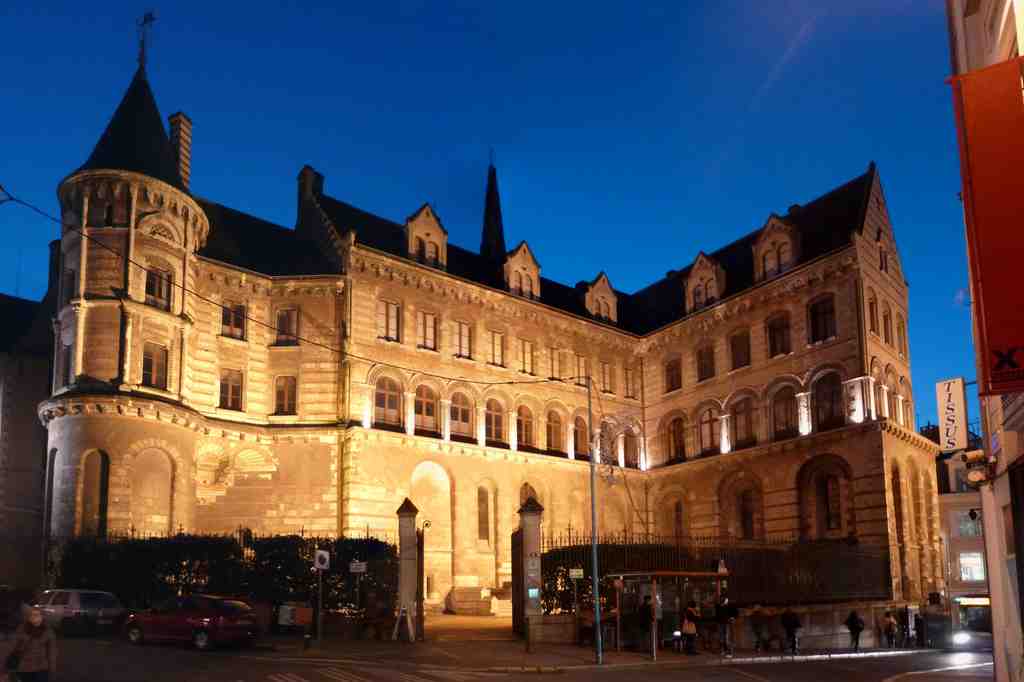
Coming up ahead, you’ll spot the Palais du Tau by its impressive mix of pale stone and brickwork, its grand T-shaped layout, and the rounded tower anchoring one corner-just look for the castle-like building glowing with character right next to the cathedral.
Now, as you stand before the Palais du Tau, imagine yourself a thousand years back, when this grand residence would have brimmed with the buzz and footsteps of bishops, clergy, and the occasional knight. Built up right against what was once the third-century city wall-yes, a reminder that this chunk of stone has seen everything from Roman sandals to modern sneakers-the palace you see today took shape in the early 1100s. But the land’s story goes even further back, with bishops keeping residence by the cathedral since at least the 800s.
Here's a fun twist: the building’s funky T-shape isn’t just an accident of architecture. Picture Bishop Ulger of Angers in 1131, attending the grand council in Reims and gawking in awe at the palatial archbishop’s residence. He comes back home, feeling a bit of palace envy, and orders his own digs to be remade-just as he saw in Reims. That T-shape became so iconic that it even gave the palace its name: “Tau” is the Greek letter T. There are only two episcopal palaces in France with this special shape-one here in Angers, the other in Reims. So, you could say Angers is one “tau-rrific” place!
Don’t let these dignified stones fool you-they’ve seen plenty of mischief and makeover. In 1438, Bishop Hardouin de Bueil fancied a proper library, so he reshaped the roof and created a sprawling room for books and serious thinking. Then, in 1506, Bishop François de Rohan constructed a grand staircase facing the courtyard-but apparently lost the will (or perhaps the funds) to finish it, leaving it incomplete for over 350 years! Later bishops tinkered with the palace too: the kitchens got circular makeovers, chapels expanded or contracted, a new wing sprouted in the 1800s, and elegantly sculpted decor was sometimes left unrecognizable by zealous renovations. Yet, through all these tumbles of history, the complex has managed to preserve a sense of unity and grace.
And if you stumble around to the old stone walls, you might spot some intriguing Latin inscriptions. One line graciously welcomes clerics and knights to honor and hospitality, but gently nudges everyone else to the less glamorous rooms-a medieval way of saying, “VIP lounge this way; everyone else, try downstairs.” Another carved phrase promises honey to friends, but a sting to anyone causing trouble-a motto fit for an era of both intrigue and hospitality.
Over centuries, as revolutionaries stormed and museums flourished, the Palais du Tau transformed from bishop’s home to museum of tapestries and religious art, and now serves as the diocesan house for good works-a monument recognized for its historic importance since 1907. Whether you picture robed bishops debating the fate of souls, or just wonder how many times that incomplete staircase tripped someone up, the Palais du Tau is a place where the old world feels just a little bit closer. Now, onward to your next Angers adventure!
If you're keen on discovering more about the situation, historical or the entries, head down to the chat section and engage with me.


