
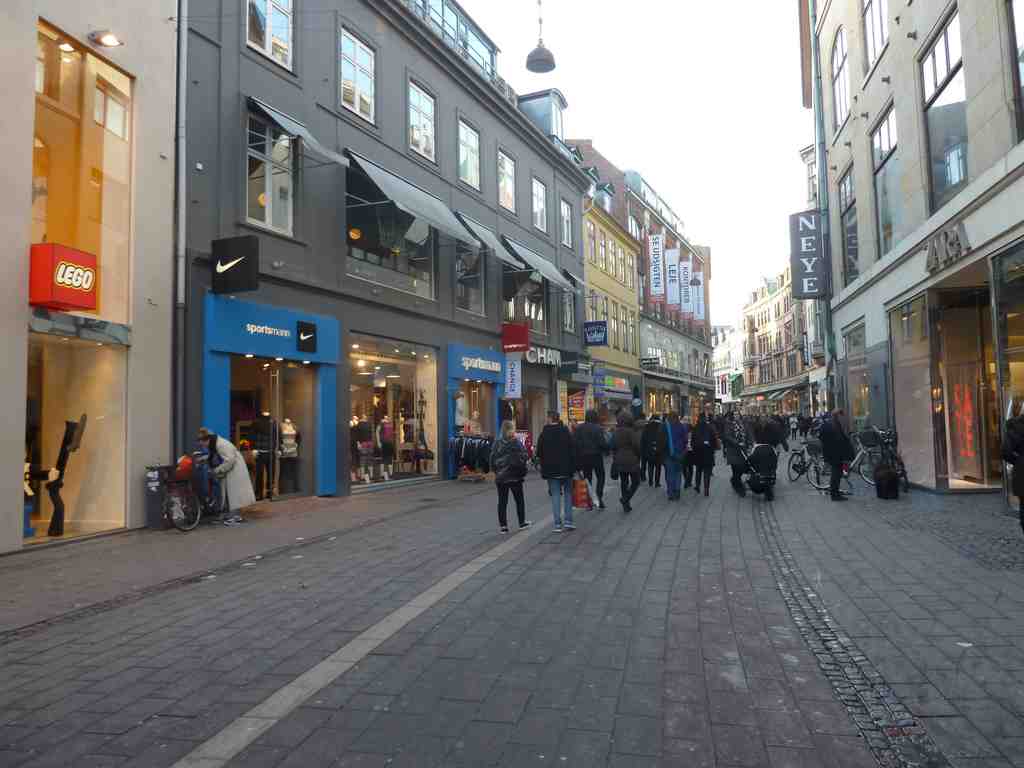
Alright, you’re nearly at Vimmelskaftet! Take a look straight ahead-see that bustling stretch lined with shops and lively crowds, right in the middle of Strøget? That’s your target! It’ll look like a classic old street, with a mixture of stone buildings and narrow facades that seem to lean in for a gossip over your head. If you spot people darting from shop to shop and the air has a faint scent of freshly baked pastries, you’ve made it!
Now, imagine Copenhagen hundreds of years ago-no big shopping chains, just craftsmen and traders calling out their wares from little booths. Vimmelskaftet is one of the city’s oldest streets, and the name itself is a bit quirky-it means “the spindle shaft,” inspired by the twisting shape the street creates along with its old neighbors. Try to picture medieval times: Stalls with leatherworkers hammering, shoemakers chatting to customers, and the air thick with the smell of fish wafting from the nearby market at Amagertorv… Maybe even the sound of a few lively arguments over prices.
This street had many names before Vimmelskaftet stuck. Once, it was called Tyskemannegade, or “German Men’s Street,” because so many German merchants settled here-bringing not just their goods, but their own pointy-roofed, gabled houses. Talk about keeping things interesting for the neighbors! By the late Middle Ages, the gossipy chatter of local workers was everywhere, from tailors to tanners, all working for the royal court or the city leaders. And, of course, the city’s best taverns and inns were right here-imagine Copenhagen’s poets and thinkers squeezing into smoky rooms, trading ideas and a few pints.
Number 47 used to house Café Bernina, a famous hangout for artists and writers. I bet if you listened closely enough, you’d hear the echo of passionate debates and the faint clink of coffee cups. Over at Number 49, the famous Danish thinker Grundtvig lived for a decade. During the March Revolution of 1848, he watched crowds surge past his window, demanding a new and more democratic government. At first, he figured it was just a rowdy mob. But soon enough, he changed his tune and became one of Denmark’s biggest champions of democracy. He’s proof that even the grumpiest neighbors can come around!
So, as you stand here and watch modern shoppers hustle past, try to hear the distant footsteps of merchants, craftsmen, revolutionaries-and maybe some poets nursing an epic case of writer’s block. On this street, every cobblestone has a story-or at least a well-told joke-just waiting to be discovered.


