
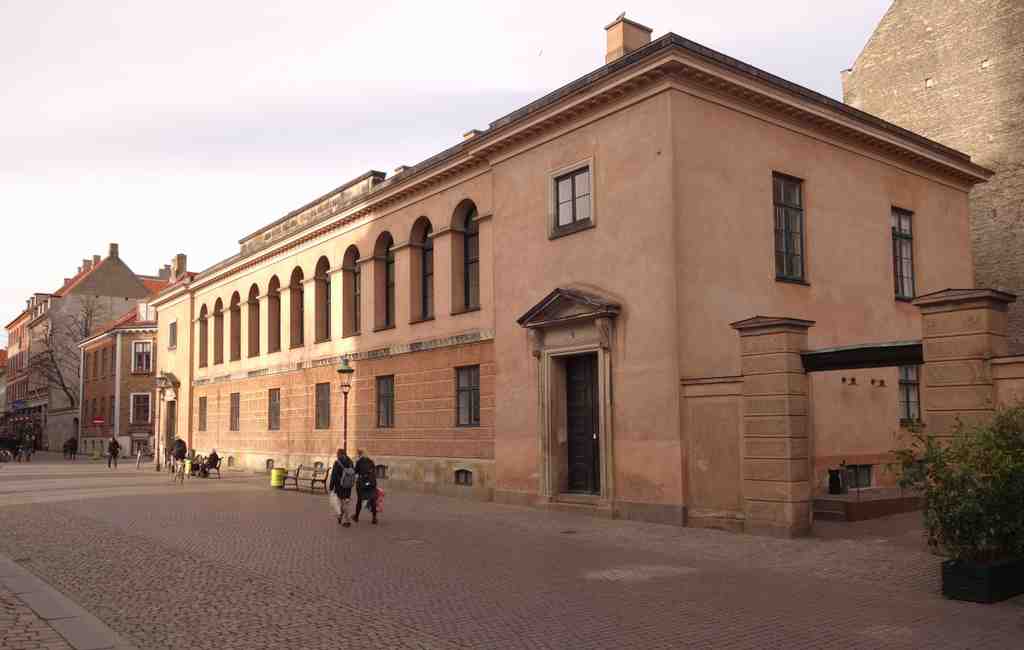
Just ahead of you is the Metropolitan School, or Metropolitanskolen, easily spotted by its long, sand-colored walls and classic, rectangular windows. The building stretches gracefully along the street, with a row of tall arched windows just above eye level. Look for the sturdy, brown main door with a pointed stone pediment above it. If you’re facing a structure that almost feels like it’s watched centuries of Copenhagen rush by, you’ve found it!
Imagine stepping back to the early 1200s, right here. This school was first founded in 1209 by Bishop Peder Sunesen-yes, that's over 800 years ago! In its earliest days, it was a Catholic monastery school, but, just like a student who keeps changing majors, Metropolitanskolen later became the top Latin school for Denmark’s elite. You might say it was Copenhagen’s version of Hogwarts… only with more Latin and less flying.
All this time, students here weren’t called “students.” Oh no, they had a special name: “peblinge.” That comes from an old Danish word meaning “little priest.” Supposedly, the name Peblingesøen, a lake nearby, comes from those energetic students sneaking off for a swim.
The school had its fair share of drama-not just final exams, but fires, reforms, and bombings. In 1728, the school burned down during the great Copenhagen fire. But by 1731, it was back up again, stubborn as ever. Then, in 1807, during another disaster, the building got destroyed again. Classes shuffled between various locations until a new building was finished right here in 1816. Picture it: 132 nervous students, all in their finest clothes, gathered for the grand opening, eyes wide as King Frederik VI himself showed up!
Over time, the school changed from a poor boys’ school to a place for the city’s elite, especially after parents started paying tuition instead of sending their kids to sing in the churches. There was even a squabble over its name-when it tried to become the “Cathedral School of Copenhagen,” another school in Roskilde wasn’t too happy and kicked up a fuss!
For its last chapter, it merged into Gefion Gymnasium in 2010 after 800 years of history. But it’s even more famous among Danes thanks to a satirical novel and film called “Det forsømte forår”-or “Stolen Spring”-that poked fun at the strict teachers and sometimes gloomy atmosphere inside these very walls.
So, even if you’re not studying Latin or dodging strict headmasters, give a little nod to the thousands of “peblinge” and students who studied (and maybe got up to some mischief) on these very cobblestones.


