
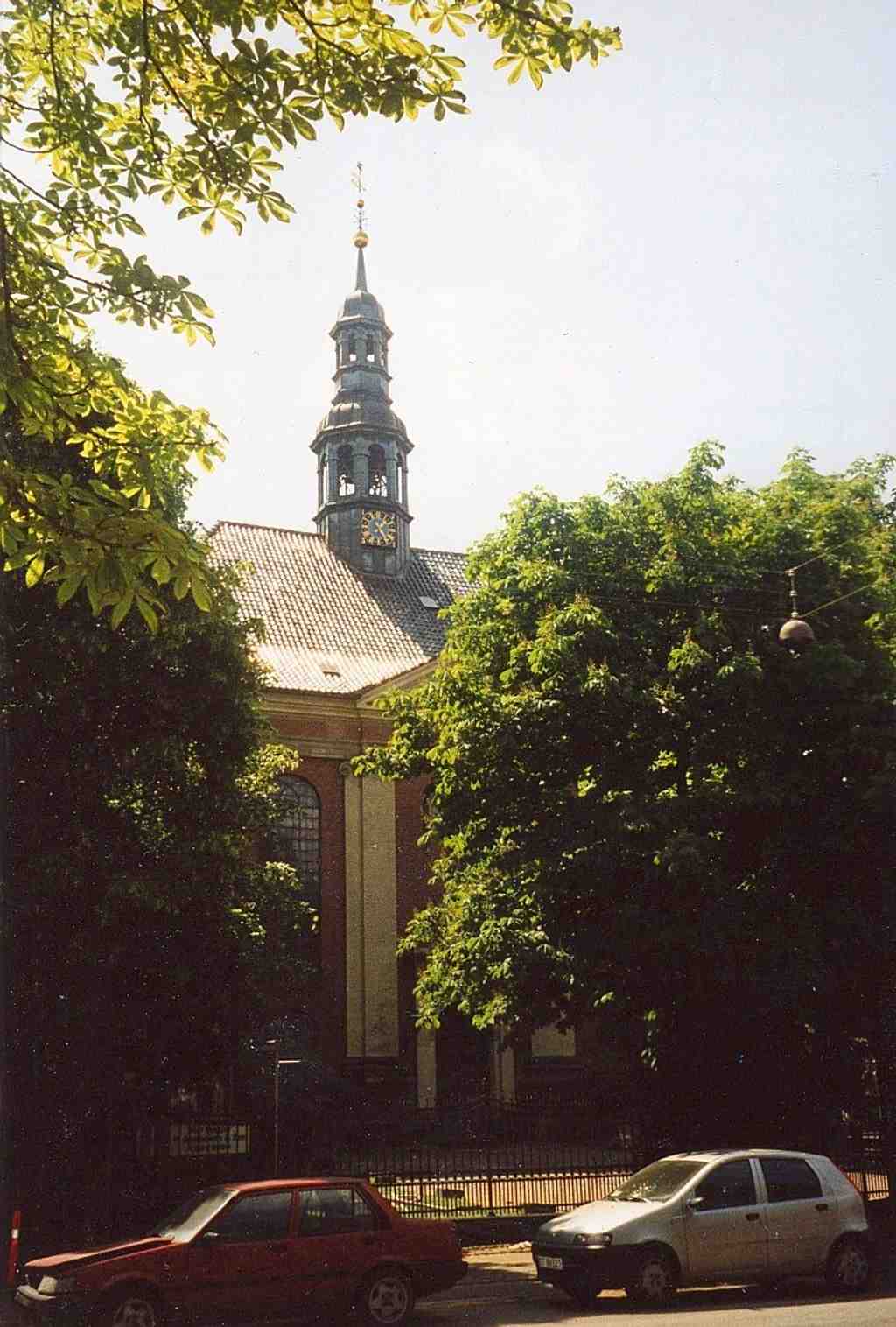
Look just above the treetops ahead of you. You’ll spot a roof topped by a small, elegant spire - it almost looks like a magician’s hat with golden decorations glinting in the sun. Right underneath, peeking out from between the leafy branches, you’ll find tall, arched windows of deep red brick and, if you’re lucky, a clock face telling the most stylish time in Gothersgade. That’s your clue: you’re facing the Reformed Church, Copenhagen!
Imagine the year is 1689. The city buzzes with the sound of horses’ hooves and market chatter, but here, across from the grandeur of Rosenborg Castle, something rare is happening. Queen Charlotte Amalie, who was anything but ordinary, is making sure that people from all over Europe - Germans, Dutch, French - have a place to worship the way they choose. She’s not just the queen, she’s also a German Calvinist on a mission, and she gets her wish: this church, built from striking red brick, stands as her gift to the Reformed congregation.
During the day, sunlight dances off the copper spire, which rises more than thirteen meters above the black-tiled roof. Inside, if you could slip past those tall doors, you’d find carved wooden decorations and a pulpit so high that the preacher could practically see into next Sunday. The rich, baroque flair inside makes you half expect powdered wigs and swishing silk dresses to appear at any second.
The church survived Copenhagen’s great fire in 1728, although not without scars. But the city’s best craftsmen rushed in to rebuild, and they didn’t hold back: beautiful new fittings, a grand organ brought over from an old castle, and special boxes reserved for the city’s elite. There was even an old age home, a school, and an orphanage wrapped into the church’s embrace. Talk about multitasking - this was never just a regular Sunday stop.
Take a look just above the entrance if you can edge a little closer. You might spot two royal monograms - one for King Christian V, the other for the ever-determined Queen Charlotte Amalie, along with an inscription in Danish from Isaiah, cheering on everyone who seeks wisdom.
Out back, the old churchyard whispers stories of refugees, noble merchants, clockmakers, and sea captains. The French section still keeps its gravestones, and among them rests a brave admiral from the Battle of Copenhagen. Imagine the secrets these stones hold, tales of those who fled their homelands hoping for a fresh start in Denmark.
Today, the church still opens its doors to German, French, and even Korean congregations, echoing with prayers in three languages. Talk about a melting pot - or maybe a melting church? So, next time you hear the chime from that lovely spire, give a little thanks to a queen who didn’t just want a crown, but a place for everyone to belong.
Intrigued by the architecture, interior or the churchyard? Make your way to the chat section and I'll be happy to provide further details.


