
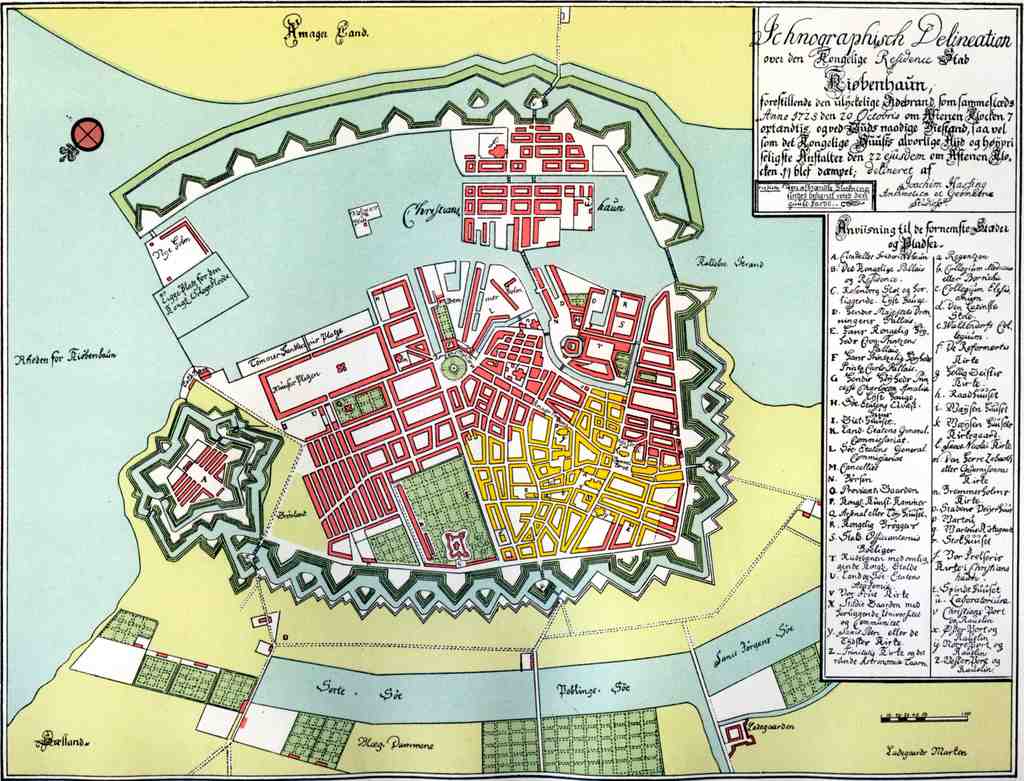
You’re now standing right where history took a fiery turn! If you look in front of you, you’ll spot a historical map - full of twisting, cramped streets and surrounded by star-shaped fortifications. To find the landmark, look for an old map or plaque showing Copenhagen as it looked centuries ago; the area in yellow and orange marks out the part that was destroyed by the fire of 1728. Imagine yourself right by one of those narrow, crowded lanes-almost lost in time.
Let’s set the scene: It’s a chilly October evening in 1728. The city is alive with candlelight, narrow streets buzzing with people settling in for the night. Suddenly, a single candle tips over-maybe the work of a clumsy hand, or perhaps a little seven-year-old blamed for something he didn’t do. Within moments, flames begin to leap and dance.
Now people are shouting, racing through those twisting alleys you see on the map, calling for help as the wind howls from the southwest, driving the fire into even more houses. Soon, both sides of Vestergade are glowing orange, sparks lighting up the night as the fire gulps down wooden roofs and ancient walls. Can you imagine the heat and the haze, the desperate cries as everyone tried to stop it-some even firing cannons at burning houses to force them to fall?
People are racing to save what they can-books, clothes, drawings-and even priceless treasures from the University Library and the famed astronomer Tycho Brahe vanish forever in the blaze. By the time it’s over, almost a third of Copenhagen is gone, and the old medieval city will never be quite the same again.
So, as you stand here by this map, picture the drama, the chaos, and the wind-fueled mystery of that night. And maybe be a little grateful your only challenge on this street today is crossing to the next bakery-and not outrunning a city-sized inferno!
Seeking more information about the timeline, losses or the consequences? Ask away in the chat section and I'll fill you in.


