
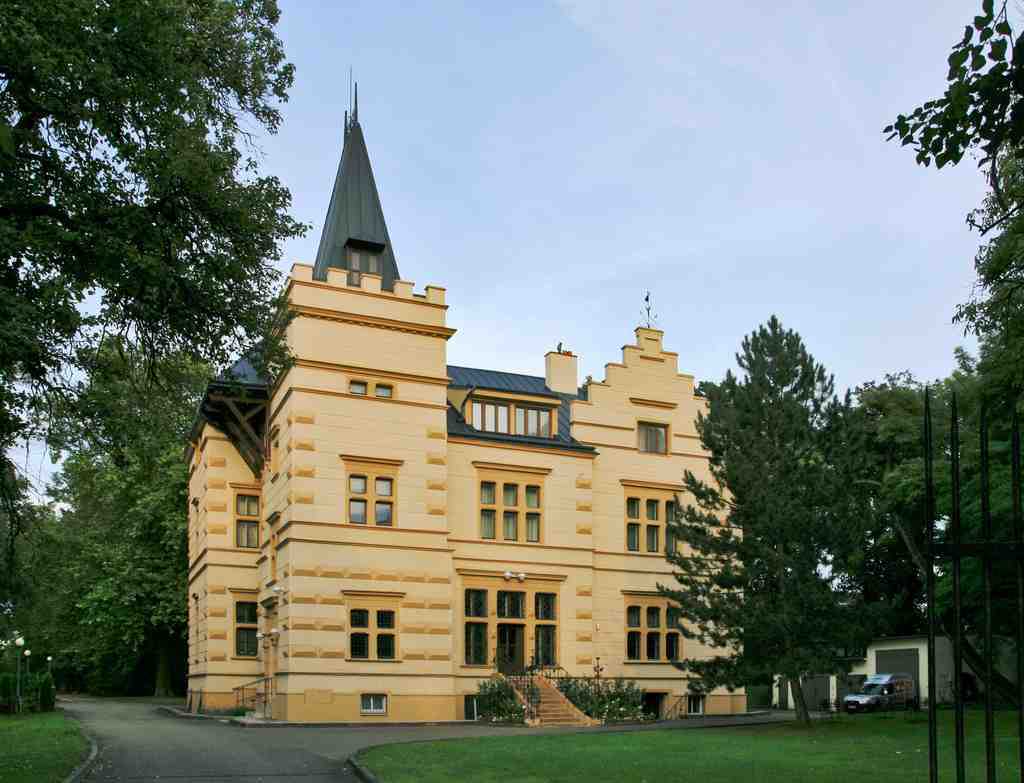
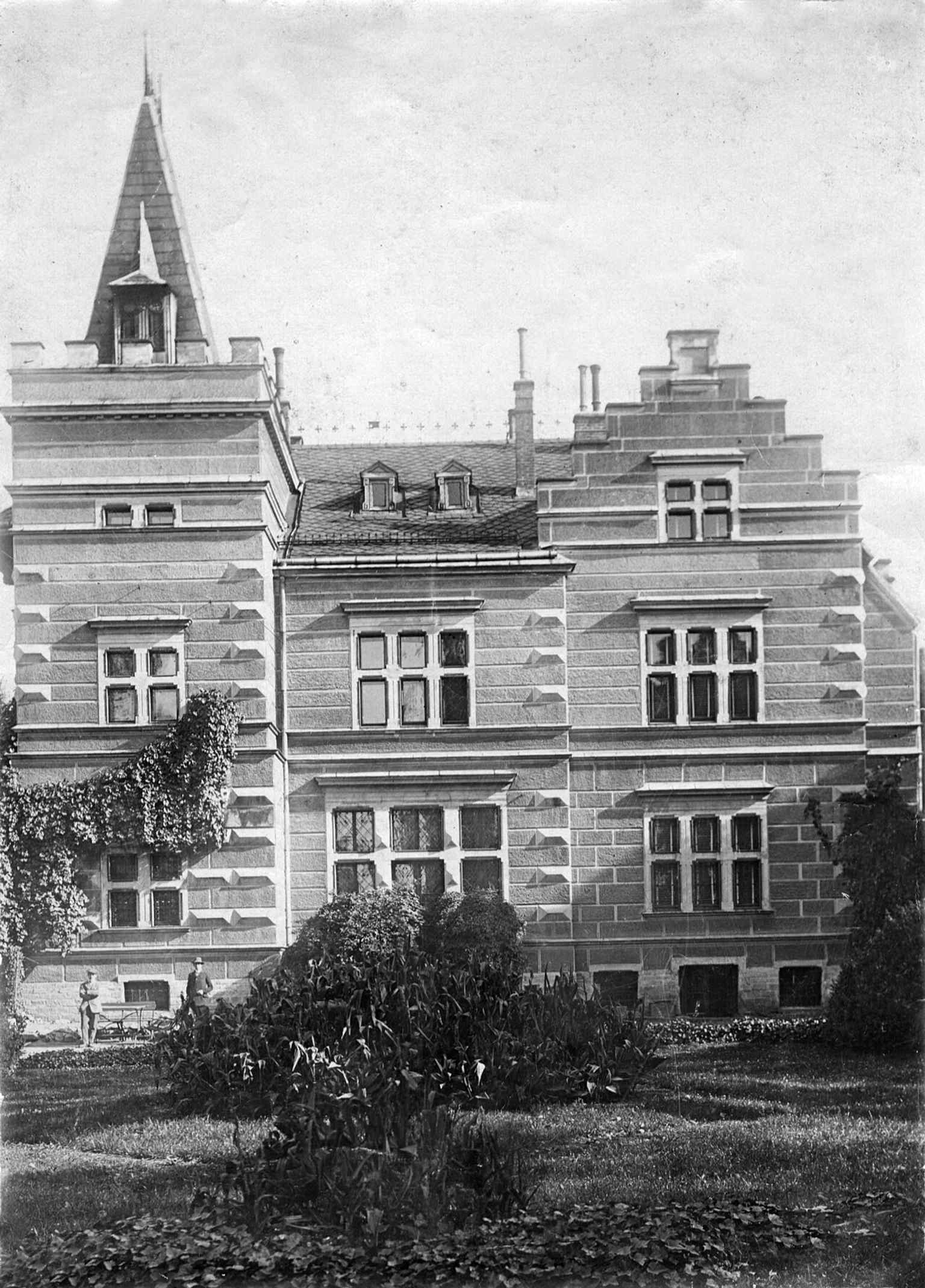
Look for the grand pale yellow masonry building defined by its irregular shape, featuring a sharp pyramidal roof tower on the left and a distinctive stepped gable on the right. Right now you are looking at a house built by a guy who really knew how to turn sweetness into absolute power.
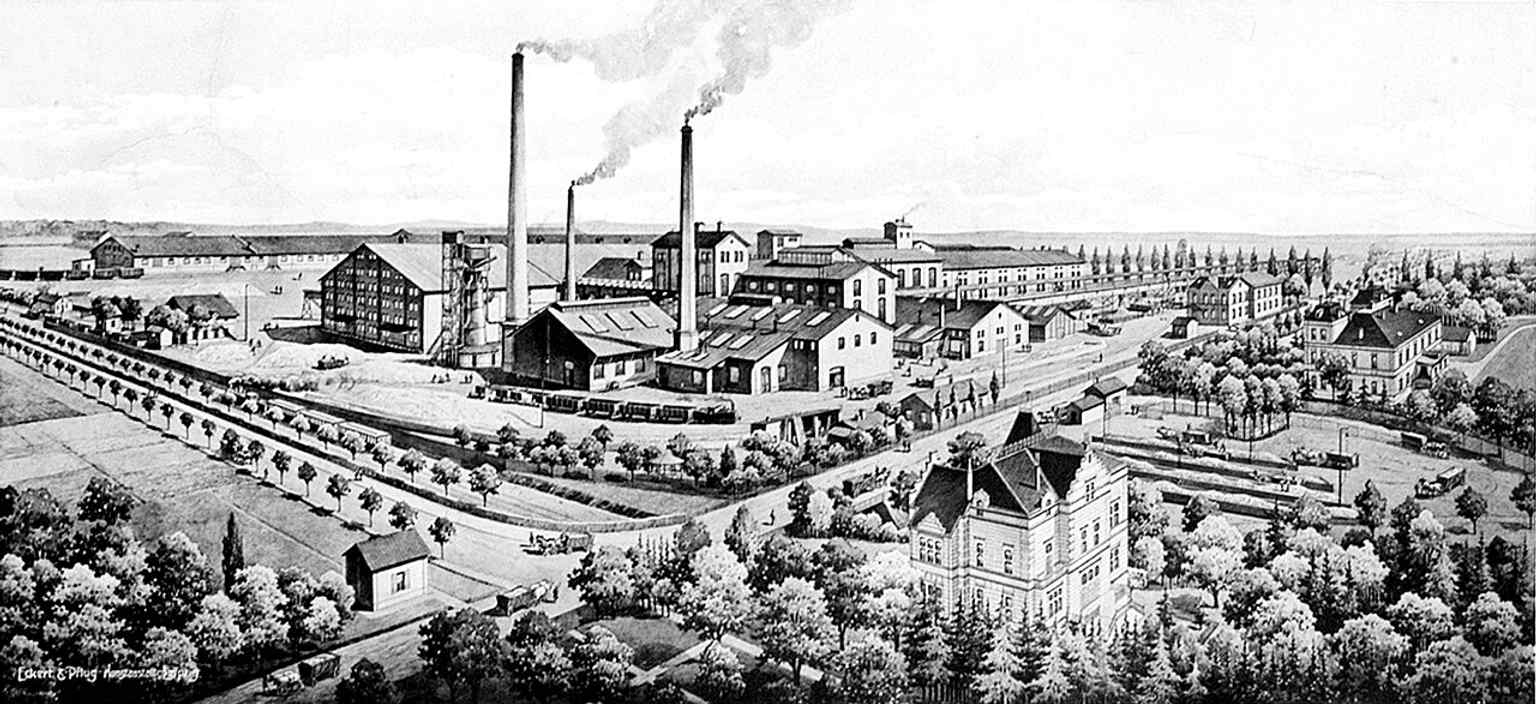
This is the Redlich Villa, designed in 1884 for a Jewish businessman named Hermann Redlich. Hermann scooped up a bankrupt local sugar factory and turned it into the fourth largest in the whole region of Moravia. He became so influential that when the regional railway was being built, he manipulated the plans so the tracks would run right past his factory. He did this just to save himself the cost of building his own side track, totally ignoring the fact that the town wanted the railway routed completely differently. Honestly, that is a wild level of local leverage.
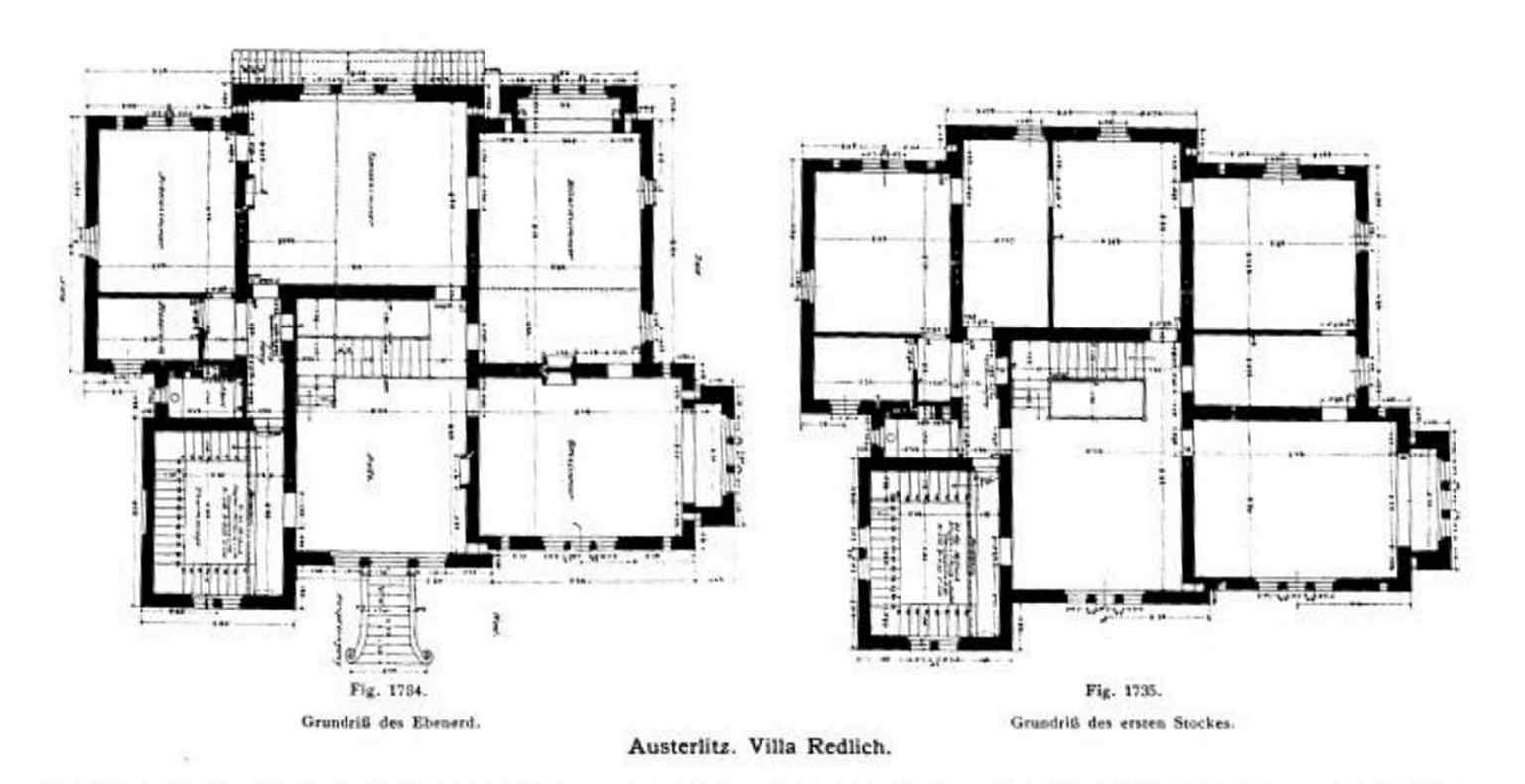
To keep an eye on his booming empire, Hermann hired a prominent architect named August Prokop to build this house. The style is a mix of Tudor Neo-Gothic and Northern Renaissance, basically a nineteenth century revival of old English and German manors. Notice how the building looks like a bunch of different sized blocks shoved together? That is a design choice called additive massing, an architectural trick of building outward chunk by chunk to create a dramatic, uneven look. Take a glance at your screen to see the original floor plans from 1904, which really show off this unusual puzzle-like layout.
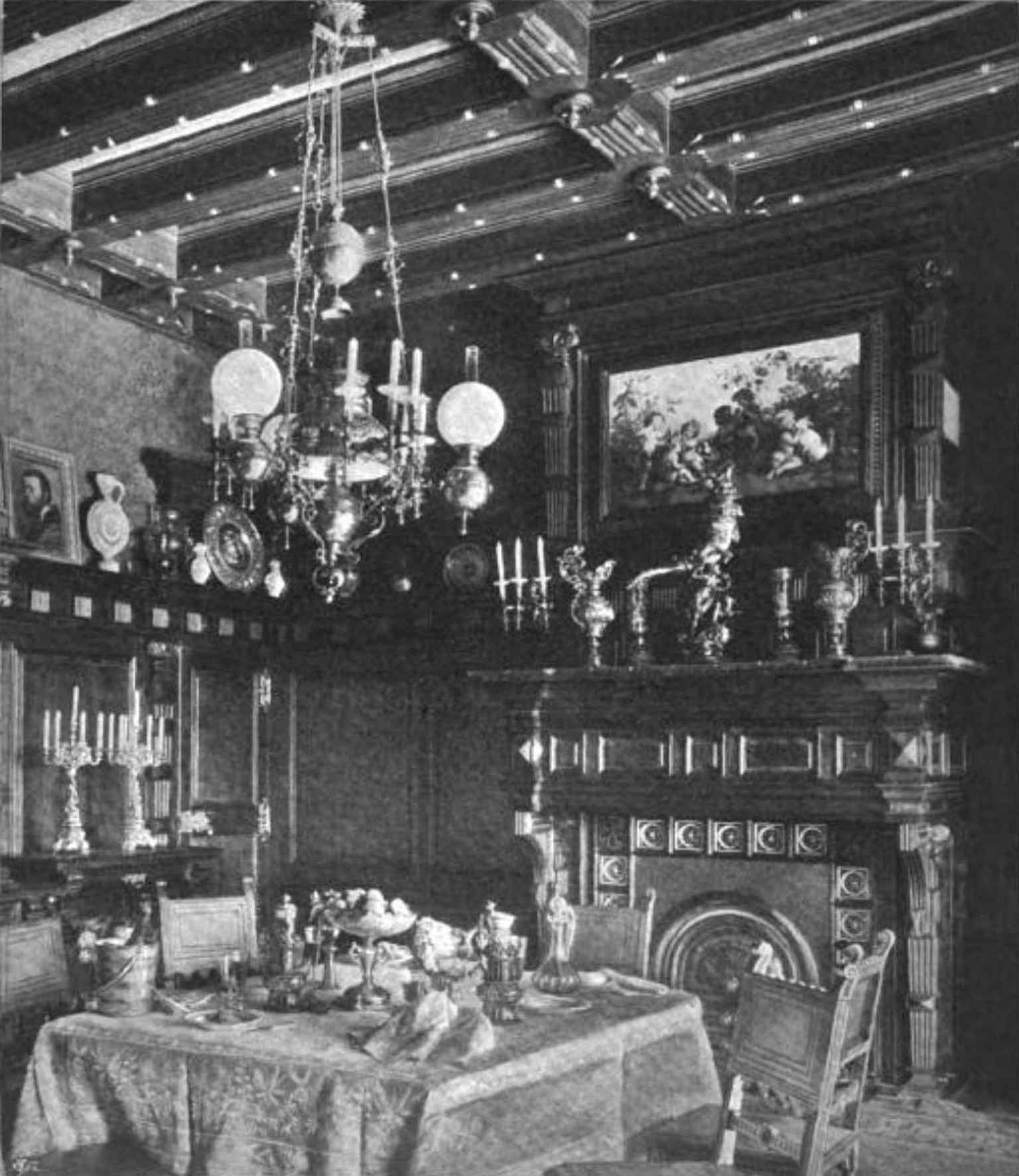
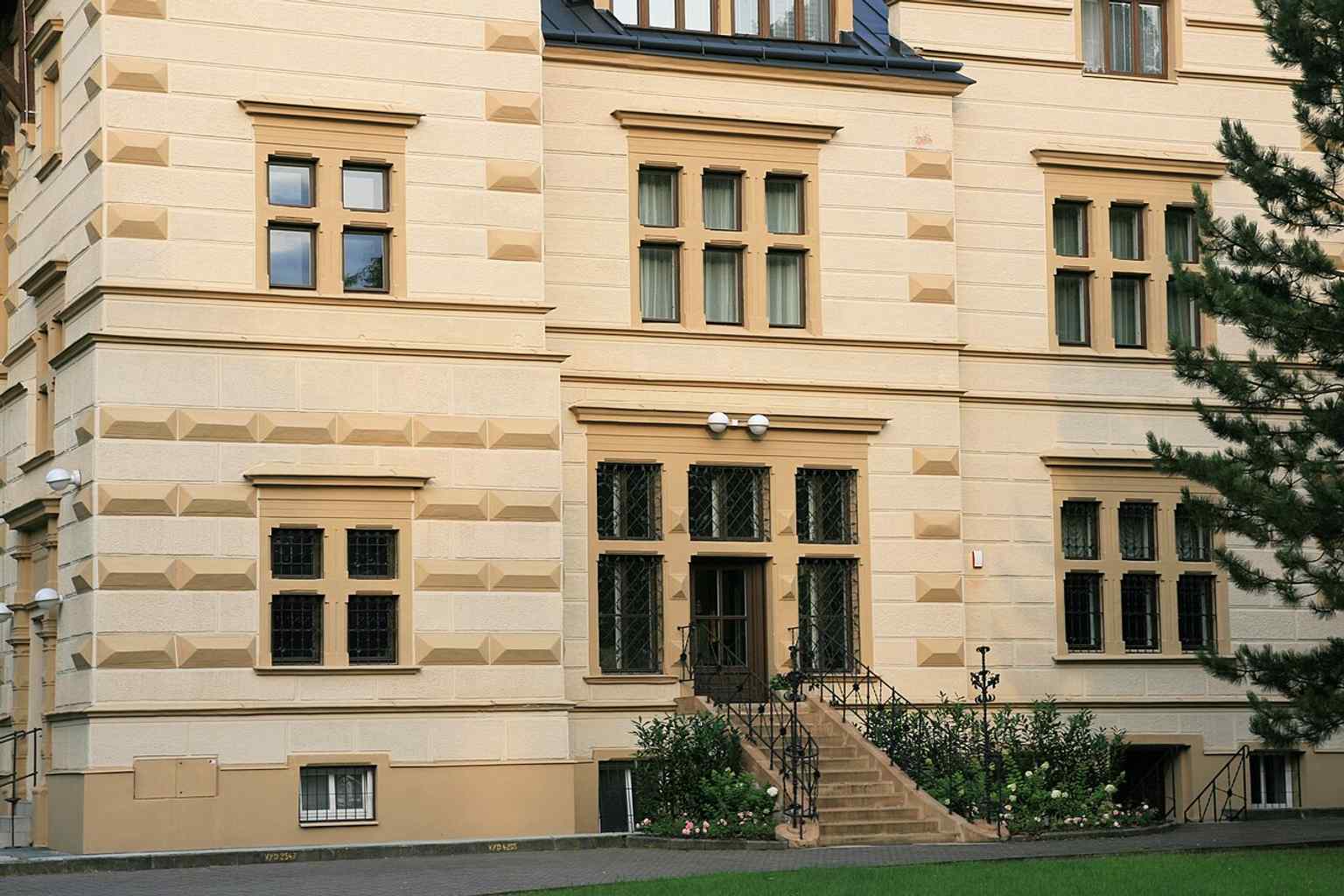
You can also see horizontal grooves running across the exterior walls. That is called rustication, a masonry technique used to make the stone look heavier and more fortified. Inside, the layout was just as deliberate. The main level was the piano nobile, an Italian architectural term for the noble floor, which was the grandest level used entirely for entertaining high society guests. Check your app for a historical photo of the original dining room, an interior so lavish that the architect proudly featured it in his own art history book.
The Redlich family ruled the local sugar trade for decades, even building a second white villa nearby for the younger generation. But the twentieth century brought heavy turbulence. A worker strike in 1905 ended in bloodshed, and eventually, the impending Nazi occupation forced the family to abandon their empire and flee across the ocean to Canada. After the war, the factory was nationalized and slowly faded, producing its last batch of sugar in 1989. Today, this grand house has found a second life as a luxury hotel, keeping the Redlich legacy anchored right here on the corner.
The building really is a survivor. Take a moment to soak this in. When you are ready, we can head to the next stop.






.jpg)
.jpg)

