
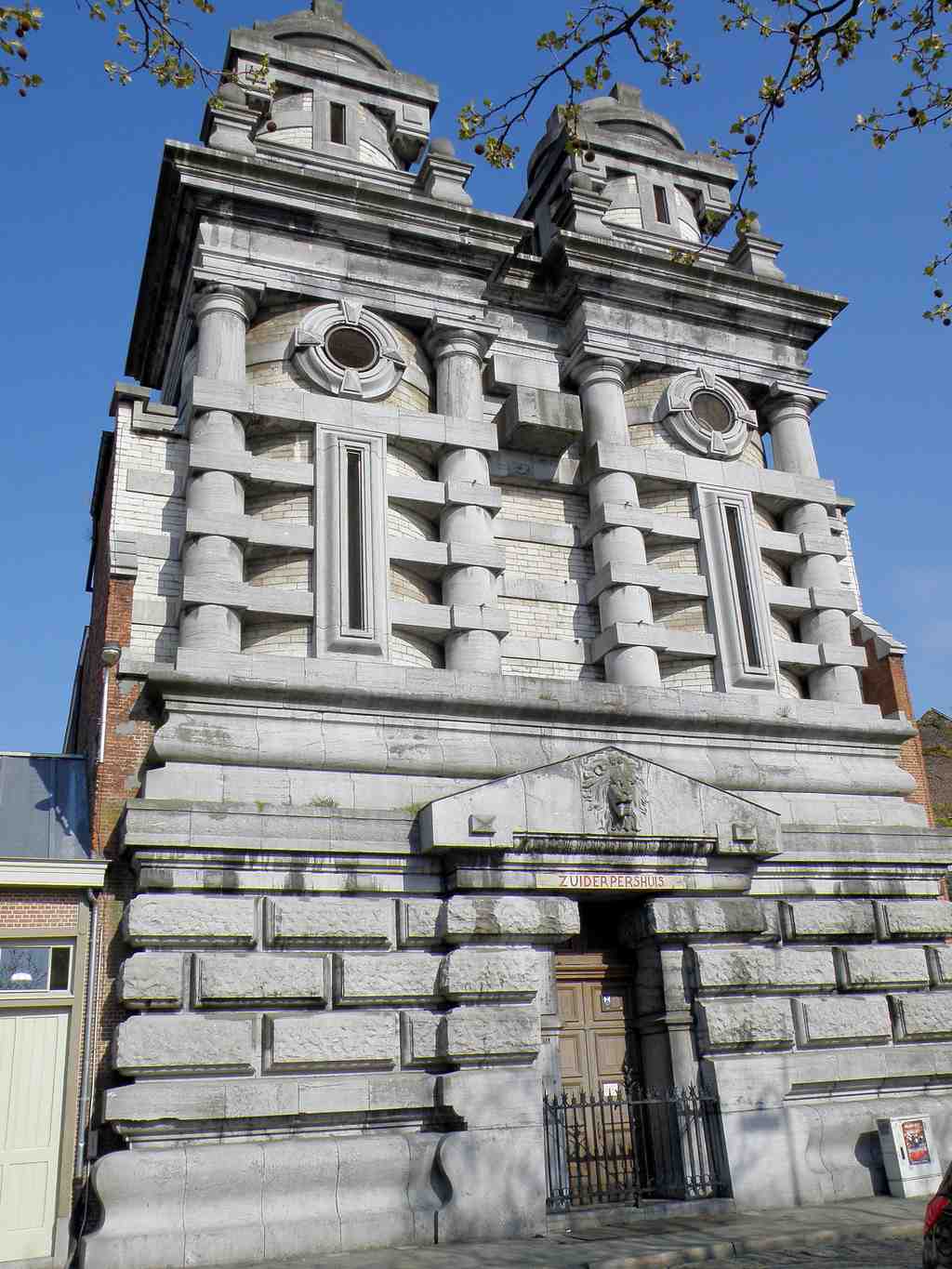
Keep an eye out for a grand stone building with two chunky towers, decorated with chunky blocks and round windows peering down over the door - that’s Zuiderpershuis right in front of you!
Now, take a deep breath and try to imagine Antwerp’s Waalse Kaai over a hundred years ago: there’s the chatter of dockworkers, the clang of metal, and in the midst of it all stands this powerful monument. The Zuiderpershuis might look like a fortress, but its true strength lay not in its walls, but in the heart-thumping force of steam! Built in 1878, and designed by the optimistic architect Ernest Dieltiens, the building is like a proud, stone-clad statement that hard work and beauty should always go hand-in-hand. Plus, let’s be honest, if fortresses ever went on Tinder, this one would clean up with those fancy Renaissance curves.
Back then, the whole Antwerp harbor buzzed with cranes, bridges, and sluices, but who gave them their muscle? That’s right: inside, Zuiderpershuis was crammed with pistons, engines, and two massive towers containing powerful hydraulic accumulators. The air inside would have been thick with steam, the smell of oil and coal, and the rumble of heavy machinery. At its prime, this place powered 164 cranes, six immense locks, eight bridges, and more gadgets than a steampunk convention. The building was basically a steam superhero, swooping in to save workers from muscle strain by providing them with mechanical brawn.
But, like all good superheroes, times changed. It took until 1958 for steam to fully bow out, gently handing power to electricity. From then until 1977, the old engines stubbornly worked on, still operating the Nassaubrug. Afterwards, the Zuiderpershuis finally fell silent, becoming a lonely warehouse that looked a bit like an overqualified bouncer at a library.
Fast forward to the 1980s, and the story takes a twist. The Internationale Nieuwe Scène swept in, filling the old halls with the chorus of actors rehearsing and dreaming up new stories. The building began to transform, restored bit by bit, and soon, it wasn’t just a relic but a buzzing cultural center. And not just any: from 1993 to 2012, it became the epicenter for world culture in Antwerp - a place where artists, musicians, and dancers from every corner of the globe swapped songs, stories, and a few recipes in the foyer designed by Bob Van Reeth.
This cultural powerhouse pumped out not just music, theater, and dance, but also ideas, crossing borders and bringing new voices onto the stage. People came here to debate, laugh, and maybe have a coffee where talk shows like Café Corsari set up shop - who says culture can’t have a little caffeine?
Even after its official funding was cut, the building kept on beating, a safe haven for startups, artists, and dreamers of every stripe. It’s still a place where you might stumble across a wild new play, a brainstorming entrepreneur, or even a ghostly echo of a steamy past. So as you stand here, give a nod to the mighty Zuiderpershuis, where steam powered the port, and creativity now powers the city. The real energy? Maybe it’s buzzing right beside you.


