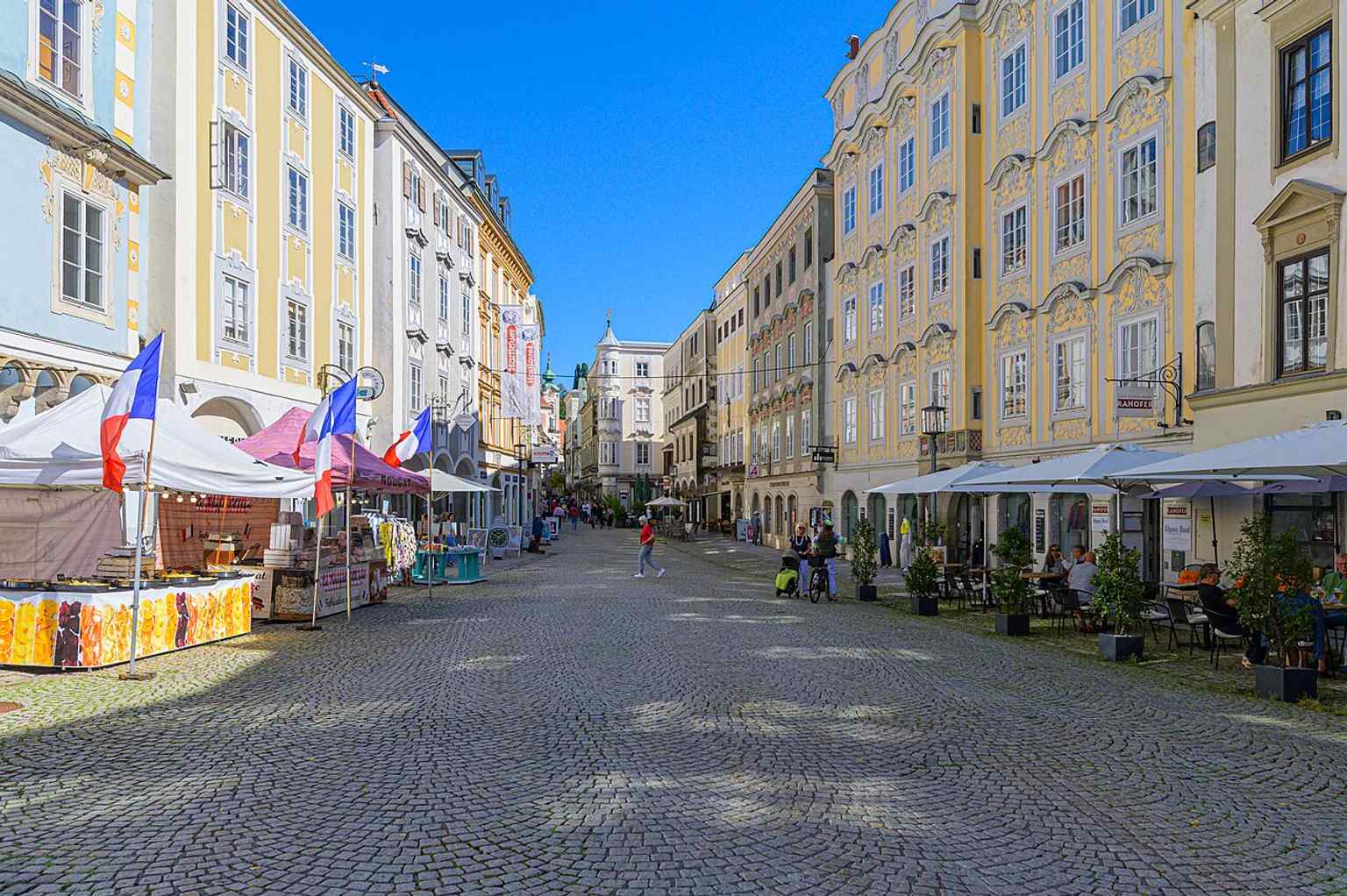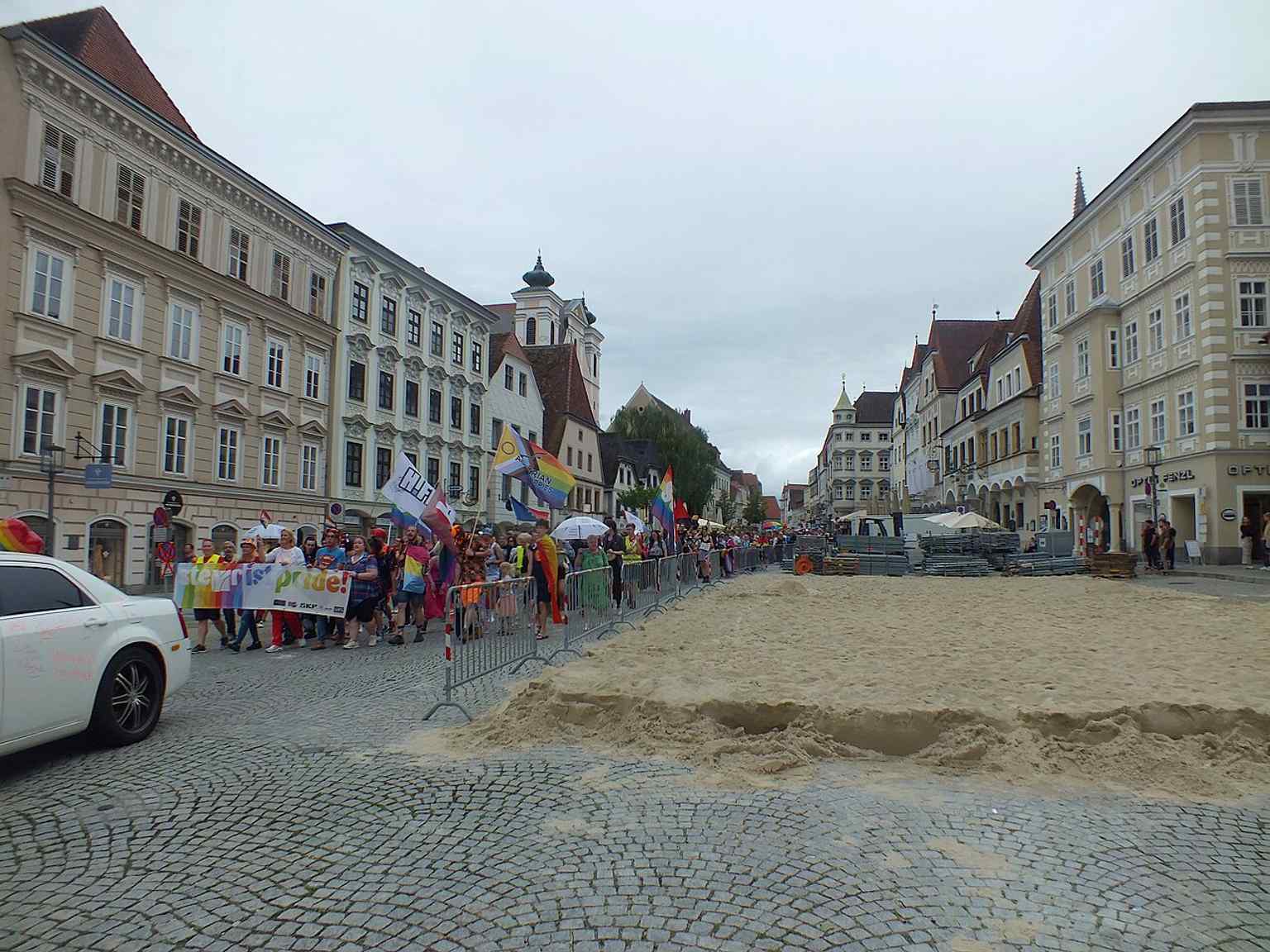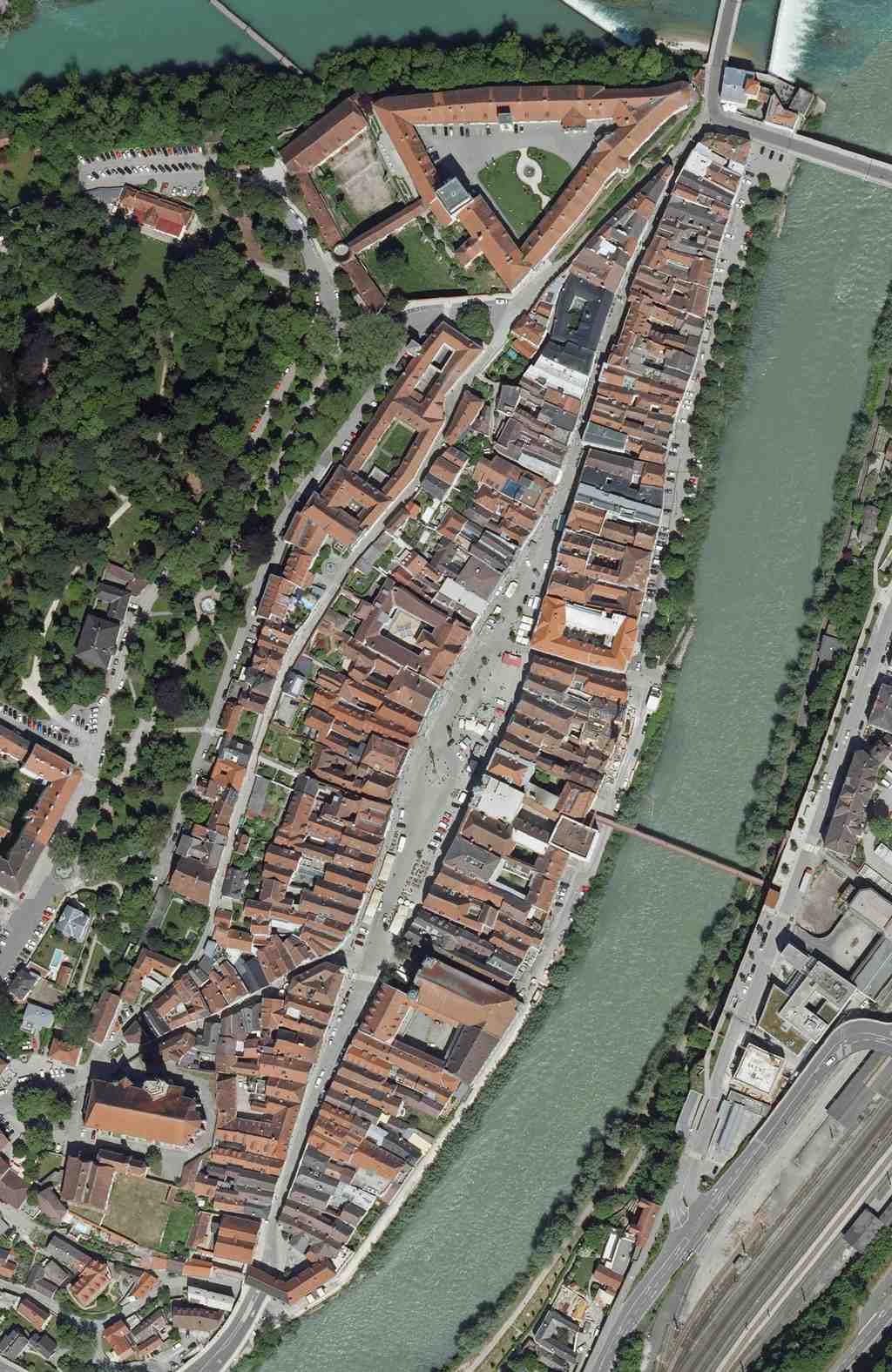
On your left, the Town Square opens as a broad lens-shaped stone space, ringed with plaster-fronted houses and marked by the Saint Leopold fountain rising from granite.
This is the heart of Steyr, and not in some polite brochure sense... I mean the real heart, the place where the city’s old arteries still meet. The square took shape in the mid-thirteenth century, when two older settlements finally grew together: one around the Stirapurc stronghold, the other around the parish church. Its unusual almond-like form came from an earlier road line and the lay of the ground, so even the shape of the place feels like history refusing to straighten itself out.
What I love here is the trick the square plays on your eyes. A lot of these facades look Baroque or Rococo, all dressed up and sociable, but behind them many house cores are much older, still Gothic at heart. The whole place remains divided in medieval parcels, so the rhythm of the buildings still follows a plan set down centuries ago. If you check the view on your screen, you can really see that long, unbroken sweep of historic fronts holding the square together like one giant architectural sentence.
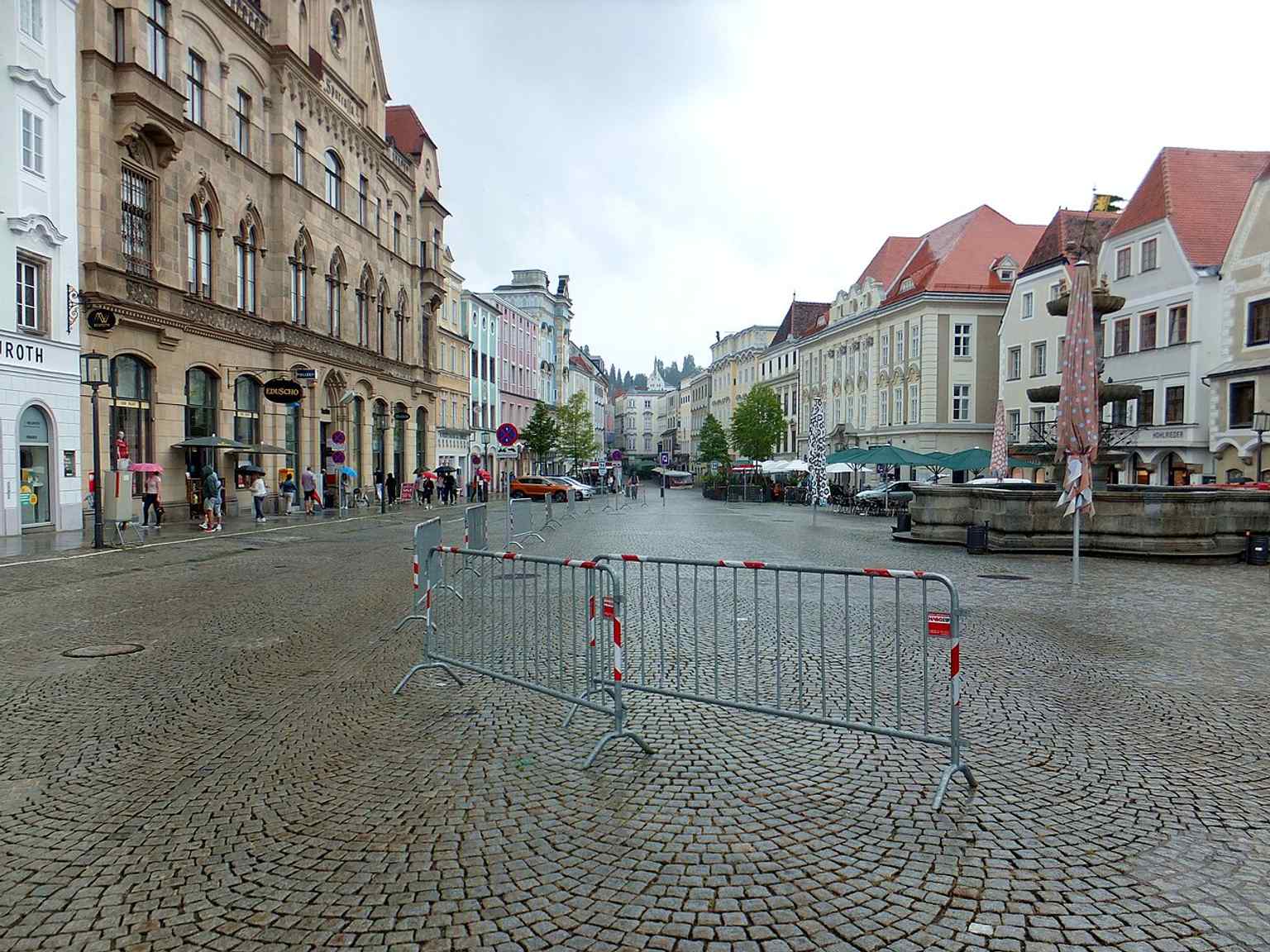
Now let your attention wander. Number thirty-two, the Bummerlhaus, is the local celebrity and the oldest house here, still showing off its late fifteenth-century Gothic face. The Rococo town hall arrived later, between seventeen sixty-five and seventeen seventy-eight, with plans by Johann Gotthard Hayberger. At number twelve, the Sternhaus flashes a Rococo facade decorated with the five senses, but its Gothic bones still peek through in the old projecting corbels and the pointed portal. War hit this square too: the left side of the Sternhaus was destroyed in World War Two and later rebuilt true to the original, while nearby house number fourteen disappeared in the bombing of the twenty-fourth of February, nineteen forty-four.
There’s music in this square too, at least in memory. Franz Schubert stayed in Steyr in eighteen nineteen, eighteen twenty-three, and eighteen twenty-five. The first two times he lodged in the Stalzerhaus, and the last time in house number sixteen, the Schuberthaus, where a plaque added in eighteen ninety still remembers him. Imagine him stepping out here, hearing carriage wheels, church bells, market voices... the same stone bowl, a different soundtrack.
At the southern end, the Marienkirche anchors the whole space; the app has a nice angle that shows how firmly it closes the square. And the fountain here, set up in sixteen eighty-three with granite pieces from the former Windhaag monastery, reminds you that even public water once arrived with a bit of ceremony.
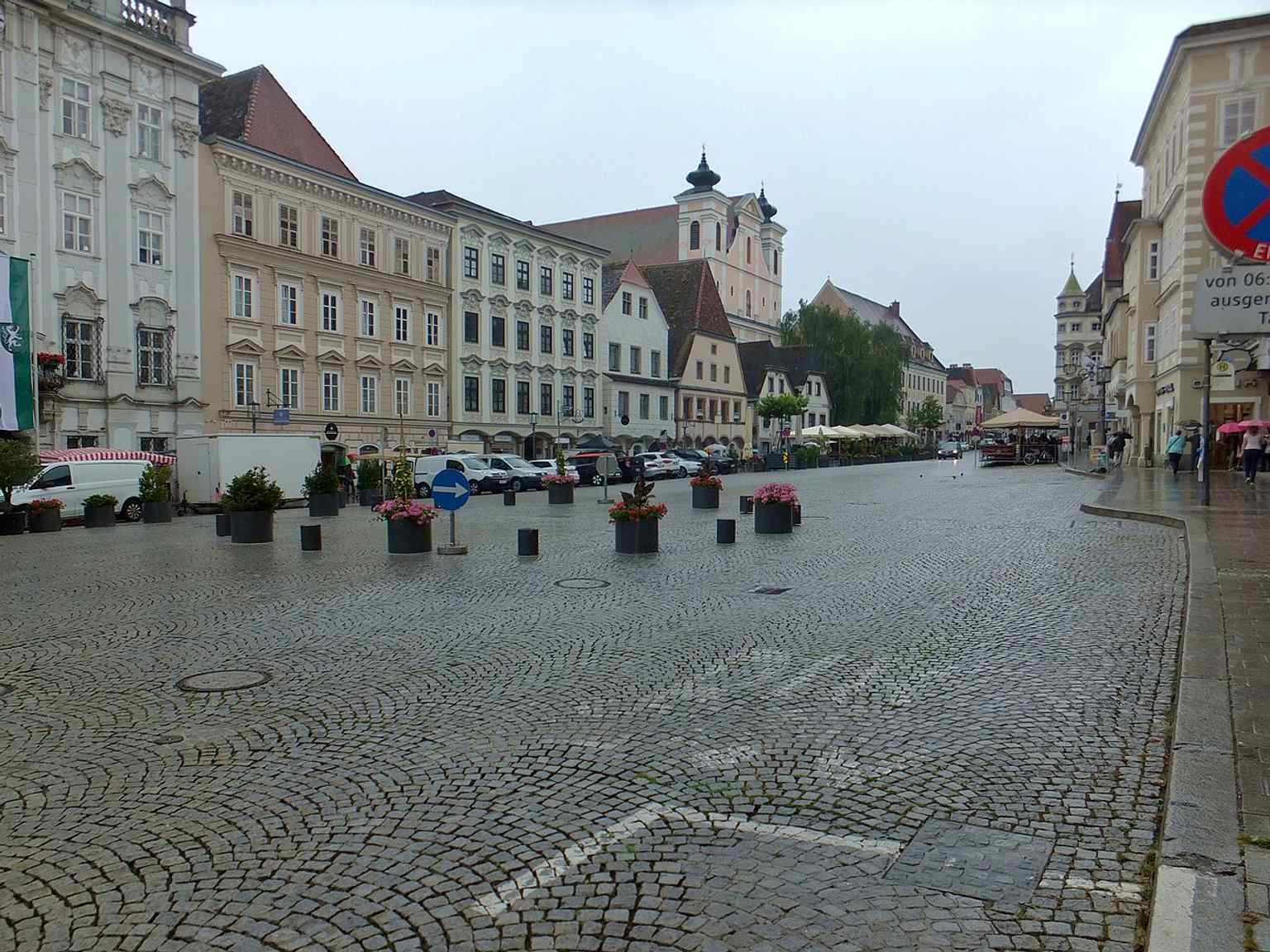
In two thousand and eighteen, the city reshaped the square again, widening the pedestrian promenade and creating more space just to linger, and yes... during that work, paving stones briefly spelled out the surname of a city official, Hingerl, before the city tore them back out.
This square feels less like a monument and more like a city still thinking out loud. It never really closes, so you can pass through at any hour. Take your time here, and when you’re ready, we can drift on to the next stop.