
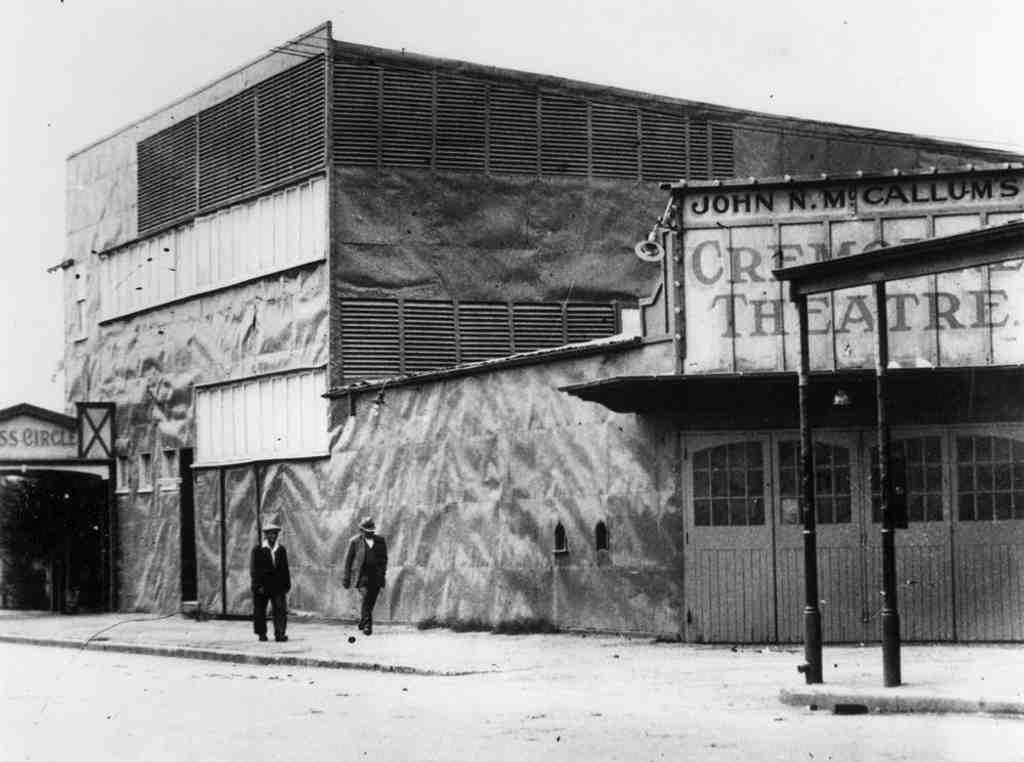
To spot the historic Cremorne Theatre, look for a large, boxy building with rough, textured exterior walls, broad windows, and bold old signage above an arched doorway-it's right in front of you, on the river side of where Stanley Street once ran.
Alright, step right up-well, actually, stand right where you are and let your imagination take center stage! You’re now standing where Brisbane’s famous Cremorne Theatre once proudly stood, though these days, not a single brick of its old self remains. But close your eyes for a moment, and picture this spot a century ago... the air buzzing with anticipation, the scent of fresh-cut grass drifting from nearby gardens, and a parade of lively characters in coats and hats bustling past the doors under flickering streetlights.
Let’s rewind to 1911. The Cremorne Theatre sprang up right here, originally an open-air amphitheater welcoming Brisbane’s crowd with laughter, songs, and vaudeville acts. Its roots are even deeper-before the theatre itself, there were the Cremorne Gardens, a nod to the old pleasure gardens of London and cities across Australia. Back then, people flocked here for concerts, pantomimes, and even violin recitals among tropical foliage and glowing gaslights. To locals, the gardens and their modest stage were almost as popular as a chilled lemonade on a hot Queensland afternoon.
The transformation from leafy garden to bustling theatre began when entrepreneur Edward Branscombe set his sights on bringing smiles to Brisbane. He opened the gates to the Cremorne on a lively August evening-guests delighted in “The Dandies,” a raucous variety show with music and sketches, and newspapers declared the atmosphere cheerful and inviting. But there was one problem the audience didn’t clap for: spitting rain from Brisbane’s subtropical skies! It turned out the only thing less waterproof than the theatre was a paper ticket, so not long after, they put up awnings to keep the downpours at bay.
Soon, the theatre passed into the hands of showman John Neil McCallum, who had a real flair for the dramatic. His troupe expanded the space to fit 3,000 seats-imagine all those eager faces, the orchestra warming up, jokes bouncing between columns, and the booming applause rocking the wooden rafters! The Cremorne became the home of wild vaudeville shows, dance acts, and the occasional drama (with much more success when comedy was involved). Ever the showman, McCallum even named his own house “Cremorne,” a tradition that stuck around in the area.
The theatre’s life, like any good stage play, had a few plot twists. In the late 1920s, the shine faded, and the building sat quietly except for the odd club meeting. Then came the cinema revolution-suddenly, the Cremorne flickered with the glow of films from Metro-Goldwyn-Mayer, though it lost much of its cavernous interior to the magic of the movies.
But when World War II swept the world, the Cremorne Theatre roared back to life. It became the go-to venue for soldiers-Aussies and Americans alike-hungry for laughter and bright lights in dark times. Vaudeville reigned again, with everyone from comedians to dancers and even a slightly naughty ballet troupe giving their all to keep spirits high. If you listen closely, you might still hear a ghostly cheer from an audience of troops on shore leave.
After peace returned, though, the curtain slowly fell. Opera companies and theatre guilds brought their productions here, including the first Australian operas by the legendary tenor Donald Smith, but by the early 1950s, the building faded into the background-more office than entertainment.
The last act for the original Cremorne came in a dramatic blaze; in 1954, fire destroyed this iconic venue, and it was never rebuilt. Yet, as any good story demands, the Cremorne’s spirit lives on. Just around the corner, the Queensland Performing Arts Centre (QPAC) rose up in the mid-1980s, with a shiny new Cremorne Theatre hiding within-smaller, cozier, but always ready to host a new generation of storytellers and dreamers.
So, as you stand by this site, surrounded by the modern pulse of Brisbane, you’re sharing the same ground where laughter, romance, song, and wild applause once echoed into the night. And if you walk by QPAC, give a wink to its smallest theatre-the new Cremorne-because every time another curtain rises, the old Cremorne takes a bow once more.




