
Audioprzewodnik po Knaresborough: Legendy, podania i odkryte zabytki
Knaresborough może wyglądać uroczo, ale cienie nad rzeką skrywają eksplozje, przepowiednie i sekrety wielkości lwa, czekające na odkrycie. Spaceruj we własnym tempie z tym audioprzewodnikiem i odkryj porywające prawdziwe historie oraz nieoczekiwane legendy, które kryją się pod idealną powierzchnią miasta – odsłaniając oblicza Knaresborough, których większość nigdy nie widzi. Kto patrzył, jak potężny wiadukt runął z hukiem do rzeki Nidd w katastrofie, która wstrząsnęła duszą Yorkshire? Jakie dziwne moce rzekomo zamieniały codzienne przedmioty – i nieostrożnych gości – w kamień w tajemniczej jaskini Matki Shipton? I czy hollywoodzki lew naprawdę mógł grasować po tych cichych wzgórzach, pozostawiając po sobie sławę i upiorne echa? Wędruj od strzelistych mostów do nawiedzonych jaskiń i zapomnianego zoo, gdzie niegdyś tańczyły słonie, a tygrysy bengalskie wywoływały panikę. Na koniec spojrzysz na Knaresborough nowymi oczami – tętniące dramatem, dziwnością, śmiechem i ukrytymi cudami. Gotowy, by wyjść poza widokówki? Pozwól, by sekrety Knaresborough Cię wciągnęły.
Podgląd trasy
O tej trasie
- scheduleCzas trwania 30–50 minsIdź we własnym tempie
- straighten2.4 km trasy pieszejPodążaj wyznaczoną trasą
- location_onLokalizacjaHarrogate, Wielka Brytania
- wifi_offDziała offlinePobierz raz, korzystaj gdziekolwiek
- all_inclusiveDożywotni dostępOdtwarzaj ponownie w dowolnym momencie
- location_onStart przy Wiadukt w Knaresborough
Przystanki na tej trasie
To spot the Knaresborough Viaduct, simply look towards the River Nidd for a grand stone bridge with four huge arches rising high above the water, connecting the two sides of the…Czytaj więcejPokaż mniej
To spot the Knaresborough Viaduct, simply look towards the River Nidd for a grand stone bridge with four huge arches rising high above the water, connecting the two sides of the gorge - you can’t miss it! Now, cast your eyes up at that mighty stone viaduct towering over the river. Imagine the year is 1848: there’s a buzz of excitement in the air, as iron and stone were set to change life in Knaresborough forever. Builders rushed to complete this grand bridge to carry the brand new Harrogate railway - but fate had more dramatic plans. Picture workers perched high above the swirling, rain-swollen river. As they laid the last stones, something went terribly wrong. Suddenly, the structure gave way with a thunderous roar. Stone blocks tumbled into the river below for five whole minutes. The noise echoed across the valley - and if you’d been here, you’d have felt it resonating through your chest! The local people watched in shock as tons of masonry crashed down, while clouds of lime mortar turned the clear river white. It’s said even the poor fish in the Nidd weren’t spared - thousands were lost in the aftermath. Now, you might think this was the end, but Knaresborough folk are made of tougher stuff! Clearing up the wreckage, engineers built a temporary railway station to keep things moving and even faced off in court over who’d pay for the disaster. I’d say, if ever there was an awkward family dinner with railway companies and contractors, this would have been it! Decisions bounced back and forth, with everyone arguing about money: who owed what, who was to blame, and whether the engineer Grainger could ever give a fair ruling, seeing as he’d worked for both railway companies. I suppose even then, engineers just couldn’t keep out of the drama. But, as the dust settled, the solution was to start again, quarrying sturdy new stone from Abbey Crags, just over a mile away - and what you see today is the result. The replacement viaduct was finished in 1851, stretching nearly a hundred metres across the gorge, with four proud arches and castle-like walls to match the town’s own medieval ruins. It’s not just a bridge - it’s a piece of living history, echoing with the sounds of steam engines, rushing water, and builders’ shouts from over 150 years ago. But not everyone agreed about its looks! The famous architecture critic Nikolaus Pevsner once called it “one of the most notable railway crimes in England,” grumbling that those castle battlements couldn’t hide the structure’s boldness. On the other hand, Yorkshire-born writer J. B. Priestley stood here where you’re standing now and saw something magical. He admired how the arches reflected in the calm river, turning the bridge into a “double beauty,” as if the gorge itself was raising a glass in toast to Knaresborough’s perseverance. These days, the railway still rolls across those arches, carrying travelers on the Harrogate line, with maintenance crews sometimes adding fences to keep themselves safe. Pause for a moment now. Can you hear the splash and chatter of rowboats below? Hundreds pass underneath each year, gazing up in awe at this handsome, stubborn bridge. And if you think this story ends here, think again - the River Nidd still whispers tales of collapse and triumph, while the viaduct quietly holds the town’s secrets in its shadows. Welcome to Knaresborough, where every stone tells a story!
Otwórz dedykowaną stronę →Look ahead for a rough, rocky cave entrance with twisted stone shapes and a shadowy figure carved from stone, just by the riverside. Welcome to Mother Shipton’s Cave, a spot…Czytaj więcejPokaż mniej
Look ahead for a rough, rocky cave entrance with twisted stone shapes and a shadowy figure carved from stone, just by the riverside. Welcome to Mother Shipton’s Cave, a spot where mystery drips from the walls-quite literally! Legend says that, over 500 years ago, deep in this dark, echoing cave, a baby was born to a frightened young woman during a thunderstorm. That baby-Ursula Southeil-grew up to be known as Mother Shipton, the famous soothsayer whose spooky prophecies sent shivers through England. Locals whispered that she had magical powers and could see the future… Imagine standing here, the air cool and damp, and hearing the slow drip, drip, drip of the petrifying well right beside you. This isn’t just any old well-the water is so full of minerals that anything left there turns to stone! Folks have been coming since 1630, leaving teddy bears, hats, and even shoes to be transformed by this magical water. But don’t worry-just touching the cave won’t turn you to stone. Or… will it? Ha! So, take a deep breath, watch your step, and let your imagination run wild where England’s most mysterious woman was once just a newborn in a cave!
Otwórz dedykowaną stronę →
Pokaż jeszcze 6 przystankówPokaż mniej przystankówexpand_moreexpand_less
To spot the Old Town Hall, look for the grand, pale stone building right in front of you on the corner, with five tall windows on the upper floor, a black wrought-iron balcony,…Czytaj więcejPokaż mniej
To spot the Old Town Hall, look for the grand, pale stone building right in front of you on the corner, with five tall windows on the upper floor, a black wrought-iron balcony, and a big clock perched at the top-if you see a Subway sandwich shop below, you’re in the right place! Alright, time to step into the busy heart of Knaresborough’s history! Imagine standing here centuries ago, with the Market Place alive with horses clip-clopping, traders shouting out their wares, and townsfolk dodging the puddles left behind by the rain. This spot was once home to a simple toll booth, guarding the gateway to town business back in the early 1600s. By 1768, it grew into a sessions house, complete with gloomy prison cells in the basement-let’s hope they had better room service than modern hotels! Townsfolk would gather here every other week to watch debtors’ hearings, and once a year, you could find the all-important county court in session. Can you imagine the tension in the air as people waited their fate while the judge peered down from above? Fast forward to the mid-1800s, and the old building was out of fashion-a bit like wearing woolly socks to a summer garden party. Sir Charles Slingsby, whose name sounds rather splendid, laid the first stone for the new Town Hall. Built in neoclassical style, it was a prize of ashlar stone and fancy design by John Child, with five grand bays and dramatic pillars. On market days, the ground floor was open, a kind of weatherproof market where you could haggle and gossip under cover. The upper floor became the prime assembly room-ideal for grand meetings, local drama, and, if you listen closely, you might almost hear politicians practicing their speeches on that iron balcony out front. Up above, the striking clock was made by J. Bailey and Co. of Manchester. Candidates for Parliament would rally the crowds from the balcony, their voices ringing out above the Market Place-if someone got egged, well, that’s politics for you! As the town grew, the Old Town Hall saw dances and celebrations, but also responded to serious business. During the Second World War, soldiers from the 41st Royal Tank Regiment attended concerts here before heading off to North Africa, carrying memories and melodies with them. Come the 20th century, the town hall decided to try on a new hat-first a mall called Castle Courtyard, then a nightclub, and even a tourist office. Who says a historic building can’t reinvent itself? So as you stand here, picture all the laughter, worry, and change that these stone walls have witnessed over centuries. And if you feel a sudden urge to give an election speech from the balcony, just remember: it’s not allowed anymore, but you’ll certainly have my vote for enthusiasm!
Otwórz dedykowaną stronę →Directly in front of you, you'll spot a small weathered wooden door set right into the golden sandstone rock, next to a carved medieval knight who stands guard over a leaded glass…Czytaj więcejPokaż mniej
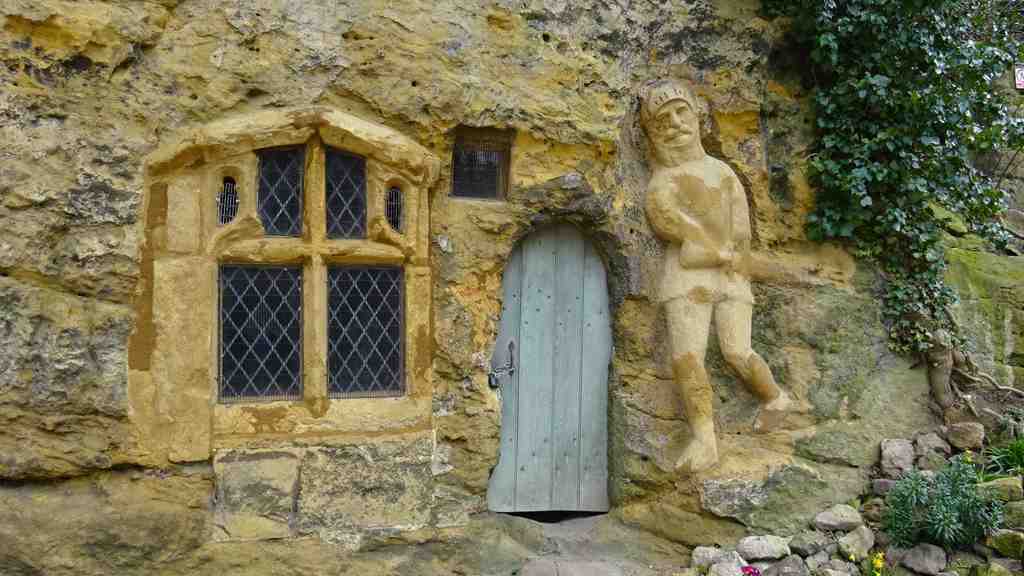
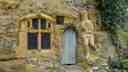
Directly in front of you, you'll spot a small weathered wooden door set right into the golden sandstone rock, next to a carved medieval knight who stands guard over a leaded glass window-just glance to the cliff face at the side of the path. Now, take a moment and breathe in the cool, damp air that seeps from this cliffside-welcome to the magical Chapel of Our Lady of the Crag, where the stone itself seems to whisper old secrets. Imagine kneeling here over 600 years ago, the clink of tools echoing in the quarry, the rush of the River Nidd below, and the weight of ancient prayer heavy in the mist. This isn’t just any old chapel-it’s literally carved out of solid rock in the early 1400s, smack-dab in the heart of a working sandstone quarry. The story goes that John the Mason- fittingly named-may have been chipping away at the stone one day when disaster struck. His son, perhaps fetching him a sandwich (or maybe just up to a bit of mischief, as sons do), stood right in the path of a tumbling rockfall. In a moment of panic, John called upon the Virgin Mary. Miraculously, as legends love to tell, the stones changed direction and missed his boy entirely! Talk about a divine intervention. Out of gratitude or perhaps awe, John vowed to carve a chapel right into the rock, devoting it to Mary as a thank-you for his son’s narrow escape. Take a close look-the craftsmanship is something to marvel at. The small arched door and the half-hidden windows look as if they’ve grown straight from the stone, weathered by centuries of wind and prayer. There’s even a mighty knight chiseled right into the cliff face, almost like he’s been standing on guard since medieval times. Historians wrangle about his age, but he was definitely striking a pose by the early 1800s when none other than William Wordsworth paid a visit. And wouldn’t you know it, the knight’s head might have been recarved in Victorian times-who hasn’t needed a bit of a touch-up over the centuries? Inside the chapel, you’d find a carved altar, stone pillars topped with leafy capitals, and even a little piscina-where the priest would have washed the sacred vessels. Overhead, the ceiling curves in a fine vaulted arch, echoing designs you might spot in remote Scottish caves. Sunlight filtering through the stained glass windows must have made even the dust motes look holy. But this place has not always been peace and prayers. Over time, the quarry fell silent, the chapel ceased its services after Henry VIII’s Reformation, and the little cave was lost to history, mistaken on old maps for another chapel entirely. The cliff face became home to shanties-a jumble of post holes in the stone hint at where rough shelters once leaned against the rock. The echoes of busy families, prayers, and simple struggles all mix together here. By the early 20th century, the chapel was rediscovered and found itself in caring hands once more. In 1916, it was reconsecrated as a Catholic place of worship, and decades later, a new Madonna and Child sculpture was added, bringing a touch of modern devotion to this ancient shrine. Of course, time isn’t always kind-vandals smashed the glass in recent years, but the community rallied, restoring what they could and preserving the story. And today, the Chapel of Our Lady of the Crag Trust watches over it, keeping the legend alive for every curious visitor. So, standing here, you feel the spirit of John and his miraculous rescue, the hush of pilgrims, and maybe the cautious eye of a stone knight who never quite lets his guard down. Knaresborough saves its most mysterious blessings right here in the rock-so be sure to thank the Virgin for safe travels, just in case any stones think about rolling your way!
Otwórz dedykowaną stronę →
Najczęściej zadawane pytania
Jak rozpocząć trasę?
Po zakupie pobierz aplikację AudaTours i wpisz kod realizacji. Trasa będzie gotowa do natychmiastowego rozpoczęcia – po prostu dotknij \"Play\" i podążaj trasą z nawigacją GPS.
Czy potrzebuję internetu podczas trasy?
Nie! Pobierz trasę przed rozpoczęciem i korzystaj z niej w pełni offline. Jedynie funkcja czatu wymaga internetu. Zalecamy pobieranie przez WiFi, aby oszczędzać dane mobilne.
Czy to wycieczka grupowa z przewodnikiem?
Nie – to samodzielny audioprzewodnik. Zwiedzasz niezależnie, we własnym tempie, z narracją audio odtwarzaną przez telefon. Bez przewodnika, bez grupy, bez harmonogramu.
Ile trwa trasa?
Większość tras zajmuje 60–90 minut, ale to Ty kontrolujesz tempo. Wstrzymuj, pomijaj przystanki lub rób przerwy, kiedy chcesz.
Co jeśli nie zdążę ukończyć trasy dzisiaj?
Żaden problem! Trasy mają dożywotni dostęp. Wstrzymaj i wznów, kiedy chcesz – jutro, za tydzień lub za rok. Twój postęp jest zapisywany.
W jakich językach są dostępne trasy?
Wszystkie trasy są dostępne w ponad 50 językach. Wybierz preferowany język podczas realizacji kodu. Uwaga: języka nie można zmienić po wygenerowaniu trasy.
Gdzie znajdę trasę po zakupie?
Pobierz darmową aplikację AudaTours z App Store lub Google Play. Wpisz kod realizacji (wysłany e-mailem), a trasa pojawi się w Twojej bibliotece, gotowa do pobrania i rozpoczęcia.
Jeśli trasa Ci się nie spodoba, zwrócimy Ci pieniądze. Skontaktuj się z nami pod adresem [email protected]
Bezpieczna płatność przez 


