
Wycieczka audio po Kolombo: Fascynujący spacer po Cinnamon Gardens
Pod tętniącymi życiem ulicami i neonową panoramą Kolombo, w każdym zakątku pulsują ukryte historie – tam, gdzie sale konferencyjne, boiska do krykieta i kolonialne dziedzińce szepczą sekrety triumfów i niepokojów. Ta wycieczka audio z przewodnikiem sięga głębiej niż pocztówkowe widoki, odkrywając legendy i zapomniane dramaty, które większość podróżnych mija w pośpiechu. Która rywalizacja akademicka w Narodowym Instytucie Zarządzania Biznesem omal nie przerodziła się w skandal na skalę całego miasta? Czyj tajemniczy sygnał przerwał kiedyś trzymający w napięciu mecz na boisku krykietowym Singhalese Sports Club? I dlaczego zegar na szczycie Arcade Independence Square odmawia wybicia północy w określone daty? Przejdź od centrów innowacji, przez szmaragdowe boiska, aż po cuda architektury, gdy Kolombo odsłania swojego ducha – to podróż utkana z ambicji, buntów, osobliwości i śmiechu odbijającego się echem w czasie. Przygotuj się na podważenie tego, co wydawało Ci się, że wiesz o stolicy Sri Lanki. Kolejny rozdział miasta już czeka. Rozpocznij swoją przygodę i odkryj puls bijący pod wypolerowaną powierzchnią Kolombo.
Podgląd trasy
O tej trasie
- scheduleCzas trwania 30–50 minsIdź we własnym tempie
- straighten4.2 km trasy pieszejPodążaj wyznaczoną trasą
- location_on
- wifi_offDziała offlinePobierz raz, korzystaj gdziekolwiek
- all_inclusiveDożywotni dostępOdtwarzaj ponownie w dowolnym momencie
- location_onStart przy Narodowy Instytut Zarządzania Biznesem
Przystanki na tej trasie
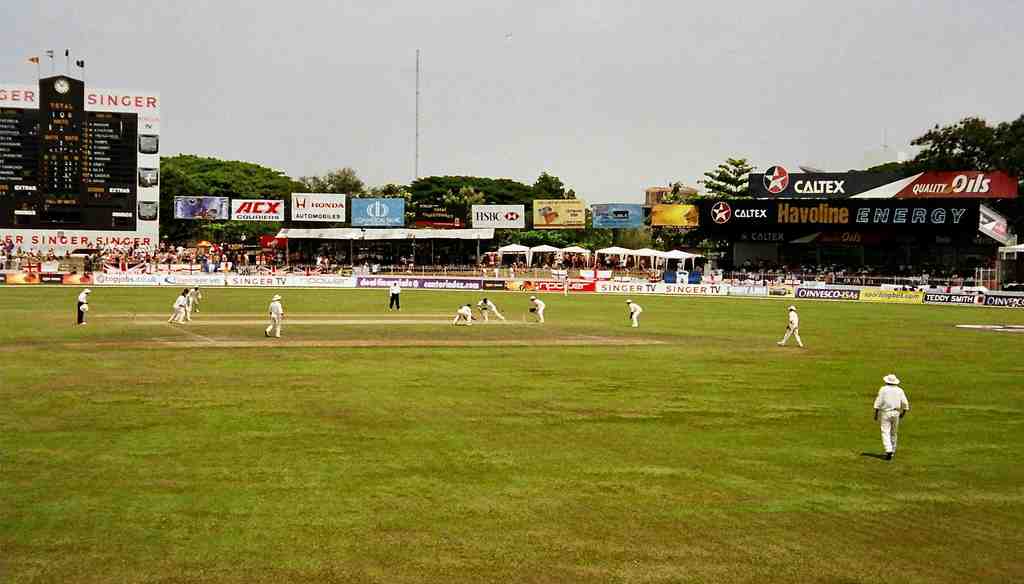
To spot the Singhalese Sports Club Cricket Ground, look straight ahead for a wide, green field ringed by grandstands, big advertisement boards, and a towering scoreboard on your…Czytaj więcejPokaż mniej
To spot the Singhalese Sports Club Cricket Ground, look straight ahead for a wide, green field ringed by grandstands, big advertisement boards, and a towering scoreboard on your left-it’s hard to miss with all the excitement! Now, as you stand here outside the legendary SSC Cricket Ground, take a deep breath and listen-the energy of heroes past and present is practically buzzing through the air. This is not just any patch of grass; this is the “Lord’s of Sri Lanka,” a sacred ground where legends swing, bowl, and sometimes dance awkwardly after a wicket. Fun fact: the Sri Lanka Cricket headquarters are right here, so you’re standing at the very nerve center of the nation’s cricketing might. The story begins back in 1899, when a band of young schoolboys-mostly from Royal College, S. Thomas’, and Wesley College-pulled off a nail-biting win by just one run. Fired up and riding high, they decided Sri Lankan cricket needed a club of its very own, and boom! The Singhalese Sports Club was born. The earliest pitch was nothing fancy-just sandy soil and cinnamon trees, which probably spiced up the odd cricket ball or two. But that wasn’t enough. By 1952, the club had its eyes on this spot-twenty glorious acres that once felt the wheels and propellers of World War II airplanes! Just imagine the roar of engines back then before it all quieted down for the crack of the bat. Fast forward to 1956 and the famous pavilion rises, thanks to a nightclub mogul named Donovan Andree-now, that's a sponsorship deal, right? In the decades that followed came the mammoth scoreboard, modern commentary boxes where broadcasters try not to lose their voices, and stands sponsored by everyone from banks to telecom giants. There’s even grassy embankments for shouting, cheering, and-yes-napping under the Colombo sun. The memories made here are jaw-dropping. In 1992, Sri Lanka faced Australia and lost by just 16 runs after needing only 181 to win-one of the narrowest defeats ever. Shane Warne, not yet the spinning superstar, stepped up and began his legendary streak by grabbing three wickets in thirteen balls. Then there’s little Mohammed Ashraful of Bangladesh, who became the youngest to score a Test century-one day shy of 17! And talk about explosive: Chaminda Vaas took 8 wickets for 19 runs here, sending Zimbabwe packing for just 38, a record low in One Day International cricket. You’re also standing on the spot of the highest partnership ever in Test history-Kumar Sangakkara and Mahela Jayawardene put on 624 runs, a number as long as a cricket season itself. The SSC is where domestic finals, World Cup clashes, and the 2002 ICC Champions Trophy unfolded, keeping the scoreboard ticking and the island’s hopes high. So look around: every blade of grass, every seat, and every echo of applause tells a piece of Sri Lanka’s cricketing soul. If you listen closely, you might just hear the next legend’s story beginning right now. Fascinated by the ground, highlights or the ground figures? Let's chat about it
Otwórz dedykowaną stronę →To spot the Arcade Independence Square, just look ahead for a grand, bright white building with a shiny silver clock tower rising from its center and elegant rows of arched…Czytaj więcejPokaż mniej
To spot the Arcade Independence Square, just look ahead for a grand, bright white building with a shiny silver clock tower rising from its center and elegant rows of arched windows-it's impossible to miss against the lush green lawn in front of you. Now, as you stand here with the Arcade Independence Square right before you, imagine yourself walking through the misty morning of old Colombo in the late 1800s. Picture a cluster of brand new brick buildings, walls still smelling of fresh plaster, not a hint of shopping or cinema magic yet in sight! Instead, in 1889 this place started its life as the Jawatta Lunatic Asylum-yes, believe it or not, people used to come here for a little rest and, well, a different kind of retail therapy. Back then, the city was buzzing with debate. The old mental hospital in Borella was more like a club for pigeons and termites, so Governor Sir William Gregory decided it was time for an upgrade. Of course, as with any good construction project, there was endless fussing over the location and design-as if building a grand hospital was like picking the flavor of the year for ice cream! When they finally finished, it wasn’t fancy: rows of plain, one-story buildings, with nothing ornamental except, as the governor said, “a short, ungraceful, and inexpensive tower” over the entrance… which, amusingly, is now the proud centerpiece with its clock keeping time for modern shoppers and moviegoers. Imagine the sounds from over a century ago: the echo of footsteps down wide corridors, the chatter and comings and goings of caretakers and the daily buzz of those living inside. Very soon, though, the building was overflowing-designed for 400, but squashing in over 500, a bit like trying to fit all your souvenirs into one suitcase. With the opening of a larger hospital at Angoda in 1917, the last patient left by 1926, and this proud box of bricks was ready for its next adventure. And what an adventure! University students filled these halls with their hopes and hurried footsteps, then the pulse of radio as Sri Lanka Broadcasting Corporation took over. Imagine the whiff of paper from the Public Administration, journalists dashing through for stories, dusty files piling up in the Auditor General and Government Analyst offices. Fast forward to 2012-cue the hard hats and dust! Soldiers worked day and night, stripping away layers, peeling back time itself, determined to let the old beauty of the buildings shine again. All the grand architecture was lovingly restored, but now with the sparkle of new shops, welcoming cafes, and Sri Lanka’s first-ever boutique cinema, ‘The Empire Cineplex.’ So next time you’re sipping coffee or catching a film here, smile to yourself-you’re enjoying a moment in a building with more plot twists than your average blockbuster.
Otwórz dedykowaną stronę →


Pokaż jeszcze 5 przystankówPokaż mniej przystankówexpand_moreexpand_less
To spot the Department of National Archives in front of you, look out for a sleek, modern building along Reid Avenue-you might notice its unique logo outside, which looks like an…Czytaj więcejPokaż mniej
To spot the Department of National Archives in front of you, look out for a sleek, modern building along Reid Avenue-you might notice its unique logo outside, which looks like an open book with vertical lines and “SLNA” rising from its pages. Welcome to the keeper of Sri Lanka’s deepest secrets and stories-the Department of National Archives! If you listen very closely, you might just hear the whispers of ancient scribes or the hurried footsteps of a colonial clerk running late with a batch of royal proclamations! But don’t worry, today’s archivists are a bit less dramatic, and the only sound you’re likely to hear is the gentle hum of air-conditioning and fluttering pages. Believe it or not, the roots of archiving on this island stretch all the way back to the time of the kings, over two thousand years ago! Back then, there were special officers appointed just to guard the secrets of the royal courts, documenting the victories, treaties, and daily drama of ancient Sri Lankan monarchs. Fast forward to the colonial era, and you’ll find that even the Dutch couldn’t resist cataloguing every grain tax and land grant, setting up some of the earliest organized archives down in Galle. But here’s where it gets exciting: the Department as you see it now began its official journey in the early 1900s. Picture a mustachioed English gentleman, R.G. Anthonisz, shuffling through piles of parchment under the skeptical gaze of the colonial Chief Secretary. It wasn’t exactly a glamorous job-the only royal robes in sight were gathering dust-but these early archivists were on a real-life treasure hunt: preserving the birth certificates of nations, squinting at faded maps, and puzzling over mysterious letters from Dutch governors and British officers. Inside, the records are like a map to the country’s memory-thousands of documents stretching from the Portuguese and Dutch eras right through to independence in 1948, stuffed with stories of crown grants, tax squabbles, and feisty council debates. You’ll even find the Bandaranaike family’s library, grainy Times of Ceylon newspapers, and Buddhist temple writings, all bundled together like a giant national scrapbook! Even now, people from all over come here to unravel family mysteries or brush up on obscure colonial laws. Think of it as a detective’s lair where everyone is invited-minus the secret handshake and magnifying glass. So, as you stand here, imagine the Department as a giant, patient elephant-quietly storing every step Sri Lanka has ever taken, one careful page at a time. And who knows? Maybe there’s a story in there with your name on it, too!
Otwórz dedykowaną stronę →To spot Cinnamon Gardens, look for elegant white-washed buildings with tall columns lining the left side of the street and leafy green trees arching over the road ahead-if you see…Czytaj więcejPokaż mniej
To spot Cinnamon Gardens, look for elegant white-washed buildings with tall columns lining the left side of the street and leafy green trees arching over the road ahead-if you see a cluster of stately architecture and lush foliage, you’re in the right place! Welcome to Cinnamon Gardens-the fanciest patch of Colombo, where the trees are almost as grand as the houses, and the air just might smell of old secrets and maybe, if you use your imagination, a faint hint of sweet cinnamon. Close your eyes for just a moment and picture this: the year is 1789, and instead of car horns or bus stops, all you’d hear are the whispers of the wind through row after row of cinnamon trees. Back then, this entire area, nearly 300 acres, was a sprawling cinnamon plantation, shading the ground and scenting the breeze-frankly, it made the air smell good enough to eat. But time has a funny way of changing things. Fast forward to today, and Cinnamon Gardens is the most elegant, posh neighborhood you’ll find in Colombo. Walk the wide streets, and you’ll see impressive diplomatic buildings and embassies-each one as grand as the next, standing like chess pieces on a rich man’s board. The Prime Minister’s Office stands nearby along with the graceful Independence Hall and the white Turin-inspired façade of the National Museum. It’s not just government and glitter here, though-Cinnamon Gardens is also home to the University of Colombo and rows of prestigious schools like Royal College and Ladies’ College, where future Sri Lankan leaders hustle between lessons dreaming of making history. Now, don’t let the high society fool you-Cinnamon Gardens keeps its feet on the ground through its mix of people. Here, Sinhalese and Tamils live next door to Burghers, Moors, and families of all religions-Buddhist, Hindu, Muslim, Christian, you name it. The patchwork of voices, clothing, and cultures makes these leafy avenues lively and colorful. Even the sporty folks have found a place among the cinnamon ghosts-there are cricket grounds, rugby fields, and even the odd racecourse for a dash of adrenaline. And if you’re looking to relax, Viharamahadevi Park offers a green escape, while theaters, art galleries, and World War memorials dot the area, each with its own tale. So, as you stand here, remember: you are surrounded by stories. This ground has seen cinnamon, statesmen, students, and sports stars-a place where Sri Lanka’s past and present mingle in the shade of old trees and modern ambition. And no matter which way you walk, you’re never far from a little magic, a little history, and maybe, just maybe, a whiff of cinnamon in the air. To expand your understanding of the demographic, schools or the places of interest, feel free to engage with me in the chat section below.
Otwórz dedykowaną stronę →

Najczęściej zadawane pytania
Jak rozpocząć trasę?
Po zakupie pobierz aplikację AudaTours i wpisz kod realizacji. Trasa będzie gotowa do natychmiastowego rozpoczęcia – po prostu dotknij \"Play\" i podążaj trasą z nawigacją GPS.
Czy potrzebuję internetu podczas trasy?
Nie! Pobierz trasę przed rozpoczęciem i korzystaj z niej w pełni offline. Jedynie funkcja czatu wymaga internetu. Zalecamy pobieranie przez WiFi, aby oszczędzać dane mobilne.
Czy to wycieczka grupowa z przewodnikiem?
Nie – to samodzielny audioprzewodnik. Zwiedzasz niezależnie, we własnym tempie, z narracją audio odtwarzaną przez telefon. Bez przewodnika, bez grupy, bez harmonogramu.
Ile trwa trasa?
Większość tras zajmuje 60–90 minut, ale to Ty kontrolujesz tempo. Wstrzymuj, pomijaj przystanki lub rób przerwy, kiedy chcesz.
Co jeśli nie zdążę ukończyć trasy dzisiaj?
Żaden problem! Trasy mają dożywotni dostęp. Wstrzymaj i wznów, kiedy chcesz – jutro, za tydzień lub za rok. Twój postęp jest zapisywany.
W jakich językach są dostępne trasy?
Wszystkie trasy są dostępne w ponad 50 językach. Wybierz preferowany język podczas realizacji kodu. Uwaga: języka nie można zmienić po wygenerowaniu trasy.
Gdzie znajdę trasę po zakupie?
Pobierz darmową aplikację AudaTours z App Store lub Google Play. Wpisz kod realizacji (wysłany e-mailem), a trasa pojawi się w Twojej bibliotece, gotowa do pobrania i rozpoczęcia.
Jeśli trasa Ci się nie spodoba, zwrócimy Ci pieniądze. Skontaktuj się z nami pod adresem [email protected]
Bezpieczna płatność przez 


