AudaTours logoAudaTours

Wycieczka audio po Cáceres: Pałace, legendy i mury w sercu centrum

Audioprzewodnik13 przystanków

Kamienne lwy spoglądają groźnie z oświetlonych słońcem fasad, a starożytne herby szepczą o rywalizacjach, które ukształtowały samo serce Cáceres. Ta wycieczka audio z przewodnikiem zabierze Cię w krętą podróż przez tajne przejścia, szlacheckie pałace i epicentrum lokalnej władzy – odkrywając historie ukryte na widoku. Jaki nocny skandal podzielił potężną rodzinę Blázquez-Mayoralgo i wywołał poruszenie w Palacio de la Isla? Jakie tajne układy zawarto za okratowanymi balkonami Pałacu Camarena, zmieniając fortuny z dnia na dzień? I dlaczego radni miejscy zabarykadowali się kiedyś w komnatach, mając do towarzystwa jedynie chleb i polityczne ambicje? Przechodź od rozbrzmiewających echem bram do tętniących życiem placów, podczas gdy intrygi, dramaty i momenty cichego buntu kształtują Twoją ścieżkę. Każdy zakątek ujawnia zwrot akcji godny legendy, a każdy krok przybliża Cię do zobaczenia Cáceres tak, jak widzieli je niegdyś jego mieszkańcy – tętniącego sekretami, walką i marzeniami. Odkryj prawdę ukrytą pod kamieniem – rozpocznij swoją podróż już teraz.

Podgląd trasy

map

O tej trasie

  • schedule
    Czas trwania 40–60 minsIdź we własnym tempie
  • straighten
    1.7 km trasy pieszejPodążaj wyznaczoną trasą
  • location_on
    LokalizacjaCáceres, Hiszpania
  • wifi_off
    Działa offlinePobierz raz, korzystaj gdziekolwiek
  • all_inclusive
    Dożywotni dostępOdtwarzaj ponownie w dowolnym momencie
  • location_on
    Start przy Palacio de la Isla

Przystanki na tej trasie
  1. To spot the Palacio de la Isla, look for a grand, sandy-colored building with a bold, arched stone doorway and a small balcony with wooden doors hovering just above it-in fact,…Czytaj więcejPokaż mniej

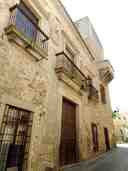
    To spot the Palacio de la Isla, look for a grand, sandy-colored building with a bold, arched stone doorway and a small balcony with wooden doors hovering just above it-in fact, that impressive entrance is a bit like the building’s version of a dramatic moustache! Alright, here you are, standing in front of the legendary Palacio de la Isla! Imagine the echoes of centuries swirling around you-medieval footsteps, the mutterings of nobles, perhaps even a family feud or two (don’t worry, I think they’ve calmed down by now). Built in the 1500s, this palace was the stage for a little family drama. The Blázquez-Mayoralgo family moved to Cáceres and built this home, but their distant cousins-already established here for ages-weren’t exactly sending welcome baskets. Oh no, there were raised eyebrows and probably a few dramatic sighs. In fact, the rift was so intense that it led to Latin messages being carved forever into stone. On the front, you can read “Moderata durant. Nobilitat animus non acta parentum,” which means: “Moderate things endure. It is spirit, not ancestors’ deeds, that ennoble us.” Basically, a medieval mic drop: “We’re new, but noble, deal with it!” There’s even a touch of Shakespearean flair: inside, one shield reads, “Vanity of vanities, all is vanity.” Makes you wonder if the neighbors were gossiping over their morning bread. Over time, the palace’s story has only become richer. It belonged to the Marquis of la Isla in the 1700s (hence the name!) and later became a hub of history and culture. The echoes of dusty manuscripts filled its halls when it served as the Province’s Historical Archive, and it’s now a lively cultural center. There’s a sparkle of modern ambition too-in 2016, it helped coordinate Cáceres’ efforts to become the European Capital of Culture! So as you stand here, know you’re not just in front of a building, but at the crossroads of pride, politics, and a whole lot of family sass. Ready for more Cáceres secrets? Let’s go!

    Otwórz dedykowaną stronę →
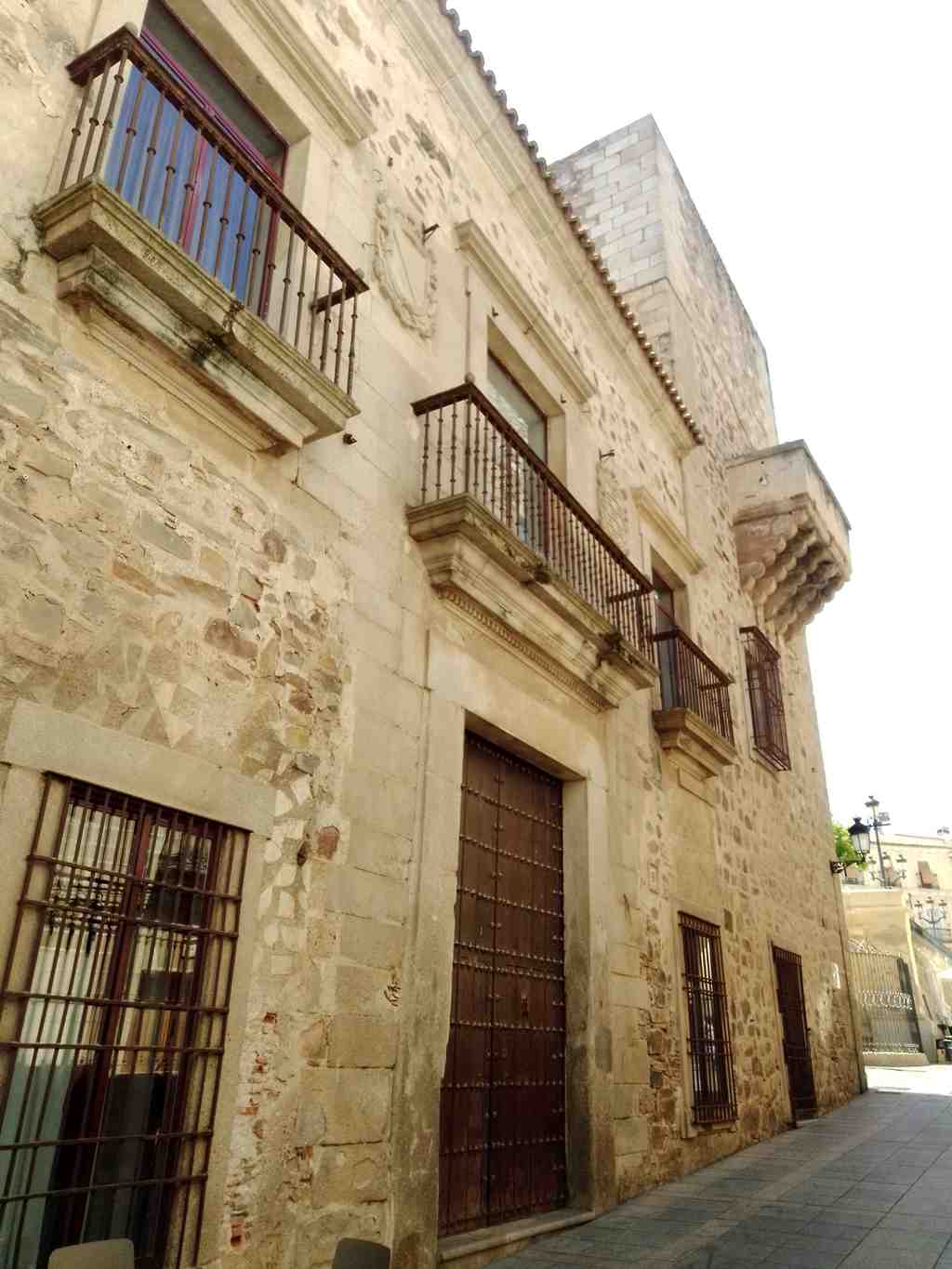
  2. Right ahead of you, look for a sturdy stone facade with high, iron-barred windows, classic balconies, and a heavy wooden door-plus a tall stone tower rising confidently at the…Czytaj więcejPokaż mniej

    Right ahead of you, look for a sturdy stone facade with high, iron-barred windows, classic balconies, and a heavy wooden door-plus a tall stone tower rising confidently at the corner where the street curves; you can’t miss it at the intersection of Plaza de la Concepción and General Ezponda street. Welcome to the Palace of Camarena! You might think you’re about to step onto the set of a historical drama... and honestly, you wouldn’t be wrong. Take a moment to look up at those balconies-imagine silk curtains fluttering behind them, and maybe a noble or two peering out, with secrets hidden behind those walls thicker than a medieval stew. This palace, believe it or not, wasn’t even supposed to be called Camarena! Originally, it was the stronghold of the powerful Carvajal family, and its oldest part, the mighty tower with its sturdy defensive overhang-called a “machicolation,” perfect for keeping out nosey neighbors or the odd invading army-dates all the way back to the fifteenth century. Picture knights clanking up and down these streets in the armor of Cáceres’ medieval heyday, while the Carvajals plotted and planned inside these walls. Now, fast-forward to the seventeenth century. The place is in need of a facelift, and along comes Pedro de Carvajal Ulloa. He’s got grand ideas, and some impressive family pride. Pedro introduces one of the treasures of this palace-a magnificent stone patio, inspired by classical Tuscan styles, right at the heart of the building. Life in the palace revolved around this patio; just imagine the echo of footsteps under stone arches, the murmured conversations, and the soft light filtering in through the high windows. Each arch and column tells the story of secret plans, family feasts, and yes, probably a squabble or two about who got the corner room. But our story doesn’t end there! By the late eighteenth century, another Carvajal, Diego de Carvajal y Flores, and his wife Ana María de Ulloa y Vasconcelos, gave the palace its now-chic neoclassical look. If this palace were a person, it would have just traded its dusty old cloak for a sharp new jacket. The main facade you see today-with its large, balanced windows and proud family crests-is their work. Imagine the couple overseeing the construction, perhaps arguing over which family shield to carve above the door. Their renovations added a stylish orderliness to the chaos of earlier centuries and made sure everyone who passed by would know exactly whose house this was. Suddenly, it’s the nineteenth century-cue the arrival of Gonzalo Carvajal y Arce. He inherits the grand title of Marquess of Camarena la Vieja, and thus, the Carvajal palace gets a new name and a whisper of new prestige. The stories these walls could tell! It was only in this era that the palace truly began to be called by the Camarena name, but until the twentieth century, it remained the beloved home-well, castle really-for generations of Carvajals. Then came the modern age and, like all good stories, the palace had to adapt or risk fading into memory. By the late twentieth century, the last of the Carvajal heirs sold their ancestral home. The building underwent a dramatic transformation by architect Gerardo Ayala, who carried out a grand renovation between 1986 and 1989. He reimagined the palace as a place of creativity and learning, turning it into the headquarters for Extremadura’s Official College of Architects and the Ateneo, a cultural hub. Ayala even stretched the old tower a bit taller and opened up a loggia-a sort of gallery of arches-overlooking the bustling Plaza de la Concepción. The palace, once a fortress against the outer world, now welcomes the city with open arms. And so, here you stand at a monument officially recognized for its cultural importance since 1992-a place that has echoed with the footsteps of lords, ladies, architects, and artists. If you listen carefully, you might just catch the whispers of centuries gone by, and if you’re lucky, maybe even a ghostly Carvajal still annoyed about the new loggia! Keep those eyes sharp and your imagination ready-every stone has a story here in Cáceres. Ready for the next stop? Let’s march on!

    Otwórz dedykowaną stronę →
  3. You’re standing right in front of the Cáceres City Council - the nerve center that keeps the city ticking day after day! Take a look at this impressive building: it might look…Czytaj więcejPokaż mniej

    You’re standing right in front of the Cáceres City Council - the nerve center that keeps the city ticking day after day! Take a look at this impressive building: it might look calm and orderly now, but you can just imagine the bustle inside as decisions are made about everything from new parks to fixing potholes. Imagine the echo of footsteps on stone floors as councilors hurry in with their morning coffees, ready to debate everything from libraries to sports clubs. The City Council is one of the top powerhouses around here, working alongside the national government, the regional government, and the provincial government. But don’t worry, there’s no “Game of Thrones” drama - just a lot of public service! Every four years, the citizens of Cáceres get to play boss, voting for their leaders in a big, city-wide election. In 2023, the mayor’s office changed hands in a dramatic twist! Rafael Mateos Pizarro of the Popular Party took over the mayor’s seat, defeating the previous mayor Luis Salaya. The cheers and a few groans in the city square must have made quite the soundtrack that night. Women have made history here, too. Elena Nevado del Campo was the second woman to wear the mayor’s sash, following in the footsteps of Carmen Heras. And long before current events, a remarkable man named Valeriano Gutiérrez Macías served as a city leader, known for his love of local traditions and folklore. You could almost imagine him recounting stories with a twinkle in his eye, keeping everyone laughing and learning at the same time. Inside, the council is divided into lively departments, or as they call them here, “concejalías.” María de los Ángeles Costa handles the city’s purse strings - imagine her rolling up her sleeves before diving into mountains of paperwork. Jorge Villar Guijarro brings a spark of innovation, helping Cáceres shine as a tourist destination. There’s María Josefa Pulido Pérez, guiding social services, and if there’s a festival or cultural event lighting up the city, chances are Fernanda Valdés Sánchez is behind it! From urban planning to youth sports, each department tackles the city’s biggest - and smallest - challenges. So, every time a new playground is built, a festival fills the streets, or the local taxes change, it all starts right here. And if you ever get a parking ticket in Cáceres, well… you know exactly who to thank!

    Otwórz dedykowaną stronę →
Pokaż jeszcze 10 przystankówPokaż mniej przystankówexpand_moreexpand_less
  1. Right in front of you, you’ll notice a tall, rugged stone wall rising dramatically from the rocky hillside, its sandy-colored masonry and square towers giving it a weathered but…Czytaj więcejPokaż mniej

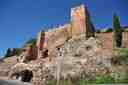
    Right in front of you, you’ll notice a tall, rugged stone wall rising dramatically from the rocky hillside, its sandy-colored masonry and square towers giving it a weathered but mighty look-just scan above the road and you can’t miss it. Now, let’s dial back the centuries together. Imagine the ground trembling lightly beneath your feet-an echo from nearly two thousand years ago, when the first stones of this very wall were set in place. The Wall of Cáceres began its life in the days of the Roman Empire, built to defend the ancient colony of Norba Caesarina. Back then, armored soldiers kept watch, their eyes sharp for trouble as the Spanish sun beat down on the brand-new stone, and the wall glimmered in the heat like the promise of safety. Not much remains from those earliest Roman days, though-time and history marched on, carrying stories of battles, sieges, and reinventions. It was really the Almohads, mighty rulers from North Africa, who gave this wall its most recognizable look in the late 12th and early 13th centuries. They built the chunky, resilient sections you see now, using both masonry and tapial-basically clay and lime reinforced with wooden frames. If those Almohads had invented concrete, you’d be looking at history’s most persistent do-it-yourselfers! At points, this wall stretches three meters thick and climbs over ten meters high. No dragon-or medieval enemy-would’ve dared mess with that. There’s an air of adventure written all over these ancient stones. This wall wasn’t just a pretty boundary; it was the ultimate “Keep Out” sign, defending the city from marauders and marking the outer limit of Old Cáceres. Today, it still does its job, sharply separating the time-capsule beauty of the old quarter-the bit that won Cáceres its UNESCO World Heritage badge in 1986-from the more recent neighborhoods just outside. Picture villagers bustling through narrow gates, archways clattering as merchants, travelers, and even the odd runaway sheep entered or left the heart of the city. Maybe you’re wondering about all those mysterious towers and gates. The wall is dotted with fantastic defenders like the Torre de Bujaco and the Torre Redonda-wait, don’t be fooled by that one, it’s actually octagonal, not round! Each of these towers held silent guards, watching over the sprawling landscape. Gates like the Arco de la Estrella or the Puerta de Coria invited guests in with grand arches, while others, like the Arco del Cristo, whispered secrets of past invasions and hidden escapes. Let’s not forget-the Wall of Cáceres holds a place of honor as one of the first officially protected monuments in Extremadura. In 1930, it was named a Bien de Interés Cultural; nearly twenty years later, much of the city followed as a historic site. So as you stand here in the shadow of the sunlit stones, you’re not just looking at a wall-you’re beside a living legend, with drama, danger, surprise, and a touch of that stubborn Spanish pride built right into every block. And hey, if you ever wanted to feel like a time traveler, you’re in the right spot-just don’t try to climb it; those Almohad architects weren’t messing around!

    Otwórz dedykowaną stronę →
  2. To spot the Toledo-Moctezuma Palace, look ahead for a stately brick tower with rounded windows and a white dome perched on top, nestled among the old stone walls and looking…Czytaj więcejPokaż mniej

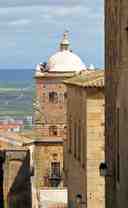
    To spot the Toledo-Moctezuma Palace, look ahead for a stately brick tower with rounded windows and a white dome perched on top, nestled among the old stone walls and looking proudly out over the countryside. Now, as you stand in front of this remarkable palace, imagine you’ve traveled back to the 15th century, with the sound of horse hooves echoing off these ancient stones and whispers of family intrigue drifting on the breeze! This was once the grand home of the powerful Toledo family, whose dramatic story reads like something out of a medieval soap opera. Their coat of arms, along with those of the Carvajal and Ulloa families (all proud rivals who owned the building at different times), are still watching over you from the palace’s main façade-very much like the medieval version of keeping up with the neighbors. But here’s where it gets really spicy: in the late 16th century, Mariana de Carvajal y Toledo married Juan de Toledo Moctezuma, a man carrying spectacularly global heritage, being the descendant of none other than the Aztec emperor Moctezuma II. Can you imagine the wedding feast? Spanish nobles on one side, Aztec legends on the other! To celebrate, they remodeled the upper floor, proudly putting all three family shields on display-including Moctezuma’s. The palace you see today glows with their story, the sunlight catching on its open brick gallery and the soaring white dome. Nowadays, the doors guard the secrets of the Provincial Historical Archive-but if you listen closely, you might just hear distant laughter from centuries past, or the proud footsteps of old nobility. And don’t worry, there’s no need to bow-unless you feel inspired!

    Otwórz dedykowaną stronę →
  3. To spot the Church of Santiago, look for a striking, sand-colored stone building with colossal buttresses, pointed arches, and a tall bell tower topped by a pyramid-shaped…Czytaj więcejPokaż mniej

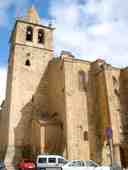
    To spot the Church of Santiago, look for a striking, sand-colored stone building with colossal buttresses, pointed arches, and a tall bell tower topped by a pyramid-shaped roof-impossible to miss, especially when you spot the medallions on those impressive supports. Picture yourself standing here, the sounds of Cáceres behind you, and before you rises the ancient Church of Santiago de los Caballeros. The bell tower stretches skyward, and enormous buttresses jut out from the walls, each decorated with carved medallions-some resting on thick, fluted columns that look sturdy enough to keep out all of history’s storms. These guards of stone have withstood centuries, and if these walls could talk, I’m sure they’d whisper tales of knights, artists, and the odd clumsy stone mason or two. Let’s wind back the clock to the late Middle Ages. It’s the 1300s, and on the outskirts of the walled town of Cáceres, a hearty band of townsfolk and knights gather in what was then just a humble church. You might catch the smell of woodsmoke and hear the clop of horses outside, for this parish belonged to a community of soldiers-Santiago’s Knights. Some ancient scrolls say the church’s first stones were laid even earlier, in the 12th century. But don’t believe everything you read; the oldest bits you see today are most likely from the 14th century. Now, as you run your eyes along the building, notice those entrances-two grand pointed arches, opposite each other, just begging for a medieval procession to march through. If you stepped in centuries ago, the echo of your footsteps would meet the soaring vaults above-listen, perhaps you can imagine the sound now. It wasn’t always this grand, though. Fast forward to the 1500s, the renaissance is in full bloom, and along comes Rodrigo Gil de Hontañón-one of Spain’s master builders. He rolled up his sleeves and, with a twinkle of innovation, gave Santiago its sweeping main chapel and elegant sacristy. Some of the church’s best features sprang to life under his watch, although, amusingly, he had a bit of a clash with the folks paying him, and left the job unfinished! Don’t worry-the ever-resourceful locals brought in another architect, Sancho Cabrera, to wrap up the job. Inside, the treasures grow richer. Look up and imagine vaulted ceilings crisscrossed with stone ribs. There’s a wide choir loft at the back where deep voices would ring out each Sunday. But the star of the show is the main altarpiece-a staggering, colorful masterpiece carved from wood in the 1500s by Alonso Berruguete, a man famous for making statues that almost walk and talk. The church must have buzzed with excitement when Berruguete’s retablo finally arrived from Valladolid in 1570, but it wasn’t smooth sailing. Rain poured in during transport, soaking the delicate wood, and it arrived battered and nearly ruined. It took a small army of artisans to set things right, but today the retablo stands gleaming, crowned with images of the Virgin and Child surrounded by angels, and none other than Santiago astride a horse, charging valiantly into battle. You might spot other beautiful sculptures, too: a serene figure of Our Lady from the 1400s, and the Cristo de los Milagros-another centuries-old wonder, whose presence might just send a shiver down your spine if you catch its gaze in the candlelight. Let’s not forget-the Church of Santiago isn’t just a museum. It’s still a living parish, part of the old city’s pulse. It hosts lively brotherhoods, especially during Easter Week, when processions wind through the streets and sacred statues are carried out-often at a frankly heroic hour. There’s a famous one: the statue of Jesús Nazareno, carved in 1609, with a cross inlaid with silver and decorated flowers, marching out as bells peal and crowds gasp with devotion. Standing here, you’re at a crossroads of history-where knights sharpened their swords, artists dreamed in wood and stone, and even rainstorms couldn’t dampen the town’s spirit. Be sure to take a deep breath and look closely; every stone is a piece of Cáceres’s centuries-old story! If you’re ready, let’s march on to our next stop.

    Otwórz dedykowaną stronę →
  4. To spot Carvajal Palace, look for a sturdy stone building with a grand arched entrance, a simple balcony jutting from the corner, and a big family crest on the facade, all made…Czytaj więcejPokaż mniej

    To spot Carvajal Palace, look for a sturdy stone building with a grand arched entrance, a simple balcony jutting from the corner, and a big family crest on the facade, all made from solid granite blocks right in front of you. Now, take a moment and imagine the creak of heavy wooden doors as you stand before the Carvajal Palace. This sturdy, almost fortress-like building has guarded the stories of one of Cáceres’ oldest noble lineages for centuries-yes, the Carvajals were the kind of folks who had more drama in their lives than most TV shows! The first thing that’ll strike you is the massive, rounded granite arch over the entrance-go ahead, run your hand over the stone, and picture the countless boots that have passed through, from knights to nobles to the odd nosy neighbor. The family crest, boldly carved in relief, sits right above you, squeezed into a rectangular frame and perched on ornate brackets. It’s basically medieval bragging in stone-“We are the Carvajals, and this is our spot!” Off to the right, you’ll spot a lonely little balcony with an arch, simple, no frills-perhaps perfect for Romeo-style serenades or some good old-fashioned gossip watching the street below. But the real twist in the story is the round tower attached to the side. Rumor has it, this tower could be even older than the palace itself, maybe even with Arab roots, and some say the mysterious warrior monks-called the Fratres-used it back in the days of battle during the Reconquista, when Christian knights fought to reclaim the city from Moorish rule. The tower still shows off its ancient arches, one shaped like a horseshoe, echoing centuries of echoes. And now, let’s talk about palatial life-more than just stone! Imagine scurrying inside on a rainy medieval evening and stepping into the airy patio, where chunky granite columns topped with decorative “ball” capitals hold up the arches, showing off a style typical of late Gothic mansions. But the real showstopper is in the garden, where a giant fig tree spreads its tangled limbs, rumored to be anywhere from 300 to 400 years old. That’s one wise old tree; if only it could tell us what it’s heard over the centuries! Tucked beneath the tower is the private chapel-a secret little jewel adorned with gorgeous Renaissance-era frescoes by an Italian painter named Juan Bautista Pachi. One moment you’re gazing at the Carvajal coat of arms, the next you’re swept into stories painted on the walls: the Annunciation, Mary visiting Saint Elizabeth, the Nativity, even young Jesus dazzling the teachers-artful glimpses into family faith and Renaissance flair. But don’t let all this grandeur fool you-there’s a thrilling legend to this family, worthy of a blockbuster! Back in the 1300s, the two Carvajal brothers were accused of a nasty crime: the murder of a nobleman. Condemned by King Fernando IV of Castile, they insisted on their innocence and demanded “a judgment from God.” Well, believe it or not, just 30 days after he sentenced them, King Fernando dropped dead! The city was abuzz. The Carvajals were cleared, and the shadow of scandal became a point of mysterious pride for the family forevermore. The Carvajals loved their city, but like all good soap operas, they took sides-sometimes joining the powerful upper families, sometimes the lower, always finding ways to thrive, outwit rivals, and support the church. They were builders, renovators, art patrons, and politicians, and their most famous offspring, Don José de Carvajal, was a top minister and secretary of the state in the 18th century. Traders, conquerors, and even flames have touched this palace’s history. After the family sold it, a huge fire in the 19th century gutted the interiors. Locals called it the “burned house” for decades until a determined descendant restored it in the 1960s, building those broad stone stairs you’d climb today to reach the upper floor. Now, the palace is home to the tourist board-so the hustle and bustle continues, just minus the horses and swords. Even today, if you listen closely, you might catch the whisper of old secrets swirling in the peaceful patio or hear the garden fig tree sighing in the breeze. Quite a place to stand, isn't it?

    Otwórz dedykowaną stronę →
  5. To spot the Puerta de Coria, look ahead for a small, mossy section of ancient stone wall rising up beside the plants at the edge of the steps-it looks like an old, rough puzzle…Czytaj więcejPokaż mniej

    To spot the Puerta de Coria, look ahead for a small, mossy section of ancient stone wall rising up beside the plants at the edge of the steps-it looks like an old, rough puzzle pieced together, standing quietly where the past meets the present. Now, let’s step with me into the echoing footsteps of centuries, right here at what was once the proud northern gate of Roman Cáceres, the Puerta de Coria, also affectionately called the Arco del Socorro. If you close your eyes and take in the crisp air, you might just imagine the clang of soldiers’ sandals and merchants’ cart wheels thumping over the stones as they streamed in from the great Roman road, the Via de la Plata, winding just east of town. Picture this: it’s the bustling days of Norba Caesarina-the original Roman name for Cáceres-and the city is wrapped in sturdy walls that guard its four cardinal points. The Puerta de Coria is the city’s northern guardian. Its mighty stone arch, shaped in a graceful half-circle, is crowned with a small niche-a special nook that, in later centuries, would hold a statue of the Virgin of Socorro, gently watching over everyone who passed beneath. But the Puerta de Coria was more than just stones and archways. Two strong towers flanked this gate, giving it the air of a silent sentinel. Imagine those towers: one rooted where the shops buzz today on Zapatería street, the other tucked into the stately Casa de los Condes de Trespalacios. Overhead, the walls and arches must have felt endless, heavy with the memories of a thousand comings and goings-trades, reunions, bittersweet goodbyes. Through this very gate nearly 800 years ago, the fate of Cáceres changed forever. In the year 1229, during the heat of the Christian reconquest, Alfonso IX of León’s troops entered through the Puerta de Coria, securing the city and forever stitching it into the great tapestry of Spanish history. Can you feel the tension, the nerves, the hope, and maybe a dash of fear, as armored knights squeezed through that arch, swords clinking and banners fluttering in the wind? History is not always peaceful, and this old gate has seen its share. But time is a trickster, and the centuries rolled on. By the 1700s, the once-majestic gate had turned, in the eyes of its neighbors, into a gloomy, shadowy nook-one that might give even the bravest city dweller the heebie-jeebies. Local aristocrats and townsfolk petitioned, “Can’t we just get rid of this old thing? It’s a health hazard, a trap for dirt and mischief, and it blocks the coaches and carriages.” The city council scratched their heads; after all, nobody likes a bottleneck-especially not one stuffed with medieval cobwebs! The final blow came from a gentleman named Joaquín Muñoz Chaves, a notable from the local Liberal Party, whose house stood nearby. By 1879, he’d had enough of the “piles of dirt incompatible with the hygiene of modern Cáceres.” With the blessing of the city’s Committee of Ornato (what a name!), he began to dismantle the old stonework. If only WhatsApp or Twitter had existed then, maybe the Real Academy of Fine Arts’ desperate plea to stop the demolition would have arrived in time! But alas, by February 1880, the Puerta de Coria was no more-swept aside in the name of progress and tidiness. Yet the story doesn’t end there. For decades after, the statue of the Virgin of Socorro that once watched over travelers was cherished, tucked behind an iron grate in a nearby noble house. And though her image vanished in the storm of a new century, her spirit still haunts these stones and this tiny, peaceful plaza. So, as you stand among the small garden and the rough, forgotten stones, surrounded by the green moss of centuries and the everyday life of Cáceres, remember: great arches may crumble, but the memories-of Roman legions, medieval conquerors, and modern city folk alike-linger ever on. And if you listen closely, this silent spot just might tell you another secret from the old stone puzzle of Cáceres.

    Otwórz dedykowaną stronę →
  6. In front of you, you’ll spot the Arch of the Christ by looking for a low, sandy-colored archway built into the city wall with a small niche and picture above it-just follow the…Czytaj więcejPokaż mniej

    In front of you, you’ll spot the Arch of the Christ by looking for a low, sandy-colored archway built into the city wall with a small niche and picture above it-just follow the sloping street until the ancient stones curve overhead. Now, take a moment and imagine yourself back almost two thousand years ago, standing right here as a Roman citizen of Norba Caesarina-yep, you’re looking at the oldest surviving doorway in the whole city, made from giant Roman stones that have watched countless feet march by. Step closer, and you’ll see the archway forms a tunnel through the mighty wall, kind of like a secret passage in a medieval castle, only this tunnel is built with two rounded arches-so tough, they could probably withstand a parade of elephants! For centuries, this gate was the main portal from the valley outside into the buzzing world of Cáceres. Imagine merchants carrying all sorts of treasures-wine, fabrics, maybe even mysterious Roman gadgets-walking right through here on their way to the great Vía de la Plata, the king of all Roman roads heading down to Augusta Emerita. Over your head, see that little nook with an old painting of Christ? That’s where the arch gets its modern name-the locals tucked that picture there in the 1800s, hoping for a bit of heavenly protection as they popped in and out of the city. But that’s not all! Back in the 1400s, right outside this very spot was the biggest fountain in town, gurgling as neighbors filled their jugs. It became the top hangout-the place to gossip, trade stories, or even hold a city council meeting (Cáceres knows how to multitask!). So, whether you call it the Gate of the Council, of the River, or the Arch of the Christ, you’re standing at the crossroads of centuries-a place where Romans, knights, and chatty locals have all left their mark. Careful as you pass under…the walls might just whisper a story or two!

    Otwórz dedykowaną stronę →
  7. St. George's Square is right in front of you: look for a spacious stone plaza surrounded by grand medieval towers and ochre buildings with iron-grilled windows, all shining golden…Czytaj więcejPokaż mniej

    St. George's Square is right in front of you: look for a spacious stone plaza surrounded by grand medieval towers and ochre buildings with iron-grilled windows, all shining golden under the sun. Picture this: You’re stepping onto the sunlit stones of St. George’s Square, where the gentle hum of chatter mixes with the history that soaks every wall. On your left and right, you’ve got centuries-old palaces and the impressive Church of San Francisco Javier. But the real star is waiting for you halfway up the church steps - check the niche! There, gleaming in bronze, is the city’s hero: Saint George, right in the act of giving that cheeky dragon a seriously bad day. José Rodríguez sculpted him, and let’s be honest, George looks like he just beat the dragon at its own game and is quietly wondering if it’s time for lunch now. Here’s the twist - art historians say this George is less the fearsome dragon-slayer and more “victorious underdog,” like a biblical David with a sharp sword. Maybe even a bit of style borrowed from Michelangelo. Imagine hushed medieval crowds gathering here, peering up, wondering if St. George will wink back or if the dragon will try a rematch! So, as you stand here, you’re surrounded by stories of heroism, a dash of artistic mystery, and just a hint of whimsical legend - the kind of square where every echo could be a knight’s footstep or the dragon’s grumble!

    Otwórz dedykowaną stronę →
  8. To spot the Palace of the Golfines de Arriba, look straight ahead for a sturdy, rugged stone building with a square, fortified tower jutting high above the street, topped by…Czytaj więcejPokaż mniej

    To spot the Palace of the Golfines de Arriba, look straight ahead for a sturdy, rugged stone building with a square, fortified tower jutting high above the street, topped by battlements and decorated with powerful family crests. Welcome to the Palace of the Golfines de Arriba! Imagine you’re standing in front of a true medieval fortress, built between the 14th and 15th centuries by Isabel de la Cerda and García de Golfín-once the power couple of Cáceres. This wasn’t just a place to hang your sword; it was designed as a “casa fuerte,” or strong house, meant to keep out both uninvited guests and any unfriendly neighbors. Originally, there were four dramatic corner towers, but only three remain today. Those old stones still show off the family’s shields, staring down from above like ancient guards on watch. Right in the center, you’ll see the impressive keep, a chunky tower added in 1513. Now, here’s the dramatic bit: while other towers in Cáceres were ordered to be cut down by Ferdinand the Catholic, this one survived thanks to a royal decree. Talk about having friends in high places! If you listen closely, maybe you’ll hear the distant clanging of metal armor echoing from the past. Inside, it’s a maze of grand rooms, more than four thousand square meters in total-so big you might need a map if they ever gave tours. But don’t try to sneak a peek; the palace is privately owned, beautifully preserved, and today is used for high-end hospitality and dining. So unless you’re holding a banquet invitation, you may have to imagine the sumptuous halls for now. And if those stones could talk, they’d be whispering secrets from an even more recent slice of history: on August 26, 1936, General Francisco Franco set up his headquarters right here. For 38 tense days during the Spanish Civil War, the entire fate of a country hummed through these walls. Now, as you stand outside, imagine the heavy footsteps of soldiers and the murmurs of urgent meetings. If walls could gossip, this palace would never be quiet!

    Otwórz dedykowaną stronę →
  9. To spot the Cáceres Museum, look for a grand, light brown stone building ahead with two balconies, ceramic decorations along the roof, big wooden doors, and two large stone coats…Czytaj więcejPokaż mniej

    To spot the Cáceres Museum, look for a grand, light brown stone building ahead with two balconies, ceramic decorations along the roof, big wooden doors, and two large stone coats of arms on the facade. Welcome to the Cáceres Museum-where ancient secrets hide behind thick stone walls and every echo whispers a different story! Imagine standing here centuries ago, in the very heart of the old city, while the stony walls of the Palacio de las Veletas and the sturdy Casa de los Caballos loomed above you. These impressive buildings were once a fortress and a noble residence, with the Palacio perched right where a mighty Moorish castle stood. Beneath your feet, the coolest secret of all lurks in the shadows: an ancient cistern, or aljibe, built on uneven ground and held up by Roman columns-just think of it as the original neighborhood swimming pool, but with a lot more mystery! As you look up at the ceramic-topped battlements, picture brightly painted gargoyles from the 18th century staring down, guarding the treasures inside. Those crests you see are like giant stone ID cards-no need to knock, everyone knows which family lived here! If you ever hear a sudden clattering, it might just be one of those dramatic stone shields rattling in the wind, reminding visitors who’s boss. Step inside, and you travel through time: you’ll find Paleolithic hand axes, Roman inscriptions, and artifacts from every age that Cáceres has known. Where else could you see a medieval Arabic cistern, an ancient cloak, and modern Spanish art all in one stroll? And if you’re lucky, you might hear the faint notes of music or laughter from centuries past drifting up from the museum’s ethnographic collection, where old traditions come alive. So, take it all in-the sturdy stone, the noble crests, and the stories of lives once lived on these very stones. Cáceres Museum isn’t just a trove of treasures; it’s where the heart of the city keeps on beating, one echo at a time.

    Otwórz dedykowaną stronę →
  10. To spot the Palace of the Storks, look straight ahead for a tall, square stone tower with castle-like battlements rising above a robust, sandy-brown mansion-just at the highest…Czytaj więcejPokaż mniej

    To spot the Palace of the Storks, look straight ahead for a tall, square stone tower with castle-like battlements rising above a robust, sandy-brown mansion-just at the highest point of the square. Take a moment to look up at this impressive tower-the storks’ palace, standing tall as if keeping watch over all of Cáceres! Imagine it’s the late 1400s, and Diego Fernández de Cáceres y Ovando is overseeing the workers, stacking rough stone onto what used to be an ancient fortress. The walls smell of sun-warmed earth and, if you had walked here back then, you might have seen graceful silhouettes circling above-dozens of storks, flapping their wings and clattering their beaks on the rooftops. That’s how this palace earned its nickname! Look at the tower-it’s 25 meters high, the only one around not sliced down by royal orders. Queen Isabel the Catholic demanded that all noble towers be shortened, fearing rebellion. But the Ovando family? They’d pledged loyalty to the wrong queen, Juana la Beltraneja. After Isabel triumphed, she decided to let these folks keep their lonely, towering view as a reward for good behavior… or maybe just for the drama! Picture the centuries rolling by: carriages bouncing in the cobbled square, noble boots ringing on the stone, and armored guards swinging open that grand, round archway. Inside, a gothic courtyard waits, echoing with whispers of family secrets, and above the door, two proud family crests keep watch-no doubt judging your shoes. In 1940, soldiers marched through these very gates, as the palace found new life as a military headquarters. Today, it’s part museum, part fortress, and if you climb to the top, the views stretch across Cáceres’ old rooftops-just as they always have, with the wind and, sometimes, the distant chatter of storks, keeping the secrets of centuries alive. Now, before you leave, ask yourself: if these walls could talk, would they tell military secrets, family feuds, or stork gossip? My bet is on the storks.

    Otwórz dedykowaną stronę →

Najczęściej zadawane pytania

Jak rozpocząć trasę?

Po zakupie pobierz aplikację AudaTours i wpisz kod realizacji. Trasa będzie gotowa do natychmiastowego rozpoczęcia – po prostu dotknij \"Play\" i podążaj trasą z nawigacją GPS.

Czy potrzebuję internetu podczas trasy?

Nie! Pobierz trasę przed rozpoczęciem i korzystaj z niej w pełni offline. Jedynie funkcja czatu wymaga internetu. Zalecamy pobieranie przez WiFi, aby oszczędzać dane mobilne.

Czy to wycieczka grupowa z przewodnikiem?

Nie – to samodzielny audioprzewodnik. Zwiedzasz niezależnie, we własnym tempie, z narracją audio odtwarzaną przez telefon. Bez przewodnika, bez grupy, bez harmonogramu.

Ile trwa trasa?

Większość tras zajmuje 60–90 minut, ale to Ty kontrolujesz tempo. Wstrzymuj, pomijaj przystanki lub rób przerwy, kiedy chcesz.

Co jeśli nie zdążę ukończyć trasy dzisiaj?

Żaden problem! Trasy mają dożywotni dostęp. Wstrzymaj i wznów, kiedy chcesz – jutro, za tydzień lub za rok. Twój postęp jest zapisywany.

W jakich językach są dostępne trasy?

Wszystkie trasy są dostępne w ponad 50 językach. Wybierz preferowany język podczas realizacji kodu. Uwaga: języka nie można zmienić po wygenerowaniu trasy.

Gdzie znajdę trasę po zakupie?

Pobierz darmową aplikację AudaTours z App Store lub Google Play. Wpisz kod realizacji (wysłany e-mailem), a trasa pojawi się w Twojej bibliotece, gotowa do pobrania i rozpoczęcia.

verified_user
Gwarancja satysfakcji

Jeśli trasa Ci się nie spodoba, zwrócimy Ci pieniądze. Skontaktuj się z nami pod adresem [email protected]

Bezpieczna płatność przez

Apple PayGoogle PayVisaMastercardPayPal

AudaTours: Audioprzewodniki

Rozrywkowe, niedrogie, samodzielne piesze trasy

Wypróbuj aplikację arrow_forward

Uwielbiany przez podróżników na całym świecie

format_quote Ta trasa była świetnym sposobem na poznanie miasta. Historie były ciekawe, bez przesadnego scenariusza, i uwielbiałam możliwość zwiedzania we własnym tempie.
Jess
Jess
starstarstarstarstar
Trasa po Tbilisi arrow_forward
format_quote To był solidny sposób na poznanie Brighton bez poczucia bycia turystą. Narracja miała głębię i kontekst, ale nie przesadzała.
Christoph
Christoph
starstarstarstarstar
Trasa po Brighton arrow_forward
format_quote Zacząłem tę trasę z croissantem w jednej ręce i zerowymi oczekiwaniami. Aplikacja po prostu idzie z Tobą, bez presji, tylko Ty, Twoje słuchawki i fajne historie.
John
John
starstarstarstarstar
Trasa po Marseille arrow_forward

Nieograniczone audioprzewodniki

Odblokuj dostęp do KAŻDEJ trasy na świecie

0 tras·0 miast·0 krajów
all_inclusive Odkryj Bez Limitu