
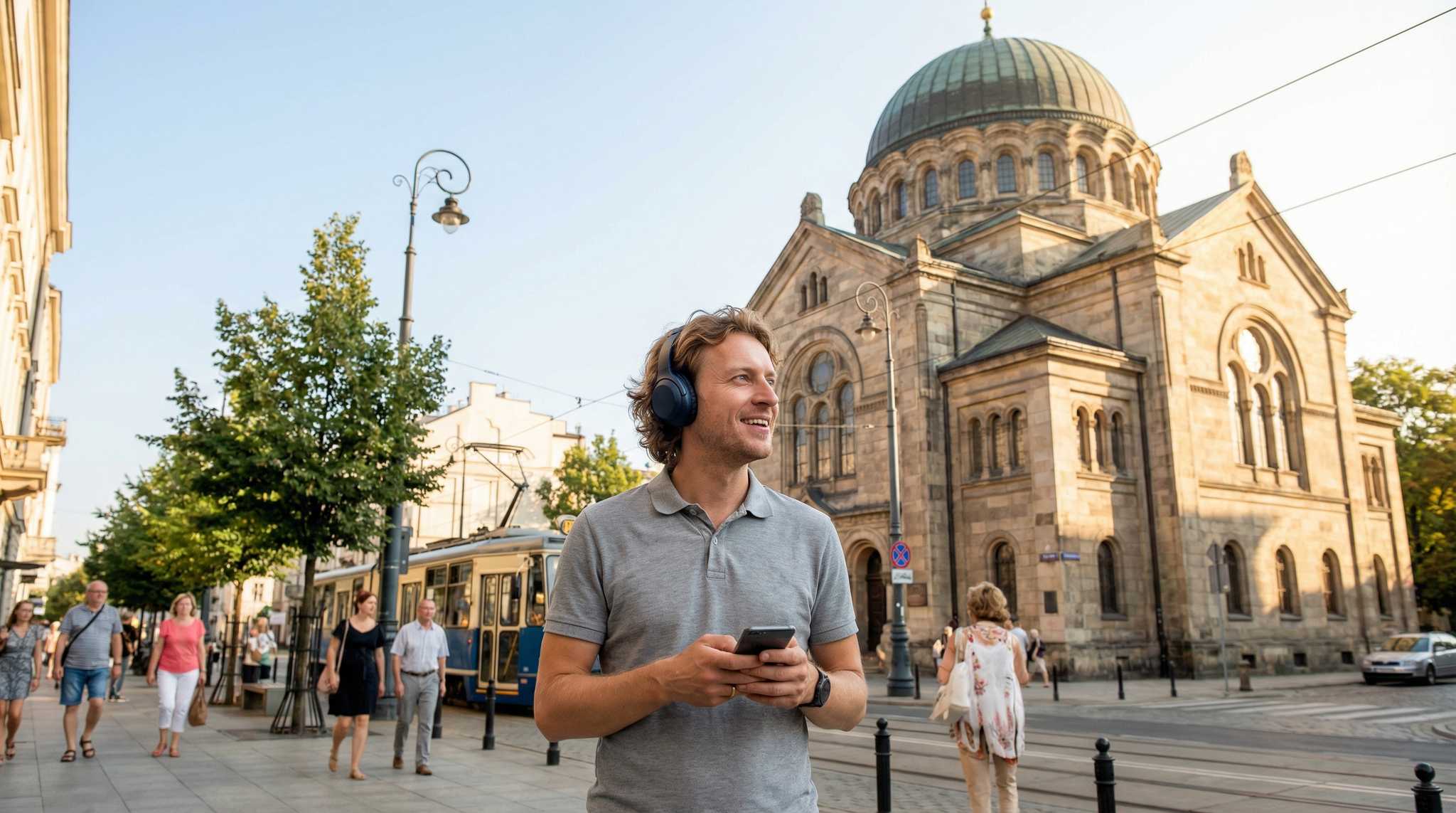
Audioprzewodnik po Warszawie: Ścieżkami dziedzictwa i historii
Pod nowoczesną panoramą Warszawy, w każdym kamieniu i na każdym placu pulsuje historia buntu i niezłomności. Ta wycieczka z audioprzewodnikiem zaprasza do ucieczki od tłumów i wejścia w świat niezwykłych tajemnic, których większość turystów nigdy nie dostrzega. Dlaczego Plac Defilad stał się niegdyś epicentrum zarówno olśniewających parad, jak i nagłych powstań? Jakie niewypowiedziane wydarzenia rozegrały się w mrocznych latach w Synagodze Nożyków? I kto ukrywał zakazaną kontrabandę w ruchliwych, pełnych echa korytarzach Hal Mirowskich? Przemierzaj scenerie walki o władzę, przetrwania i odrodzenia kulturowego. Przejdź tam, gdzie stali papieże, protestujący i ocaleni. Śledź zapomniane ślady pod światłami miasta i milczącymi fasadami. Każdy zakręt obiecuje zwrot akcji, gdy Warszawa odsłania warstwy tragedii, oporu, skandalu i nadziei. Gotowy na odkrycie miasta, które nie godzi się na milczenie? Pozwól, by ukryte prawdy Warszawy poprowadziły Twój kolejny krok.
Podgląd trasy
O tej trasie
- scheduleCzas trwania 30–50 minsIdź we własnym tempie
- straighten4.8 km trasy pieszejPodążaj wyznaczoną trasą
- location_on
- wifi_offDziała offlinePobierz raz, korzystaj gdziekolwiek
- all_inclusiveDożywotni dostępOdtwarzaj ponownie w dowolnym momencie
- location_onStart przy Plac Defilad w Warszawie
Przystanki na tej trasie
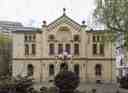
Now, as you're walking along Twarda Street, start looking to your right. You should see a building that stands out with its yellowish facade, symmetrical design, and a striking…Czytaj więcejPokaż mniej
Now, as you're walking along Twarda Street, start looking to your right. You should see a building that stands out with its yellowish facade, symmetrical design, and a striking arched entryway. The building you’re looking at is the Nożyk Synagogue. The Nożyk Synagogue is tucked away at 6 Twarda Street in the Śródmieście district. Designed by Karol Kozłowski and completed in 1902, this architectural gem combines elements of Romanesque Revival and Rundbogenstil styles, giving it that charming historic character. Alright, history buffs, fasten your seatbelts, because here we go: This synagogue is the only prewar Jewish house of prayer in Warsaw that’s still standing tall today, despite the chaos of the 20th century. It was desecrated by the Nazis during World War II, turned into stables and a depot, and all that fun stuff. But like a true warrior, it was restored after the war and continues to serve its purpose. Before the war, Warsaw had over 400 houses of prayer. Imagine that! The Nożyk Synagogue, financed by the kind-hearted merchant Zalman Nożyk and his wife Ryfka, was intended for Orthodox Jews, providing a haven for the Jewish community. You’ll notice its facade has a neo-Romanticist feel with notable neo-Byzantine elements. The inside is divided into three aisles, giving it a spacious feel. After seeing some damage in an air raid in September 1939, it was back on its feet by the mid-1980s, with a whole new wing and a fresh lease on life. Nowadays, it’s not just a place of worship but also a hub for various Jewish organizations and the Warsaw Jewish Commune. So there you have it-a symbol of resilience and a piece of living history, right before your eyes. Now, ready to move on to the next destination?
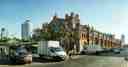
Otwórz dedykowaną stronę →Ah, you've made it to the Mier Halls! You'll want to look to your right to spot them. You'll be able to see two impressive and identical market halls constructed with striking…Czytaj więcejPokaż mniej
Ah, you've made it to the Mier Halls! You'll want to look to your right to spot them. You'll be able to see two impressive and identical market halls constructed with striking brickwork and detailed architecture that reflects their storied past. The structures have a series of large arched windows and intricate decorative elements, particularly noticeable above the entrances where you'll find symbols like the Mermaid of Warsaw. The Mier Halls, or Hale Mirowskie as they're locally known, were built between 1899 and 1902. Originally the biggest commercial hub in Warsaw, they were designed to bring some order and hygiene to the marketplace madness-think of it as upgrading your kitchen with the latest gadgets! Named after Wilhelm Mier, a cavalry major general, these halls took over the spot of his deconstructed barracks. The architects behind these halls were a dream team, Bolesław Miłkowski, Ludwik Panczakiewicz, Apoloniusz Nieniewski, and Władysław Kozłowski. They created two identical structures, each about the length of a football field. The iconic construction was so solid, it withstood quite a bit, until WWII hit. Now, the nickname “stomach of Warsaw” starts to make sense, right? Before the war, this was the go-to place for fresh groceries and household items. During the war, it served various roles, including housing for makeshift hospitals and endless market stalls. The halls were heavily damaged in the 1944 Uprising but arose from the ashes to serve Warsaw once more, albeit with some dramatic post-war changes, including a stint as a sports haven. So, as you stand here, imagine the hustle and bustle of vendors and buyers from a bygone era, only to transform into a sporting venue before settling back into its commercial roots. Quite the chameleon of a building, don't you think? Keep exploring and let’s get ready for our next stop!
Otwórz dedykowaną stronę →
Pokaż jeszcze 6 przystankówPokaż mniej przystankówexpand_moreexpand_less
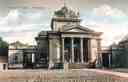
As you approach Tłomackie Street, look to your left. Imagine a grand neoclassical structure with sturdy columns and a large central dome that once dominated the area. The…Czytaj więcejPokaż mniej
As you approach Tłomackie Street, look to your left. Imagine a grand neoclassical structure with sturdy columns and a large central dome that once dominated the area. The structure you envision is the magnificent Great Synagogue of Warsaw. Nowadays, the location is occupied by a tall, modern Blue Skyscraper, but let's revisit the history of what stood here before. The Great Synagogue of Warsaw, once an architectural gem, embodied the spirit and resilience of the city's Jewish community. Designed by the talented Leandro Marconi, this neoclassical grand synagogue was completed in 1878. When it first opened its doors on September 26 in celebration of Rosh Hashanah, it was the largest Jewish house of worship in the world - pretty impressive, right? This synagogue wasn't just about grand architecture. It served as a spiritual home to many in Warsaw's Jewish community, offering modernized services without drastically changing traditional liturgy. Imagine sermons in Polish, an all-male choir singing, and an organ playing during weddings - quite a mix of tradition and modernity! However, this marvel met a tragic fate during World War II. On May 16, 1943, after the devastating Warsaw Ghetto Uprising, the Nazis, led by SS-Gruppenführer Jürgen Stroop, destroyed the building. Stroop saw the destruction as a "theatrical finale" to the suppression of the Jewish resistance - a horrific end to a vibrant symbol of faith and community. Today, the site hosts the Blue Skyscraper, a modern office building. It's a stark contrast to the synagogue's former neoclassical beauty. For a glimpse into the past, you can visit the POLIN Museum of the History of Polish Jews where a scale model of the Great Synagogue is displayed. As you look up at the Blue Skyscraper, you’re standing on historical ground. Take a moment to reflect on the rich history and resilience of the community that once gathered here.
Otwórz dedykowaną stronę →As you're approaching the Załuski Library, look to your right and you'll see an elegant, white building with tall windows and a symmetrical façade. Notice the intricate…Czytaj więcejPokaż mniej
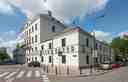
As you're approaching the Załuski Library, look to your right and you'll see an elegant, white building with tall windows and a symmetrical façade. Notice the intricate bas-reliefs that line the upper part of the ground floor-these are a giveaway that you're at the right spot! Now, let's dive into the fascinating history of this landmark. The Załuski Library, or Biblioteka Załuskich, was founded in 1747 by the Załuski brothers, Józef Andrzej and Andrzej Stanisław, who were Roman Catholic bishops. It holds the distinction of being the first public library in Poland and one of the earliest in Europe. Talk about being ahead of its time! The library began with an impressive collection of 200,000 items and eventually grew to around 400,000 by the end of the 1780s. It wasn't just about books either! The collection included maps, manuscripts, scientific instruments, and even plant and animal specimens. It was like the Amazon of the 18th century, but with way more style. After the Kościuszko Uprising in 1794, Russian troops, under orders from Czarina Catherine II, seized the library's valuable holdings and moved them to Saint Petersburg, where they formed the cornerstone of what would become the Imperial Public Library. The Polish collection, however, suffered greatly; many items were damaged or lost forever during this upheaval. In the 1920s, some joy returned to Poland when the newly founded Second Polish Republic got back part of the original collection thanks to the Treaty of Riga. These items were then included in the National Library, established in 1928, which now considers itself the Załuski Library's successor. But the drama did not end there. During World War II, a large part of the original Załuski collection was deliberately destroyed by German troops during the Warsaw Uprising in 1944. Fortunately, the passion of the Załuski brothers for book collecting has left an enduring legacy in Warsaw, reminding us of a time when the city was a beacon of knowledge and learning. Now, isn't that a tale of adventure, passion, and heartbreaking losses, all woven around a love for books? Quite the literary whirlwind!
Otwórz dedykowaną stronę →As you approach stop number 6, the Presidential Palace will be on your left. Look for a grand neoclassical building with a white facade and tall columns, topped with ornate…Czytaj więcejPokaż mniej
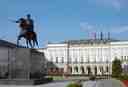
As you approach stop number 6, the Presidential Palace will be on your left. Look for a grand neoclassical building with a white facade and tall columns, topped with ornate sculptures. The building is fronted by a large, gated courtyard. You’ll also spot an impressive statue on horseback - that’s Prince Józef Poniatowski keeping watch! Now, let’s dive into the fascinating history of the Presidential Palace, also known as Pałac Prezydencki. Originally built in 1643, this palace began as an aristocratic mansion and has undergone several transformations by prominent architects over the years. The current neoclassical look was completed in 1818. This building has been right at the heart of many significant historical events. In 1791, it was the venue for the authors and advocates of the Constitution of 3 May 1791, the first modern European constitution. Not shabby for a building gig, huh? By 1818, it had become the seat of the Viceroy of Congress Poland, starting its journey as a governmental hub. After Poland's resurrection post-World War I, it became the seat of the Council of Ministers. During World War II, it managed to survive the Warsaw Uprising intact and was used by German occupiers as the Deutsches Haus. Fast forward to 1955, and the Palace hosted the signing of the Warsaw Pact inside its distinguished walls. Since July 1994, it has served as the official residence of the president of the Republic of Poland. Whew, talk about a building with a dynamic resume! The palace’s first name, "Pałac Koniecpolskich," comes from its original owner, Crown Great Hetman Stanisław Koniecpolski. The vivid history and continual evolution of this landmark make it not just a building, but a live-in witness to centuries of Polish and European history. And you thought your house had seen a lot over the years! Enjoy taking in the majestic sight of the Presidential Palace, a true masterpiece of historical architecture and significance.
Otwórz dedykowaną stronę →Ah, you've reached the location that once hosted the monumental St. Alexander Nevsky Cathedral! Imagine a grand architectural gem standing before you in Saxon Square, now…Czytaj więcejPokaż mniej
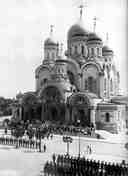
Ah, you've reached the location that once hosted the monumental St. Alexander Nevsky Cathedral! Imagine a grand architectural gem standing before you in Saxon Square, now Piłsudski Square. Spotting it back in the day would have been a breeze: picture a massive structure styled in classic Russian Orthodox architecture, complete with multiple onion domes topped with gilded crosses. The tallest of these domes stood 70 meters high, making it the tallest building in Warsaw at its peak. The cathedral flaunted a symmetrical facade with intricate arches and elaborate frescoes, a true feast for the eyes. So, let me take you on a little historical jaunt. This grand cathedral was built between 1894 and 1912 by the renowned Russian architect Leon Benois. Now, you might be wondering, why such a massive Orthodox cathedral in Poland? Well, back then, Warsaw was part of the Russian Empire. The cathedral was one of nearly 20 Orthodox churches built mainly to cater to the influx of Russian soldiers and officials. It served not just as a place of worship but as a symbol of Russian dominance. However, this symbol of Russian authority didn't sit well with the Poles, leading to its demolition in the mid-1920s, shortly after Poland regained independence. The authorities felt it stood as a painful reminder of Russian imperialism and decided to bring it down, despite its architectural beauty. Interesting tidbit: the funding for the cathedral came from all over the Russian Empire, with citizens contributing through donations and taxes, much to the dismay of Warsaw's largely non-Orthodox population who were coerced into providing funds. So there you have it, a striking cathedral that once towered majestically over Warsaw, now living on through fascinating tales of history! Keep on walking, our next adventure awaits! Interested in a deeper dive into the background, construction or the demolition? Join me in the chat section for an insightful conversation.
Otwórz dedykowaną stronę →You're now approaching one of Warsaw's most solemn yet dignified landmarks, the Tomb of the Unknown Soldier. Look straight ahead-you should see a set of three large, white arches…Czytaj więcejPokaż mniej
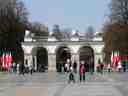
You're now approaching one of Warsaw's most solemn yet dignified landmarks, the Tomb of the Unknown Soldier. Look straight ahead-you should see a set of three large, white arches that stand proudly in the middle of Piłsudski Square. The arches are part of the remains of the Saxon Palace, which once graced this location. This monument is a tribute to all the unknown soldiers who have given their lives for Poland, and it carries a lot of historical weight. Speaking of weight, you might even feel a bit heavier with all this history around you! The Tomb of the Unknown Soldier (Grób Nieznanego Żołnierza) is more than just a memorial. It’s a piece of history. Since November 2, 1925, it has housed the unidentified remains of a young soldier who fell during the Defense of Lwów. To add to the poignancy, soil from many battlefields where Polish soldiers fought has been brought here, making it hallowed ground, indeed. Right in front of you, you'll notice an eternal flame. It's a symbolic gesture, burning continuously, representing the undying gratitude for those who gave their lives. The flame is flanked by guards from the Polish Armed Forces, standing vigilantly and symbolizing respect and remembrance. If you’re here on the hour, you might be lucky enough to witness the changing of the guard-a solemn and captivating ceremony in itself. The monument you see today was partially salvaged from the Saxon Palace, meticulously preserved to keep the memory alive even after the destruction of World War II. Those arches have seen it all, and now, they see you! Take a moment here-breathe in the history. Feel the weight of the battles fought and the lives remembered. Quite a monumental spot, wouldn’t you say?
Otwórz dedykowaną stronę →You're almost there! The Saxon Garden will be just to your right. To spot it, look out for an iconic central fountain flanked by beautifully trimmed hedges and statues. You’ll see…Czytaj więcejPokaż mniej
You're almost there! The Saxon Garden will be just to your right. To spot it, look out for an iconic central fountain flanked by beautifully trimmed hedges and statues. You’ll see orderly pathways and lush trees lining the grounds. Alright, here we are at the Saxon Garden, the beauty queen of Warsaw’s parks! Sporting an age that rivals some of the world's most renowned gardens, this 15.5 hectare expanse is a green oasis with a regal history. Founded in the late 17th century and gracing the public since 1727, this was one of the first parks to flung open its gates to common folk like us. Before we got to roam here, it was military fortifications - Sigismund's Ramparts - and palace grounds for a powerful noble. By the time of King Augustus II, the garden was elegantly extended into the "Saxon Axis," a grand alignment of parks and palaces. Imagine a fashion makeover for parks, transitioning from a baroque French-style grandeur to a romantic English landscape aesthetic by the 19th century. Despite taking a battering during WWII and the Warsaw Uprising, it has been partially reconstructed to retain its baroque symmetry and charm. This garden isn't just a pretty face; it's a page from history! Walking through, you’ll notice how the layout is like a beautiful dance of formal vistas inspired by the parks of Versailles. Everywhere you turn, there are statues, parterres, and vast stretches of green. The Saxon Palace formerly stood grand here, but WWII changed that. Today, this refreshing green space, filled with history and beauty, continues to enchant its visitors. So, take a leisurely stroll, soak in the serene atmosphere, and let your imagination wander through centuries of history. Who knew a garden could tell such a captivating story?
Otwórz dedykowaną stronę →
Najczęściej zadawane pytania
Jak rozpocząć trasę?
Po zakupie pobierz aplikację AudaTours i wpisz kod realizacji. Trasa będzie gotowa do natychmiastowego rozpoczęcia – po prostu dotknij \"Play\" i podążaj trasą z nawigacją GPS.
Czy potrzebuję internetu podczas trasy?
Nie! Pobierz trasę przed rozpoczęciem i korzystaj z niej w pełni offline. Jedynie funkcja czatu wymaga internetu. Zalecamy pobieranie przez WiFi, aby oszczędzać dane mobilne.
Czy to wycieczka grupowa z przewodnikiem?
Nie – to samodzielny audioprzewodnik. Zwiedzasz niezależnie, we własnym tempie, z narracją audio odtwarzaną przez telefon. Bez przewodnika, bez grupy, bez harmonogramu.
Ile trwa trasa?
Większość tras zajmuje 60–90 minut, ale to Ty kontrolujesz tempo. Wstrzymuj, pomijaj przystanki lub rób przerwy, kiedy chcesz.
Co jeśli nie zdążę ukończyć trasy dzisiaj?
Żaden problem! Trasy mają dożywotni dostęp. Wstrzymaj i wznów, kiedy chcesz – jutro, za tydzień lub za rok. Twój postęp jest zapisywany.
W jakich językach są dostępne trasy?
Wszystkie trasy są dostępne w ponad 50 językach. Wybierz preferowany język podczas realizacji kodu. Uwaga: języka nie można zmienić po wygenerowaniu trasy.
Gdzie znajdę trasę po zakupie?
Pobierz darmową aplikację AudaTours z App Store lub Google Play. Wpisz kod realizacji (wysłany e-mailem), a trasa pojawi się w Twojej bibliotece, gotowa do pobrania i rozpoczęcia.
Jeśli trasa Ci się nie spodoba, zwrócimy Ci pieniądze. Skontaktuj się z nami pod adresem [email protected]
Bezpieczna płatność przez 


