AudaTours logoAudaTours

Wycieczka audio po Berlinie: Korytarze sprawiedliwości i zaginione place Mitte

Audioprzewodnik4 przystanków

Jedna kula w Berlinie zmieniła kiedyś losy narodu – jednak jej echo niemal zaginęło wśród wspaniałych fasad i tajemnych dziedzińców miasta. Wybierz się w samodzielną podróż audio przez Mitte, gdzie to, co znane, staje się zaskakująco obce. Odkryj ukryte historie, omijając typowe tłumy, aby znaleźć prawdy, których większość odwiedzających nigdy nie dostrzega. Jaka mroczna decyzja podjęta wewnątrz Bundesministerium der Justiz obaliła potężnych wrogów? Kto zniknął z Hausvogteiplatz w mglistą noc, pozostawiając po sobie tylko szepty i wskazówki? Dlaczego Dönhoffplatz stał się dziwną sceną skandalu z tajemniczą zamkniętą skrzynką w roli głównej? Podróżuj w czasie na każdej ulicy, poczuj pod stopami ciężar nierozwiązanych tajemnic i intryg politycznych. Obserwuj dramat miasta, przemykając między pomnikami i chwilami, odkrywając niewidoczne zwroty akcji i fascynujące sekrety Berlina. Pozwól, by Berlin Cię zaskoczył – naciśnij odtwarzanie i daj się poprowadzić jego ukrytym historiom.

Podgląd trasy

map

O tej trasie

  • schedule
    Czas trwania 30–50 minsIdź we własnym tempie
  • straighten
    1.3 km trasy pieszejPodążaj wyznaczoną trasą
  • location_on
    LokalizacjaBerlin, Niemcy
  • wifi_off
    Działa offlinePobierz raz, korzystaj gdziekolwiek
  • all_inclusive
    Dożywotni dostępOdtwarzaj ponownie w dowolnym momencie
  • location_on
    Start przy Dönhoffplatz

Przystanki na tej trasie

  1. But first, there wasn’t a square at all. In the early 1700s, this was just open land outside the Leipziger Gate, a city perimeter defense. Berlin’s old fortifications were pulled…Czytaj więcejPokaż mniej

    But first, there wasn’t a square at all. In the early 1700s, this was just open land outside the Leipziger Gate, a city perimeter defense. Berlin’s old fortifications were pulled down in 1712, and suddenly, there was a free-for-all space that cried out for purpose. It started as the “Esplanade,” then “Großer Markt”-the “Great Market.” For decades, anyone wanting to buy or sell anything from apples to handkerchiefs would come here. Picture a mud-splattered, noisy outdoor Walmart! But Berlin loved a good noble, and nobody was nobler-at least in this neighborhood-than Alexander von Dönhoff. He was a Prussian general-lieutenant who got the king’s blessing to whip the place into shape. His infantry regiment drilled here-imagine clanging muskets and the occasional dropped gun to keep things lively-and he personally built a house on this square. In the 1740s, the area was officially named after him, though the spelling seemed to change as often as Berliners change their opinions: Dönhoffplatz, Dönhofscher Platz, even Döhnhofischer Platz. The 18th century was nothing if not creative. Around you, the city’s fashionable elite tried to outdo each other by building grand palaces. The most famous was Palais Hardenberg, which later became the headquarters for both the Prussian Chancellor and, in its second act, the Prussian Landtag-the Parliament. Power and intrigue quite literally lined the sidewalks. It was here that the wild debates took place between progressives, old-school nobles, and the king, arguing about whether to modernize the Prussian army-imagine a 19th-century game of “Who Wants to Be a Prussian Chancellor?” with even higher stakes. One crowd-pleaser on this square was the famous obelisk called the “Meilenzeiger,” or Milestone, put up in 1730. This was the official “zero point” for measuring distances to Potsdam-a kind of historical Google Maps, but with less user error and no rerouting. There were other landmarks too: a lion-topped fountain gifted by a British water company and-who could forget-the first escalator in Berlin, installed in the sparkling Tietz department store in 1925. If Berliners got tired from all the shopping, they could always visit the Löwenbrunnen, or relax at the famous Concerthaus where conductor Benjamin Bilse raised his baton, or check into the glitzy Hotel London. As time marched on, the square changed faces more times than a quick-change artist. Magnificent monuments to reformers like Stein and Hardenberg stood tall for decades, only to be moved, hidden, or even vanish (if you spot an 1800s statue out for a walk, please inform the city council). For a brief and possibly quirky moment in 1913, a temporary 15-meter “airship monument” rose to the sky, decorated with the names of aviation pioneers-though it disappeared about as fast as a free pretzel at a street market. Of course, not all was grandeur. The 20th century brought tough times. The rise and fall of empires, war damage, and controversial political changes left their mark. By the late 1940s, much of Dönhoffplatz’s historic architecture was gone or severely damaged. Enter the 1970s, and social housing towers started climbing skyward. The Platz as such faded from the map, its name erased until 2010, when it was officially rededicated as “Marion-Gräfin-Dönhoff-Platz,” honoring journalist and peacemaker Marion Dönhoff-not just a nod to nobility, but to new kinds of heroism. Still, there’s plenty to spot if you know where to look. Notice the reconstructed Spittelkolonnaden-the elegant colonnades from the 1700s now adding a touch of old Berlin. Peer at the faithful replica of the old milestone, a quiet reminder of all those journeys that began right here. Next time your phone tells you to “head straight for 500 meters,” remember-you’re doing it with historical style. So, Dönhoffplatz isn’t just a spot on the map. It’s a shape-shifting city stage for trades, torches, squabbles, and the occasional flying obelisk. Think of it as Berlin’s memory box-sometimes chaotic, always fascinating, and occasionally just a little bit lost and found. Ready for our next stop? Let’s dive deeper into Berlin’s stories! Eager to learn more about the layer, dönhoffplatz 1734-1914 or the dönhoffplatz 1914-1948? Simply drop your inquiries in the chat section and I'll provide the details you need.

    Otwórz dedykowaną stronę →
  2. The story of this ministry is practically a legal thriller-with plenty of plot twists. Its journey began after World War II in 1949, picking up the baton from the old Reich…Czytaj więcejPokaż mniej

    The story of this ministry is practically a legal thriller-with plenty of plot twists. Its journey began after World War II in 1949, picking up the baton from the old Reich Ministry of Justice. Back then, the ministry’s main office was in the Rosenburg, a stately building in Bonn. Picture that scene: only 80 people, freshly dusted desks, and the smell of new beginnings-with a touch of nervousness, perhaps, about shaping a new Germany. It was only in 1999 that the main base moved here to Berlin, bringing legal minds to the very heart of the country’s politics. But don’t let the modern glass facade fool you. This ministry comes with heavy history in its briefcase. For decades, it was-and still is-a classic core ministry of the German government, like the big siblings of Finance, Defense, and Home Affairs. These are known as the classic “mandatory ministries”-those that no government could function without. And you know things are serious when your institution is literally required by the Constitution! Of course, every place has its secrets. In the shadowy years after the war, the ministry had more than a few skeletons in its legal closet. Following an independent commission of historians and legal scholars in the 2010s, it came to light that a startling number of staff members-up to 77%-had Nazi pasts, including 94% of those in top positions. Talk about inheriting a haunted filing cabinet! It turned out that, for years, the work of the ministry was shaped by people with very checkered pre-war careers-and some rather creative interpretations of “forget and forgive.” By the 1960s, you could almost imagine the paperwork rustling as these secrets began to slip into the daylight. And here’s a twist worthy of any legal drama: Despite all this, Germany’s new justice ministry managed to build a liberal legal framework and oversee the development of the country’s democracy-even if it had to do some pretty uncomfortable soul-searching along the way. One consequence of that dark chapter is that learning about Nazi-era legal legacy became a key part of training for every new generation of German jurists. Think the law is all about stuffy courtrooms and endless paperwork? Not quite. Today, the Ministry runs with almost 900 employees, split into specialized legal divisions with job titles as long as some of the laws they write! They help draft and polish new laws for everything from criminal law and fair business practices, to copyright and civil law, all while making sure nobody sneaks in a loophole. But wait-there’s more. This institution also oversees consumer protection-in other words, making sure you don’t get scammed when shopping online, or ripped off by a dodgy ad for “super miracle supplements.” Justice and shopping protection in one - truly a super ministry! And if you’re curious about Europe’s version of “Legal Avengers”: The German Justice Minister joins their EU colleagues, huddling over big European issues in meetings that, I suspect, feature more coffee and arguments than action scenes, but are crucial all the same. So, next time you see a headline about a new law, recall that a corner of it probably started taking shape right here. And if you ever wonder why legal paperwork is so incredibly complicated-well, now you know. It’s been through a lot!

    Otwórz dedykowaną stronę →
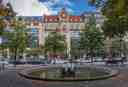
  3. To spot Hausvogteiplatz, look for a small, triangular square with a classic fountain surrounded by trees and distinctive historic buildings, including one with a clock and arched…Czytaj więcejPokaż mniej

    To spot Hausvogteiplatz, look for a small, triangular square with a classic fountain surrounded by trees and distinctive historic buildings, including one with a clock and arched windows straight ahead. Welcome to Hausvogteiplatz-right at the intersection of fashion, history, and, once upon a time, a surprising amount of ham! No, really, locals used to call this place “Schinkenplatz,” not just because of its odd shape, but because meat was sold here, and perhaps for other reasons best left a mystery for your own imagination. You’re standing in a spot where Berlin’s past layers itself like fabric on a tailor’s table. Close your eyes for a second and imagine the 17th century. Under your feet, there would have been massive fortress walls-eight meters high, with a deep, water-filled moat and battlements that protected the town from danger. But these fortifications didn’t last; as the city grew, traffic between the old medieval center and the bustling suburbs made them more of a nuisance than a defense. One by one, the walls came down and the area turned from military to mercantile, with markets beginning to spring up and life flowing where soldiers once patrolled. The original Hausvogtei, or royal court prison, once stood right here, making this perhaps the least popular address in Berlin if you were a truth-teller in the mid-1800s. A famous saying back then was: “He who knows and freely speaks the truth, ends up in the Hausvogtei in Berlin.” And don’t laugh too soon-the last public shaming at the pillory happened in 1853, when a woman accused of perjury was tied up here for all to see. I guess not everyone wanted to visit Hausvogteiplatz for the latest trends back then! But fashion was about to step onto the main stage. By the late 1800s, this was not just any square; it was the beating heart of Berlin’s ready-to-wear clothing industry. Picture the scene: fabric merchants hurrying through the streets, delivery boys darting in and out of four-story shops, the sounds of typewriters and the swish of new dresses. Big department stores and elegant townhouses popped up, and the whole place was buzzing with creativity. Berlin-made suits, dresses, and furs started traveling all over Europe, even across the Atlantic. The stories behind these clothes were threaded with the traditions of Berlin’s Jewish community, who for generations had built a thriving textile trade here. In the golden years before the First World War, dozens, soon hundreds, of fashion firms made Hausvogteiplatz their home, with designers and buyers gathering to gossip at Café Schiller or share the latest Parisian looks at Reimann. Imagine the air thick with excitement during international buying trips, with the sense that you were at the very center of a global movement. Of course, the tides turned. The Nazis rose to power in the 1930s, and the Jewish-led fashion industry, like so much of Berlin, suffered horrible persecution. Families fled or were forced to sell their businesses at terrible losses. More than 4,000 people connected to the trade were murdered during the Holocaust-a grim silence where once business had boomed and laughter filled the cafés. So, as you stand near the fountain, take a look at the reflective stainless steel memorial shaped like dressing mirrors, close to the U-Bahn entrance. Step inside, and you’ll see yourself multiplied and distorted, much like the fractured memories of this place. Embedded in the pavement are the names, now partly lost to history, of the Jewish firms who once gave life and style to Hausvogteiplatz. Today, the square has been revived, with modern buildings blending old and new, and the tradition of Jewish culture returning, even housing the only nationwide Jewish weekly newspaper here. You’re standing on what was once a catwalk for fashion-and now, maybe just for you and the pigeons! Don’t forget to toss a lucky coin in the fountain, and remember: fashion, history, and Berlin’s ever-mischievous sense of humor all walk hand in hand at Hausvogteiplatz. Seeking more information about the designations of the square, development, ready-to-wear location or the memorials? Ask away in the chat section and I'll fill you in.

    Otwórz dedykowaną stronę →
Pokaż jeszcze 1 przystankówPokaż mniej przystankówexpand_moreexpand_less
  1. You’ll spot Spittelmarkt Underground Station right in front of you, marked by a bright blue “U Spittelmarkt” sign-just look for that splash of color set against a towering…Czytaj więcejPokaż mniej

    You’ll spot Spittelmarkt Underground Station right in front of you, marked by a bright blue “U Spittelmarkt” sign-just look for that splash of color set against a towering backdrop of glassy modern buildings. Alright, here we are at Spittelmarkt station-where today’s hum of city life meets more than a century of urban adventures and a few spectacular mishaps. Imagine yourself transported back to October 1908, when the Berlin air was thick with the excitement of new underground wonders. Right where you're standing, Berliners celebrated the grand opening of this very station, now tucked beneath the surface of the pulsating Mitte district and the shadow of these gleaming new towers. But don’t let the unassuming entrance fool you-down below, this U-Bahn stop has seen its fair share of drama. When engineers first set out to build Spittelmarkt, they quickly learned that Berlin’s ground was not about to make things easy. You see, the Spree River is just steps away, but under your feet was marshy, unstable land, a builder’s worst nightmare. They had to drill foundations an impressive fifteen meters deep and whack in a steel wall fully sixteen meters down along the street just to anchor everything. To make things spicier, medieval city walls and even ancient plague cemeteries lurked underground. Yep-gravediggers had to carefully collect bones and skulls, giving them a new, quieter home in Friedrichsfelde. When the station finally opened, it wasn’t just a gateway to the U2 line-it was a real showstopper. The original design featured a magnificent gallery of thirty-five round-arched windows, offering dazzling views onto the canal and bathing the platform in daylight. Few Berliners had seen anything like it; the only other station to attempt that trick was Stadtpark on the U4, but even that couldn’t compare to the riverside drama here. To keep the station safe from flooding, clever engineers counted on Berlin’s locks to keep the Spree’s water levels in check, and rumor has it that local fish were jealous they couldn’t sneak a peek at passengers waiting below. Not all was joyous, though. The station had to close its windows during World War II under blackout orders, sealing out the sunlight because of bombing raids. Even then, Spittelmarkt couldn’t dodge trouble-a bomb struck it in February 1945, causing heavy damage above the rails. Despite destruction on the surface, the sturdy river-facing wall held, and thankfully, no unwanted swimming pools appeared in the U-Bahn. But not long after, burst tunnels elsewhere in the city caused another deluge, submerging the network and bringing service here to a watery halt. The trains only returned to Spittelmarkt once the last drop was drained and repairs were finished, a full year and a half after the war’s end. Over in East Berlin during the DDR era, the station faded into quieter times. As the city’s center shifted and new roads took over, Spittelmarkt’s hustle slowed to a crawl. The beautiful window gallery stayed bricked up for decades. New light blue tiles lined the station, and advertisements disappeared. Even during the big 750th anniversary celebrations in 1986, the idea of reopening the windows turned out to be just that-an idea. But every underdog gets a comeback! After reunification in the 1990s, Berliners began restoring the station’s lost grandeur, reopening parts of that famous window gallery, lighting it up in blue at night, and spiffing up the walls with new tiles and dramatic mosaics of Berlin’s romance with water. In 2008, the station finally got an elevator, making access easier for everyone.

    Otwórz dedykowaną stronę →

Najczęściej zadawane pytania

Jak rozpocząć trasę?

Po zakupie pobierz aplikację AudaTours i wpisz kod realizacji. Trasa będzie gotowa do natychmiastowego rozpoczęcia – po prostu dotknij \"Play\" i podążaj trasą z nawigacją GPS.

Czy potrzebuję internetu podczas trasy?

Nie! Pobierz trasę przed rozpoczęciem i korzystaj z niej w pełni offline. Jedynie funkcja czatu wymaga internetu. Zalecamy pobieranie przez WiFi, aby oszczędzać dane mobilne.

Czy to wycieczka grupowa z przewodnikiem?

Nie – to samodzielny audioprzewodnik. Zwiedzasz niezależnie, we własnym tempie, z narracją audio odtwarzaną przez telefon. Bez przewodnika, bez grupy, bez harmonogramu.

Ile trwa trasa?

Większość tras zajmuje 60–90 minut, ale to Ty kontrolujesz tempo. Wstrzymuj, pomijaj przystanki lub rób przerwy, kiedy chcesz.

Co jeśli nie zdążę ukończyć trasy dzisiaj?

Żaden problem! Trasy mają dożywotni dostęp. Wstrzymaj i wznów, kiedy chcesz – jutro, za tydzień lub za rok. Twój postęp jest zapisywany.

W jakich językach są dostępne trasy?

Wszystkie trasy są dostępne w ponad 50 językach. Wybierz preferowany język podczas realizacji kodu. Uwaga: języka nie można zmienić po wygenerowaniu trasy.

Gdzie znajdę trasę po zakupie?

Pobierz darmową aplikację AudaTours z App Store lub Google Play. Wpisz kod realizacji (wysłany e-mailem), a trasa pojawi się w Twojej bibliotece, gotowa do pobrania i rozpoczęcia.

verified_user
Gwarancja satysfakcji

Jeśli trasa Ci się nie spodoba, zwrócimy Ci pieniądze. Skontaktuj się z nami pod adresem [email protected]

Bezpieczna płatność przez

Apple PayGoogle PayVisaMastercardPayPal

AudaTours: Audioprzewodniki

Rozrywkowe, niedrogie, samodzielne piesze trasy

Wypróbuj aplikację arrow_forward

Uwielbiany przez podróżników na całym świecie

format_quote Ta trasa była świetnym sposobem na poznanie miasta. Historie były ciekawe, bez przesadnego scenariusza, i uwielbiałam możliwość zwiedzania we własnym tempie.
Jess
Jess
starstarstarstarstar
Trasa po Tbilisi arrow_forward
format_quote To był solidny sposób na poznanie Brighton bez poczucia bycia turystą. Narracja miała głębię i kontekst, ale nie przesadzała.
Christoph
Christoph
starstarstarstarstar
Trasa po Brighton arrow_forward
format_quote Zacząłem tę trasę z croissantem w jednej ręce i zerowymi oczekiwaniami. Aplikacja po prostu idzie z Tobą, bez presji, tylko Ty, Twoje słuchawki i fajne historie.
John
John
starstarstarstarstar
Trasa po Marseille arrow_forward

Nieograniczone audioprzewodniki

Odblokuj dostęp do KAŻDEJ trasy na świecie

0 tras·0 miast·0 krajów
all_inclusive Odkryj Bez Limitu