AudaTours logoAudaTours

Martinsville Audiotour: Schatten van Kunstzinnigheid en Historische Straten

Audiogids8 stops

Een T. rex-skelet torent hoog boven geavanceerde technologie uit in het centrum van Martinsville, het bewijs dat deze kleine stad eeuwenoude geheimen herbergt achter elke baksteen en penseelstreek. Deze zelfgeleide audiotour leidt je door het hart van Martinsville, onthult onvertelde verhalen onder de bekende bezienswaardigheden en laat je de lokale geschiedenis ervaren zoals weinigen dat hebben gedaan. Waarom ontketende een rustig museum een verhit stadsdebat? Welk vreemd artefact, gevonden in de kelder van Piedmont Arts, blijft tot op de dag van vandaag onopgelost? Welk Main Street-festival eindigde met zwaailichten om redenen waar nog steeds over gefluisterd wordt? Volg kronkelende trottoirs van fossielrijke galerijen naar creatieve muren vol verborgen schandalen, folklore en innovatie. Volg de hartslag van Martinsville in zijn plaatsen en stemmen, voel hoe elk hoofdstuk zich ontvouwt terwijl je loopt en luistert. Zie bekende plaatsen in verrassend, levendig nieuw detail. Laat de eeuwenoude mysteries van Martinsville je meeslepen. Druk op afspelen en begin de zoektocht.

Tourvoorbeeld

map

Over deze tour

  • schedule
    Duur 30–50 minsGa op je eigen tempo
  • straighten
    2.6 km wandelrouteVolg het geleide pad
  • location_on
  • wifi_off
    Werkt offlineEén keer downloaden, overal gebruiken
  • all_inclusive
    Levenslange toegangOp elk moment opnieuw afspelen, voor altijd
  • location_on
    Start bij Martinsville, Virginia micropolitane gebied

Stops op deze tour

  1. You’re looking for a wide oval track surrounded by packed grandstands and a line of colorful race cars zipping around-it’s hard to miss the roar and excitement of the Martinsville…Meer lezenToon minder

    You’re looking for a wide oval track surrounded by packed grandstands and a line of colorful race cars zipping around-it’s hard to miss the roar and excitement of the Martinsville Speedway in this lively micropolitan area. Welcome to the start of our Martinsville adventure! Picture yourself standing among a sea of cheering fans, the aroma of popcorn and hot dogs filling the air, hands gripping the fence in anticipation. Martinsville isn’t just about fast cars-though you might hear a thunderous rumble as engines come to life -it’s the heart of a community that’s grown and shifted over the decades. Now, back in 2000, this entire micropolitan area had more than 73,000 folks making memories right here in Martinsville or just up the road in Ridgeway, Bassett, or even tiny Oak Level. Ever wonder how many families called this place home? Just over 30,000 households! It’s a tapestry woven from lively towns, census spots, and even quirky unincorporated nooks like Axton or Horsepasture-yes, that’s really the name! And since way back in 1871, Martinsville hasn’t belonged to any county; it’s an independent city, kinda like a teenager who moved out but still visits for laundry! Over time, the hum of race day joined the steady rhythms of daily life-whether in a bustling neighborhood or a sleepy town hidden among the pines. So, as you soak in the atmosphere, remember: this stadium of life is just one piece of a unique and ever-evolving puzzle.

    Open eigen pagina →
  2. To spot Scuffle Hill, just look for the grand red brick mansion with towering white columns and a stately porch right in front of you, partially peeking out from behind thick…Meer lezenToon minder

    To spot Scuffle Hill, just look for the grand red brick mansion with towering white columns and a stately porch right in front of you, partially peeking out from behind thick green bushes. Now, gather round for the tale of Scuffle Hill-a house that simply refused to quit! Built originally in 1905 for Col. Pannill Rucker, a man who knew his tobacco almost as well as he knew ambition, the home went up in flames in 1917. But like a phoenix, it sprang back to life between 1917 and 1920, its brick shell filled with laughter, loss, and the ever-present whiff of pipe smoke. You can imagine the excitement as masons laid down granite and poured the concrete foundation, while local folks whispered, “What’s next for the old Rucker place?” The answer: everything! The mansion eventually became home to the Rives Brown family, then to the Pannills of Pannill Knitting fame, and even found a second calling as the parish house for Christ Episcopal Church. The name “Scuffle Hill” is a wink to Revolutionary War hero General Joseph Martin, who grumbled he had to “scuffle” up money to buy his first bit of land nearby. In 1997, this resilient beauty landed on the National Register of Historic Places-a badge of honor for a house that refused to be forgotten.

    Open eigen pagina →
  3. Right in front of you, you’ll see a grand gray two-story house with a big wrap-around porch and a round, turret-style tower on the right-just look for the place that looks fancy…Meer lezenToon minder

    Right in front of you, you’ll see a grand gray two-story house with a big wrap-around porch and a round, turret-style tower on the right-just look for the place that looks fancy enough for a fairy tale tea party. This is the John Waddey Carter House, a true Queen Anne style beauty that’s been catching eyes since 1896. Imagine the clatter of horse carriages on the street as this gray, weatherboard-sheathed house rose up, inspired by architect George Franklin Barber’s clever designs. The house’s star feature is its dramatic, two-story gable that dares you not to gasp, while the polygonal tower at the corner looks like it could hide a Victorian secret or two-maybe a nosy neighbor keeping an eye out for who’s coming to call! That huge, one-story porch is perfect for imagining elegant gatherings, with genteel Victorians sipping lemonade beneath the steep, metal-clad roof. There’s even a swooping bay window and a utility wing called a service ell-because every historic house needs a few mysterious corners. Listed on the National Register of Historic Places in 1988, the Carter House now stands right in the East Church Street-Starling Avenue Historic District, holding onto its stories of old Martinsville, even while the world outside keeps spinning. And hey, if you’re feeling fancy, give that porch a royal wave as you go by!

    Open eigen pagina →
Toon 5 stops meerToon minder stopsexpand_moreexpand_less
  1. Look to your left-you’ll spot classic brick and pastel colored historic homes standing proudly along the street, their different shapes and rooftops announcing the entrance to…Meer lezenToon minder

    Look to your left-you’ll spot classic brick and pastel colored historic homes standing proudly along the street, their different shapes and rooftops announcing the entrance to this special district. Alright, let’s take a step back in time together-imagine it’s the late 1800s, carriages and fancy hats rule the day, and Martinsville’s East Church Street-Starling Avenue is just coming alive! The trees rustle around you, but listen closely-you might hear the faint click of typewriters or the sounds of families coming and going from houses with impressive names like the James Cheshire House or the “Wedding Cake House” (try not to get hungry, it doesn’t serve dessert!). These 117 buildings, each with their own flavor, tell stories from the bustling mid-1880s all the way to the post-war 1950s. There’s a bit of everything here-from the pointed Tudor Revival styles to stately Colonial Revivals, and even a church that’s watched generations grow. Did you know that some old-timers still argue about which window gives the best view of a thunderstorm? The district isn’t just homes, though-the local high school, gymnasium, and iconic neighbors like the John Waddey Carter House, Scuffle Hill, and the Little Post Office bring even more intrigue. Listed on the National Register of Historic Places since 2006, every brick whispers secrets of their former residents. So, take your time-maybe you’ll even feel the echoes of yesterday’s laughter swirling just around the corner!

    Open eigen pagina →
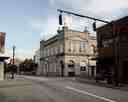
  2. To spot Martinsville, just ahead of you stands a striking, two-story stone building with pronounced corners capped by decorative finials-look toward the intersection where Main…Meer lezenToon minder

    To spot Martinsville, just ahead of you stands a striking, two-story stone building with pronounced corners capped by decorative finials-look toward the intersection where Main Street meets a quieter side road, right under the traffic lights. Welcome to the heart of Martinsville, a city that loves to make a big impression-sometimes with a giant NASCAR roar and sometimes, well, with its famous croissants from the bakery around the corner. But let’s skip back-way back-where it all started with a Revolutionary War general named Joseph Martin, a guy so legendary they put his name on the city and, just for good measure, the neighboring county too. Picture this: the rumbling Smith River, thick forests, and Martin building his Scuffle Hill plantation on land that’s now dotted with city blocks and barbecue joints. His pal? Oh, just Patrick Henry, founding father, “Give me liberty or give me death!”-the two would debate the future of America right where traffic now occasionally gets, let’s call it, dramatic. The town boomed after World War II, when a single word-nylon-changed everything. During the 1940s, DuPont opened a vast nylon filament plant, just when America needed it most. If you hear the wind, that’s not your imagination; it’s the ghostly hum of thousands of sewing machines cranking out parachutes, pantyhose, and a few dreams. Martinsville, once famous for chewing tobacco, quickly gained a new motto: “the Sweatshirt Capital of the World.” Not the most glamorous title, but hey, at least the locals were cozy! Of course, every hero faces a villain-or two. For Martinsville, economic hardships struck hard in the 1990s, as jobs from furniture and textile factories packed up and left faster than you can say “globalization.” But here’s where Martinsville’s stubborn spirit comes through: neighborhoods like “Mill Town,” worn-out and left behind by the old cotton mills, transformed into thriving communities, thanks in part to local heroes like Whitney Shumate. Imagine, starting out with rickety old rental houses and ending up with new homes, filled with hope and laughter, all without a single penny from the federal government. And in case you thought it was all quiet southern charm, remember the city’s pulse runs fast at the legendary Martinsville Speedway-just outside town, barely half a mile in length but loaded with enough NASCAR history and burnt rubber to make your heartbeat skip just as the cars do. If you squint, you might even see a blur of race cars in your mind’s eye, and maybe-just maybe-catch a whiff of funnel cake drifting on the wind. Martinsville claims many notable names, from footballers to country artists, and even the occasional professional wrestler. These streets have hosted everyone from civil rights pioneers to future presidents-Barack Obama rallied here in 2008, drawing a crowd almost as enthusiastic as race day. Today, the city is proud of its quirky blend of old and new: a council-manager government (which might sound dull but is really just a fancy way of keeping everyone honest), mighty industries, a reinvigorated arts community, and festivals that turn uptown into a playground of music, crafts, and laughter every fall. Hospitals here trace a lineage of compassionate care, while nearby colleges and museums keep minds busy and imaginations soaring. So, whether you’re here for the thunder of engines, the peace of a gentle river, or a bottomless mug of southern hospitality, Martinsville proves you don’t have to be big to make a big impression. Just remember-around here, the racetrack isn’t the only place you’ll find a quick turn and a tight community. Intrigued by the geography, demographics or the economy? Make your way to the chat section and I'll be happy to provide further details.

    Open eigen pagina →
  3. To spot the Piedmont Arts Association, just look for a bright, modern white building with a striking orange-red abstract sculpture near the entrance and a large sign that reads…Meer lezenToon minder

    To spot the Piedmont Arts Association, just look for a bright, modern white building with a striking orange-red abstract sculpture near the entrance and a large sign that reads "Piedmont Arts"-if you see that sharp sculpture curling like a musical note, you’re in the right place! Welcome to Piedmont Arts! If you listen closely, you can almost hear the sound of footsteps and excited voices buzzing in and out of the galleries, especially when a new exhibit opens. This isn’t just any museum-this is a creative heartbeat of Martinsville! Imagine it: the year is 1961, and a small group of passionate local artists, inspired by the Virginia Museum of Fine Arts, gather here with a dream. They want to share art with everyone-yes, even the neighbor who’s pretty sure their stick figures are advanced drawing. They started by exhibiting regional works in the old Lynwood House, thanks to a generous lease from the DuPont company-imagine artists rushing around, propping up canvases and setting up sculptures while the smell of fresh paint fills the rooms. Their vision kept growing, turning them into the Piedmont Arts Association in 1976. And then, like a plot twist in a good movie, they were gifted the beautiful Schottland Estate in 1981, which gave this creative crew a permanent home-perfect for building dreams and displaying masterpieces. Fast-forward to the 1990s and Piedmont Arts decided to get even bigger! They launched the Shared Vision Campaign and built a new wing-to the sound of hammers and saws, of course. They turned their ambition into real walls, gallery spaces, a classroom, and even a performance hall. It was a place where music, theater, and art all come alive. Accreditation by the American Alliance of Museums in 2004 was like a gold star for all their hard work-you could almost hear the applause from the community that day. Right now, Piedmont Arts hosts exhibitions that feature everything from local student artwork in the Foster Gallery, to national and international artists. Galleries like the Hooker-Garrett and Lynwood Artists Gallery are always changing, so each visit is a new adventure. Outside, their Art Garden calls to you with vibrant sculptures and towering trees-one of them over 100 years old! And if you’re really lucky, you might stumble on a school group giggling through a treasure hunt, or local kids showing off their masterpieces. And you know what’s really cool? Piedmont Arts doesn’t just keep the fun inside. They spread artistic joy all over Martinsville, filling Uptown with murals, mobiles, and sculptures. In fact, if you see one of those wild mobiles spinning in the wind, that’s their handiwork! So take a deep breath and enjoy-because here, art isn’t just a thing you look at, it’s a thing you live. Want to explore the visual arts, r.p. gravely-a.j. lester art garden or the performing arts in more depth? Join me in the chat section for a detailed discussion.

    Open eigen pagina →
  4. Right in front of you is a charming, one-story brick building with a white door, simple steps, and a round decorative vent just under the steep gable roof-look straight ahead and…Meer lezenToon minder

    Right in front of you is a charming, one-story brick building with a white door, simple steps, and a round decorative vent just under the steep gable roof-look straight ahead and you can’t miss its cottage-like charm nestled among green bushes and shady trees. Now, let’s picture 1893: mail wasn’t racing through the internet, but by horse, cart, and feet-rain or shine, sweltering or freezing! The man in charge here, John B. Anglin, wasn’t your average mail carrier-he was the supervisor of the star route mail delivery, which sounds like something from a cowboy movie, but really just meant private contractors carrying mail out to remote spots. Inside, the Little Post Office was a one-room wonder, dressed up in the elegant Queen Anne style-think fancy woodwork and intricate details that made it feel like a mini-mansion for letters. It hummed with the excitement of news and greetings crisscrossing the country until 1917, when its days as a post office ended. Fast forward to today, and this tiny treasure is part of the Piedmont Arts Association’s installations, carrying creativity instead of correspondence. And here’s a proud fact: it’s listed on the National Register of Historic Places, meaning this little spot is officially too cool to tear down. So, whether you dream of being a 19th-century mailman or just enjoy quirky history, the Little Post Office delivers!

    Open eigen pagina →
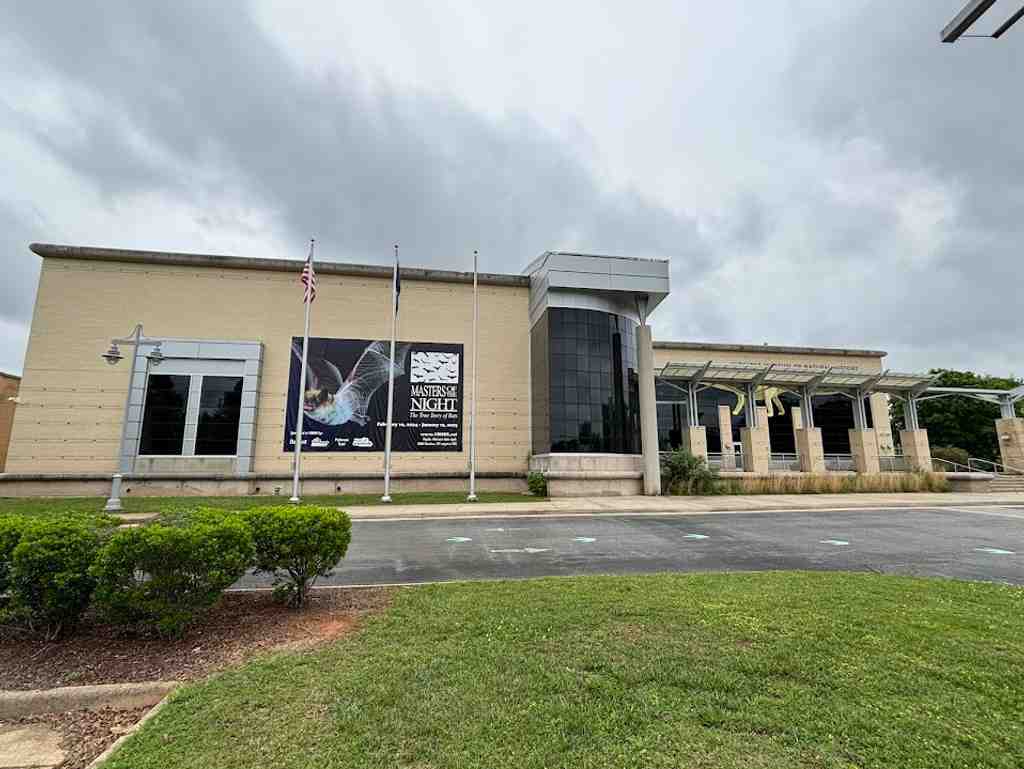
  5. Right in front of you, you’ll see a modern beige brick building with tall, black-tinted windows and three flagpoles out front, along with a big “Masters of the Night” bat exhibit…Meer lezenToon minder

    Right in front of you, you’ll see a modern beige brick building with tall, black-tinted windows and three flagpoles out front, along with a big “Masters of the Night” bat exhibit banner-yup, that’s the Virginia Museum of Natural History! Now, as you stand here at the entrance, imagine the world buzzing with discovery-because this building isn’t just a museum; it’s a portal to ages past and the wonders of our planet, right in Martinsville. The story begins back in 1984, when the museum was just a twinkle in the eyes of two adventurers of science, Dr. Noel T. Boaz and Dr. Dorothy Dechant Boaz, who kicked things off as The Boaz Foundation. Picture a small private operation filled with fossil dreams and local fossils that looked like they’d been dug up from under the family garden shed. In 1985, it opened as the Virginia Museum of Natural History to the public-maybe someone shouted “Eureka!” or at least “We’re open!” and the city got a brand new treasure chest, packed with fossils, gems, and plenty of curiosity. Only a few short years later, by 1988, the museum must have impressed the bigwigs at the Virginia General Assembly, because it became an official agency of the Commonwealth, giving its collections a permanent home for everyone in the state. The first board meeting must have been a thrilling nail-biter-“Should we put the Allosaurus on the left or the right?” That’s a serious debate when you’re dealing with giant bones! From these lively beginnings, the museum kept growing, and in 1994, it received accreditation by the American Alliance of Museums-think of that as getting a shiny gold star, but for museums. Less than five percent of museums ever get re-accredited, which the Virginia Museum of Natural History managed again in 2010! Along the way, the crowd of fossils grew to over 22 million items-yes, you heard that right. So if you feel like something is watching you in there, it’s probably a 14-million-year-old whale skeleton peering down from the rafters, not the museum staff. Let me paint a picture for you inside: The first thing you’d see is the Harvest Foundation Hall of Ancient Life. Standing almost 10 feet tall, an Allosaurus dinosaur skeleton guards the entry. Next to it, a delicate baleen whale skeleton, hanging gracefully under glassy skylights, invites you to step right into Earth’s wild history. The labs tucked behind glass windows seem alive with the click-clack of microscopes and the focused hush of busy scientists. You can catch a glimpse of their work-prepping fossils, examining artifacts, or wondering if they’ve finally discovered the world’s largest ancient lunchbox. And just around the corner is one of the true giants-the first intact stromatolite head ever found in Virginia. Imagine a fossil the size of a small car, weighing over two tons. Stromatolites are ancient rock formations made by bacteria, and this “head” is bigger than most people’s living room sofas! Museums love their drama, and this one likes to make a bold statement. The adventure continues with exhibits like Uncovering Virginia, where the scientists recreated the scenes of discovery from six actual research sites, spanning from 700 million years ago to just a few centuries ago. It’s interactive, so you can turn detective-sifting “dirt,” examining fossils, and even poking at virtual animals and plants who once called Virginia home. Trust me, you haven’t truly questioned your own existence until you’ve stared into the eye sockets of a prehistoric shark. On top of all that, there’s a gallery calling out to future Dr. Dolittles: the Hahn Hall of Biodiversity, brimming with wild African mammals donated by Dr. Thomas Marshall Hahn Jr.-caution, some of them appear to be judging your shoe choices. Today, this museum is more than fossils and facts. With programs for kids, sleepovers among dinosaur bones, and even summer camps where imaginations can run as wild as the wildlife, there’s always something to uncover or giggle at. And hey, if things ever get too much, you can always escape to the kid’s discovery reef and pretend you’re a clownfish. So, welcome to a place where ancient giants and microscopic mysteries share the same postcode, where Virginia’s history is millions of years in the making, and where your curiosity is always in for a treat!

    Open eigen pagina →

Veelgestelde vragen

Hoe begin ik de tour?

Download na aankoop de AudaTours-app en voer je inwisselcode in. De tour is direct klaar om te starten – tik gewoon op afspelen en volg de GPS-geleide route.

Heb ik internet nodig tijdens de tour?

Nee! Download de tour voordat je begint en geniet er volledig offline van. Alleen de chatfunctie vereist internet. We raden aan om te downloaden via wifi om mobiele data te besparen.

Is dit een groepsrondleiding met gids?

Nee - dit is een audiotour met eigen gids. Je verkent zelfstandig op je eigen tempo, met audiovertelling via je telefoon. Geen tourguide, geen groep, geen schema.

Hoe lang duurt de tour?

De meeste tours duren 60-90 minuten, maar jij bepaalt het tempo volledig. Pauzeer, sla stops over of neem pauzes wanneer je wilt.

Wat als ik de tour vandaag niet kan afmaken?

Geen probleem! Tours hebben levenslange toegang. Pauzeer en hervat wanneer je wilt – morgen, volgende week of volgend jaar. Je voortgang wordt opgeslagen.

Welke talen zijn beschikbaar?

Alle tours zijn beschikbaar in meer dan 50 talen. Selecteer je voorkeurstaal bij het inwisselen van je code. Let op: de taal kan niet worden gewijzigd na het genereren van de tour.

Waar vind ik de tour na aankoop?

Download de gratis AudaTours-app uit de App Store of Google Play. Voer je inwisselcode in (verzonden per e-mail) en de tour verschijnt in je bibliotheek, klaar om te downloaden en te starten.

verified_user
Tevredenheid gegarandeerd

Als je niet tevreden bent met de tour, betalen we je aankoop terug. Neem contact met ons op via [email protected]

Veilig afrekenen met

Apple PayGoogle PayVisaMastercardPayPal

AudaTours: Audiotours

Vermakelijke, budgetvriendelijke wandeltours met eigen gids

Probeer de app arrow_forward

Geliefd bij reizigers wereldwijd

format_quote Deze tour was een geweldige manier om de stad te zien. De verhalen waren interessant zonder te gekunsteld aan te voelen, en ik vond het heerlijk om op mijn eigen tempo te verkennen.
Jess
Jess
starstarstarstarstar
Tbilisi-tour arrow_forward
format_quote Dit was een prima manier om Brighton te leren kennen zonder je als toerist te voelen. De vertelling had diepgang en context, maar overdreef het niet.
Christoph
Christoph
starstarstarstarstar
Brighton-tour arrow_forward
format_quote Begon deze tour met een croissant in de ene hand en nul verwachtingen. De app gaat gewoon mee met je, geen druk, gewoon jij, je koptelefoon en gave verhalen.
John
John
starstarstarstarstar
Marseille-tour arrow_forward

Onbeperkte audiotours

Ontgrendel toegang tot ELKE tour wereldwijd

0 tours·0 steden·0 landen
all_inclusive Onbeperkt verkennen