Houston Audiotour: De Oriëntatiepunten van Houston Onthuld
Zonlicht stroomt door wolkenkrabbers en verlicht verhalen die de meeste inwoners van Houston nooit horen. De iconen van Downtown zijn meer dan alleen fotogeniek – ze verbergen verwikkelde schandalen, stille rebellies en flitsen van genialiteit die een hele stad hebben gevormd. Begin deze zelfgeleide audiotour en stap binnen in ruimtes waar verborgen drama's zich afspeelden. Ga verder dan het voor de hand liggende terwijl je zwevende kathedraalbogen, geheime hoekjes van grootse oude bibliotheken en de weelderige gazons van Sam Houston Park verkent – en hoort wat reisgidsen weglaten. Welk schokkend geheim veroorzaakte verontwaardiging in de Co-Kathedraal van het Heilig Hart? Wie verdween onder een regenbui tijdens het lezen in de Openbare Bibliotheek van Houston? Waarom trekt één ongemarkeerde bank in Sam Houston Park alleen degenen aan die het codewoord kennen? Race door onvertelde hoofdstukken en voel de geschiedenis kloppen in je pas. Zie Downtown Houston transformeren met elke aanwijzing en elk verhaal. Ware ontdekking wacht tussen glazen torens en tijdloze baksteen. Klaar om te zoeken naar geheimen waar alleen locals over fluisteren? Begin nu met luisteren.
Tourvoorbeeld
Over deze tour
- scheduleDuur 40–60 minsGa op je eigen tempo
- straighten2.9 km wandelrouteVolg het geleide pad
- location_onLocatieHouston, Verenigde Staten
- wifi_offWerkt offlineEén keer downloaden, overal gebruiken
- all_inclusiveLevenslange toegangOp elk moment opnieuw afspelen, voor altijd
- location_onStart bij Sam Houston Park
Stops op deze tour
You’re looking at a classic stretch of manicured green-guarded by a tall black iron fence-with a historic house peeking out through a peaceful grove of trees, right at the gateway…Meer lezenToon minder
You’re looking at a classic stretch of manicured green-guarded by a tall black iron fence-with a historic house peeking out through a peaceful grove of trees, right at the gateway to Houston’s Sam Houston Park. Alright, welcome to the spot where Houston first decided, “Hey, let’s give ourselves a little breathing room.” Sam Houston Park isn’t just another patch of lawn in the city; it’s the oldest city park here, founded back in 1900 when Mayor Sam Brashear wrangled these 20 acres from a mosaic of owners-one chunk used to be a brickyard, another belonged to someone called So Young. These days, the clattering of streetcars and the hustle of downtown get muted as soon as you step inside. Picture yourself walking these grounds more than a century ago…Victorian landscaping, winding footpaths, a charming mill, and a bridge crossing what was likely the tamest little stream you’d ever laid eyes on. There was even a bandstand and a conservatory for those with grand tastes. And over there? That’s the Kellum-Noble House-the oldest brick home still standing in all of Houston. Built back in 1847, first by Nathaniel Kellum, then later used as a school by Zerviah Noble, who taught there until 1899. Imagine the chatter of kids darting through the breezeway, voices echoing between the double galleries on a muggy Houston morning. Now, the Heritage Society runs the show here. Since 1954, they’ve been the local guardians of Houston’s tangible memories-moving, restoring, and caring for these old buildings as if they’re living, breathing time capsules. Inside the park, you’ll spot all sorts of architectural personalities: shy log cabins from the 1820s, like the Old Place-Houston’s oldest surviving structure, by the way, a sturdy little cabin first built out along Clear Creek. That place’s been through a LOT. Floods from Buffalo Bayou would regularly try to reclaim it-during Tropical Storm Allison, the water even reached the cabin’s roof. Nature does keep us humble down here. Look close and you’ll find a Greek Revival mansion that once belonged to William Marsh Rice-yes, that Rice, from Rice University fame. There are shotgun houses, German cottages, even a tiny 1891 Lutheran church, moved from northwest Harris County right here so it wouldn’t get lost to progress. Each building tells a different chapter about the wave of folks who called Houston home: European immigrants, formerly enslaved people building new lives, and everyday families chasing a shot at comfort, maybe even a kitchen with gas lights and one of those new-fangled refrigerators, like in the Staiti House from 1905. This park could’ve been just another patch of grass. Instead, it’s a survival story in miniature-historic homes rescued, pulled apart, moved from their original spots (sometimes for as little as $25, can you imagine?) and pieced back together right here. Some came from neighborhoods that no longer exist, like Freedmen’s Town-meaning, in a way, the very soul of early Houston endures. You can walk these footpaths, peek into the gracious galleries, and try to picture just how much courage it must’ve taken to build a life on the edge of frontier Texas. So, next time someone tries to tell you Houston’s nothing but highways and high-rises, you’ll know better. There’s a heartbeat here at Sam Houston Park-and, if you listen, it’s got a story with plenty of mileage left in it.
Open eigen pagina →Just ahead of you is the Houston Public Library-no, not just *a* library, but the biggest brain in the city center, if you like to think of buildings as having personalities. This…Meer lezenToon minder
Just ahead of you is the Houston Public Library-no, not just *a* library, but the biggest brain in the city center, if you like to think of buildings as having personalities. This is where generations of Houstonians have come to turn dusty questions into crisp answers, and first-grade reading logs into lifelong obsessions. The place feels solid-you might even say it has backbone, and not just because of all the spines lining those shelves. Let’s take you back-way, way back-to 1854. Houston’s idea of excitement was a raucous debate club called the Lyceum, which evolved into a circulating library. I picture a handful of folks arguing over Shakespeare versus Texas law books. By late 1800s, the dream outgrew these living-room libraries. Enter William Marsh Rice-yes, that Rice, as in Rice University. Rice dropped $200,000 (a fortune in those days) to open a real library for the people in 1895, and just a decade later, thanks to philanthropy king Andrew Carnegie, Houston got itself a proper Carnegie Library building in 1904. But here’s the twist-not everyone could walk right in. Early on, libraries in Houston, like almost everywhere, had all sorts of restrictions, and desegregation was still a far-off thought. It took passionate reminders and public letters from Black Houstonians-people like civil rights hero Lonnie E. Smith, whose name now graces a library branch-to nudge things forward. Houston desegregated its libraries in 1953-not by grand announcement, mind you, but almost under the radar, as if trying not to wake the neighbors. Subtlety, thy name is bureaucracy. Now, if you look at the stately Julia Ideson Building around the corner-that Spanish Renaissance lady with her carved explorers and mission-style flourishes-that’s the heart of Houston’s original Central Library. Opened in 1926, it’s named for Julia Ideson, the first head librarian. Imagine Julia, back when the collection was just 10,000 books, being handed the keys and a single staff member. I bet she could recite the Dewey Decimal System in her sleep. But that wasn’t the only story unfolding here. On the other side of town, African American Houstonians carved out their own place for learning-the Colored Carnegie Library, opened in 1913 with its own Black board and staff. It closed in 1961, a casualty of city planning meet wrecking ball, but it’s got a spiritual successor: the W.L.D. Johnson Library out in Sunnyside. Stepping into the present, the Houston Public Library system sprawls into all corners of the city-over thirty five branches, special research centers, a fleet of traveling bookmobiles, and neighborhood libraries perched in repurposed churches, old retail spaces, and shiny new halls. There’s even a mobile computer lab, which is about as Houston as it gets: “If you can’t get to the library, the library’ll come to you.” Not everything’s been smooth sailing-funds ebbed and flowed, buildings outgrew themselves, renovations sparked debate, and sometimes hurricanes showed up uninvited. You’ll notice, though, how the library keeps re-inventing-digitizing city directories from decades past, adding eco-friendly architecture like the Looscan branch over in River Oaks, and relocating its HQ whenever construction dust sets in. So, standing here, you’re at more than a book depository. This place is the living memory of Houston-a city that’s always looked forward, even as it argues politely with its own past. Whether you need a quiet place to plot your next big idea or just want to shelter from a sudden Gulf storm, the doors are almost always open... and the stories inside? Usually right at your fingertips. If only all of life’s mysteries came with a library card.
Open eigen pagina →Right in front of you, towering against the Houston sky, is Heritage Plaza-a sleek glass skyscraper capped with a distinct, stepped granite crown that looks like a modern-day…Meer lezenToon minder
Right in front of you, towering against the Houston sky, is Heritage Plaza-a sleek glass skyscraper capped with a distinct, stepped granite crown that looks like a modern-day Mayan pyramid perched high above the city. Alright, you can’t miss this one-762 feet of Texas ambition, clad in mirrored glass and topped with what looks either like a Mesoamerican temple or a bald eagle mid-flap... depending on how much coffee you’ve had. Built in 1987, Heritage Plaza made its entrance just as Houston’s real estate market was--well, let’s just say “taking some unscheduled vacation time.” While this place was finished during the oil bust, most of its million-plus square feet sat emptier than a Spurs fan’s hopes at a Rockets game. That is, until Texaco came riding in two years later, leasing up over half the place and calling it home for a good decade. And nothing says “corporate romance” like a lobby with a marble waterfall. Inside, you’ll find echoes of Mexico-fitting, since the architect found inspiration on a trip to the Yucatán. Check out the top: those granite steps weren’t just for show, they’re a playful nod to the grand stone temples down south. Or, if you prefer local legend, just squint and you’ll spot an eagle ready to swoop down Main Street for lunch. Fun fact: Heritage Plaza stands a bit aloof from the Houston tunnel network-no secret underground shortcuts here, though you can still take a skyway stroll to the DoubleTree Hotel next door. Skyscraper survival, Houston style.
Open eigen pagina →
Toon 12 stops meerToon minder stopsexpand_moreexpand_less
Alright, you’ve found yourself staring up at Enterprise Plaza, or-as only the postal service and real estate agents insist-1100 Louisiana. This tower of steel and glass topped out…Meer lezenToon minder
Alright, you’ve found yourself staring up at Enterprise Plaza, or-as only the postal service and real estate agents insist-1100 Louisiana. This tower of steel and glass topped out in 1980, stretching 55 stories high, and for a brief moment, it wore the crown as the tallest building in Texas. Of course, Houston’s competitive streak meant it only held that title for two years before another skyscraper leapt ahead. Hey, this is Texas-someone’s always building something taller, faster, or flashier. Enterprise Plaza was whipped up by Hines, the development firm that’s practically left its fingerprints all over Houston. Since then, the ownership’s bounced around enough times to make a rodeo rider dizzy, landing every big investor in commercial real estate from CalPERS to Capitol Guidance. Think of this spot as the corporate cockpit of Houston’s energy and financial world. Enterprise Products calls it home, along with big-name law firms and energy consultants. If you ever wondered where the serious Houston energy deals go down... it’s probably a few floors above your head. And if you’re keeping score, this tower is still an A-lister in Houston’s ever-changing skyline. Not bad for a ‘70s kid, right?
Open eigen pagina →Alright… look up for a moment and meet Wells Fargo Plaza-one of Houston’s genuine giants. When you hear “tallest in Texas,” this place comes in third, but it dominates Louisiana…Meer lezenToon minder
Alright… look up for a moment and meet Wells Fargo Plaza-one of Houston’s genuine giants. When you hear “tallest in Texas,” this place comes in third, but it dominates Louisiana Street with a sort of cool confidence. Seventy-one floors, shooting nearly a thousand feet up into the sky-and if you count the FOUR stories below ground, well, this building digs deep quite literally and metaphorically. Now, just to put that height in perspective, if you took the elevator to the roof and dropped your hat, I wouldn’t count on getting it back before lunch. And, in true Houston fashion, there’s no shortage of drama. Back in 1983, Hurricane Alicia ripped a good chunk of the windows right out of this tower. Imagine coming back after the storm, looking up, and realizing your office now has, uh, “excellent cross-ventilation.” This skyscraper started life back in the ‘80s as the Allied Bank Plaza, then it cycled through names faster than a soap opera character: First Interstate Bank Plaza, and finally Wells Fargo Plaza-when the banking world was doing its own real-life version of musical chairs. And while skyscrapers love to boast about their amenities, Wells Fargo does pack a punch. It’s got THE Houstonian Lite health club perched on the 14th floor. So, you could pump iron with a view, then reward yourself with a business meeting… or maybe just a really good smoothie. But here’s something uniquely Houston: Wells Fargo Plaza is the ONLY tower that lets you stroll straight from the street into Houston’s legendary downtown tunnel system. Most buildings make you search for hidden elevators or stairs, but this one? It practically rolls out the red carpet right into the city’s air-conditioned rabbit warren. If you haven’t been underground yet, it’s a whole network of shops, restaurants, and shortcuts-a lifeline during Houston’s “air fryer” summer months. Over the years, this tower has welcomed more than high-powered bankers. At one point, the Consulate-General of Japan, Switzerland, and even the UK set up shop here. You’ve got law firms like Greenberg Traurig, some serious attorney headquarters, and offices for major companies that have come and gone, often as dramatically as the weather. There was even a spell when the Consulate-General of Switzerland made its home in Suite 5670. Try saying “yodel” from up there. And the building made a little splash in pop culture, too-the very front entrance pops up in the last scene of the 1989 thriller “Cohen and Tate.” Kind of poetic for a place that’s played host to global politics, law, and late-night elevator rides. So, standing here, among the suit-and-tie crowd and the occasional fitness buff sneaking out for a lunch hour workout, you’re at the crossroads of finance, diplomacy, and classic Houston hustle. It’s not just a skyscraper-it’s a vertical slice of the city’s ambition. Now, how about we keep chasing the skyline together?
Open eigen pagina →You’re looking at a giant white grid of windows, rising in a clean, straight line above a patch of green trees-keep your eyes up to spot the tall antenna capping the roof.…Meer lezenToon minder
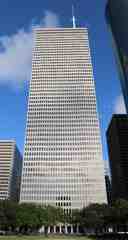
You’re looking at a giant white grid of windows, rising in a clean, straight line above a patch of green trees-keep your eyes up to spot the tall antenna capping the roof. Alright, so you’re standing in front of what folks used to call One Shell Plaza-now it goes by 910 Louisiana, but let’s be honest, around Houston, this tower’s got way too much history to just blend in. When it was finished back in 1971, this place was the absolute king of the Houston skyline, the tallest building in the city. Picture Houston in the '70s: flares, big hair, oil money everywhere, and right here, this 50-story beauty shooting up over everything else-like the new kid at school who just happens to be seven feet tall. Its designers, Skidmore, Owings & Merrill-yeah, those same folks made skyscrapers famous all over the country-wanted something bold, sharp, and modern. You can see their touch; there’s a clean, geometric rhythm in those endless rows of windows. Now, if you’re thinking this building looks a lot like some towers in New Orleans or Denver, good eye. It’s all part of the same architectural family tree. Now, about that flashy needle up top-back in the day, this antenna beamed out radio and TV signals for what seemed like half the city. There was even a spell when eight different FM stations were blasting from up there. Houston’s own media mountaintop-until the city’s glass canyon of skyscrapers started making radio signals bounce around like a bad game of pinball. The inside has always been high profile too. Shell Oil made this their home for decades, and it’s still a legal power center-Baker Botts law firm has called this place home since day one. Even the bottom 22 floors are packed with NRG Energy folks, and-fun fact-the Houston Club up on the 49th floor is where deals that shape the city get hashed out over lunch. 910 Louisiana isn’t just a big office block-it’s Houston ambition in steel and glass, strutting out in the open for everyone to see. It even pulled in its own TV cameo, serving as the “World Building” on an old NBC soap. Now THAT is a landmark with range.
Open eigen pagina →You’re looking for the tall, glassy skyscraper directly in front of you-the one topped with a giant open circle that lights up like a sci-fi beacon at night. Now, CenterPoint…Meer lezenToon minder
You’re looking for the tall, glassy skyscraper directly in front of you-the one topped with a giant open circle that lights up like a sci-fi beacon at night. Now, CenterPoint Energy Plaza hasn’t always looked quite this... dramatic. Back in 1974, it was just another Houston high-rise-until a skyscraper arms race broke out downtown. When the building next door got a bit taller, the owners of this place said, “Well, two can play at that game!” So, in 1996, they patched on a 90-foot extension and-a real flex-a five-story-tall round canopy on top. Some say it was meant to look like a lantern welcoming the city, but locals will joke it’s more like Houston’s own flying saucer. Inside, this tower has seen more corporate drama than a soap opera: power companies merging, moving, and leaving behind entire floors of empty offices. Through it all, CenterPoint’s name stuck, and that “lantern” keeps glowing, part of Houston’s ever-changing skyline. Honestly, if buildings could brag, this one’s got a pretty good case.
Open eigen pagina →Right in front of you, you’ll spot a modern tower with crisp, mirrored glass and big square columns-just look above the “Louisiana” street sign, and you’ll see the entrance with…Meer lezenToon minder
Right in front of you, you’ll spot a modern tower with crisp, mirrored glass and big square columns-just look above the “Louisiana” street sign, and you’ll see the entrance with “Total Plaza” spelled out in metallic letters. Alright, welcome to Total Plaza-one of those buildings that seems to change identity more often than a Houston weather forecast. Since opening in 1971, this place has answered to at least four different names, depending on what company was signing the checks at the time. It kicked off as the United Gas Building, became the Entex Building, got dubbed Louisiana Place, and today-courtesy of some very big oil money-it’s Total Plaza. Back when bell-bottoms were all the rage and Houston was just starting to boom, this building rose up on the block next to Allen Center, quickly stacking up tenants and stories-35 floors in all, each covered in that reflective glass, which on a sunny day, could practically double as a giant makeup mirror for the downtown skyline. A long parade of Houston history has stomped through these halls. In the ‘70s, Entex called this tower home. Not long after, a Dutch company saw an opportunity and scooped it up for 40 million bucks. By the '80s, folks were wheeling and dealing office space up and down these corridors-this was back before working “from home” meant anything besides being out sick. In the ‘90s, the University of Houston System posted up their main offices here for a while-probably navigating red tape over morning coffee. But for many Houstonians, this building became famous as the perch of METRO, Houston’s public transit authority. Imagine those suits and transit planners spread across TEN floors, plotting out bus routes and budgets with a bird’s-eye view of all the commuters hustling below. The turn of the millennium brought another shake-up. METRO packed its bags for its own digs and Total Petrochemicals moved right in-bringing a fresh wave of French oil energy to downtown. By late 2005, the building was reborn again with its new identity, Total Plaza. But don’t think it’s all just cubicles and conference calls up there. The very top-35th floor-is reserved for the Petroleum Club of Houston, a long-standing institution that’s part social club, part networking powerhouse. When their old home, the ExxonMobil Building, was up for sale, they grabbed the chance for a glow-up at Total Plaza-bar included, because... well, networking in Houston just isn’t the same without a good drink and a knockout city view. If you get the chance, step inside and you might feel like you’ve wandered onto a movie set for the energy sector: lots of metallic colors, sleek decor, and just enough glass and steel to remind you you’re in the heart of Houston’s oil country. And, as big city rumor has it, if you know the right person, you can enter the building’s tunnel system and practically crisscross all of downtown without your shoes ever touching actual sunlight. Just another day at Total Plaza-where change is the only constant, and the next chapter is probably being negotiated upstairs right now.
Open eigen pagina →Look ahead and you’ll spot a tall, sharply-stepped brown high-rise, topped with a tan, octagonal crown-that’s the Hyatt Regency Houston Downtown, rising unmistakably from the…Meer lezenToon minder
Look ahead and you’ll spot a tall, sharply-stepped brown high-rise, topped with a tan, octagonal crown-that’s the Hyatt Regency Houston Downtown, rising unmistakably from the street corner. Alright, take in this towering slice of ‘70s Houston-thirty stories clad in brown brick, looking a bit like a giant modern ziggurat with a party hat. When the Hyatt Regency first opened in December 1972, folks couldn’t believe its size. Still today, at 401 feet, nobody’s managed to top it as Houston’s tallest hotel. Now, you see that odd shape at the top? That used to be Spindletop, a revolving restaurant that slowly spun diners dizzy as they looked out over downtown. These days, it hosts swanky events, but the memory of the spinning steakhouse lives on. The real jaw-dropper, though, is inside-a 29-story open atrium so dramatic, it made its way into the 1976 sci-fi classic Logan’s Run. Over the years, this hotel has played host to everything from economic summits to political conventions-basically, Houston’s version of the international red carpet. And after a $40 million facelift in 2008, it’s even got the only Shula’s Steakhouse in Texas. Now that’s what I call hospitality-Houston-style.
Open eigen pagina →Straight ahead, you’ll see a pale, grid-patterned skyscraper that’s broad-shouldered and resolutely rectangular-just look for the one that seems to have been designed by someone…Meer lezenToon minder
Straight ahead, you’ll see a pale, grid-patterned skyscraper that’s broad-shouldered and resolutely rectangular-just look for the one that seems to have been designed by someone with a deep fondness for geometry. Ah, Two Allen Center, or as some folks remember it, the Devon Energy Tower-for a hot minute, anyway. Born in 1978, this 521-foot marvel climbed high during Houston’s “build 'em tall and build 'em fast” years. Walk inside and you’ll spot sleek travertine flooring under your shoes, the kind that makes you wonder if you should’ve worn fancier socks. Over its 36 floors, this place has juggled a who’s-who of Texas business: Citicorp hung its banner here back in ‘89, Exxon once filled the cubicles, and Devon Energy had its logo on the door until they pulled stakes in 2012, taking 500 jobs with them. Not the easiest day for the Houston workforce, that. Now, head up to floors 13 and 14, and you’ll find Chamberlain Hrdlicka-the law firm with a name as long as your arm. It’s a building of shifting tenants but unshakeable presence-a box full of stories, right in the heart of the city.
Open eigen pagina →Look straight ahead for a tall, reddish-brown skyscraper with stacked, angular setbacks near the top-it almost looks like someone kept adding building blocks, but only on one…Meer lezenToon minder
Look straight ahead for a tall, reddish-brown skyscraper with stacked, angular setbacks near the top-it almost looks like someone kept adding building blocks, but only on one side. You’re looking up at Wedge International Tower-43 stories tall and sparkling with a bit of Houston attitude. Finished back in 1983, this was once called everything from Unitedbank Plaza to 1415 Louisiana, depending on who was signing the checks......but after WEDGE Commercial Properties bought it in the ‘90s for somewhere between $25 and $45 million, their name stuck. Now, here’s where it gets a bit flashy: since ‘95, the tower’s been outlined with neon green lights, inspired by the legendary Bank of America Plaza up in Dallas. Houston rivalry, anyone? By the way, the very top-floor 43-houses Strato 550, one of the highest bars in Houston. You can just about touch the clouds with your martini. One bit of drama in its history: a fire in ‘93 scorched some of the upper floors, but--thankfully, nobody was hurt. Just another chapter in this tower’s sky-high tale.
Open eigen pagina →You’re looking for a shimmering, glass-wrapped tower shaped a bit like a giant cough drop standing proudly against the Houston sky-just tilt your gaze upward and let your eyes…Meer lezenToon minder
You’re looking for a shimmering, glass-wrapped tower shaped a bit like a giant cough drop standing proudly against the Houston sky-just tilt your gaze upward and let your eyes follow the fluid lines reflecting every inch of downtown hustle. Alright, here’s a story that’s as Houston as BBQ and summer humidity. This sparkling tower at 1500 Louisiana Street-once known as Enron Center South-has had a wilder history than a Texas rodeo. Designed by famed architect César Pelli, it was the first new skyscraper in town in over a decade when it was finished in 2002. Back then, Houston’s skyline was on pause after the 1980s energy bust-lots of empty offices, not a lot of hungry tenants. But, with oil prices rising and the city’s fortunes perking up, Enron swept in with plans for their big, shiny headquarters. Unfortunately, right as this beauty was ready to open its doors, Enron’s infamous collapse went down. They never even got to move in. Imagine building your dream house only to get stuck in a reality show scandal before opening the front door. For a while there, this place was “zero percent occupied”-not exactly what any landlord wants to hear. Eventually, ChevronTexaco swooped in, livened the place up, and by 2006 it was bustling with 4,000 employees. And just to keep things fresh, Chevron announced a multi-million-dollar renovation in 2024-bathrooms and all, because, you know, even skyscrapers need a little pampering now and then. It’s a glass-and-steel reminder of how Houston’s fortunes fall, rise, and always find a way to glitter again.
Open eigen pagina →Right here in front of you-towering up like a shiny, slightly nostalgic time capsule-is Houston House Apartments. Now, you might look at this 31-story high-rise and think,…Meer lezenToon minder
Right here in front of you-towering up like a shiny, slightly nostalgic time capsule-is Houston House Apartments. Now, you might look at this 31-story high-rise and think, “Classic modern city living,” but back in 1966, when it first opened, this place was the fresh face on the block. Designed by Charles M. Goodman-who had a real knack for mid-century flair-it brought almost 400 apartments to downtown Houston, long before high-rises were all the rage for city living. Picture it: Lyndon B. Johnson was president, bell-bottoms were about to take over, and these apartments seemed unstoppable. Fast-forward a few decades-add a few owners, including Larry Hill and his crew-and Houston House managed a rare feat: actually staying residential in the heart of the business district. Not many old towers can boast about outlasting the trends, but here, even in 2007, 90% of the units were filled. Some of these apartments are just 500 square feet-cozy, if you’re being generous. You’d pay somewhere between $800 and $1,300 for the privilege, so… not bad if you want to trade space for skyline views. Now, it hasn’t all been smooth sailing. One wild night in 2007, a car in the garage actually went straight through a wall and landed upside-down on a neighboring roof. Talk about a plot twist no building manager wants. And as for renovations-there have been plenty. Multiple sales attempts, a dashed deal with a Chicago company, and then finally, an enormous investment just to keep the place slick and livable. So, if you hear the echoes of past decades here, you’re not imagining it. Houston House has held on-through disco, dot-coms, and whatever’s next-still calling itself home to a long parade of Houstonians. That’s staying power.
Open eigen pagina →Right in front of you, you’ll spot a grand tan building with twin pointed towers, arched windows, and palm trees lining its entrance-it’s hard to miss the sense of purpose and…Meer lezenToon minder
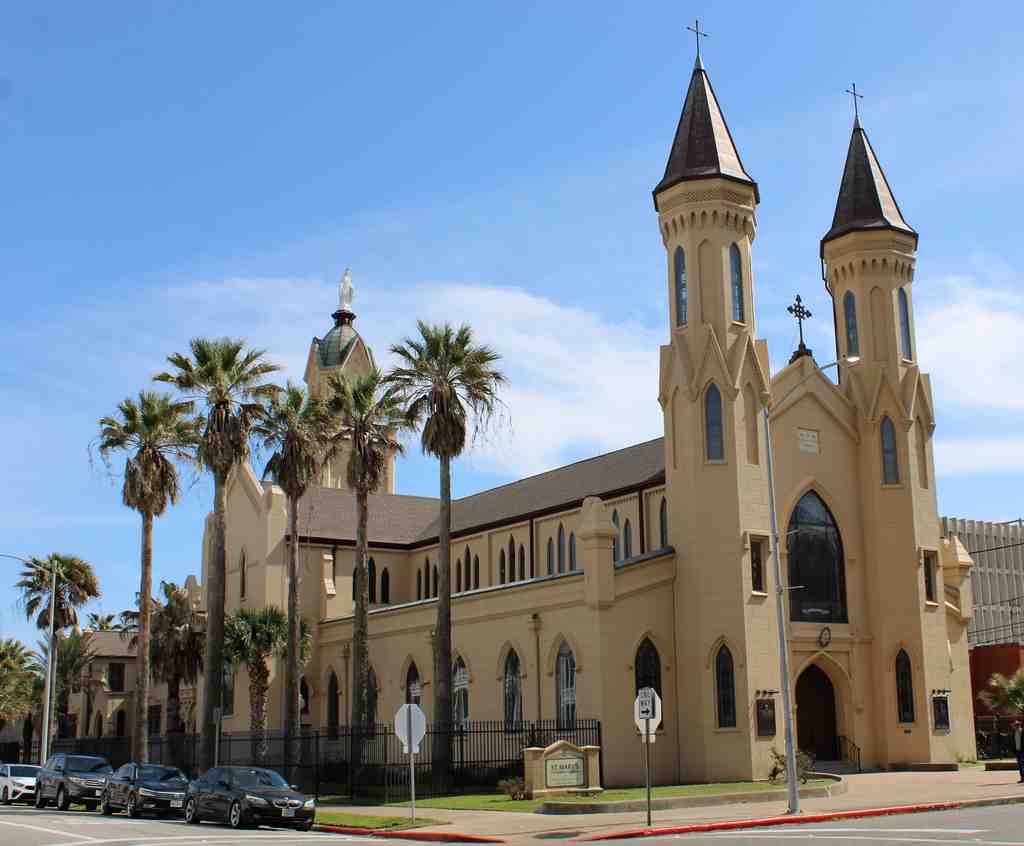
Right in front of you, you’ll spot a grand tan building with twin pointed towers, arched windows, and palm trees lining its entrance-it’s hard to miss the sense of purpose and permanence radiating from this spot. Alright, let’s talk about the Roman Catholic Archdiocese of Galveston-Houston-an institution whose roots here run about as deep as the Gulf Coast’s humidity. You’re standing near the headquarters of the largest Catholic jurisdiction in Texas. Not too shabby for a diocese born on the salty spit of Galveston Island, huh? From humble origins to massive reach, the story of this archdiocese is a tale of faith, endurance... and a little Texan grit. Imagine the year is 1756. Spanish missionaries set up shop not too far from here, opening Nuestra Señora de la Luz on Galveston Bay. The place didn’t last-by 1771, it was abandoned, probably because even back then, Texas weather took no prisoners. Fast forward through a roller coaster of flags-Spanish, Mexican, Republic of Texas-and you land in 1839, when Houston got its very first Catholic church, courtesy of Pope Gregory XVI, making Texas an official piece of Catholic turf. Galveston was THE Catholic capital for years, with the diocese officially crowned in 1847. Folks like Bishop Jean-Marie Odin were on a holy mission-he opened schools, welcomed religious orders, and crisscrossed Texas recruiting both priests and, occasionally, financial aid. The early bishops? Imagine working remote... but with horses and buggies, not Wi-Fi. After the horror of the 1900 Galveston hurricane, Catholic institutions were reduced to rubble. Bishop Nicolaus Gallagher went into full rebuild mode, roping in just about every order he could find: Jesuits, Sisters of Charity, Basilian Fathers-you name it. And by the time he checked out in 1918, the diocese had quadrupled in size. That right there is some serious Texas tenacity. But as Houston grew-boy, did it grow-the Catholic engine moved inland. In 1959, Sacred Heart in Houston was tapped as co-cathedral, officially linking Houston’s name to the whole project. By then, Houston’s sprawl was unstoppable-kind of like our traffic. Integration came to the Catholic schools in the early ‘60s, and ministries began reflecting the city’s growing diversity. In 2004, everything shifted again: the diocese was made an archdiocese, turning Galveston-Houston into the fifth-largest archdiocese in the country, now serving a whopping 1.8 million Catholics. Today, it reaches from Galveston’s beaches to the pine woods north of Houston-8,880 square miles of Texas-sized territory divided into 13 administrative deaneries. It runs over 140 parishes and the biggest private school system in Texas, where enrollment actually grows year over year-hard to pull off these days. But not all chapters are uplifting. The archdiocese has weathered storms not just of the meteorological kind but also from the reckoning on clergy sex abuse, with public calls for transparency, legal scrutiny, and demands for protection finally taking center stage. Inside, you’ll find a coat of arms featuring a star for Texas, a red cross for the faith, and roses for Mary, the archdiocese’s patron. It all signals the grand mix of Texas identity and Catholic tradition. And for those keeping score, the current archbishop is Joe Vásquez-new to the post, and probably still learning the names of all those counties. So as you stand here, sizing up those spires and palm trees, think about the generations of folks who turned the flat, unpredictable landscape of Houston and Galveston into spiritual home turf-stubborn, hopeful, and, let’s be honest, maybe just a little bit stubborn again.
Open eigen pagina →You’re looking for a grand limestone building with a modern Romanesque vibe; just glance across the street for a structure topped with a dome and golden crosses, with a tall,…Meer lezenToon minder
You’re looking for a grand limestone building with a modern Romanesque vibe; just glance across the street for a structure topped with a dome and golden crosses, with a tall, slightly squared-off bell tower-and, if you see marble and that big sweep of windows, yep, you’ve found the Co-Cathedral of the Sacred Heart. Well, if you didn’t know a church could make such a bold architectural statement, welcome to Houston. This one was designed to turn heads-and, if you’re Catholic, maybe get a few people to pop in for Mass. But don’t let those crisp limestone lines fool you-there’s a LOT of history bubbling underneath that polished exterior. Let’s rewind a bit. Picture Texas in 1847. It’s wild, it’s hot, and the whole region has, oh, about 20,000 Catholics scattered from the Gulf Coast to the dusty plains. The Pope at the time, Pius IX, figured, “You folks need a diocese.” So Galveston got the state’s very first Catholic cathedral. Fast forward a century-Houston, suddenly bursting at the seams, is demanding its moment in the ecclesiastical sun. Enter Sacred Heart. The parish itself started up in 1896, trying to wrangle Houston’s Catholic population as the city ballooned. The first church was up by the late 1890s, but-classic Houston-it got replaced and expanded more than once. The parish hustled to keep up; the pastor was buying up corner lots, knocking down old buildings to put in schools, making room for everyone. By the 1950s, there’s no denying it: Houston needed something big, and maybe just a little flashy, to match its growing status. So, in 1959, Rome gave the green light: make Sacred Heart a “co-cathedral,” so the bishop could do his thing in Houston as well as Galveston. But you know how temporary fixes go-they never really stay temporary. Over the decades, the building got patched up, renovated, tarted up with mosaics from Italy, and even got central air, which in Texas is just plain smart. But by the 2000s, the updates just couldn’t keep pace with the needs. They brought in Ziegler Cooper Architects-local talent, by the way-who whipped up a sleek, Italian Romanesque design that looked both timeless and right at home among Houston’s glass towers. They used 30,000 square feet of marble, AND the stained glass windows? Straight from Florence, Italy. The dome soars to 117 feet-try not to get a crick in your neck-and the bell tower, or campanile, tops out at 140. Of course, it wouldn’t be a Houston church if it didn’t come with a little sticker shock: forty-nine million bucks and, naturally, a slew of construction awards. This new, gleaming co-cathedral flung open its doors in 2008, ready for ceremonies, civic milestones, and anyone needing a moment of stillness in the middle of the city’s buzz. Today, this co-cathedral does more than just hold services. It anchors the faith community for over a million folks stretching across the whole archdiocese, while its big-hearted spirit echoes the changing city around it. Even with all that new polish, it’s built on the legacy-and, perhaps, the stubborn optimism-of everyone who helped Houston’s Catholic story grow. Not bad for something that started as a patch of prairie and a handful of hopeful parishioners.
Open eigen pagina →
Veelgestelde vragen
Hoe begin ik de tour?
Download na aankoop de AudaTours-app en voer je inwisselcode in. De tour is direct klaar om te starten – tik gewoon op afspelen en volg de GPS-geleide route.
Heb ik internet nodig tijdens de tour?
Nee! Download de tour voordat je begint en geniet er volledig offline van. Alleen de chatfunctie vereist internet. We raden aan om te downloaden via wifi om mobiele data te besparen.
Is dit een groepsrondleiding met gids?
Nee - dit is een audiotour met eigen gids. Je verkent zelfstandig op je eigen tempo, met audiovertelling via je telefoon. Geen tourguide, geen groep, geen schema.
Hoe lang duurt de tour?
De meeste tours duren 60-90 minuten, maar jij bepaalt het tempo volledig. Pauzeer, sla stops over of neem pauzes wanneer je wilt.
Wat als ik de tour vandaag niet kan afmaken?
Geen probleem! Tours hebben levenslange toegang. Pauzeer en hervat wanneer je wilt – morgen, volgende week of volgend jaar. Je voortgang wordt opgeslagen.
Welke talen zijn beschikbaar?
Alle tours zijn beschikbaar in meer dan 50 talen. Selecteer je voorkeurstaal bij het inwisselen van je code. Let op: de taal kan niet worden gewijzigd na het genereren van de tour.
Waar vind ik de tour na aankoop?
Download de gratis AudaTours-app uit de App Store of Google Play. Voer je inwisselcode in (verzonden per e-mail) en de tour verschijnt in je bibliotheek, klaar om te downloaden en te starten.
Als je niet tevreden bent met de tour, betalen we je aankoop terug. Neem contact met ons op via [email protected]
Veilig afrekenen met