

Twickenham Audiotour: Verhalen, Schandalen & Sereniteit aan de Theems
Ontdek de glinstering van filmmagie in een rustige straat in Twickenham of stuit op een kapel die begon als een bescheiden 'ijzeren kerk' die winderige gelovigen onderdak bood. Om de volgende hoek ligt een geheim toevluchtsoord van een kunstenaar, tuinen die gonzen van de echo's van creatief genie en oorlogsindustrie. Deze zelfgeleide audiotour leidt je door Richmond upon Thames en onthult onvertelde verhalen waar rebellen, dromers en buitenbeentjes de geschiedenis herschreven achter bescheiden deuren. Dit zijn de verborgen lagen die weinig bezoekers ooit vinden. Welke geheime catastrofe zorgde ervoor dat een onstuitbare filmtycoon van de ene op de andere dag instortte? Wie wekte felle loyaliteit op in een kapel gebouwd voor warmte en veerkracht? En waarom kwamen de uniformen van vliegeniers tot leven onder het dakraam van een schilder tijdens de oorlog? Beweeg door steegjes van ambitie, schaduwen van schandalen en zonovergoten plekjes waar legende de werkelijkheid ontmoet. Herontdek Twickenham als een mozaïek van excentrieke uitvindingen en gefluisterde intriges. Je verhaal begint op de drempel van het onverwachte – druk op play en stap in de schijnwerpers van de geschiedenis.
Tourvoorbeeld
Over deze tour
- scheduleDuur 40–60 minsGa op je eigen tempo
- straighten5.4 km wandelrouteVolg het geleide pad
- location_onLocatieLonden, Verenigd Koninkrijk
- wifi_offWerkt offlineEén keer downloaden, overal gebruiken
- all_inclusiveLevenslange toegangOp elk moment opnieuw afspelen, voor altijd
- location_onStart bij Twickenham Filmstudio's
Stops op deze tour
To spot Twickenham Film Studios, look for a crisp, modern black sign, marked by bold white text spelling out “Twickenham Film Studios,” framed by minimalist corner brackets -…Meer lezenToon minder
To spot Twickenham Film Studios, look for a crisp, modern black sign, marked by bold white text spelling out “Twickenham Film Studios,” framed by minimalist corner brackets - you’ll know you’re in the right place when you see this striking entrance on a quiet St Margarets street. You’re now standing at the doorstep of cinematic history - but believe it or not, this legendary place was once… an ice rink! So if you hear anyone humming the theme to “Blades of Glory,” just remind them it’s actually “A Hard Day’s Night” history here. In 1913, Ralph Jupp transformed this chilly patch of Twickenham into London’s biggest film studio. Just imagine the excitement: bowler hats bobbing past, new-fangled cameras clicking, directors shouting “Action!” for the very first time. World War I was in full swing, but the bright lights inside these studios never dimmed. The London Film Company, pioneers of silent drama, worked their magic here. Sadly, even the silver screen can flicker, and by 1920, tough times shut down the original company. But this place? It just couldn’t stay quiet for long. It became a haven for all sorts of quirky and ambitious independent filmmakers, cameras rolling day and night. Fast forward to the 1930s, and meet Julius Hagen - the man who barely slept, because he was so busy making movies! Back then, British law said Hollywood studios could only show their blockbusters here if they also made plenty of British films. Enter the “Quota Quickie!” Julius manufactured these speedy productions almost like an assembly line. One crew filmed by sunlight, another by moonlight - it was a 24-hour symphony of clapperboards, costumes, and cups of strong tea. After a taste of international success with films like “The Private Life of Henry VIII,” Hagen aimed even higher. He poured huge sums into rebuilding the studio and dedicated himself to prestige productions - including “Scrooge.” However, tackling the global movie business is like wrestling a stubborn octopus. Distributors across the pond shut him out, and before you could say “box office flop,” Hagen’s empire went bust in 1937. Still, his spirit - relentless, creative, occasionally over-caffeinated - lives on in every soundproofed wall and shadowy corner. Wartime brought more changes. The Shipman family took over in the ‘40s, steering Twickenham into a new golden age. And what an age it was! In the Swinging Sixties, these stages boomed again. Michael Caine drove a Mini for “The Italian Job,” Hollywood legends strolled the halls, and a little British band called The Beatles turned up for “A Hard Day’s Night” and “Help!” Their laughter, lyrics, and magic all blended into the walls - and if you listen closely, maybe you’ll still catch an echo. Later, cutting-edge blockbusters arrived. Imagine “Blade Runner” being pieced together in these rooms, or a werewolf howling for “An American Werewolf in London.” More recent gems - “Bohemian Rhapsody,” “Top Gun: Maverick,” and “Belfast” - all passed through Twickenham’s high-tech mixing rooms and dubbing theatres. They even named one room after Richard Attenborough, that beloved British storyteller, whose heart beat for the movies. Today, Twickenham Film Studios is buzzing stronger than ever. New owners, big ideas, state-of-the-art Dolby Premier sound systems - it’s all happening behind those iconic black doors. Oh, and there’s a handy underwater camera tank for all your aquatic action needs. You didn’t bring a snorkel by any chance, did you? So, as you stand here, picture the hustle: stars in costume darting between trailers, directors debating their next shot, and every brick vibrating with a century of movie magic. At Twickenham Film Studios, you’re not just outside a building - you’re right at the beating heart of British film legend. Lights, camera, memories!
Open eigen pagina →Look to your left for a charming cream-colored cottage with a tall central chimney, sloping roof, and two side wings nestled among lush trees and gardens-that’s Sandycombe Lodge…Meer lezenToon minder
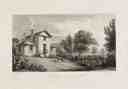
Look to your left for a charming cream-colored cottage with a tall central chimney, sloping roof, and two side wings nestled among lush trees and gardens-that’s Sandycombe Lodge right in front of you. Welcome to Sandycombe Lodge-Turner’s own work of art that you can walk around! Imagine the year is 1814. Twickenham is countryside for miles, with nothing but birds calling overhead, and a streak of smoke rising gently from the chimney of this small villa. Here, the great artist J. M. W. Turner escaped the busy city, designing this picturesque-cottage as a cozy hideaway for himself and his father William. It’s the only building Turner ever designed, and just like one of his paintings, every detail was chosen with care. If you listen closely, you might almost hear the rustle of his sketchbooks and the scratch of his pencil as he worked in the quiet rooms, interrupted only by birdsong or the occasional gust of wind through the garden trees. Back then, this wasn’t just Turner’s escape-it was a little piece of solitude in the wild, far from the noisy London streets. Of course, history didn’t let Sandycombe peacefully snooze forever. During World War II, this calm home buzzed with the noise of sewing machines-the lodge became a small factory for airmen’s uniforms! Imagine the whirring of machines shaking these elegant old staircases. Poor Turner would have had quite a shock. After the war, new owners stepped in. Eventually, Professor Harold Livermore and his wife Ann made it their mission to save this precious place. Thanks to their efforts (and some serious fundraising-let’s face it, renovating history isn’t pocket change!), Sandycombe survived, was restored, and reopened to visitors. Now you can feel the echoes of Turner’s creative spirit, perhaps picture him gazing at the sky, searching for inspiration. As you stand here, take in the scent of the gardens and the soft tick of time; after all, how often do you get to step right into an artist’s dream?
Open eigen pagina →

Toon 12 stops meerToon minder stopsexpand_moreexpand_less
To spot St Stephen's, Twickenham, just look for the grand stone church with a tall square tower and a big rose-pattern window, right across from the bus stop on Richmond Road-it’s…Meer lezenToon minder
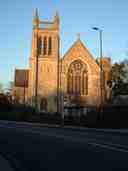
To spot St Stephen's, Twickenham, just look for the grand stone church with a tall square tower and a big rose-pattern window, right across from the bus stop on Richmond Road-it’s hard to miss, especially with its warm, honey-colored stone catching the light. Now, imagine yourself here over three hundred years ago... Instead of this striking, gothic-style beauty, there was just a small chapel, quietly serving a handful of locals who trudged down muddy paths to worship. But, as time marched on, the little chapel couldn’t keep up with the growing throngs of Twickenham’s faithful. So, in 1874, with the help of two clever architects-T. M. Lockwood and T. H. Mawson-they built the impressive church standing in front of you now. The chancel was added in 1885, and, not wanting to rush things, they waited until 1907 for the tower-good things (and tall ones!) come to those who wait! Venture inside, and you’ll find gorgeous stained glass windows by Alfred Octavius Hemming, telling their colorful stories as sunlight streams through. And listen closely-the organ, crafted in 1889 by Henry Willis & Sons, sometimes rumbles to life and practically shakes the stone walls. It’s one of the best-preserved organs in all of London, so if you hear a note or two, that’s history singing! Oh, and don’t be surprised if you cross paths with young voices from St Stephen’s School, who fill this place with laughter and choir song almost as often as the congregation itself. Not bad for a spot that started as a humble little chapel!
Open eigen pagina →Look straight ahead towards the end of the garden, and you’ll spot a dazzling cluster of white marble statues-larger than life-gleaming atop a rockery and water cascade,…Meer lezenToon minder
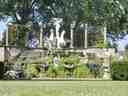
Look straight ahead towards the end of the garden, and you’ll spot a dazzling cluster of white marble statues-larger than life-gleaming atop a rockery and water cascade, dramatically posed among splashing streams and greenery right in front of you. Welcome to one of Twickenham’s grandest and cheekiest surprises: The Naked Ladies! No, you haven’t accidentally stumbled onto a secret garden party-it’s just the stars of York House’s garden, and they do draw a crowd even on the quietest of days. Take a deep breath of that garden air, maybe catch a whiff of the fresh water dancing by, and get your eyes ready for some serious marble drama. These leading ladies aren’t from around here. They're actually Oceanids, daughters of the sea gods-eight of them in total, along with a pair of wild aquatic horses, all carved from sparkling white Carrara marble shipped straight from Italy at the turn of the twentieth century. Now, that marble isn’t just for show; each of their enormous blocks weighs over five tons. Imagine the shipping costs! Nobody is entirely sure which Italian artist crafted them, but there’s a strong hunch they were born in the legendary studio of Orazio Andreoni in Rome. The statues originally belonged to the colorful and controversial Whitaker Wright-a man who made millions and lost them in scandal, ending his story with a dramatic courtroom cyanide capsule. The Naked Ladies were swept up in the ensuing fire sale of his estate, arriving in Twickenham with their intended design and instructions completely lost-like a jigsaw puzzle tipped out of its box! This left a British landscaping firm, J Cheal & Sons, scratching their heads and making things up as they went along. Let’s just say, some of the poses are... rather inventive, especially if you catch them from the side. Take a really good look at their hands and what remains of their props-you might notice a few fingers missing, or pearls that look as though they once shimmered between their fingers. Over time, vandals took a liking to the details, but most of these have since been restored-including lost pearls, fingers, and even a hoof or two. The statues now bask in their eternal marble glow, surrounded by beds of lush planting, poised on a rockery behind a pond with the River Thames swirling nearby. This garden and statue tableau became famous for its high society parties back in the early 1900s, thanks to their new owner Sir Ratan Tata, who bought York House and decided it needed a dash of Italian drama. Picture King George V strolling by in his finery, perhaps trying very hard not to stare too much at the scenery! But wartime brought a very different kind of attention. During the Blitz, it was feared these luminous marble figures might shine moonlight back to guide enemy bombers. So, in a move only the British could dream up, workers slathered the entire set in a thick layer of grey sludge as camouflage. Artistic? Maybe not. Effective? Well, no bombs fell here, so who’s to say! As the years passed, Twickenham Council found themselves the curious new caretakers of this monumentally awkward inheritance after York House was bought for a new town hall. Attempts to auction the statues off fell flat-apparently not many Londoners had room in their gardens for a herd of marble nudes. So here they stayed, watched over by locals, battered by the British weather, and occasionally by mischievous hands or paint cans. After the dust (and the grey sludge) settled post-war, The Naked Ladies experienced a full-blown beauty treatment, with restorers chiseling off wartime cement, erasing graffiti, and giving the statues back their lost features. As a reward for surviving scandal, auction rooms, garden parties, and world wars, they were granted official Grade II protection by Historic England. Today, The Naked Ladies are Twickenham icons-appearing in wedding photos, inspiring a local beer, and drawing visitors with their blend of glamour, mischief, and mystery. So as you stand here, listen for the laughter of the past and admire these mythical figures. Just remember, whatever you do, don’t ask them to cover up-they’re too fabulous for modesty!
Open eigen pagina →To spot Eel Pie Island, look out across the river to see a lush, tree-covered island dotted with quirky houses and boathouses, surrounded by small boats swaying gently in the…Meer lezenToon minder
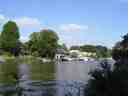
To spot Eel Pie Island, look out across the river to see a lush, tree-covered island dotted with quirky houses and boathouses, surrounded by small boats swaying gently in the water. Welcome to one of London’s most mysterious and legendary islands-Eel Pie Island! Imagine the soft lap of the Thames just beneath your feet, birdsong floating in the trees, and the faint hum of boats as you gaze across to an isle that’s always felt a little cut off from ordinary life. Eel Pie Island is only about nine acres, but boy, does it pack a punch when it comes to stories. Now, the name itself has a rather delicious origin. Back in the 19th century, when river inns flourished, the local inn here was famous for serving-you guessed it-eel pie to hungry travelers and rowdy boat parties. Before it was ever called Eel Pie Island, people knew it as Parish Ait and Twickenham Ait, and before the 19th century, it was actually split into three distinct parts, separated by the tide. There’s even a map from 1607 that shows those tiny islets. But let’s travel even further back in time for a moment-archaeologists have found ancient red deer antler tools on the shoreline, used by Mesolithic folk, which proves this land has seen human hands and wild stories for thousands of years. Fast-forward to the Georgian era, and you’d see a lively scene. There was an inn by 1743, a favorite pit stop for steamer excursions. By 1830, a newer, more stylish inn took its place. Author Samuel Lewis, writing in 1848, even used up half his space on Twickenham just talking about this place, and he described Eel Pie House as a spot for “refreshment and recreation to water parties, and persons repairing hither for the amusement of fishing.” No wonder-imagine coming here for a pie and ending up at a wild party. And what a party it became! The island’s most famous building, the Eel Pie Island Hotel, started off a genteel three-storey home for ballroom dances in the roaring 1920s and 1930s…but then the 50s and 60s rocked up, trumpeter Brian Rutland got the jazz going, and the place exploded into a legendary music venue. Big names came and went-The Rolling Stones, Pink Floyd, The Who, Rod Stewart, Long John Baldry’s Hoochie Coochie Men, and so many more. Imagine the sound echoing across the river, drums and guitar riffs, and perhaps someone’s shoes sticking to the floor after a slightly too-enthusiastic dance move. Here’s a twist worthy of a rock anthem: in the late 1960s, the hotel couldn’t keep up with expensive repair demands and closed its doors. But the wild spirit lived on! The hotel reopened as Colonel Barefoot’s Rock Garden. Some nights, you might have found yourself dancing to Genesis or Deep Purple, sipping a strange cocktail called “Colonel Barefoot’s Killer Punch,” and trying not to get lost in a light show or a tangle with the fire chief. And then-mystery time-a fire swept through, and by 1971 the hotel was destroyed. Only ashes were left where rock legends and hippies had once danced. But Eel Pie Island didn’t disappear into dust. Far from it! The 1970s saw hippies set up the biggest commune in the UK right where you’re standing. If you listen closely, maybe you can almost hear the echo of a guitar, a burst of laughter, or the philosophical ramblings of someone with very long hair. Today’s island is a quirky, creative haven-about 50 homes, around 120 people, still dotted with boatyards, hidden artists’ studios, and private paths twisting through houses and nature reserves. There’s even a nature reserve at either end, where the wild things keep their privacy just as much as the human residents do. For a few days in June and December, the island’s art studios open up to the public-who knows what you’ll discover: paintings, sculptures, or a very friendly dog with paint on its nose. This isn’t just a home for artists-Twickenham Rowing Club calls this place its home, and the Richmond Yacht Club too. Parkrun’s headquarters is tucked away here, quietly plotting their next 5k. Eel Pie Island has slipped into all sorts of stories-Sherlock Holmes solved a “complicated poisoning” here, George Harrison mentioned it in a song, and Danny Wallace once “invaded” the island to declare himself king. It’s not often you find rock stars, indie bands, actors, and inventors all living next door to each other, but that’s Eel Pie for you: curious, stubborn, musical, and just a bit wild. So as you look across the river, let your mind wander back to those late nights, wild jazz, clinking mugs of cider-and the scent of fresh eel pie drifting in the air. Seeking more information about the name and former names, description and uses or the in media, the arts and literature? Ask away in the chat section and I'll fill you in.
Open eigen pagina →To spot the Twickenham Methodist Church, just look straight ahead for a pointed brick building with grand arched windows, framed in red brick, and a bold blue door right on Queens…Meer lezenToon minder
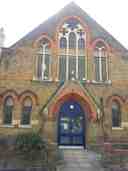
To spot the Twickenham Methodist Church, just look straight ahead for a pointed brick building with grand arched windows, framed in red brick, and a bold blue door right on Queens Road. Now, let’s imagine ourselves back to July 1880. Dust fills the air, and eager locals gather as the very first stone of this chapel is set in place. Designed by Charles Bell - a man who really loved a good archway - this was Twickenham’s only non-Anglican church at the time, proudly standing out with its newness and purpose. Picture the bakers and butchers of Queens Road craning their necks, whispers swirling - “A Methodist chapel, here? Whatever next!” The walls would soon echo with Sunday hymns, the laughter of children in Sunday school, and the hurried footsteps of latecomers dodging the stern looks of Mrs. Perkins at the door. Years passed, and in 1899, even grander plans arrived - a church so new it shuffled this very chapel into the role of a community hall and classroom. For decades, the place buzzed with bustle: fêtes, bake sales, and more than a few creaky chairs. The grand Christ Church next door didn’t last, but this sturdy chapel bore witness right up until December 2016 when the doors closed for worship. And now, standing outside, you can almost hear the faint echo of old sermons and the smell of tea drifting from the past. Who knows, maybe a stray hymn still floats through those brick arches if you listen closely enough!
Open eigen pagina →To spot Pope’s Villa, just look across the water for a grand three-storey house with a hipped roof, tall windows, and a huge arched entrance at its center-almost as if it’s…Meer lezenToon minder
To spot Pope’s Villa, just look across the water for a grand three-storey house with a hipped roof, tall windows, and a huge arched entrance at its center-almost as if it’s inviting you in from the riverbanks. Now, imagine yourself in the early 1700s, the gentle splash of the Thames just beside you, and the poet Alexander Pope arriving here, quill in hand, ready to transform Twickenham forever. When Pope first settled in this spot in 1719, the area was more countryside than city, with only the sound of birds and a few curious neighbours wondering what the famous poet might get up to. And get up to things he did! Pope leased this plot-a patch of land with a handful of cottages-from Thomas Vernon, and like any ambitious new homeowner, he wasted no time demolishing a couple of the old buildings. He then called in the celebrity architect James Gibbs to help him dream up a villa fit for poetry, with three splendid floors and wide windows looking out towards the river. The front was classic and grand-a bit of Palladian flair-while the most eye-catching part was the dramatic archway on the ground floor, perfect for arrivals by boat. In fact, the design hints at a Venetian palace, as if Venice had floated all the way to Twickenham! But Pope wasn’t just about fancy houses. He had a soft spot for gardens-especially the kind that surprise you. He filled his land with a theatre, an arcade, a bowling green, even something he called a “What Not,” which, to this day, nobody seems quite sure about. The crowning touch was a winding, silvery tunnel, burrowed right beneath the villa and into his five-acre garden-his very own secret passage. And, oh, what awaited at the tunnel’s end: Pope’s Grotto, a mind-bending underground wonder. Let’s step into the scene together. Imagine pulling open the door to the grotto and hearing your footsteps echo against the cold stone:. Pope described it as a place that transformed instantly with a swing of the doors. Shut them, and sunlight vanished-leaving only a magical camera obscura, where reflections from the river shimmered and danced across the walls in moving, watery pictures. Light a lamp, and the shells, mirrors, and crystals embedded in the walls would sparkle in a thousand directions-a disco before discos were cool! But Pope wasn’t finished; he wanted his grotto to be famous, so he added treasures: marble and quartz, sparkling stones and actual chunks of the Giant’s Causeway (a gift from the renowned Sir Hans Sloane, no less). Every visit brought new marvels-a shiny mineral from Cornwall, or maybe a stalagmite from Wookey Hole. Local legend claims some caves were left a bit barer after locals helped themselves to stalactites… shot down from the roof for Pope’s collection! Now, that’s dedication to interior décor. While Pope wrote poems-words carving into history-his home became a muse to many. Paintings and engravings show riverside views, soft willows drooping over the banks, and the house glowing as twilight settles in. Even the celebrated artist Turner tried to defend the place when demolition threatened-though, alas, with little luck. After Pope’s death in 1744, new owners arrived. Sir William Stanhope added wings and dug a second tunnel, while Baroness Howe swept in and had the villa demolished in 1808, building her own next door and even pilfering some of the grotto’s decorations. The original villa faded, but the stories-and the garden’s “what not”-refused to vanish. Years later, in the 1840s, the site was reborn, this time as a Tudor Gothic house-still called Pope’s Villa-becoming a school and echoing with children’s laughter instead of philosophical debate. Today, Radnor House School stands here, and though the villa has changed, Pope’s Grotto survives, tucked below ground and opening a magical portal to the past for 30 weekends every year. As you stand here, let your imagination wander back-water glimmering, the poetic air thick with curiosity. Who knows, with so much history bubbling beneath your feet, you might even hear a whisper from the grotto itself: -a nod from Pope, and the river, and a treasure trove of stories waiting to be discovered. Yearning to grasp further insights on the alexander pope's villa, pope's grotto or the current use? Dive into the chat section below and ask away.
Open eigen pagina →Look ahead for a gleaming, bright-white castle-like building with fairy-tale turrets, pointy battlements, and tall chimneys rising above a lush green lawn-there’s no mistaking…Meer lezenToon minder
Look ahead for a gleaming, bright-white castle-like building with fairy-tale turrets, pointy battlements, and tall chimneys rising above a lush green lawn-there’s no mistaking Strawberry Hill House! Alright, time for grand finales! Welcome to the magical Strawberry Hill House, a place that looks like it leapt right out of a fever dream of knights, poets, and oversized birthday cakes. Built by Horace Walpole in the mid-1700s, this Gothic Revival villa is a masterpiece of quirky invention-a real-life Gothic castle before they were cool. Imagine, the year is 1749, and Walpole, fresh from inheriting a tidy fortune, is told by friends and family that he really ought to build himself an impressive country house. What he leases, though, is nothing but a humble cottage with a less-than-glamorous name: “Chopped Straw Hall.” I suppose “Chopped Straw Hall” doesn’t quite have the same ring, does it? With a twinkle in his eye, Walpole renames his estate after an old local title he finds: Strawberry Hill. Now that’s tastier! Walpole wasn’t alone on his architectural adventure. He formed a “Committee of Taste” -sounds serious, but really, it was Walpole and two creative friends dreaming up wild designs. Together, they set about transforming the place into a Gothic fantasy land. They borrowed turret plans from old castles and inspiration from the mighty cathedrals of Westminster and Canterbury-though, let’s be honest, some elements were freewheeling Gothic, and others were Walpole’s personal inventions. He wanted “gloomth” inside, with grand shadows and mysterious corners to set off his collections, and a “riant” (cheerful) sunlit garden outside. Talk about mood lighting! As you stand here, imagine the scent of newly cut grass and the sight of the villa’s bright walls almost glowing against the English sky. Construction went on in stages, and Walpole delighted in adding ever more elaborate details-towers, battlements, shell-like benches, secretive passageways, even fireplaces designed by the famous Robert Adam, and arched windows inspired by Westminster Abbey. The finished product was irregular, extravagant, and nothing like any other house before it. When Walpole’s creative partner Richard Bentley stomped off after a disagreement (creative differences-very dramatic!), Walpole’s vision marched on, each year bringing more flights of fancy. But the exterior is just the start. Inside, Strawberry Hill once played host to Walpole’s legendary collection of antiquities and oddities-think ancient armor, a creepy clock said to have belonged to the ill-fated Anne Boleyn, and even a cardinal’s hat from the days of Henry VIII. Each room was designed as a setting for these treasures, turning the house into something halfway between a fairy tale and a haunted museum-Walpole even claimed his house inspired his famous Gothic novel, “The Castle of Otranto.” Fancy that! Visitors flocked here from near and far, from royalty to curious locals. It turned into such a sensation that Walpole joked Strawberry Hill had become an inn and he couldn’t enjoy breakfast without a crowd at the door. He found it hilarious-and sometimes exhausting. In the garden, intricate shell benches captured the imagination, specially designed to startle and charm. Even the garden was a revolution-unruly and natural, rejecting the fussy lines of European gardens for winding paths, carefully placed groves, and surprise views. For Walpole, a garden should be a place of joy, not just brooding mystery-though there was plenty of both at Strawberry Hill! After Walpole, the house changed hands and fortunes. Some owners brought it to ruin-there was a mammoth 24-day auction where its treasures were sold off like in a dramatic costume-drama. Others, like the determined Frances Waldegrave, poured love and money back in, restoring chic details and throwing dazzling parties for the cream of Victorian society. In modern times, the place has survived dereliction, restoration, and even a starring role on TV, finally reopening in 2010 after a dazzling £9 million makeover. The public can now wander its wild gardens, admire the restored rooms, and, if they have a good imagination, maybe sense the swoosh of Walpole’s silk cloak echoing through the halls. So, as you stand before this twinkling white castle, remember: Strawberry Hill is the original Gothic party house, a place where every brick was set with a wink and a dream. It’s proof that a spot of whimsy, a dash of drama, and a wild sense of history can create something truly magical-just one more reason Twickenham has a storybook ending. Intrigued by the under horace walpole, later owners or the 21st century? Explore further by joining me in the chat section below.
Open eigen pagina →

Veelgestelde vragen
Hoe begin ik de tour?
Download na aankoop de AudaTours-app en voer je inwisselcode in. De tour is direct klaar om te starten – tik gewoon op afspelen en volg de GPS-geleide route.
Heb ik internet nodig tijdens de tour?
Nee! Download de tour voordat je begint en geniet er volledig offline van. Alleen de chatfunctie vereist internet. We raden aan om te downloaden via wifi om mobiele data te besparen.
Is dit een groepsrondleiding met gids?
Nee - dit is een audiotour met eigen gids. Je verkent zelfstandig op je eigen tempo, met audiovertelling via je telefoon. Geen tourguide, geen groep, geen schema.
Hoe lang duurt de tour?
De meeste tours duren 60-90 minuten, maar jij bepaalt het tempo volledig. Pauzeer, sla stops over of neem pauzes wanneer je wilt.
Wat als ik de tour vandaag niet kan afmaken?
Geen probleem! Tours hebben levenslange toegang. Pauzeer en hervat wanneer je wilt – morgen, volgende week of volgend jaar. Je voortgang wordt opgeslagen.
Welke talen zijn beschikbaar?
Alle tours zijn beschikbaar in meer dan 50 talen. Selecteer je voorkeurstaal bij het inwisselen van je code. Let op: de taal kan niet worden gewijzigd na het genereren van de tour.
Waar vind ik de tour na aankoop?
Download de gratis AudaTours-app uit de App Store of Google Play. Voer je inwisselcode in (verzonden per e-mail) en de tour verschijnt in je bibliotheek, klaar om te downloaden en te starten.
Als je niet tevreden bent met de tour, betalen we je aankoop terug. Neem contact met ons op via [email protected]
Veilig afrekenen met 


