
Cork Audiotour: Een Meeslepende Reis Door Tijd en Tradities
Een stad gebouwd op verzonken rivieren en oude rebellie, Cork verbergt zijn meest vurige verhalen net onder het gelach dat uit de marktkraampjes stroomt. Begin aan een zelfgeleide audiotour door straten die ooit door Vikingen werden geregeerd, over lang begraven waterwegen en in zalen waar complotten in de schaduw werden gefluisterd. Dit zijn de plaatsen waar de meesten voorbij snellen, maar weinigen echt zien. Wie riskeerde zijn leven – en verloor een kroon – binnen de gehavende muren van Christ Church? Waarom probeerde vuur tweemaal de geest van de Engelse Markt het zwijgen op te leggen, om deze alleen maar sterker te maken? En welk verdwenen monument keek vanaf Grand Parade toe terwijl de stoutmoedigste schandalen van Cork zich beneden ontvouwden? Volg echo's van belegering, liefdesverdriet en plotselinge viering terwijl je dwaalt van geurige markten naar met muziek gevulde heiligdommen. Elke stap trekt je dieper in de hartslag van Cork: levendig, spookachtig en uitdagend levend. Klaar om die drempel over te steken en op zoek te gaan naar het geheime hart van Cork? Laat het verhaal beginnen waar rivier en rebellie samenkomen.
Tourvoorbeeld
Over deze tour
- scheduleDuur 30–50 minsGa op je eigen tempo
- straighten1.5 km wandelrouteVolg het geleide pad
- location_on
- wifi_offWerkt offlineEén keer downloaden, overal gebruiken
- all_inclusiveLevenslange toegangOp elk moment opnieuw afspelen, voor altijd
- location_onStart bij Engelse Markt
Stops op deze tour
To spot Grand Parade, look straight ahead for the tall, grey, ornate stone monument rising from the plaza, surrounded by busy streets and splashes of green trees and…Meer lezenToon minder
To spot Grand Parade, look straight ahead for the tall, grey, ornate stone monument rising from the plaza, surrounded by busy streets and splashes of green trees and flowers. Welcome to Grand Parade! Imagine a time when the street in front of you wasn’t a street at all, but a lively channel of the River Lee, with boats bobbing by and merchants yelling their offers over the water. Back in the early days of Cork, this was the western edge of a bustling Hiberno-Norse settlement. Yes, believe it or not, Vikings once paddled where those city buses now rumble past! By the late 1600s, maps still showed Grand Parade as a waterway. You’d be standing on a dock then, maybe ducking flying fish or even a wayward bowling green ball, since the east bank was mostly open green space. Buildings slowly crept in by the 1700s, and the city began reclaiming land from the river. By 1801, the transformation was complete: the channel disappeared, and a grand street was born. The river’s ghost lives on below your feet, but now it’s all bustling shops, offices, and a parade of Cork’s finest characters-plus the odd seagull keeping everyone honest. The street got its Irish name, “Sráid an Chapaill Bhuí” or “Yellow Horse Street,” from a statue of King George II on horseback. But don’t worry, the king and his horse have since trotted off, and now their old spot is occupied by the stunning national monument standing before you. Point of pride: that’s where Cork’s biggest celebrations often kick off! This stretch has seen plenty of changes-some dramatic, like the redevelopment of the former Capitol Cinema. Locals fretted about its shabby state, but from 2016 onward, the street bounced back with shiny new shops, a dash of modern glass, and big names like Facebook moving into the historic heart. But there’s still magic in the old, like the Berwick Fountain behind you. Once in the centre of the Parade, it was moved to make way for progress, but it still trickles with memories of Judge Walter Berwick’s kindness to the people of Cork. Even Cork’s music scene tips its cap to this spot-The Frank and Walters named an album after Grand Parade. So, as you take in the sights and soak up the buzz of Cork’s favourite meeting point, remember: you’re standing where a river once flowed, a king’s horse once stood, and stories-some old, some brand new-are always in the making.
Open eigen pagina →
Toon 6 stops meerToon minder stopsexpand_moreexpand_less
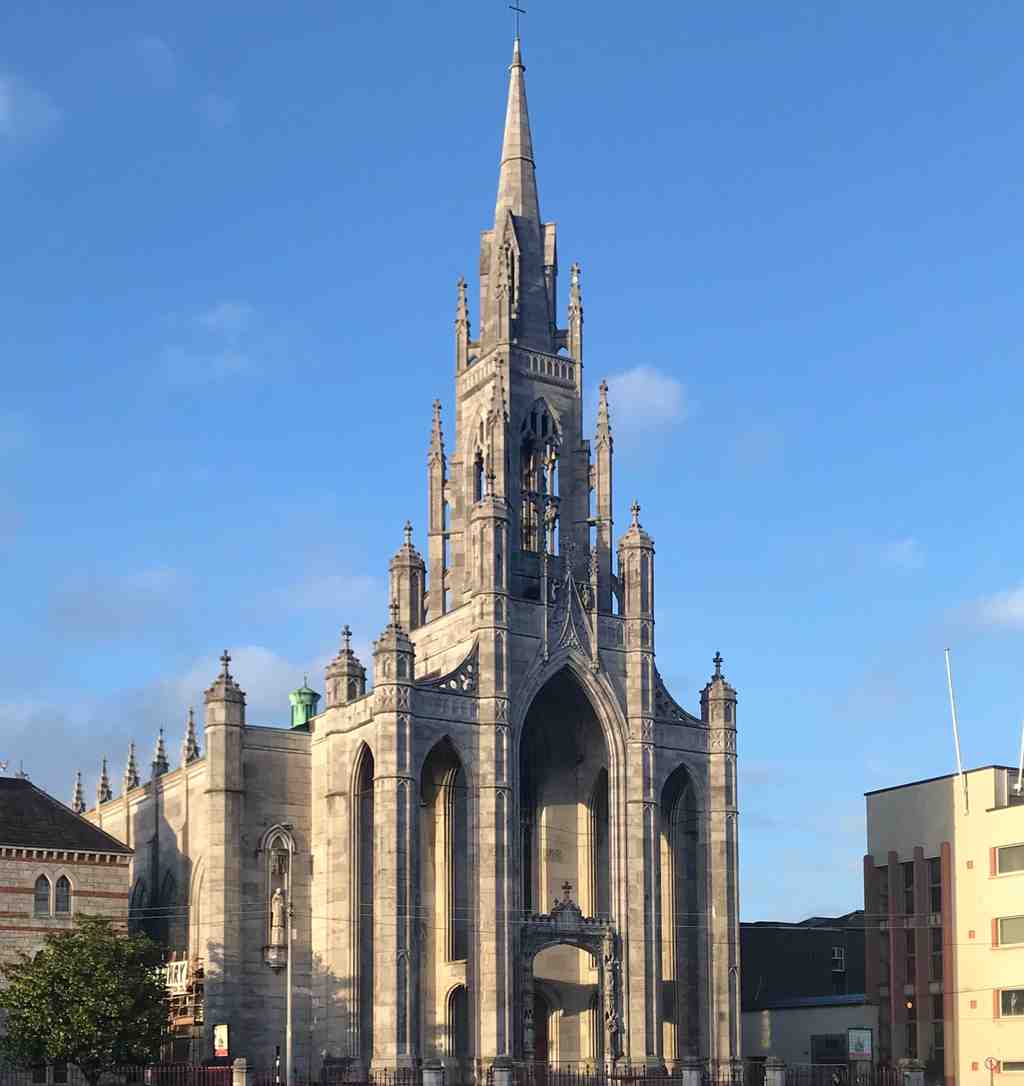
Look for a tall, pale limestone church right on the bank of the River Lee, with a soaring spire and pointy Gothic arches-its dramatic entrance and intricate stonework make it hard…Meer lezenToon minder
Look for a tall, pale limestone church right on the bank of the River Lee, with a soaring spire and pointy Gothic arches-its dramatic entrance and intricate stonework make it hard to miss! You’re standing in the shadow of Holy Trinity Church, or as the locals say with a bit of pride, Father Mathew Memorial Church. Now, close your eyes for a second and picture Cork in the 1830s: bustling with carriages, merchants, and muddy quaysides. The Capuchin friars were wandering these very streets, dreaming of a new church grand enough to shelter the hopes and prayers of the local people. The previous chapel-well, let’s just say it was so small and humble, you’d be forgiven for mistaking it for someone’s oversized garden shed. Not exactly “grand design” material! That dream became a mighty challenge. The marshy ground beneath your feet had to be drained before building could even begin. Imagine, workers trudging around in boots, trying desperately not to sink with each step, while the people of Cork passed by and wondered if the walls would ever rise. The chosen architect, a chap named George Richard Pain-famous for his love of pointy arches and dramatic facades-set out to create a masterpiece. He wanted a church that soared above the city, almost floating above the Lee, but things didn’t quite go to plan. Money ran dry faster than a cup of tea at a Cork gossip session. With the Great Famine looming and a cholera outbreak to boot, even Father Mathew’s superhuman fundraising (and he was a bit of a superstar in his day, especially among the temperance crowd) couldn’t keep the stones piling up. There were arguments, cost quarrels, and poor Pain even passed away before the job was halfway done. For years, the building site stood still, just a ghostly shell by the river. Local legends say it was the best place to hide away when you were supposed to be at church but didn’t want to sit through another long sermon! After the famine, things picked up. New architects stepped in, people rallied their coins, and at long last, Holy Trinity Church opened its doors. The grand opening in 1850 was so packed, you needed a ticket just to get in-imagine that for a church service! Still, even after the doors opened, there was a funny twist: the front of the church, the part you’re staring at now, wasn’t finished. For decades, it stood with a sort of “under construction” look. If you’d visited in the late 1800s, you’d have seen scaffolds, chisels, and the unmistakable sound of hammers--as craftsmen raced to finish before the 100th birthday of Father Mathew. But finally, with local stonemasons working double time and limestone from the same old quarry, the facade was made complete just in time for a big centenary celebration. The inside of the church, too, is a jewel box. Don’t miss the stained glass: some of the finest were designed by the legendary Harry Clarke’s studio. There’s even a spectacular window dedicated to Daniel O’Connell, the great Irish liberator, and another showing Christ as the Prince of Peace, with Cork’s own skyline shining below. Over the years, Holy Trinity has survived fires, near demolitions, and major renovations. Some suggested tearing it down entirely in the 1980s, but the city wasn’t having any of it-this church, with its flying buttresses and soaring gothic spire, was too much a part of Cork’s heartbeat. Let’s not forget the friary next door, either-a Venetian Gothic masterpiece built in record time (maybe the only thing in this story that happened quickly!). The Capuchin friars here have looked after generations of Corkonians-not just their spiritual health, but their bellies and backs, running clothing drives and social gatherings, pantomimes, and charity concerts, drawing thousands through the church doors. Take a breath now, and soak in the grand views: soaring stone, pointed spires, and a church that refused to give up, even when Cork’s world looked bleakest. Right here on the banks of the Lee, Holy Trinity stands as a blessing, a memory, and a little reminder that persistence-and maybe a bit of Cork stubbornness-can build wonders. And if you’re wondering, yes, even today, local jokes say you can spot a true Corkonian by whether they call it Holy Trinity or “Father Mathew’s”-either way, it’s the same spot where faith, hope, and a dash of humor have been ringing through the city for almost two centuries. Want to explore the background, construction or the architecture in more depth? Join me in the chat section for a detailed discussion.
Open eigen pagina →Look ahead and you’ll see South Mall as a wide, bustling street lined with tall, elegant buildings and leafy trees, just past the parked cars and right in the heart of…Meer lezenToon minder
Look ahead and you’ll see South Mall as a wide, bustling street lined with tall, elegant buildings and leafy trees, just past the parked cars and right in the heart of Cork. Welcome to South Mall! Take a deep breath-can you smell the faint memory of river water? Believe it or not, under your feet once flowed a channel of the River Lee. Imagine the slap of oars and the creak of old wooden boats pulling up where cars now park. Over the centuries, this grand avenue became Cork’s banking brain, filled with the quiet chatter of legal offices and the golden glint of coins in counting houses. Some of these buildings were built with bricks that once sailed across the ocean as ballast, so you’re literally surrounded by pieces of faraway lands. See the majestic white façade of the AIB branch? That bank’s legacy here stretches back to 1825, and whispers of business deals and secrets seem to echo between its pillars. Today, South Mall mixes the old and new: trendy co-working spaces buzz behind Georgian windows, and just down the street sits a sparkling hotel-the city’s first new one since 2004. So whether you’re a lawyer, a local, or just a happy wanderer, South Mall is Cork’s living, breathing time capsule-don’t be surprised if you find yourself wondering what stories the river here might tell if it could talk.
Open eigen pagina →As you stand here, look straight ahead-Oliver Plunkett Street stretches right in front of you, lined with colorful shopfronts, strung banners overhead, and a lively throng of…Meer lezenToon minder
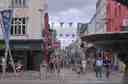
As you stand here, look straight ahead-Oliver Plunkett Street stretches right in front of you, lined with colorful shopfronts, strung banners overhead, and a lively throng of people bustling past, while to your right you’ll spot the trickling sound of a fountain adding to the charm. Now, let’s step into the heart of Oliver Plunkett Street, where every footstep seems to echo with stories, some centuries old! Picture it: it’s the early 1700s, the city is bursting out from its original walls, and right here on what was then a marshy patch, the first grand street east of Grand Parade was boldly laid down. Back then, it wasn’t called Oliver Plunkett Street at all! It proudly wore the name George’s Street, after the reigning King George I. Imagine the swish of horses’ hooves and the clatter of cartwheels rolling along this brand-new street. As you walk, notice the slight dip in the road-Cork’s lowest-lying street, just four metres above the River Lee. When the river felt cheeky and leapt its banks, the shops here got their feet wet. Locals are so used to a bit of flooding that one might say they keep their wellies close by-just in case! The street's seen its fair share of drama. In 1920, during the Burning of Cork, this whole area blazed as British troops swept through, setting large sections of the street aflame. Stores that stood for centuries faced fiery ruin. But as Cork has always done, people rebuilt, dusted off the ashes, and carried on selling butter, bread, and perhaps a little local gossip-because resilience is a Cork specialty. Not long after Irish independence, the street’s name changed from George’s to Oliver Plunkett Street, honoring a 17th-century archbishop and martyr. Yet, old habits die hard; you could still see “Late George’s Street” on shop signs as late as 1945. It was like the city just couldn’t let go of the past-Corkonians are sentimental souls, after all! What about today? The atmosphere here is electric-more than a hundred independent shops, some run by the same families for generations. You’ll find everything from quirky boutiques to the General Post Office. Hungry? If you catch a delicious whiff wafting through a narrow lane, follow it; Market Lane leads to the famous English Market, where the buzz of traders still fills the air. Look around, and you’ll spot entrances to a network-a grid of cheerful little streets like Prince’s Street and Cook Street, chock full of night spots just off the main drag. Here’s a fun fact: back in 1971, Prince’s Street became Ireland’s first-ever pedestrian street, and soon more of Oliver Plunkett’s side streets followed. Today, almost everything you see is car-free from 11am to 4am, giving it almost a festival feel by day and night. In 2004, the city gave the street a €3.8 million facelift-fancy tiles, lighting, and benches, all designed to keep it looking spick and span. And in 2016, it won the “Great Street Award” from London’s Academy of Urbanism. Not too shabby for a street that started as a marsh, eh? Take a moment to soak it all in-the colorful facades, the fluttering bunting, the laughter from cafés, the sense of Cork’s indomitable spirit everywhere you look. This street may have changed names and faces, but its heart beats as strong as ever.
Open eigen pagina →Look ahead for a tall, solid stone building with deep red bricks and arched windows trimmed with white stone-it’s right across from the row of taxis and has “Makers Outdoor Shop”…Meer lezenToon minder
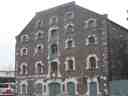
Look ahead for a tall, solid stone building with deep red bricks and arched windows trimmed with white stone-it’s right across from the row of taxis and has “Makers Outdoor Shop” written across the front. Welcome to Parnell Place, one of the busiest veins in Cork’s city centre! As you stand here, picture the rattle of buses, the chatter of travelers, and the constant hum of life-this place is the beating heart where journeys begin and end for many. But it wasn’t always called Parnell Place. Over the years, this street has worn a wardrobe of names: from Cold Harbour (which honestly sounds like a spot where pirates would chill out after a long day) to Nelson's Quay, then Warren's Place, and finally, today’s name-honoring Charles Stewart Parnell, the Irish political hero known for his wild ambition and that bristly moustache! The big blocky bus station just down the way is like Cork’s own living clock, with people coming and going at all hours. Think of the millions of stories: nervous first-time travelers, heartfelt reunions, baskets of fresh market goods, and even the odd misadventure-someone, somewhere, always manages to leave their umbrella behind. So look around you and breathe in the fresh tang of the River Lee while you listen for the echo of old footsteps. This spot is more than just stone and buses-it’s the place where Cork keeps moving!
Open eigen pagina →
Veelgestelde vragen
Hoe begin ik de tour?
Download na aankoop de AudaTours-app en voer je inwisselcode in. De tour is direct klaar om te starten – tik gewoon op afspelen en volg de GPS-geleide route.
Heb ik internet nodig tijdens de tour?
Nee! Download de tour voordat je begint en geniet er volledig offline van. Alleen de chatfunctie vereist internet. We raden aan om te downloaden via wifi om mobiele data te besparen.
Is dit een groepsrondleiding met gids?
Nee - dit is een audiotour met eigen gids. Je verkent zelfstandig op je eigen tempo, met audiovertelling via je telefoon. Geen tourguide, geen groep, geen schema.
Hoe lang duurt de tour?
De meeste tours duren 60-90 minuten, maar jij bepaalt het tempo volledig. Pauzeer, sla stops over of neem pauzes wanneer je wilt.
Wat als ik de tour vandaag niet kan afmaken?
Geen probleem! Tours hebben levenslange toegang. Pauzeer en hervat wanneer je wilt – morgen, volgende week of volgend jaar. Je voortgang wordt opgeslagen.
Welke talen zijn beschikbaar?
Alle tours zijn beschikbaar in meer dan 50 talen. Selecteer je voorkeurstaal bij het inwisselen van je code. Let op: de taal kan niet worden gewijzigd na het genereren van de tour.
Waar vind ik de tour na aankoop?
Download de gratis AudaTours-app uit de App Store of Google Play. Voer je inwisselcode in (verzonden per e-mail) en de tour verschijnt in je bibliotheek, klaar om te downloaden en te starten.
Als je niet tevreden bent met de tour, betalen we je aankoop terug. Neem contact met ons op via [email protected]
Veilig afrekenen met 


