Boedapest Audiotour: Verkenning van bezienswaardigheden in het stadscentrum
Onder de verfijnde façades en rivierboulevards van Boedapest schuilt een eeuwenoud web van rebellie, ambitie en intellect dat door het hart van Taban pulseert. Deze zelfgeleide audiotour neemt je mee naar geheime hoofdstukken die de meeste reizigers missen – waar legendarische professoren botsten met keizers, revolutionairen verboden boeken hamsterden, en met inkt bevlekte uitgevers alles riskeerden om de cultuur levend te houden. Wat veroorzaakte academische rivaliteiten die zo fel waren dat ze de officiële taal van de ene op de andere dag veranderden? Waarom verdwenen onbetaalbare manuscripten tijdens oorlogen en doken ze decennia later weer op? Wie probeerde subversieve pamfletten naar buiten te smokkelen, vermomd als religieuze teksten? Beweeg van grote collegezalen naar verborgen bibliotheekkluizen en sprookjesachtige hoofdkwartieren. Elke stap knettert van intrige – van adellijke schandalen aan de Eötvös Loránd Universiteit tot gewaagde uitgeverscomplotten bij de Sint-Stefanusmaatschappij. Deze straten waren getuige van rellen, doorbraken en wilde plannen. Zie Boedapest opnieuw: stoutmoedig, turbulent, onvergetelijk. Druk op play – en laat de dramatische geheimen van Taban je dieper de ziel van de stad intrekken.
Tourvoorbeeld
Over deze tour
- scheduleDuur 40–60 minsGa op je eigen tempo
- straighten3.8 km wandelrouteVolg het geleide pad
- location_on
- wifi_offWerkt offlineEén keer downloaden, overal gebruiken
- all_inclusiveLevenslange toegangOp elk moment opnieuw afspelen, voor altijd
- location_onStart bij Eötvös Loránd Universiteit
Stops op deze tour
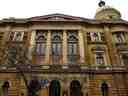
To spot Eötvös Loránd University, look for a grand, stately building with tall windows, ornate details, and a decorative crest above the entrance-just follow the flow of students…Meer lezenToon minder
To spot Eötvös Loránd University, look for a grand, stately building with tall windows, ornate details, and a decorative crest above the entrance-just follow the flow of students and you’ll find yourself standing before an academic legend. As you stand here, imagine the gentle chatter of thousands of students echoing down these halls over centuries-yes, centuries-because this is not just any university. Eötvös Loránd University, or ELTE for short, is the brainy heart of Budapest, founded all the way back in 1635! Picture cobblestone streets, monks in heavy robes, and Cardinal Péter Pázmány himself, the university’s founder, pacing nervously as he welcomes the very first students. Back then, it was all theology and philosophy-just two faculties, and Jesuits ran the show. Fast forward, and the campus grows, the subjects multiply, and suddenly you have law in 1667, medicine in 1769, and a university ready to take over Budapest! Now listen for the clacking of horse hooves and the distant calls of market vendors as the university makes its grand move: first to Buda in 1777, and then settling here, in Pest, just a few years later. The whole city must have been buzzing-imagine students nervously clutching parchment and trying to find the right classroom in a swirl of Latin, because until 1844, that was the only language spoken here! But don’t worry, Hungarian soon took over, and that’s not the only transformation. This place has changed names more often than a chameleon-Royal University of Pest, University of Budapest, Royal Hungarian Pázmány Péter University, and finally, Eötvös Loránd University! And what a name: Baron Loránd Eötvös wasn’t just skilled with a chalkboard, but also a bona fide scientific superstar. So, yes, ELTE wears its title with pride. What makes ELTE so special, besides its 28,000 students bustling around today, is the glittering treasure trove of minds it’s nurtured. We’re talking about five Nobel Prize winners-a club more exclusive than a royal ball! Imagine Albert Szent-Györgyi, discoverer of Vitamin C, grabbing a quick coffee here before unlocking the secrets of scurvy. Or cast your mind to the present, with Ferenc Krausz, another Nobel laureate in Physics, showing that this place still sparks world-changing ideas. Step back-watch for a stray football coming your way, because ELTE students know how to play as hard as they study! Their athletic club, Budapesti Egyetemi Atlétikai Club, has even made it to Hungary’s top football league (for a brief, shining moment-before, let’s say, heroically returning to the underdogs). Stroll a little, and you’ll see ELTE’s nine faculties scattered throughout Budapest, each its own universe: law, science, humanities, psychology, and more. Just imagine the river of knowledge flowing through lecture halls along the Danube, in gardens, and inside libraries full to the brim with wisdom. Some faculties have their own library-think of the historic one at Ferenciek tere, a real bookworm’s paradise! But ELTE isn’t just about old books and fancy prizes; it’s alive, buzzing, and constantly changing. In 1895, women were first welcomed here-imagine the excitement (and maybe a few raised eyebrows) on the first day! Even today, the university sticks with tradition by staying state-owned, unlike many others who’ve run off with new funding models. So the next time you hear the word “university,” remember ELTE: a place of noble roots, riveting change, and more stories than even its oldest librarian could tell. Just beware-standing here, you might catch a bit of that Nobel-winning inspiration yourself. Who knows, in a hundred years it could be your statue by the entrance, with future students puzzling over how you ever found time to get any sleep! Wondering about the academic profile, campuses or the faculties? Feel free to discuss it further in the chat section below.
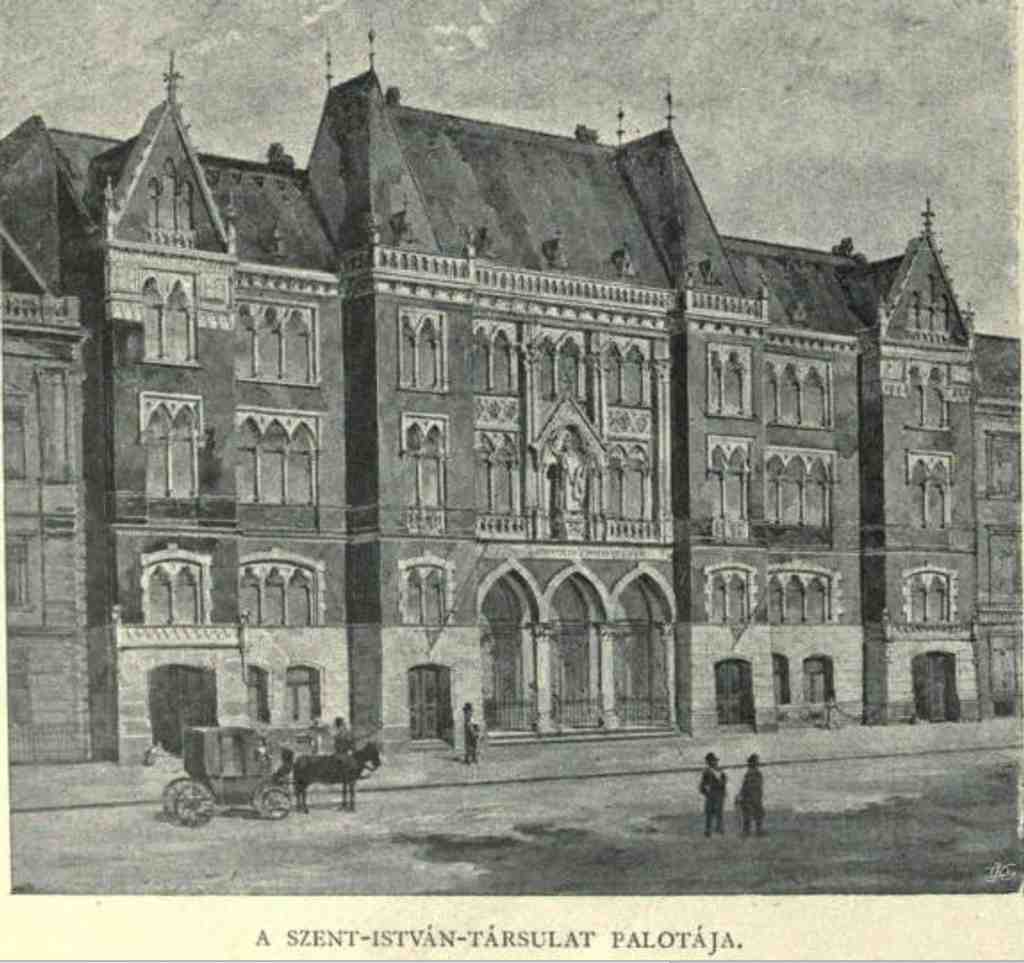
Open eigen pagina →To spot the St. Stephen's Company, look up at the impressive, sprawling Gothic Revival building ahead of you, with its steep, peaked roofs, ornate stone arches, and rows of tall…Meer lezenToon minder
To spot the St. Stephen's Company, look up at the impressive, sprawling Gothic Revival building ahead of you, with its steep, peaked roofs, ornate stone arches, and rows of tall windows - it almost looks like something straight out of a storybook! Imagine we’re standing here not just on a bustling Budapest street, but at the very heart of an incredible story that started nearly two centuries ago. Picture 1848: Budapest is crackling with new ideas, revolutions, and, let’s be honest, some questionable facial hair. Right in the midst of that chaos, a group of ambitious dreamers, with ink-stained fingers and hearts full of hope, decided Hungarians needed more than just paprikás and poetry-they needed access to books! Affordable, good books that even the humblest villager could read by candlelight. So, under the guidance of Fogarasy Mihály and the patronage of the mighty Archbishop Kopácsy József, the Saint Stephen Society-Szent István Társulat in Hungarian-was born. If you listen carefully, maybe you can still hear the excited whispers of those first members discussing their mission: “Books should be cheap as bread and nourishing for the soul!” They started with just a thousand eager souls, promising every new member not just wisdom, but books-lots of them. Their very first publication had a rather catchy name: “Christian Calendar for Hungarian Catholics.” Sure, it wasn’t exactly “Harry Potter,” but it filled a real need-guiding families through faith and the rhythms of the year. And soon, newspapers like the “Katholikus Néplap” followed, spreading news and cheer. Picture a Budapest where every cobbler, baker, and candlestick maker could finally afford to own a book. But just as things were getting going, history barged in uninvited. The 1848-49 War of Independence turned lives upside down. Money lost its value faster than a snowman in July. Thousands of forints, carefully saved by the Society, melted away, and their precious publications scattered or seized-an organizational nightmare before spreadsheets even existed! Still, they didn’t quit. Like determined librarians on a mission, they dusted off whatever was left, gathered the best minds in the land-think of political heavyweights like Deák Ferenc-and got right back to work. Now, fast-forward to 1852, and you’ll see the Society proudly adopting the name “Saint Stephen”-after Hungary’s first king, a man known for wisdom, faith, and the ability to wear a crown without it slipping. Picture years of struggle under official censorship, fighting to keep the Hungarian language-and people’s spirits-alive through books. Then, with reconciliation and peace in Hungary, suddenly their presses were humming like busy bees, churning out textbooks and teaching aids not just in Hungarian, but also in German, Slovak, Romanian, Croatian, and Rutén for the rainbow of cultures living in the country. Meanwhile, they became the proud publishers of scholarly journals and fierce defenders of Catholic values, creating an ever-widening circle of writers, teachers, and thinkers. At one point, their annual general meetings must have looked like a who’s-who of Hungarian brilliance, with lively debates and no shortage of tea (or perhaps pálinka?). By the turn of the century, the Society was so successful that they had this very building-yes, the grand, fairy-tale palace you’re looking at-constructed for themselves. It became not just their headquarters but the beating heart of Hungarian Catholic publishing. They even ran their own print shop, the Stephaneum, giving them the second-largest publishing operation in the land, just behind the legendary Franklin Company. And in 1923, their commitment was honored by none other than Pope Pius XI, granting them the coveted title of the Holy See’s Publisher, a badge of respect that probably made other publishers green with envy. But, as every good story goes, more storms rolled in. After the Second World War, restrictions clamped down. Many of their journals vanished, their manuscripts were scrutinized by tight-fisted officials, and their grand printing presses lay quiet-except for the “Katholikus Szemle,” which survived, stubbornly, like an umbrella in a downpour. Only after 1989, with Hungary’s return to freedom, could the Society spring back to life, reviving its proud tradition of publishing for schools, congregations, and anyone hungry for knowledge. Today, the Saint Stephen’s Company stands as a living bridge from Hungary’s stormy past to its creative present, having published close to 60 million copies of nearly 12,000 works-everything from encyclopedias and scientific treatises to schoolbooks, novels, and more than a few fascinating stories. So, as you look around, let your imagination wander: this was once the nerve center of bookish revolutionaries, determined to bring learning and faith to every corner of the nation, one page at a time. And remember-never underestimate the power of a good book... or a determined publisher!
Open eigen pagina →Look up ahead for a grand, mustard-yellow building with tall arched windows, majestic columns, and an elegant dome topped with colored tiles-this stately facade marks the…Meer lezenToon minder
Look up ahead for a grand, mustard-yellow building with tall arched windows, majestic columns, and an elegant dome topped with colored tiles-this stately facade marks the University Library of Eötvös Loránd University. Welcome to the University Library, the beating heart and book-filled brain of Eötvös Loránd University. Now, if you find the scent of old books and ancient secrets irresistible, you’re in for a treat! Imagine stepping back through nearly five centuries of history, where every whisper of the wind past these neo-Renaissance walls seems to carry a story or two. The building was completed in 1876, originally designed by Antal Szkalnitzky and Henrik Koch Jr., making it the very first library palace purpose-built for book-loving scholars in all of Hungary. Talk about getting your priorities straight! Close your eyes for a moment and let yourself drift to the 16th century. Picture Jesuit monks trudging through muddy streets, books clutched tightly as they move their growing collection from town to town, always hopeful for a permanent home. The collection actually predates the university itself and began way back in 1561-thanks to a college set up in Trnava by the Jesuits under Archbishop Miklós Oláh. In those days, books were so precious that every new title felt like a treasure chest unlocked. By 1632, their library boasted almost 1,500 items. Not bad for a collection that started with a handful of dusty volumes and a prayer! When the Jesuit order was dissolved in 1773, their books faced homelessness yet again. But the university, which had just been shipped from Trnava to Budapest, scooped them up like a literary rescue mission. The real boost came in 1780, when the library received the country's first legal deposit right-meaning every publisher in Hungary was supposed to send a copy of every book printed. (Well, "supposed to." Like all good rules, this one was a bit bendy at first.) Now fast forward to the 19th century: the library had grown so vast it desperately needed a new home. Toldy Ferenc, the library’s champion, managed to persuade a royal archduke there was no better investment than a splendid house of books. After a few delays (and even a fire at a supplier’s factory that set things back-), the current building finally opened with a flourish in 1876. Picture the library’s opening days, crowds in smart coats and scholarly specs lining up beneath frescoes by Károly Lotz and gaping at the dreamy sgraffito work by Mór Than. With its whispering halls and sturdy bookcases, the place quickly became Budapest’s main temple of learning, a bit like Hogwarts-but with even more dusty tomes and less risk of magical mishaps (unless you count the hunger for knowledge as a curse). The University Library is much more than bookshelves stacked to the rafters. Its Rare Manuscripts room is a magician’s trove of wonders: nearly 200 illuminated codices, ancient papal decrees, medieval charters, and treasures like Dante’s Divine Comedy, elegantly hand-illustrated in the 1300s. There’s even a collection of “incunabula”-the oldest printed books, including one, glittering with gold illumination, that once belonged to a 15th-century archbishop. The collection survived world wars, regime changes, and a few less magical events like the 1970s construction of Metro Line 3 beneath the building. That particular adventure caused the building to crack and sink a bit-engineers had predicted an 8-centimeter dip, but got a jaw-dropping 14-centimeter tilt instead! Cracks crept along the walls, scaffolding appeared everywhere, and for a while, the only thing falling harder than the books was visitor attendance. But resilience is the library’s middle name. Thanks to decades of repairs and clever adaptation, it bounced back in the 1990s and now stands once again as the centerpiece for students, scholars, and anyone keen to get lost in a universe of paper and ink. Today, it houses over 2 million titles spread across elegant reading rooms, all open to the public-so if you’ve ever wanted to read a book that’s older than half the palaces in Budapest, this is your stop! Don’t be shy-peek through the main doors and imagine yourself crossing 450 years of adventure, from inquisitive monks to modern researchers. And remember-while Google might crash now and then, this library? It’s been online since 1561. That’s what I call “long-term storage”! Want to explore the history of the library, university library services or the special collections in more depth? Join me in the chat section for a detailed discussion.
Open eigen pagina →
Toon 11 stops meerToon minder stopsexpand_moreexpand_less
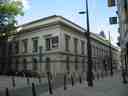
You’ll find the Károlyi Palace right here, a grand, pale yellow one-story building with classicist lines, tall windows with deep frames, and a sense of quiet dignity-just look for…Meer lezenToon minder
You’ll find the Károlyi Palace right here, a grand, pale yellow one-story building with classicist lines, tall windows with deep frames, and a sense of quiet dignity-just look for the long facade hugging the corner of Károlyi Street, surrounded by trees and shaded sidewalks. Now, take a deep breath, because you’re standing in front of a place that has seen centuries of drama, extravagance, whispers, and garden parties-welcome to the Károlyi Palace, a slice of Budapest’s heart with a story longer than its list of windows! Let’s imagine the scene: it’s the 1830s, and Count György Károlyi decides Pest needs not just another stately home, but a refined palace, elegantly fashioned in the classical style. Back then, though, the area was a maze of winding street names-some sounded like Zucker Gasse, others like Uri Street. That’s a bit like waking up every day and your GPS giving you a new address, isn’t it? The Károlyi Palace soon became the pride and joy of the city’s elite. It was a place where decisions that would shape Hungary were whispered over glasses of strong coffee and crumbly cakes. But the plot thickens-quite literally under your feet! During World War II, when a water reservoir was being dug in the palace garden for air-raid safety, workers stumbled upon skeletons and ancient relics. Imagine, beneath the roots of peaceful trees lay the bones and treasures of medieval Pest: belt buckles, bronze rings, a necklace, even a Roman coin with 'Fortuna Redux' engraved. Turns out the garden once doubled as a cemetery during the early days of Hungarian history-talk about having skeletons in the closet! The garden has changed as much as the palace. Once, it was surrounded by walls, its fragrant acacias and rare orchids jealously guarded by the Károlyi family. In spring, the blooms would spill over the walls, tempting the whole city with promises of secret beauty. And though regular folk could only dream, the palace itself became known for its grand feasts and royal guests: Queen Maria Theresa herself once waved to crowds from the balcony, and later, the waltzing feet of nobles swept polished floors during dazzling balls. Let’s not forget the drama of the 19th century. During the Hungarian Revolution of 1848, enemy soldiers marched into the palace and took up residence, guards posted at every door, the owners forced to watch as their beloved home became the HQ for foreign generals. Even the first Hungarian Prime Minister, Lajos Batthyány, was dragged away to prison from these halls! Then, when all seemed lost, the revolutionary hero Kossuth Lajos rode into Pest in a carriage decorated with ribbons made by the countess herself-triumph and heartbreak side by side. Fast forward to the days of the Austro-Hungarian Empire, and the palace saw yet more parties, this time with visiting princes-yes, even the future King Edward VII of England dropped by to admire the palace’s lush garden and flawless flower arrangements. And if you’d been lucky enough to be the Károlyi gardener back then, you might have packed your bags for Parisian garden shows, gathering inspiration to transform Pest’s soil into velvet lawns and exotic beds. But don’t let all that glamour fool you-the 20th century brought worries of bankruptcy and the threat that this whole estate would be carved up and sold, replaced by plain old apartment blocks. The family held on for as long as they could, throwing garden teas among blooming lilacs, but eventually, like so many grand homes in Europe, it passed into public hands. For a while it held the city’s famed art collections. After World War II, the city itself owned the palace, opening up the garden for concerts and laughter. These days, if you’re curious about Hungary’s literary past, the palace now houses the Petőfi Literary Museum-though right now, its rooms are being carefully renovated, just as they’ve been time and time again. And as you gaze at its serene classicist face, remember: beneath its calm surface, this building has witnessed centuries of revelry, revolution, and rediscovery. You can almost still hear the whispers and music echoing through the corridors. And hey, with so much history under one roof, it’s no wonder the palace likes to keep its doors and its secrets wide open to anyone who cares to listen!
Open eigen pagina →To spot Károlyi Garden, look for a peaceful green space surrounded by tall wrought-iron fences and stately trees, with colorful flowerbeds and playful children’s areas just…Meer lezenToon minder
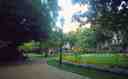
To spot Károlyi Garden, look for a peaceful green space surrounded by tall wrought-iron fences and stately trees, with colorful flowerbeds and playful children’s areas just through the gates on your right. Welcome to Károlyi Garden, the oldest public park in downtown Budapest-and perhaps the grandest survivor of time’s mischief! As you stand here, imagine a space that’s been more secretive than your neighbor’s Wi-Fi password: for centuries, this was a hidden treasure, locked behind stone walls and only open to the city’s most powerful families. Today, children’s laughter and birdsong fill the air, but let’s turn the clocks back… Picture the late 1600s: Budapest barely recovering from Ottoman rule, empty plots being given away for cheap, and a clever baron named Werlein claiming this spot for his home. Over the years, the garden’s land switched hands more often than a hot potato, until finally, in 1768, the wealthy Károlyi family made it theirs. Back then, the garden was all geometric shapes and strict order, sort of like a fancy green chessboard. But the Károlyis weren’t about to be outdone by Paris or Vienna, so they soon mixed in the English garden style-winding paths and playful corners-right when such things were the hottest trend across Europe. If hedges could gossip, you’d have heard the Károlyi garden described as “the place to be seen.” In the palatial heyday of the 1800s, the garden became a true social hotspot-and not just for strolls. Imagine grand parties where flickering lanterns lined the entrance, the city’s elite gliding through candlelit walkways while the aroma of blooming flowers filled the air. There were green lawns, winding walkways, orangeries packed with exotic lemon and orange trees, and even a greenhouse so lush that some flowers might have needed a passport. One legend says that Emperor Franz Joseph and Empress Elisabeth themselves admired the floral displays here-and that Queen Victoria’s son, the Prince of Wales, once attended a party that cut through the night with laughter and clinking glasses. But, alas, it wasn’t all royal picnics. The garden faced floods in 1838, where the grass turned into a private swimming pool-sadly, the local ducks raved, but the flowers did not. During the Hungarian Revolution of 1848-49, the palace echoed with soldiers’ boots, secret conversations, and the not-so-subtle racket of General Haynau’s morning jogs. Some say he even organized a dance in the garden, as if swinging a Hungarian waltz could erase the chaos outside. By the late 1800s, the garden was famed across Pest. With its lush lawns, rare plants, and elegant design, it was the envy of every botanist and busybody. The legendary gardener Kopál József turned it into a botanical wonderland-palms, orchids, rhododendrons, and azaleas turned the greenhouses into a riot of colors. Even when the gates were locked to the public, people peered through the bars, dreaming of secret summer afternoons among the roses. Fast forward to the 20th century, and things got dramatic. The Károlyi family nearly sold the garden to make way for apartments, but Budapest must have whispered, “Not today.” Instead, the state took ownership, and in 1932, the gates were thrown open for everyone. Imagine the excitement as Pest’s residents flooded in, eager to claim a slice of this forbidden paradise. Children giggled on the grass, lovers met in the shady alcoves, and somewhere, a dog probably made history on the oldest mulberry tree in Budapest. World War II, however, left scars-bombings damaged the grounds, and decades later, metro construction nearly wiped everything out. For a while, the only things growing here were weeds and rumors. But the people of Budapest refused to let go. After several careful restorations, the park blossomed once more, blending formal flowerbeds with winding paths and peaceful playgrounds. If you listen closely, you might even hear old secrets rustling through the leaves. Today, the Károlyi Garden is the green heart of the city, open to all and full of stories. Whether you’re here for chess under the linden trees or a nap on the soft grass, remember: you’re walking through centuries of history-one step at a time. For further insights on the location, history and description or the the károlyi garden in cultural life, feel free to navigate to the chat section below and inquire.
Open eigen pagina →Take a look to your left-what you’re seeing is a grand, six-story corner building that almost glows gold at night, with large arched windows and a glowing “HOTEL ASTORIA” sign…Meer lezenToon minder
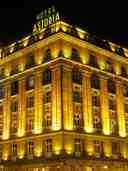
Take a look to your left-what you’re seeing is a grand, six-story corner building that almost glows gold at night, with large arched windows and a glowing “HOTEL ASTORIA” sign right up top, making it simply impossible to miss! Now, let’s step in closer and imagine together: It’s 1914, and Budapest is ready to impress the world with its latest marvel-the Astoria Hotel, fresh and grand, its lights burning bright at the very heart of the city. For more than a century, this has been one of the city’s most elegant and storied destinations, a place where old-world charm still lingers like the scent of strong coffee in a velvet-draped café. But the Astoria’s story actually begins long before the stylish guests and the marble floors. Travel back with me to the 1700s, and you’d find this very spot buzzing with the sound of a blacksmith's hammer, thanks to a determined craftsman named Benedek Unger. Over time, his workshop gave way to a lively café that soon became a magnet for Budapest’s brightest minds and boldest hearts-politicians, poets, and even the legendary Sándor Petőfi, who lived next door for a while and penned part of *János vitéz* here. You can almost hear the scratch of his pen in the silence, can’t you? Fast forward to the 1800s, when the ancient city walls came tumbling down and the area exploded with possibility. Where there once was a city gate and an old fortification, now stood a flashy new lodging house and a café that buzzed with late-night debates and revolutionary dreams. Even today, Magyar Street next door is a silent nod to the Unger family's legacy. By 1914, at the crossroads of Kossuth Lajos Street and Museum Boulevard, with Budapest booming and the world on the brink of change, the Astoria Hotel opened its doors. Talk about top-of-the-line! This place was state-of-the-art, boasting central heating, modern elevators, and even a vacuum-cleaning system-pretty rare back then. They’d even built a wine cellar that quickly became the toast of the town. The hotel’s design was an unexpected collaboration-two architects working separately but in perfect harmony, each side of the building reflecting a different vision, but together making magic. And let’s talk about the name! The original manager, Mihály Gellér, thought back to his days in New York City at the Waldorf-Astoria, and brought a whiff of that transatlantic glamour right here. Astoria-it just rolls off the tongue, doesn’t it? No wonder locals started calling it, half in jest, “Ahsztória,” playfully noting how hard it was to snag a room among the city’s elite. If these walls could talk, oh, the stories they’d spill! During the “Chrysanthemum Revolution” in 1918, Count Mihály Károlyi literally addressed a sea of hopeful faces from the first-floor balcony-think of it as a TED Talk with a little more drama and a lot more mustaches. Soon, the Astoria became the very headquarters of the National Council and even Károlyi’s own living quarters. Picture secret meetings in room 105, dramatic arguments, and maybe a few hasty plans scribbled on napkins. The interwar years saw all sorts of colorful characters passing through under the glitter of chandeliers and the glint of sparkling mirrors. They say Gyula Krúdy, the famous writer, adored the hotel because the cleaning staff worked so quietly he could sleep in until noon-now that’s what I call a five-star perk! But all was not always champagne and jazz. In 1944, as history’s dark tide swept across Hungary, the Astoria became a Gestapo stronghold-its gilded halls echoed with boots and whispers, and by the end of that nightmare, the building was left battered and looted. Still, it bounced back with legendary resilience, hosting American army officers and, soon enough, ordinary guests eager for a little old-fashioned luxury in a city picking itself up, piece by piece. Through revolution, war, and political storms, the Astoria has always come back brighter-literally, after every renovation, they seem to add a few extra bulbs to dazzle the nighttime streets. Today, it’s part of the Danubius Hotel Group and has all the bells and whistles of a top-class hotel-soundproof rooms, fine dining, and just enough secret history to make any stay here feel like you’ve snuck onto the set of a grand historical drama. So, as you stand there now, imagine the sweep of long gowns and the sharp click of dress shoes on the tile, the whisper of revolution and the clink of glasses. The Astoria isn’t just a hotel-it’s one of Budapest’s great survivors, a glamorous witness to all the laughter, whispers, and midnight plots that have shaped the city you’re wandering through today.
Open eigen pagina →To spot the Ferenciek tere metro station, just look for a sleek, modern underground hall with shiny brown columns and tan benches lined up along the wall, right under a digital…Meer lezenToon minder
To spot the Ferenciek tere metro station, just look for a sleek, modern underground hall with shiny brown columns and tan benches lined up along the wall, right under a digital green-and-white info sign. Now, take a deep breath and imagine the busy heart of Budapest throbbing all around you-right here, beneath your feet, lies one of the city’s most crucial crossroads. Ferenciek tere metro station opened its doors on New Year’s Eve in 1976, making it the sparkling gateway to the downtown for thousands of people ever since. Imagine the first passengers, a little nervous and very excited, stepping onto brand-new trains, heading north or south through the M3 tunnel network. Before 1990, they’d have known this as “Liberation Square”-a name echoing with stories of history, freedom, and change. Above ground, the square buzzes with bus engines and tram bells (easy to spot: just follow lines 5, 7, 8E, and a whole alphabet soup of others), and this station is as close as you can get to the exact middle of Budapest! So next time your phone says, “navigate to city centre,” you can wink and think, “Already here!” Some say if you listen closely, you can hear the whispers of those who rushed here decades ago, eager to start a new era-maybe one or two still waiting for that train that never seems to come on time. Welcome to the true heartbeat of Budapest!
Open eigen pagina →As you’re walking down Petőfi Sándor Street, look for a modern, glassy facade with a huge metallic gate featuring a giant stylized “K:” - that’s the Katona József Theatre, nestled…Meer lezenToon minder
As you’re walking down Petőfi Sándor Street, look for a modern, glassy facade with a huge metallic gate featuring a giant stylized “K:” - that’s the Katona József Theatre, nestled quietly among the other buildings like a well-kept secret waiting for a dramatic entrance. Welcome to the Katona József Theatre, one of Budapest’s most revered temples of drama! Imagine standing outside what looks like an unassuming modern stony theater jammed between residential buildings. Sometimes people walk right past it-until the theater leaps out at them with its bold design and the hum of anticipation from within. If buildings could whisper, you’d hear, “On your left, modern classics are being made.” Now, let’s slip into the past and let this story unfold! Once upon a time, in the tail end of the Austro-Hungarian monarchy, this courtyard was home to a stylish Art Nouveau palace at Petőfi Sándor utca 6, built on the dreams of architects Falus Elek and Herquet Rezső. Can you believe this gem was originally meant to be a cinema? Bureaucracy had other ideas-no license, no films! Enter a stubborn hero: Artúr Bárdos. When life gave him lemons, he didn’t just open a lemonade stand, he opened a cabaret instead, which soon blossomed into a real, honest-to-goodness theater. Tucked away from the bustling main thoroughfares, it felt like a secret club for fans of laughter and drama. Early audiences must have heard the creak of wooden benches, the laughter echoing off artful secessionist walls, and, for the first time in all of the Monarchy, the thrilling spin of a revolving stage in 1916. Through all its quirks, the theater’s intimate auditorium met every expectation, even with its tricky logistics. Over the decades, the theater changed hands and names. Through the roaring twenties, it became the Belvárosi Színház, jazzing up the city night after night. By 1951, state policies rolled in, and the theater became a part-time chamber venue for the mighty National Theatre next door. But boy, did it punch above its weight! Iconic actors found their breakout roles here, like Ladomerszky Margit in Shaw’s Mrs. Warren’s Profession-she performed it nearly 600 times! Directors found a creative playground within these walls, pushing boundaries. At one point, it even hosted Molière, Shakespeare, and Shaw alongside Hungarian playwrights like Csokonai and Mikszáth. Plays were sometimes judged not for their artistry, but for their “revolutionary” spirit-a bit like a talent show, but the judges are all aspiring politicians! The 1970s and '80s were like a tense drama themselves. Behind the curtain, change was brewing-directors from the countryside were shaking up the city stage. Faced with resistance in the National Theatre, two visionaries, Székely Gábor and Zsámbéki Gábor, spotted an opportunity when bureaucracy finally let its guard down. The old regime couldn’t quite control the spark anymore. In the political games of 1982, this very building was offered up as the last chess move - the birth of a bold, independent troupe: the Katona József Theatre. The founding members were rebels of the old order, artists who believed theater should speak directly and powerfully to the audience. The very first play: Chekhov’s rare comedy “The Wood Demon”, which set the mood for decades of world-class performances. From that day on, the theater became a heartbeat for the city’s cultural scene, a place for innovation and-let’s not forget-some truly spicy political statements veiled behind Shakespearean double-speak and farcical humor. Their productions didn’t just stay in Budapest; they’ve graced stages across forty countries, from Prague to Paris to Buenos Aires! Inside, the theater has been constantly updated-from removing the ornate boxes to sneaking in high-tech lights and sound equipment. The space might leak from time to time (every historic theater needs some drama offstage too!), but it’s always felt modern, fresh, and a bit magical. You might like to know their show “Three Sisters” was performed over 230 times, and the production “Portugál” ran for over 20 years, loving every single applause. Today, under director Gábor Máté, Katona József Theatre keeps surprising audiences and gathering fans. It ditched the old subscription model for a “patron’s circle”-think of it as the VIP section for drama lovers. And even if it’s standing room only, people are always eager to get in. So, next time you see that big “K:” on the front, imagine the whispers of decades of Hungarian drama, political intrigue, and rebellious art echoing off the walls. Every creak of the revolving stage is another story told, another secret shared. Now, shall we see what’s playing tonight? Don’t worry, I promise not to pull you into a tragic monologue-or maybe I will! To expand your understanding of the the building, previous independent companies or the chamber theatre of the "national" (1951-1982), feel free to engage with me in the chat section below.
Open eigen pagina →Let’s set the stage: it’s the second century, and Pest isn’t the bustling city you see today. In fact, it’s mostly swampy forest and wild floodplains, rising like an island out of…Meer lezenToon minder
Let’s set the stage: it’s the second century, and Pest isn’t the bustling city you see today. In fact, it’s mostly swampy forest and wild floodplains, rising like an island out of the marsh. A branch of the Danube curved around this spot, making it both easier to defend and a perfect place for a trading post. Because, after all, if you want to keep out invaders-and sneak peeks at smugglers-you can’t do better than a good moat. Speaking of sneaking, listen closely for the distant clatter of Roman soldiers on patrol. The Romans, meticulous as ever, built Contra-Aquincum both as a fortress and a bridgehead. Its thick stone walls-some over three meters wide!-were designed not just to keep out your everyday band of thieves or raiders, but to secure control over an invaluable crossing, the main trade route leading deep into the Great Hungarian Plain. Who’d want to mess with that? Apparently, everyone in the neighborhood. They say the only things that crossed the river more than the traders were the local troublemakers. Bandits, smugglers, and the not-so-occasional barbarian incursion kept the Roman garrison busy. You could say the customs officers here had the toughest job in Budapest... even before traffic jams were invented. The original fort was built in the early second century, probably while Emperor Trajan was busy expanding the Empire’s boundaries and his personal collection of marble busts. The look of the first camp is a bit of a mystery, but archaeologists have uncovered bits of stamped bricks, clear evidence of Roman military engineering. Cohorts from as far as Thrace and Szentendre left their muddy footprints all over the place, along with bricks marked Antoniniana, hinting at a later renovation during the reigns of Caracalla or Elagabalus. When the job was finished, legend has it, they threw a party for the emperor, although we can’t confirm if there was cake. By the late third century and the reign of Diocletian, the Romans faced new threats. Sarmatian and Roxolani warriors stormed across Pannonia, sometimes conquering the forts, sometimes just redecorating them with arrows and flames. Time for a remodel! The fortress was rebuilt from its foundations up, now in a dramatic rhombus shape with fan-shaped and horseshoe towers at the corners-an ancient answer to the open-plan office. A deep ditch circled the walls, and the stonework included recycled tombstones and altar stones. That’s right, the Romans were all about upcycling-fashionably ancient and environmentally friendly! Inside, the camp was arranged differently from the standard Roman outpost. Instead of packing the barracks together, the soldiers hugged the inner walls, leaving a big open area in the middle. Maybe they liked to play football, or maybe they just wanted plenty of space so enemies couldn’t burn down the place so easily! Sacred space was vital here too: the most important building was the sacellum, where the legion’s flags were kept safe-a spot that may have doubled as one of Europe’s oldest Christian chapels. But as centuries rolled by, the old empire changed. More and more non-Roman peoples were brought in to help defend the borders, and styles, languages, and even helmet designs took on Germanic flairs. Eventually, with pressure from every side, the Romans withdrew, and by the fifth century, Contra-Aquincum was handed over to the advancing Huns. Later, medieval churches and graveyards sprung up right on these ancient stone foundations, with Dominicans building a mighty monastery nearby-probably hoping visitors wouldn’t confuse the monk’s chants for invading armies. As the centuries turned, the fortress stones were recycled once more to build new palaces and city walls. By the time the Ottomans arrived, the old Roman fort was mostly hidden. After the city’s liberation, new houses rose, cellars carved from the fortress’s still-strong foundations. But the old stones never really disappeared-they became part of Budapest itself, the silent witnesses beneath our feet. Fast forward to the 20th century: the city finally remembered its Roman past. Excavations uncovered thick walls, mysterious ditches, and enough forgotten artifacts to fill a museum. Today, you can see the ruins behind protective glass, sometimes catching the ghostly reflection of a legionnaire-or just yourself, depending on the angle. Next time you walk by, spare a thought for the soldiers, merchants, and mischievous smugglers who once called this place home. Contra-Aquincum might be a ruin now, but its story is very much alive-just a stone's throw from the Danube and another two thousand years of history awaiting exploration! Intrigued by the location, first construction or the the fortress? Make your way to the chat section and I'll be happy to provide further details.
Open eigen pagina →Look for a white street sign with bold black letters reading "Váci utca" attached to the textured corner of a light-colored building-this means the famous Váci Street is right in…Meer lezenToon minder
Look for a white street sign with bold black letters reading "Váci utca" attached to the textured corner of a light-colored building-this means the famous Váci Street is right in front of you! Welcome to Váci Street, the legendary lifeline of Budapest’s downtown! As you stand here, listen to the buzz of different languages mixing in the air, and the beat of footsteps on cobblestones worn smooth by millions of curious visitors. This isn’t just any street-it’s the catwalk of Budapest, lined with elegant shops like Zara and Hugo Boss, twinkling window displays, and cafes bursting with the smell of fresh coffee and pastries. If you close your eyes, you might just catch the scent of perfume drifting from a passing shopper-or maybe that’s just someone eager to make a fashion statement at Mango or Lacoste! But beware, dear explorer! In the world-renowned Váci utca, not everything is always as it seems. Among the glittering jewelry shops and shoe stores, there are stories of cunning-where charming strangers might invite you for a drink at a mysterious bar with a “birthday party” that will end up costing more than just a slice of cake! It’s Budapest’s very own version of a detective novel. Yet, the atmosphere is electric, and the memories made here last a lifetime. Whether you’re shopping, people-watching, or just soaking up the vibes, Váci Street is a place to savor-just keep your wits (and your wallet) about you!
Open eigen pagina →Ahead of you, you’ll see a pale, cream-colored corner building with rows of tall, arched windows and a dark wooden balcony jutting from the upper floor-simply look for the stately…Meer lezenToon minder
Ahead of you, you’ll see a pale, cream-colored corner building with rows of tall, arched windows and a dark wooden balcony jutting from the upper floor-simply look for the stately facade perched at the edge of the square as you walk. Welcome to one of Budapest’s intellectual sanctuaries: the Deák Square Lutheran Grammar School, known to locals as DEG! Now, imagine the early morning sounds here over two hundred years ago-the chime of church bells, the rattle of horse carriages on cobblestones (so noisy, teachers sometimes had to shout over them!), and the laughter of children echoing from this very spot. In fact, the noise from the stone-paved streets was so intense that, when a wagon rolled by, lessons would come to a complete stop, as the teachers had no chance against the clatter. It all began in the late 1700s, when the Lutheran community in Pest, seeking both spiritual and scholarly pursuit, squeezed their budding congregation and their humble school into a single, rented city room. Imagine a cantor, multitasking as both choir leader and teacher, instructing eager little ones in both the basics and faith. By 1791, they’d secured this very plot next to what was once the Kohlmarkt, and in 1793, what would become this elegant school was raised from the blueprints of famed architect Pollack Mihály. It had just one floor, but from the moment lessons began in the ground-floor prayer room, education here was the real deal. In 1811, right beside the newly built Lutheran church, the school expanded. Now, in addition to elementary classes, there were grammar lessons: a golden ticket to higher learning! The language of instruction was German, but soon, subjects like geography and literature were taught in Hungarian-a sign of the times, and maybe, a hint that mastering languages in Hungary could be as tricky as juggling goulash with one hand while playing chess with the other. In 1818, boys and girls went their separate ways. The classes soon filled up, and, in true Budapest fashion, upwards growth was the answer: the building sprouted a second story! By 1823, the school had a brand-new focus: Latin. The kids were tackling filology, Greek, and local history-who said grammar school couldn’t be glamorous? Now, here comes a twist: in 1833, an eleven-year-old boy arrived-Petőfi Sándor. Yes, the future national poet himself shuffled through these halls, put here by his dad in hopes he’d master German. Spoiler alert: folklore has it, his German was shaky, and he nearly landed at the very bottom of the class list. But hey, he excelled in art, and if there’s one thing you can’t test, it’s a poet’s heart. By 1840, there were nearly 350 students, with both boys’ and girls’ classes. Thunderous carriages and smoky bakeries made city life ever-present. The teachers lived right next door, ready to help rain or shine-or shout over raucous city traffic. Some of those teachers were literally geniuses, writing textbooks and poetry, and teaching in multiple languages. School trips weren’t all that different from today, except instead of buses, imagine a merry trek into the Buda hills or even to the ancient Roman ruins in Óbuda-now those were real field trips! The school soon became a hotspot for bright minds: politicians, inventors, writers, and-fun trivia-a future designer of the Budapest tram lines (yes, it wasn’t all bookworms here, some students genuinely sparked the city’s future). In the 1870s, the building became one of the country’s most modern schools: the first gas lighting in Pest, then plumbing-though the gym and yard were still missing. Too bad, because with all this energy, these kids needed a spot to run! Times changed, and by 1933, the place evolved into a prestigious girls’ high school. A stylish navy-blue uniform with a crest was required-very Hogwarts, just without the magic ceiling. The war years left scars: teachers were drafted, memorial plaques still honor the fallen. For a time, the school was nationalized, bouncing between closures and comebacks. Finally, in 1992, DEG bounced back, re-opened with just 57 students but with the spirit of centuries at its core. Today, it’s not just a school, but a melting pot of faiths and talents: choirs, bands, theater, art clubs, and a school museum on the first floor, telling tales from its vibrant past. So, as you stand here, savor this unique blend of tradition and resilience-because in Budapest, even a school can be a living, breathing testament to the city’s heart. And in case you’re wondering: yes, you really are walking in the footsteps of poets, inventors, and visionaries-all without needing to learn Latin.
Open eigen pagina →To spot the Lutheran Church on Deák Square, just look for a stately, creamy-colored building with no tower at all, a grand triangular roof topped with a golden cross, and four…Meer lezenToon minder
To spot the Lutheran Church on Deák Square, just look for a stately, creamy-colored building with no tower at all, a grand triangular roof topped with a golden cross, and four massive columns right above the entrance, facing directly onto the busy square. Now, while you’re standing here, let’s slip back in time and imagine the square as it was over 200 years ago. The Lutheran Church of Deák Square is not just the oldest Lutheran church in Budapest-it's also the largest Protestant church in the entire city! Built without a steeple, it stands out for its understated classical elegance, with those strong Doric pillars holding up a clean, triangular pediment. Just above you, the enormous curved metallic roof gleams faintly, keeping watch over the “Lutheran Island”-this whole block, filled with Lutheran institutions like a school, pastor’s offices, a bookstore, even a museum and a kindergarten. It’s practically a small town! Its story begins with a master architect, Mihály Pollack, who started building the church in 1799. By the time it was finished in 1808, it had already had a taste of drama. In 1809, right after its construction, soldiers commandeered the space, turning it into a uniform warehouse-a far cry from the peace it was meant for. But by 1811, music once again filled the air as the church was consecrated for worship. Step inside with your imagination: one vast, rectangular space, two balconies stacked atop each other. At the front sits an altar inspired by Raphael’s stunning Transfiguration, sculpted by Ferenc Lochbihler. And at the side, a pulpit and a baptismal font crafted from deep red marble-if only church furniture could talk! But every old building has its scars. The church was damaged by cannon fire in the mid-1800s, and later lost its petite classical tower for safety reasons. The grand ceiling? Once it was domed, but that had to be swapped for a flat, coffered one after the tower came down-proving that even churches get a makeover now and then! If you listen closely around noon, you might hear the cheerful chimes of a computerized bell system, added at the turn of the millennium, since the church is still famously without a real bell tower. History has left its mark in other ways too. In March 1838, when the great flood filled the city, this church became a literal island of safety, sheltering families from the rising waters. On the facade, there’s a marble tablet commemorating the legendary Hungarian leader Lajos Kossuth, who had both his sons baptized right here. Meanwhile, the courtyard walls display bronze plaques honoring Martin Luther and Johann Sebastian Bach. Imagine the hopeful voices, the worried families, and the spirited hymns swirling through these halls. Through wars, floods, and construction of the M2 metro-which rattled its bones a bit-the church has stood strong. Today, it hosts services every Sunday and on special holidays. Fancy a bit of music? Since 1985, dazzling pipe organ recitals and the Budapest Bach Week have filled this space with heavenly sound. The church’s modern organ, built in 1971, was once the biggest of its mechanical kind in Hungary, so you know the acoustics mean business!
Open eigen pagina →Look ahead for a grand, pale rectangular building standing proudly at a corner, with rows of tall windows and graceful arches out front; it’s easy to spot because it holds a…Meer lezenToon minder
Look ahead for a grand, pale rectangular building standing proudly at a corner, with rows of tall windows and graceful arches out front; it’s easy to spot because it holds a strong presence on the street, just begging for a little royal attention. Welcome to the site of the legendary Queen of England Hotel-a place where the echoes of laughter, gossip, and perhaps the clink of billiard balls still linger in the air, even though the building itself has long been replaced. Close your eyes for a moment and let’s step back all the way to 1792, when this place first rose from the ground, courtesy of the ambitious Kemnitzer János. Picture a bustling corner near the old pontoon bridge, where the aroma of rich coffee wafts from the very first Hungarian Grand Café, and in the center, guests marvel at marble arches and sparkling chandeliers. Even a visiting botanist, Count Hoffmannsegg, raved that he’d never seen a more splendid coffee house-four marble columns, glittering Arabesque candleholders, and stylish mahogany walls that must’ve made every visitor feel just a little bit fancier. The hotel grew with the city, and in the 1830s, after a devastating flood, it was reborn in time to honor none other than Queen Victoria herself. The place became known as the Queen of England Hotel, with a garden planned in the courtyard and the country’s very first ladies’ salon. Imagine grand society types lounging on those now-iconic Thonet chairs, and, just to add a little color, a flower shop right inside, blooming with fresh arrangements straight from the caretaker’s own garden. But fate had a way of shaking things up. In the spring of 1849, the hotel found itself caught in the crossfire of war. General Hentzi aimed his cannons from Buda, and the hotel-especially its beautiful roof-suffered a smoky, fiery end. Yet, the Queen of England Hotel would not be defeated. With architect József Hild’s designs, the hotel was soon reborn, sporting a stately terrace toward the Danube, white marble staircases, golden railings, and elegant English furniture. For decades, this hotel was the beating heart of the city-its grand restaurant and lively café filled with laughter, gossip, and political intrigue. It was here that Deák Ferenc-known as "the Wise Man of the Nation"-made his home for fifteen years. In case you picture a stern, aloof politician, think again! Deák lived modestly on the second floor, carving wood to relax, living with his canary, his blackbird, and his goldfish. No fancy staff for him! He only accepted visitors when his door key hung outside. Otherwise, you’d better come back tomorrow. He wrote mountains of letters here-including eight hundred sent out to help the orphans of his great friend Mihály Vörösmarty, since the newspapers were simply too nosy to publish such an appeal. If only walls could talk! This was a place where secrets were whispered, alliances were formed, and prestigious guests mingled over steaming plates of chicken paprikash-Deák’s favorite, by the way. For an extra treat, if you stuck around the busy ground floor long enough, you might have glimpsed Budapest's elite or seen someone dash out to buy flowers for a mysterious rendezvous. The hotel, alas, lost its shine by the turn of the century, outshone by the flashier restaurants and cafés along the new Danube promenade. After closing its doors in 1916 and serving for a while as offices, the Queen of England Hotel was eventually demolished in 1940. Plans for a grand new office block were interrupted by war-so in its place, the UVATERV headquarters arose in the 1950s, this time in a sleek avant-garde style. Today, all that remains is memory, and perhaps somewhere, faintly, the ghost of Deák Ferenc still sits whittling away at a block of wood. So as you stand here, let yourself drift back just for a moment, and imagine the hum of a busy café morning or the ring of a bell as important news arrives. The Queen of England Hotel may be gone, but its stories are very much alive! Would you like to continue to our next stop? To expand your understanding of the history, deák ferenc or the the later fate of the hotel, feel free to engage with me in the chat section below.
Open eigen pagina →To spot the Elisabeth Bridge, just look ahead over the Danube for the striking, light-gray suspension bridge with tall white pillars reaching into the sky and sturdy cables…Meer lezenToon minder
To spot the Elisabeth Bridge, just look ahead over the Danube for the striking, light-gray suspension bridge with tall white pillars reaching into the sky and sturdy cables arching gracefully down to the roadway-it's the unmistakable modern structure connecting both sides of the city across the river. Now, take a deep breath-you're standing before one of Budapest's most iconic bridges, right where east meets west. The Elisabeth Bridge may look fresh and sleek, but beneath that modern skin lies a story more dramatic than a soap opera. Imagine the year 1903-ladies in huge hats, gentlemen swinging canes-a grand suspension bridge is opened here, named after the beloved Queen Elisabeth. Locals crossed it for decades, city trams rattling across day and night, until one cold January in 1945, as WWII was ending, retreating German troops violently destroyed the bridge, sending it crashing into the Danube. For years after, only twisted steel remained, sticking out like bones. Budapest was left wounded, the wide river cutting the city in two. But the heart of Budapest beats with stubborn resolve and just a touch of architectural curiosity. So, should the bridge be rebuilt right here or in a different spot? Locals argued about it like a heated family dinner. In the end, a modern bridge was born between 1961 and 1964, designed by Pál Sávoly, who made clever use of the original stone pillars. Think of it as the bridge’s “ancient roots, new shoes” moment. The engineers even traveled to Cologne, Germany, to study another grand bridge before making ours longer-because size does matter when you’re crossing the Danube! Opening day in November 1964-though fashionably late by two weeks-was like a citywide block party, as tens of thousands poured onto the bridge. Picture the scene: excited people in their finest coats, the cool breeze off the Danube, the whole event broadcast live on Hungarian television. Here’s a quirky secret: if you were to crawl up inside one of those towering pylons (though please don’t-Budapest police have little patience for acrobats), you’d find a mysterious camera obscura trick, projecting a tiny, upside-down traffic scene inside. Talk about secret city art! A few fun facts: the bridge looks white, but it’s actually a sneaky shade of light grey-like a magic trick played by sunlight. Trams once clattered past, but their weight took a toll, so after the new metro line arrived in the 1970s, tram tracks were removed and the bridge got a well-deserved makeover (and-bonus-wider sidewalks!). At night, it gleams with a special illumination, a gift from the people of Japan, designed by artist Motoko Isii. Next time it lights up, thank Tokyo with a wave! Look closer-Elisabeth Bridge isn’t just a road; it’s appeared on coins, on old banknotes, and even as the playful little bridge logo Hungarian TV once used at sign-on. You’re standing by living history. Now, as cars and bikes zip by and the river glimmers beneath, imagine all the stories-of war, peace, celebration, and everyday crossings-woven into this elegant stretch of steel and light.
Open eigen pagina →
Veelgestelde vragen
Hoe begin ik de tour?
Download na aankoop de AudaTours-app en voer je inwisselcode in. De tour is direct klaar om te starten – tik gewoon op afspelen en volg de GPS-geleide route.
Heb ik internet nodig tijdens de tour?
Nee! Download de tour voordat je begint en geniet er volledig offline van. Alleen de chatfunctie vereist internet. We raden aan om te downloaden via wifi om mobiele data te besparen.
Is dit een groepsrondleiding met gids?
Nee - dit is een audiotour met eigen gids. Je verkent zelfstandig op je eigen tempo, met audiovertelling via je telefoon. Geen tourguide, geen groep, geen schema.
Hoe lang duurt de tour?
De meeste tours duren 60-90 minuten, maar jij bepaalt het tempo volledig. Pauzeer, sla stops over of neem pauzes wanneer je wilt.
Wat als ik de tour vandaag niet kan afmaken?
Geen probleem! Tours hebben levenslange toegang. Pauzeer en hervat wanneer je wilt – morgen, volgende week of volgend jaar. Je voortgang wordt opgeslagen.
Welke talen zijn beschikbaar?
Alle tours zijn beschikbaar in meer dan 50 talen. Selecteer je voorkeurstaal bij het inwisselen van je code. Let op: de taal kan niet worden gewijzigd na het genereren van de tour.
Waar vind ik de tour na aankoop?
Download de gratis AudaTours-app uit de App Store of Google Play. Voer je inwisselcode in (verzonden per e-mail) en de tour verschijnt in je bibliotheek, klaar om te downloaden en te starten.
Als je niet tevreden bent met de tour, betalen we je aankoop terug. Neem contact met ons op via [email protected]
Veilig afrekenen met