AudaTours logoAudaTours

Audiotour Arles: Echo's van de Tijd Langs Les Alyscamps en Oude Kusten

Audiogids14 stops

Bloed doordrenkte ooit de stenen waar gladiatoren vochten voor hun leven en dichters boodschappen voor de eeuwigheid kerfden. Arles verbergt eeuwen van conflict, creativiteit en geheimen onder haar zonovergoten straten. Met deze zelfgeleide audiotour loop je op je eigen tempo en ontdek je de verhalen die de meeste zwervers nooit horen. Elke stap onthult felle rivaliteiten, onverwachte schoonheid en vergeten machtsspellen die de stad hebben gevormd. Waarom veranderde één enkele opstand het lot van Arles voor altijd? Welk verborgen symbool in de Primaatbasiliek van Saint-Trophime liet geleerden generaties lang raden? Kan een oude Romeinse vloek nog steeds worden gevonden in de schaduw van Les Alyscamps? Volg de loop van de geschiedenis van de brullende menigten van de Arena tot de mysterieuze stilte van oude graven. Laat nieuwsgierigheid je door bogen, langs verweerde kasseien en in een wereld van verloren wonderen trekken. Begin de reis en laat de geheimen van Arles uit het verleden onder je voeten oprijzen.

Tourvoorbeeld

map

Over deze tour

  • schedule
    Duur 40–60 minsGa op je eigen tempo
  • straighten
    3.0 km wandelrouteVolg het geleide pad
  • location_on
  • wifi_off
    Werkt offlineEén keer downloaden, overal gebruiken
  • all_inclusive
    Levenslange toegangOp elk moment opnieuw afspelen, voor altijd
  • location_on
    Start bij Musée Réattu

Stops op deze tour

  1. To spot the Musée Réattu, look for a long, fortress-like stone building with rows of tall windows, set right along the curve of the Rhône riverbank. Alright, as you stand before…Meer lezenToon minder

    To spot the Musée Réattu, look for a long, fortress-like stone building with rows of tall windows, set right along the curve of the Rhône riverbank. Alright, as you stand before these rugged stone walls-imagine the wind fluttering in off the river and the sun glinting on the ancient limestone-you’re at the gateway to a place where art history, wild stories, and a secret order all collide! The Musée Réattu was once the Grand Priory of the Order of Malta, built in the late 1400s. Picture knights in thick cloaks, secret meetings, and the laughter of noble guests echoing inside. By 1562, high-ranking “Grand Priors” took up residence, ruling over a network of 48 commandries stretching across the region. But nothing lasts forever, and in the chaos of the French Revolution, the Order lost everything. Their grand estate was broken to pieces and sold bit by bit. Into this tumble of history stepped Jacques Réattu, a painter born right here in Arles. Bit by bit, between 1796 and 1827, Réattu reassembled 27 scraps of the property-like a puzzle no one else could solve-setting up his studio where knights once planned their crusades. When Réattu died, his daughter Élisabeth inherited both house and art. She struck a deal with the city in 1867, trading the lot for a pension and the right to stay-clever thinking! Over the years, the building played many roles: a pawn shop (where fortunes changed hands), a tobacco warehouse (the smell must have been something!), even a drawing school. It survived time, war, and its fair share of dust bunnies. In the mid-twentieth century it was lovingly restored. When you go inside, you’ll see history layered like cake: from medieval halls to modern exhibition spaces designed in the 1990s for Picasso’s very own drawings. Speaking of Picasso-here’s a twist. In 1971, he donated 57 fresh works to the museum. There’s also a huge archive of photography-the first in any fine arts museum in France. Listen closely next to the galleries, you might imagine shutters clicking and creative plotting from legends like Richard Avedon and Man Ray. And if fashion’s more your style, Christian Lacroix’s 2008 show drew a crowd rivalling a runway-120,000 visitors! From revolutionary drama to bursts of color and sound art echoing through ancient halls, the Musée Réattu is where medieval mystery and lively creativity meet-sometimes all in the same room.

    Open eigen pagina →
  2. To spot the Arles Photography Meetings, look for posters, banners, or a crowd gathering near one of the city’s historic buildings-there’s no single fixed venue, so exhibitions can…Meer lezenToon minder

    To spot the Arles Photography Meetings, look for posters, banners, or a crowd gathering near one of the city’s historic buildings-there’s no single fixed venue, so exhibitions can pop up in all sorts of eye-catching locations, from galleries to garages. Ready for a twist? Unlike most photo festivals with grand halls and fixed galleries, the Arles Photography Meetings are a bit like a well-composed photo-beautiful, surprising, and sometimes a little mysterious. Founded in 1970 by local legend Lucien Clergue, sharp-witted writer Michel Tournier, and passionate historian Jean-Maurice Rouquette, this annual summer event started with just 200 curious visitors. Picture it: the air thick with anticipation, the sound of excited footsteps echoing through ancient streets, and somewhere, the faint click of a camera shutter. You might have thought nobody would come to a photography festival in this sleepy town, but that first spark turned into a bonfire. Over the decades, Arles transformed into a playground for world-famous photographers and unknown visionaries alike. Don’t bother looking for a single entrance-these exhibitions sprawled through the town, popping up in garages, abandoned buildings, and anywhere willing to house art for a while. It’s a bit of a treasure hunt, really; you never know what unexpected space might be filled with photos that make you laugh, cry, or question reality. I sometimes think the festival staff secretly compete for the title of “most unlikely exhibition venue.” By the 1980s, the Meetings were attracting not just amateur shutterbugs, but legends like Ansel Adams, William Eugene Smith, and André Kertész, who would stand before entranced audiences, describing their craft. In 1987, a bold move shook things up-Martin Parr’s color photography burst onto the scene, smashing the black-and-white status quo. That same year, Nan Goldin revealed raw, intimate moments with her friends in The Ballad of Sexual Dependency, stunning and delighting onlookers, albeit making a few blush, too! Things got even more electrifying in 2002, when the digital wave crashed in with Here is New York, a moving collection of images captured by witnesses during the September 11 attacks. Even the art world’s dinosaurs had to admit: photography was evolving, and Arles was right in the middle of it. The Meetings have a knack for mixing the avant-garde with the deeply personal. In 2011, From here on showcased art stitched together from internet-found images-both a nod to modern creativity and a raised eyebrow to online chaos. In 2016, the festival spotlighted African artists, shattering stereotypes with the exhibition Africa pop. Even clashes made headlines: in 2019, when African photographers were missing from the official lineup, a Parisian gallerist organized a rebellious parallel exhibition-a little controversy always makes for sharper focus, doesn’t it? Attendance swelled year after year, reaching a staggering 140,000 in 2018. Before long, the big question became: where to put all these people and pictures? The town responded creatively, signing an agreement in 2023 to spread exhibits across a dozen different venues-think the Espace Van Gogh, crypts, museums, and more. The only thing missing is a pop-up gallery in my sock drawer. Some venues, like Musée Réattu, lend an air of classical gravitas; others, like the Fondation Manuel-Rivera-Ortiz, add experimental flair. But there’s even more! This is a “do-it-yourself” festival. Nearly 40% of its budget comes from ticket sales, not government handouts. The event generates hundreds of jobs, and while the artists don’t get a big paycheck, they do walk away with something just as valuable: exposure, camaraderie, and their work splashed across international headlines. The “off” festival-brought back in 2024 after a break-gives even more photographers the spotlight, with the La Kabine association rounding up a hundred side exhibits and drawing the city’s creative crowd together. Today, with a collection of nearly 3,500 works donated by over 470 photographers, and the current director Christoph Wiesner guiding the creative ship, Arles remains at the heartbeat of innovation. So as you explore, remember: in Arles, every alley, archway, and hidden courtyard could be holding the next photographic coup. Don’t blink-you might miss the next masterpiece! Yearning to grasp further insights on the historical, business model or the main exhibitions? Dive into the chat section below and ask away.

    Open eigen pagina →
  3. You’re standing before the vast, soaring nave of the Church of the Dominicans of Arles-just look up and ahead for those dramatic pointed arches and the tall, sun-streamed windows…Meer lezenToon minder

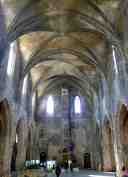
    You’re standing before the vast, soaring nave of the Church of the Dominicans of Arles-just look up and ahead for those dramatic pointed arches and the tall, sun-streamed windows that give away this immense Gothic landmark, wedged tightly among the city’s old streets. Now, imagine the year is 1448, and a crowd has gathered for the grand ceremony of laying the cornerstone. The “good King René” himself is on hand, probably trying not to trip on his robe. The air is full of promise and a little bit of construction dust, if we’re being honest! This church was born out of necessity: after a series of unfortunate events involving being too snug against the city’s synagogue and then having their previous home outside the walls demolished by invading armies, the Dominican friars thought, “Why not go bigger, bolder, and maybe less flammable?” They picked this spot by the Rhône in what was the Jewish quarter, wanting more elbow room and, possibly, fewer dramatic neighbors. What they built is still the largest Gothic church in all of Arles, with a vaulted single nave that stretches above you and side chapels tucked in like secret pockets; the northern side was split into five separate chapels, and the southern just one-unless, of course, you count the oversized chapel built in honor of Saint Dominic by a particularly enthusiastic local family in 1469. They didn’t mess around. The centuries were not always kind to such grandeur. After the French Revolution, this church went through some truly awkward phases-imagine trying to fit a sacred altar where someone wants to park a cart, or keeping holy silence in a room full of barrels and crates. At one point, they even squeezed in a hydraulic factory. The neighboring cloister? Bulldozed. Thankfully, its north wall and a bit of the old gothic entrance held firm, now pressed up against the surrounding houses as if hoping to eavesdrop on some modern gossip. By the early 1900s, there were ideas to bring the building back to life. It basically had a “makeover montage,” only very, very slow. In 1921, the government at last protected it as a historic monument, but it took decades-long after World War II-till Arles could finally claim the whole battered structure for itself. Since then, careful work has revealed beautiful century-old sculptures and brought back the strength of those old stones. Look up at those light-filled windows: they’re not just pretty, they’re practical too, letting sunshine battle back the shadows that fill this enormous space. The west façade is divided by a surprisingly fancy six-sided stair tower. Historically, there were even separate doors: one for the public, one for the brothers-because we all know, sometimes you just need your own entrance! If it feels especially ancient, you’re not wrong. Archaeological digs show the massive stone pillars actually rest on even older Roman walls, so you’re walking among the footprints of not one, but many lost ages stacked on top of each other. For a building no longer used for worship, it still inspires awe. Now that’s what I call a heavenly fixer-upper!

    Open eigen pagina →
Toon 11 stops meerToon minder stopsexpand_moreexpand_less
  1. To spot Café Terrace at Night, look for a yellow-awning café with small tables spilling out onto cobbled stones, set beneath a star-studded blue sky right at the north-east corner…Meer lezenToon minder

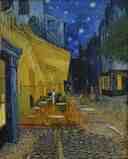
    To spot Café Terrace at Night, look for a yellow-awning café with small tables spilling out onto cobbled stones, set beneath a star-studded blue sky right at the north-east corner of the Place du Forum-just imagine Van Gogh himself painting under those very stars. Alright adventurer, let’s turn back the clock to a breezy September night in 1888. You’re standing exactly where Vincent van Gogh placed his easel, ready to immortalize one of the most enchanting evenings Arles ever saw. It’s not just any night-this is where colors dance beneath a sky pricked with stars, and where a simple café terrace becomes a theater for light and mystery. Picture it: the café’s golden glow pours onto the square, making the world feel warmer and more alive. Sparks of laughter and the gentle clang of glasses float through the southern air. But while the terrace itself is painted like a lantern, just a few steps away lurk the deep violet shadows of the rue du Palais-Van Gogh’s brush was brave enough to dive straight into those mysteries, never using black, only dreamy blues and purples. And if you peek behind him, somewhere in the canvas, is the silhouette of an old church tower, now transformed into the Musée Lapidaire. Now, Van Gogh wasn’t content to paint by daylight like most artists-oh no, he thrived on the electric thrill of painting straight from life, under starlight. He described to his sister the sheer joy of working outside, lanterns flickering over cobblestones turned violet and rose-imagine his paintbrush picking up colors by moonlight, maybe mixing up a lilac for a green after a long day, and thinking, “Oh well… Let’s see what magic happens!” When he wrote to his brother Theo, he confessed his “terrible need for religion,” and found wonder-if not answers-right here among painted stars and bustling townsfolk. If you look closely at his painting, you’ll see figures huddled, sipping drinks under that bold yellow canopy-a place illuminated so brightly it almost glows against the blue night. And here’s a bit of a fun riddle: some art historians claim Van Gogh hid a secret Last Supper in this scene, painting twelve star-haloed diners around a glowing server at the heart of it all. That’s right, a little Da Vinci code, Van Gogh style! Whether intentional or just the magic of storytelling, it’s a theory that’s kept art fans guessing for decades. But there’s no denying Vincent’s thoughts were swirling with inspiration, both ancient and modern. He was fascinated by the writings of Guy de Maupassant, whose novels described starry boulevards sparkling with life. And in the very same month, he painted more celestial night scenes, like Starry Night Over the Rhône-not to mention the world-famous The Starry Night, which would come a year later. And what about the colors? Van Gogh wanted this scene to feel like a night without darkness. Instead of making the shadows black, he filled them with blue and green, while the café and pavement glowed pale yellow and lemon green. It’s no wonder this painting-known earlier as “Coffeehouse, in the evening”-became a legend, leaping from the streets of Arles into films like Lust for Life, episodes of Doctor Who, and even making the cut as one of the BBC’s 100 Great Paintings. So as you stand here, listen to echoes of laughter drifting from inside, maybe the gentle clink of a cup set onto a table. Imagine you’re stepping right into that glowing square yourself, feeling the violet night all around you, and sharing a drink with Van Gogh-just another traveler, searching for the beauty hidden in the ordinary. And there you have it-Café Terrace at Night, as alive tonight as it was for Vincent all those years ago. Let’s keep wandering, who knows what other colors are waiting just around the next corner. Want to explore the genesis, night effects or the in popular culture in more depth? Join me in the chat section for a detailed discussion.

    Open eigen pagina →
  2. To spot the Museon Arlaten - Museum of Provence, look ahead for a striking pale stone mansion with rows of large arched windows, a carved doorway marked “Museon Arlaten”, and a…Meer lezenToon minder

    To spot the Museon Arlaten - Museum of Provence, look ahead for a striking pale stone mansion with rows of large arched windows, a carved doorway marked “Museon Arlaten”, and a glass walkway overlooking ancient stone ruins below-trust me, this doesn’t look like your average museum entrance! Now, imagine you’re about to walk into the heart and soul of Provence itself-not just a museum, but a living storybook crafted in real stone, thread, and memory. The Museon Arlaten isn’t just here to show off pretty Provençal costumes or curious old objects; it was created to save the spirit of an entire region, and its tale begins with a poet who loved his home so much, he wanted it preserved for future travelers like you. It all started in the 1890s, when Frédéric Mistral-yes, the Nobel Prize-winning poet who could make a mistral wind sound romantic-decided Provence needed its own treasure chest. Gathering help from Émile Marignan and a small army of eager donors, Mistral began collecting anything and everything that made Provence Provence. Did you make homemade lavender soap? Into the collection! Carved a tiny wooden bull for a village festival? That’s another artifact saved. Soon, the treasures kept flowing in, and by 1899, Arles had its own museum, bursting with the everyday wonders of Provence. But Mistral wasn’t done yet. When he pocketed the Nobel Prize in 1904 (no pressure, right?), he used some of that fame and fortune to move the Museon Arlaten into this magnificent mansion-which, unless you’re a time traveler, didn’t look quite as polished back then. Over time, this place has been a school, a Jesuit college, and finally the headquarters for Provençal pride. The building itself weaves together stories from ancient Roman stones at your feet to 18th-century opulence above your head. There’s even a ruined temple wing thrown in, just to keep things dramatic (and to make the neighbors jealous). Generations of Arlesians, historians, and just plain curious people have wandered these halls. Some stared in awe at swirling Provençal skirts from two centuries ago. Others pondered dioramas showing nighttime vigils by firelight, or the life-sized scene of an Arlésienne in quiet prayer. The walls have seen celebrations, arguments, and the odd moment of panic when someone realized they just bumped into a priceless Roman statue. The museum hosts paintings by Antoine Raspal, thousands of dazzling colorful sketches by Léo Lelée, and mysterious 19th-century photos by Dominique Roman-including the very first donated pictures in 1898. By the early 2000s, the building itself was starting to feel the weight of history-creaky floors and all-so the community rounded up more than 22 million euros for a grand renovation. It was closed for over a decade, making locals wonder if the Museon Arlaten was about to become a legend itself. But in 2021, bright, renewed, and filled with new galleries (plus a dash of designer glamour from Christian Lacroix), the doors opened wide again, ready to reveal Provençal secrets from rituals and folk tales to the fashions and trades that shaped everyday life. From whispers of gypsy memories to the glimmer of silk ribbons and flashes of carnival color, this museum isn’t just a house for history-it’s Provence, bottled up and waiting for you to unwrap each story. So, are you ready to step inside and discover what else the poet saved for you? And careful-don’t trip over any priceless dioramas of 19th-century tailors hard at work!

    Open eigen pagina →
  3. To spot the Protestant Temple of Arles, just look for a stately, pale stone building with a broad staircase leading up to three large arched doors, framed by columns and…Meer lezenToon minder

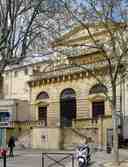
    To spot the Protestant Temple of Arles, just look for a stately, pale stone building with a broad staircase leading up to three large arched doors, framed by columns and overlooking the street from above-almost as if it's keeping a watchful eye on the comings and goings of the city. Now, as you stand in front of this grand structure, imagine yourself whisked back to 1790, just as the French Revolution is brewing. Originally, this very spot wasn’t a temple at all, but a fashionable club-the “Cercle de la Rotonde”-where nobles in their finest clothes gathered to mingle under the elegant circular dome. The heart of this building is a sweeping round hall with smooth, fluted columns and a striking cornice, crafted in the refined, neoclassical style of architect Claude-Nicolas Ledoux. Can you hear the echoes of laughter and lively card games that once filled this room? But then, history roared in. Picture the Revolutionaries bursting through the doors in 1792, the chaos as Marseillais surged in to help the local “Monnaidiers,” leaving the once-opulent interiors in disarray. In the wake of the Revolution, the building changed hands like a game of musical chairs-an auction in 1806 gave it to a private owner who turned it into Arles’ top spot for public balls, concerts, and spirited debates. It wasn’t until 1860, after a rallying international effort, that the Protestant community finally acquired it, transforming the Rotonde into a beacon of worship and gathering. Since then, this building has played host to Sunday services, biblical lessons, choirs, and even other Christian communities and cultural events. And though its purpose has changed, it remains a living memory of Arles’ revolutionary past-officially treasured as a historical monument for almost 80 years. So next time you pass by, give a little nod to the Rotonde-it’s seen balls, revolutions, prayers, and even a few wild heritage days. Not bad for a building that started as a circle of friends with excellent taste in architecture!

    Open eigen pagina →
  4. To spot the Chapel of Charity, look for a stately stone façade ahead of you, marked by tall Corinthian columns and a large decorative medallion set high above the entrance, just…Meer lezenToon minder

    To spot the Chapel of Charity, look for a stately stone façade ahead of you, marked by tall Corinthian columns and a large decorative medallion set high above the entrance, just to the west of the post office and near the grand Hotel Jules-César. Alright, welcome to the place where drama, devotion, and maybe a touch of hotel glamour all mingled together! Before you is the Chapel of Charity, which might seem a little shy about its centuries-old story but, oh, what a tale it could tell! Back in the 17th century, the Carmelite nuns, having settled in Arles since 1631, were on a bit of a real estate adventure. By 1634, they snapped up land near the gate of Marché-Neuf-imagine nuns with blueprints and big dreams, making deals that would outlast revolutions! Their convent expanded near what was the ancient hospital for the poor, a far cry from its modern day neighbor, the former luxury Jules-César hotel. But change swept through faster than you can say “revolution!” By the time the French Revolution rolled around, the nuns were kicked out, and the old hospital was judged too ancient-so the patients moved into the nuns' former digs. Call it a historical game of musical chairs! Still, the name “Chapel of Charity” stuck, echoing both its caretaking past and a little bit of divine irony. Now, take in the grand entrance. Built from 1708, that porch is held up by twin Corinthian columns, guarding secrets and stories. Peer up at the sculpted heart pierced by an arrow-a reference to the mystical vision of Saint Teresa, patron saint of these adventurous nuns. Picture the inside as it was: arches soaring over three richly adorned bays, side chapels glowing with candlelight, and an air thick with incense and whispered prayers. Don’t miss the masterpieces! The main altar and baroque altarpiece were local bragging rights, sculpted by Jean-Baptiste Péru and centered around a painting by Pierre Parrocel-Saint Teresa, mid-apotheosis, looking like she’s ready for a very dramatic spotlight. Fast-forward a few centuries: after serving as a theater for hotel guests (I’ll bet those performances were divine!), the chapel landed in the hands of the town. Today, it’s alive with art exhibitions and creative buzz. And who knows? Somewhere in there, a Carmelite spirit might still be quietly rehearsing her lines. Enjoy this beautiful blend of sacred and spectacular right here on the boulevard des Lices!

    Open eigen pagina →
  5. Right in front of you, you’ll spot the Primatial Basilica of Saint-Trophime by its tall, pale stone façade and magnificent sculpted Romanesque portal, standing above a flight of…Meer lezenToon minder

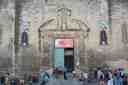
    Right in front of you, you’ll spot the Primatial Basilica of Saint-Trophime by its tall, pale stone façade and magnificent sculpted Romanesque portal, standing above a flight of broad steps-just look for the richly carved figures ringing the arched doorway. Now, take in a deep breath and get ready to travel back in time-because you’re standing in front of a true legend of Arles! Picture yourself in front of these great doors around the year 1100, while stonemasons carve the fantastic beasts and saints that watch you today. This church, begun atop ancient Roman remains, is like a layer cake of history, blending the solid strength of Romanesque architecture with the soaring grace of later Gothic touches. Above you, the nave soars five bays long, supported by clever stone vaults and columns that could practically moonlight as Corinthian salad bowls. But here’s where the story gets dramatic. Imagine, right here, not one but two grand church councils rocked the ancient Christian world in the fifth century. Bishops in flowing robes argued theology, and even the notorious priest Lucidus was judged within these walls. And it gets more glamorous: in 597, Saint Augustine of Canterbury-having just converted the entire English court-returned to Arles and was consecrated here as the first Archbishop of England. Over the centuries, this church became the heart of the city. There have been solemn processions, grand coronations-Emperors Frederick Barbarossa and Charles IV both got their crowns inside, their armored retainers probably tripping over each other on these very steps. Marriages of royalty, such as Louis II and Yolande of Aragon, brought eight days of feasting, balls, and general medieval revelry. You can practically hear the clanking of goblets and the stomping of horses! Look closely at that intricately carved portal. It’s not just for show-there’s a whole biblical comic strip running across the stone, from the Last Judgment to the birth of Christ and even, if you squint, the fabled barque of the damned. The tympanum above the door shows Christ enthroned, flanked by weird and wonderful creatures representing the four Evangelists. It’s both a warning and a welcome: angelic choirs wrap around the arch, while saints and sinners parade beneath. Van Gogh himself once stood here and wrote that the portico was so impressive, it felt like a monstrous dream from another world. Step inside, and you’d find yourself among treasures fit for a king. Tapestries from Aubusson depict scenes from the Virgin Mary’s life, and paintings by masters like Louis Finson dazzle the eyes. Ancient sarcophagi, ornate marble pulpits, and glittering stained glass all bear witness to centuries of faith, power, and artistic flair. Even the cloister next door is a kind of hidden gem, with galleries that shift from Romanesque to Gothic as you wander from one side to the other. This isn’t just a building; it’s the beating heart of Arles. Once the chief cathedral of all Gaul, Saint-Trophime survived revolutions, royal weddings, and changing tides of history. Designated a minor basilica by the Pope in 1882, saved from ruin by the famous Prosper Mérimée, and recognized as a UNESCO treasure-it’s still the main church for the people of Arles today. So as you stand here, feel the echo of centuries beneath your feet, and remember: thousands of souls-from emperors to everyday townsfolk-have passed through these doors before you. And now, you’re part of the story! Shall we see what secrets lie around the next corner? Interested in knowing more about the plan of the church, description of the church or the the furniture

    Open eigen pagina →
  6. Pause here for a moment, right in front of the very heart of local decision-making: the Canton d’Arles. Now, I know what you’re thinking-election districts aren’t usually the kind…Meer lezenToon minder

    Pause here for a moment, right in front of the very heart of local decision-making: the Canton d’Arles. Now, I know what you’re thinking-election districts aren’t usually the kind of thing that gets hearts racing on a holiday. But let’s add a pinch of adventure, a sprinkle of rivalry, and just a dash of French administrative law to spice things up. Imagine it’s 2015, and the air is buzzing, not just from the sun on the Rhône, but from excitement and perhaps a bit of confusion. The whole system is changing. Instead of many little cantons scattered like puzzle pieces across the Bouches-du-Rhône, the powers that be have chopped the number down from 57 to 29-like deciding fewer, bigger croissants are better than many petites ones (which is a bold move in France!). The new canton of Arles mixes together slices from Arles-Ouest, Arles-Est, Port-Saint-Louis-du-Rhône, and Saintes-Maries-de-la-Mer, blending city, marsh, and seaside into one political pastry. All managed from-you guessed it-right here in Arles. The elections themselves might make you sweat more than a Provençal summer. In 2015, voters had their pick between duos-one man and one woman, always a balance-making the contest an even match. Imagine the tension as two teams go head-to-head: Koukas and Raoux, Magini and Villanove. It’s like the political version of a pétanque match, and almost half the 46,200 registered voters turned out to play referee. In the second round, with nervous anticipation in the air, Koukas and Raoux clinched the win, with Aurore Raoux taking her seat among the communists. You can almost picture residents peeking through their curtains, wondering which binôme would decide their fates. Then came 2021. The turnout was so low it seemed as if more people had chosen to picnic in the Camargue than head to the polls. But those who did, faced another duel: Alvarez and Graillon versus the previous victors. With 61.7% of the vote, Alvarez and Graillon took the title, maybe waving politely to passersby with a slightly relieved smile. Three entire communes make up this energetic district, their collective voice echoing the pulse of its nearly 62,000 inhabitants. Each one’s hopes and arguments ripple through the council chambers and out onto the sun-drenched streets-reminding us that democracy, while sometimes as tricky as deciphering a Provençal accent, is always a bit of a spectacle. So, next time someone calls administration dull, you can tell them it’s just another chapter in Arles’ rich, and yes, dramatic story!

    Open eigen pagina →
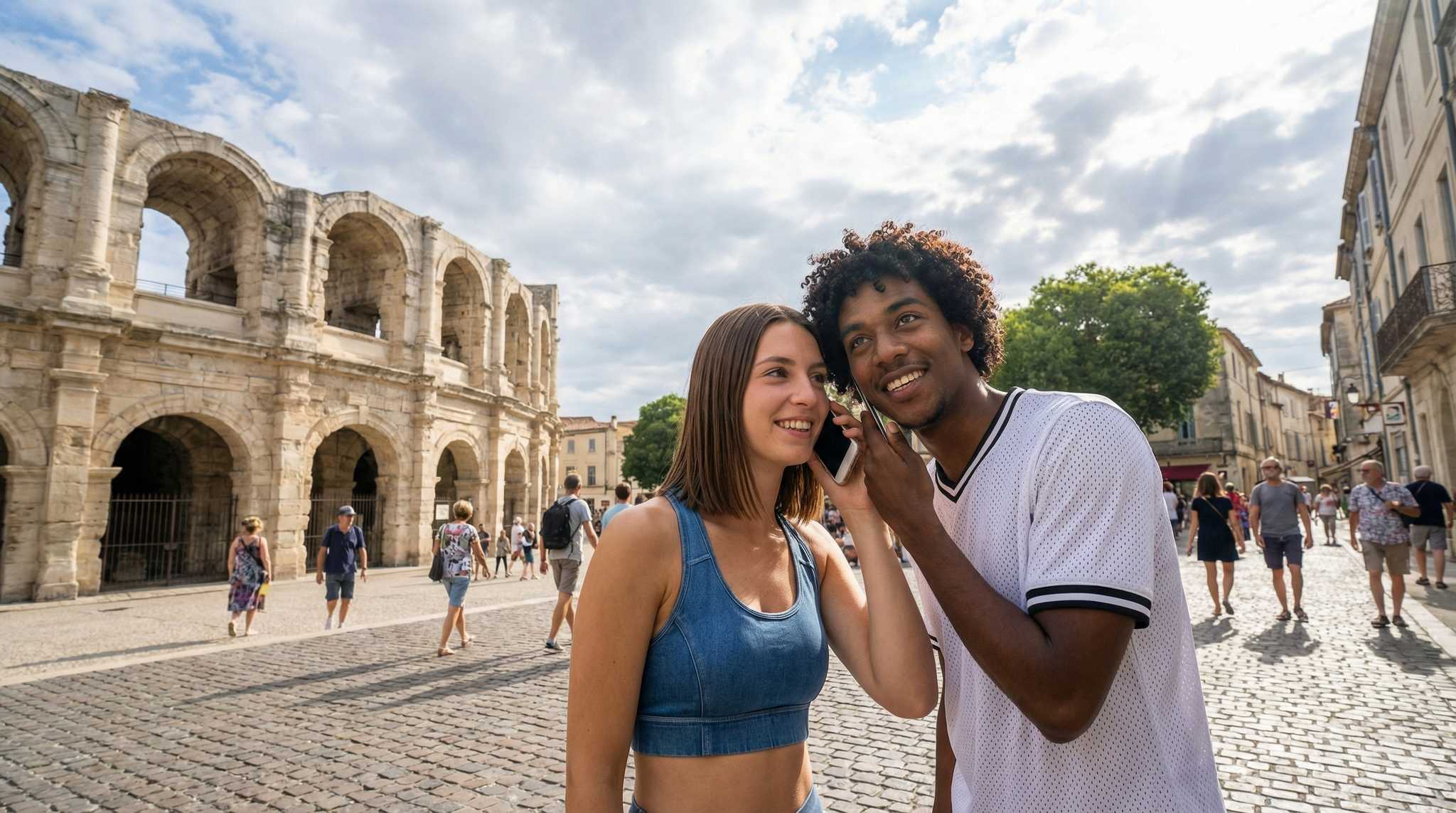
  7. In front of you, rising above the broad stone steps, you’ll spot the massive oval of the Roman arena - a circle of weathered arches, with a tall square tower at its heart, making…Meer lezenToon minder

    In front of you, rising above the broad stone steps, you’ll spot the massive oval of the Roman arena - a circle of weathered arches, with a tall square tower at its heart, making it impossible to miss as you look up from the stairs. Long ago, the streets here would’ve thundered with the sound of Roman sandals and market cries, not to mention the occasional goat - even Caesar would have needed to sidestep! Picture Arles nearly 2,000 years ago: the city called Arelate, freshly rewarded by Julius Caesar himself, who was so grateful for their wartime loyalty against rival Marseille that he had warships built here - twelve mighty vessels rattled together in less than a month, their oars clattering as they won him a decisive victory. Not bad for a riverside city, right? In those days, after Caesar’s win, Arles became a Roman colony, bustling with proud Roman citizens - real toga-and-designer-sandals types. The veterans of the sixth legion settled here, and the city’s fortunes soared. A grand city plan unfurled: temples, forums, and, of course, the arena you’re looking at now started to rise up. Even Augustus, Caesar’s adopted son, popped in to make sure his family’s prestige was stamped into every stone. The official name of the place? “Colonia Julia Paterna Arelate Sextanorum.” Try fitting that on a business card. Back then, Arles was so important that Roman bigwigs scribbled its name in marble and dropped boulders for city walls - though, to be fair, those walls were soon too small for its growing population. The city kept expanding, eventually spreading even to the marshy lands of Trinquetaille over the river. Life was lively, with new roads like the Via Agrippa stretching north to Lyon, and ships constantly unloading barrels of grain and amphorae of wine. Through the first and second centuries, Arles kept booming. Rich families rose to prominence - senators, shipowners, even the odd celebrity lawyer or philosopher. There were workshops, shipyards, and an industry motto that could’ve been: “What happens in Arles… gets exported to Rome!” The city’s port hummed with trade from the Mediterranean, and the mighty Barbegal water mills - a Roman industrial marvel - ground grain for thousands. By the third century, Arles was famous for grand new builds, like the Roman circus and expanded neighborhoods filled with artisans. And as the centuries rolled on, major changes swept through: Christianity began to take hold, mixing with Roman gods and Egyptian goddesses - you had temples, churches, and even the occasional rumored miracle. Now, don’t get too cozy - the story’s about to get dramatic. Invasions and sieges became the new normal as Alamans, Wisigoths, and Roman generals vied for a foothold. There were nights when flames and chaos lit the skyline, and times when citizens fled into places like the very arena ahead, seeking refuge from warriors at the gates. Picture life in a city where the job title “bishop” meant you might need a bodyguard! Even so, Arles thrived as a spiritual and political capital, hosting great councils where emperors and bishops debated weighty issues - and probably fretted over missing their lunch. One legend echoes through these stones: Genès, a Roman court scribe who stood up for his Christian faith, was executed across the Rhône and buried out at Alyscamps, inspiring generations. By the fifth century, Arles peaked as a regional “capital of Gaul,” bustling with more people than live here now. Emperors and usurpers vied for power; you could almost imagine them lining up to take their selfies in front of the arena, if only they had phones and less ambition. Despite wars, sieges, and even an assassination or two, Arles was prized for its markets, great assemblies, and its mix of cultures. For a time, this city shaped the very destiny of Western Europe. So, as you stand before these stones, you’re not just seeing ruins - you’re looking at the heartbeat of an empire, sometimes trembling but always alive with stories, shouts, and centuries of change. Want to explore the 1st century bc bc: arles, roman colony, 1st century or the 2nd century in more depth? Join me in the chat section for a detailed discussion.

    Open eigen pagina →
  8. Look straight ahead for a grand oval structure of pale stone, crowned by two tiers of tall, ancient arches and topped by a square medieval tower-it stands dominantly against the…Meer lezenToon minder

    Look straight ahead for a grand oval structure of pale stone, crowned by two tiers of tall, ancient arches and topped by a square medieval tower-it stands dominantly against the sky, impossible to miss! Welcome to the mighty Arles Arena! Imagine yourself back in Roman times, around the year 90 AD. The air is buzzing with excitement, the crowd is restless-nearly 25,000 spectators are packed into these vast stands, chattering loudly, all eager for the spectacle about to unfold. Built on the orders of Emperor Domitian, the arena was Arles’ answer to the Colosseum in Rome, designed as a place to host grand entertainments for the people of this Roman colony. The arena’s sixty rows of arches, which you can still see today, once rang out with the thunderous roar of excitement during gladiator games and wild hunts. To create this Roman masterpiece, engineers leveled a whole section of the old town wall and raised the structure up on this hill. The arena’s clever design included sweeping corridors-think ancient traffic jams, but with tunics and sandals instead of cars! When the games began, the main elliptical arena below became a battleground for gladiators and beasts, surrounded by a sea of shouting and stamping feet. But Arles Arena wasn’t just about sports; it was also a stage for power and spectacle. In 255, the emperor Gallus threw grand games here to celebrate military victories. Later, Emperor Constantine ordered wild animal hunts to celebrate the birth of his son-talk about over-the-top birthday parties! Even when kings like Childebert came to visit, they wanted to see a good old-fashioned Roman show. In those days, the arena was the beating heart of Arles, a true symbol of the Roman way of life. Then history took a wild turn. As the Roman Empire faded, invaders and unrest swept through Europe. The arena’s noisy cheers faded, and this stage of glory became a fortress, complete with four defensive towers. Imagine over 200 homes and two chapels crammed inside, all protected by these soaring stone walls-every nook and cranny filled with the sounds of daily life. Fast forward to the late Middle Ages, and things got even stranger-a doctor passing through Arles in 1495 was shocked to see poor families living inside, tucked beneath the ancient arches. Even King Francis I stopped by, scratching his royal head at how rundown this monument had become. Finally, in the 1800s, the city’s mayor decided enough was enough: the squatters were cleared out, homes removed, and the arena returned to its original purpose-bringing people together for spectacle and celebration. In 1830, a celebration for the capture of Algiers marked the arena’s grand rebirth-festivities, drama and, of course, Arles’ own brand of bullfighting, a local tradition that lives on today. Not long after, this breathtaking monument was declared a national historic site and in 1981 joined the UNESCO World Heritage lineup. These days, the Arles Arena is a superstar again, famous not only in France but around the world. In summer, you can hear the shouts and gasps of spectators as actors and athletes recreate ancient gladiator games. From lively music festivals to bullfights and theater performances, the arena is bursting with energy. If you listen carefully, you can almost hear echoes of Vincent van Gogh and Picasso, who both found inspiration here, or maybe catch the voices of TV crews and fictional car chases from films shot amid its shadows. So, whether you dream of ancient heroes, medieval mystery, or modern-day excitement, take a moment to stand in awe-nearly two thousand years of adventure are built into these marvelous, towering arches. Interested in a deeper dive into the description, description or the nowadays? Join me in the chat section for an insightful conversation.

    Open eigen pagina →
  9. To spot the Church of the Major of Arles, look ahead for a large, weathered stone building with a simple, triangular façade, a small belltower topped by a pyramid, and deep green…Meer lezenToon minder

    To spot the Church of the Major of Arles, look ahead for a large, weathered stone building with a simple, triangular façade, a small belltower topped by a pyramid, and deep green doors-it's just beside the parking area and stands out with its ancient charm. Now, let’s transport you back in time-all the way to the year 452, when the very first church on this site was consecrated during a dramatic church council. Imagine the ground beneath your feet humming with ancient energy: there once stood a Roman temple here, devoted to a goddess called Bona Dea, or “the Good Goddess”-and you can still sense a whiff of sacred mystery in the air. In fact, an altar from that temple now slumbers just across town in the Arles Antique Museum! As you look at the current Romanesque building, with its robust walls and unassuming Louis XIII-style façade rebuilt in the 1600s, you’re witnessing layer upon layer of history. Back in 1152, the old church got a makeover fresh out of the Provençal Romanesque style book-and though the building grew and changed over the centuries, three of those medieval nave arches still stand strong today, almost defying the quirks of time and fashion. For centuries, this church was a local heavyweight-a parish so big it included the whole Crau plain, and with a congregation ranging from dignified townsfolk to sun-bronzed shepherds. And speaking of shepherds, legend has it that the church welcomed not only bishops, but herders and even a confraternity dedicated to Saint Veran, who was famous for his sheep-wrangling skills-patron saint of anyone handy with a crook! But not everything was always peaceful. Fast forward to 1944, when bombs shook the city-old stones trembled, stained glass quivered, and the church’s ancient foundations needed mighty reinforcements in the 1980s to keep her standing. Yet the Major endured, braving not only wars but wild renovations, some of which landed beautiful columns in the bottom of the Rhône river (maybe they just didn’t want to leave Arles?). Inside, the church is a wonderland of chapels and artistry: elaborate altars of colored marble, relics with stories longer than a Provençal dinner, and paintings depicting miracles (including a young man being resurrected-not something you see every day at church). There’s a vivid crucifix, a choir of statues, and a strange survivor-a forged iron mission cross, saved from angry crowds by a wise priest’s quick thinking. Look up, and you'll spot the proud belltower, rebuilt in 1579 with a sharp pyramid and topped by a statue of the Virgin and Child-added in 1867, probably to make sure everyone knew who was boss! The bells themselves have a dramatic past; one used to call people to everything from prayer to curfew, and even tolled for condemned souls right up to 1820. Oh, and if you hear a deep gong, you can thank the good folks of Annecy, who recast the main bell after it cracked in the 1900s. Every May 1st, the church sparks back to vibrant life as the Guild of Saint-George’s ‘gardians’-that’s our local cowboys-arrive on horseback, blessing their steeds and tipping their hats to tradition. Alongside this, the church cradles tales of precious relics: the jawbone of Saint Mark, for one, gifted from Venice for saving the city from famine, and treasures now housed in museums but once protected here. And don’t forget the pipe organ, built in 1698, sounding once throughout these stone arches-though now it waits silent, dreaming of restoration. As you stand here, try to imagine the air alive with organ music, medieval incense, the soft murmur of prayers, and maybe the shuffle of hooves outside on festival day. So as you gaze at this weathered guardian of Arles, remember-underneath every stone and behind every door, there’s a secret waiting for you to discover, and if these walls could talk, I bet they’d sing! Ready for our next stop? Fascinated by the historical, description or the interior and furniture? Let's chat about it

    Open eigen pagina →
  10. To spot the Church of Saint-Pierre-et-Saint-Paul de Mouleyyrès, look up along the slope to your right and you’ll see a small, ancient stone chapel perched dramatically at the edge…Meer lezenToon minder

    To spot the Church of Saint-Pierre-et-Saint-Paul de Mouleyyrès, look up along the slope to your right and you’ll see a small, ancient stone chapel perched dramatically at the edge of a rocky cliff, ringed by tall cypress trees and peeking out from behind thick greenery like an old secret watching over the railway below. Now, take a good look at that rugged little church above you-it might look peaceful today, but its past is anything but quiet. Let’s jump back and feel the layers of time stacked right here on this hillside. Imagine standing here in the 5th century, the quiet broken only by the cries of birds and the hum of pilgrims making their way on the old Roman road that snakes through Les Alyscamps. Back then, a Roman temple to Mars was said to have stood hidden beneath the earth right where the church is now. But then, according to legend-because every great place needs a great legend!-Saint Denis himself, who became the first bishop of Paris, built the initial chapel, dedicated to both Saint Peter and Saint Paul. The truth? Archaeologists think a man named Petrus actually founded it, and you can even find his name on an old funeral inscription from around the year 530. This church didn’t just sit quietly-it quickly became a hotspot for early Christians. It drew funerals, prayers, and the hope of eternal rest, so much so that people wanted to be buried as close as possible to these holy walls. You could almost imagine wagon after wagon, loaded with stone sarcophagi, rumbling towards this very hill, eager for a coveted plot. The air would be heavy with the scent of incense, and echoes of psalms would drift through the night. Things got lively in the Middle Ages-just over there, beside the church, was a hospital for weary pilgrims journeying to Santiago de Compostela. The Chapel of the Trinity stood nearby, all set in a grove of hackberry trees that shaded this rocky plateau, giving rise to the local nickname, “Fabregoule.” Life here revolved around faith, travel, and the unseen presence of dozens-hundreds-of tombs beneath your very feet. The church was so important that in the 12th century, it was handed over to the powerful Chapter of Saint-Trophime. But, oh, history loves to shake things up! As centuries passed, things changed. In the late 14th century, the once-proud church was handed to a lonely hermit. Imagine him, tending the crumbling stones, muttering prayers while wolves might have howled from the woods below-a bit of Gothic drama worthy of a novel. And then came the engineers! In the 16th century, during the turmoil of war, the citizens of Arles destroyed the church themselves, worried invading armies might use it as a stronghold. Talk about tough love! But this little church just wouldn’t quit. After the wars, it rose again like a very determined cat with nine lives. Its spindly, clover-shaped old section-the original from the earliest Christian days-became the sacristy for a new church that took shape in the shadow of past destruction. But just when things seemed settled, the 19th century arrived in a rush of steam and steel. First, the canal, and then, in the 1840s, the railway carved through the hill, leaving the church teetering on what now looked like a cliff, tombs and all, high above the chattering trains. Today, this spot is one of the last three survivors of a dozen ancient shrines that used to crown these rocky bluffs. Its walls are patched with centuries of change: a 17th-century facade, a heavily reworked doorway, hints of the old three-lobed apse, and secret marble slabs decorated with mysterious, ancient patterns-stars, crosses, circles-that belong to a vanished world. Archaeologists, like treasure hunters, uncovered stones and inscriptions linking these ruins to churches in Marseille and other faraway places. So as you look up, take in the textured stone, the stubborn cypress trees, and the odd feeling of both solitude and history thick in the air. Maybe you’ll catch, on the breeze, the voices of pilgrims, the sighs of centuries, and-if you listen closely enough-the low rumble of the trains, just one more layer in the long, winding story of this little church on the edge of forever.

    Open eigen pagina →
  11. Right ahead, you’ll spot the Alyscamps by looking for a long, tree-lined path flanked by ancient stone sarcophagi and the remains of an old chapel on your left-just follow the…Meer lezenToon minder

    Right ahead, you’ll spot the Alyscamps by looking for a long, tree-lined path flanked by ancient stone sarcophagi and the remains of an old chapel on your left-just follow the rows of centuries-old tombs disappearing into the shade. Now, take a deep breath-can you feel the air grow a little mysterious, almost whispering with the secrets of the past? Welcome to the Alyscamps, Arles’ most legendary necropolis, where Roman emperors and medieval bishops are your neighbors… at least, in spirit! Imagine yourself standing where, through centuries, countless feet-grieving families, monks, even kings-have trodden this same earth. Back in Roman times, this was not just any cemetery. The Alyscamps was sacred ground, a mighty city of the dead that stretched along the ancient Via Aurelia, outside the city walls just as the Romans preferred. In those days, you would have seen hundreds, maybe thousands of stone sarcophagi gleaming in the sunshine, waiting for souls from every corner of Arles… and beyond! The story gets even more extraordinary at the end of the 4th century-a local, Saint Genest, met his tragic and heroic fate here, and so many people across Europe wanted to rest forever near this blessed spot that they shipped their loved ones down the Rhône on boats, coins tucked beside them to thank the Arlésians for a good burial. The world’s oldest delivery service, you might say! Through the Middle Ages, the Alyscamps buzzed with pilgrims on their way to Compostela; imagine the clang of their staffs, the sound of prayers floating through the air, maybe the faint smell of incense too. Bishops jostled for the best resting spots, and churches sprang up, especially after the monks of Saint-Victor took over the grand old Saint-Genès church-as long as they paid a hefty “rent” in incense to Arles’ mighty archbishop each year. Just proves, even in the afterlife, the bills never stop coming! But tides change. When Saint Trophime’s prized bones moved downtown in 1152, the Alyscamps’ shine dulled just a little. Later, during the Renaissance, the powerful and the posh couldn’t resist-sarcophagi vanished into stately homes and collections, one shipload even sinking in the Rhône. In the 19th century, trains and canals sliced through this ancient peace-imagine tombs rattling as locomotives roared by! Yet still, artists fell under its spell. Van Gogh and Gauguin painted this avenue of death and memory; Dante winked at it in his Divine Comedy. Even Gucci turned it into a catwalk in 2018! Here, where sarcophagi sleep beneath shifting trees, time piles up like fallen leaves. The Alyscamps keeps its secrets, but always invites you to wander, wonder… and maybe tip your hat to the ghosts, just in case!

    Open eigen pagina →

Veelgestelde vragen

Hoe begin ik de tour?

Download na aankoop de AudaTours-app en voer je inwisselcode in. De tour is direct klaar om te starten – tik gewoon op afspelen en volg de GPS-geleide route.

Heb ik internet nodig tijdens de tour?

Nee! Download de tour voordat je begint en geniet er volledig offline van. Alleen de chatfunctie vereist internet. We raden aan om te downloaden via wifi om mobiele data te besparen.

Is dit een groepsrondleiding met gids?

Nee - dit is een audiotour met eigen gids. Je verkent zelfstandig op je eigen tempo, met audiovertelling via je telefoon. Geen tourguide, geen groep, geen schema.

Hoe lang duurt de tour?

De meeste tours duren 60-90 minuten, maar jij bepaalt het tempo volledig. Pauzeer, sla stops over of neem pauzes wanneer je wilt.

Wat als ik de tour vandaag niet kan afmaken?

Geen probleem! Tours hebben levenslange toegang. Pauzeer en hervat wanneer je wilt – morgen, volgende week of volgend jaar. Je voortgang wordt opgeslagen.

Welke talen zijn beschikbaar?

Alle tours zijn beschikbaar in meer dan 50 talen. Selecteer je voorkeurstaal bij het inwisselen van je code. Let op: de taal kan niet worden gewijzigd na het genereren van de tour.

Waar vind ik de tour na aankoop?

Download de gratis AudaTours-app uit de App Store of Google Play. Voer je inwisselcode in (verzonden per e-mail) en de tour verschijnt in je bibliotheek, klaar om te downloaden en te starten.

verified_user
Tevredenheid gegarandeerd

Als je niet tevreden bent met de tour, betalen we je aankoop terug. Neem contact met ons op via [email protected]

Veilig afrekenen met

Apple PayGoogle PayVisaMastercardPayPal

AudaTours: Audiotours

Vermakelijke, budgetvriendelijke wandeltours met eigen gids

Probeer de app arrow_forward

Geliefd bij reizigers wereldwijd

format_quote Deze tour was een geweldige manier om de stad te zien. De verhalen waren interessant zonder te gekunsteld aan te voelen, en ik vond het heerlijk om op mijn eigen tempo te verkennen.
Jess
Jess
starstarstarstarstar
Tbilisi-tour arrow_forward
format_quote Dit was een prima manier om Brighton te leren kennen zonder je als toerist te voelen. De vertelling had diepgang en context, maar overdreef het niet.
Christoph
Christoph
starstarstarstarstar
Brighton-tour arrow_forward
format_quote Begon deze tour met een croissant in de ene hand en nul verwachtingen. De app gaat gewoon mee met je, geen druk, gewoon jij, je koptelefoon en gave verhalen.
John
John
starstarstarstarstar
Marseille-tour arrow_forward

Onbeperkte audiotours

Ontgrendel toegang tot ELKE tour wereldwijd

0 tours·0 steden·0 landen
all_inclusive Onbeperkt verkennen