
Kopenhagen Audiotour: Een Historische & Botanische Odyssee
Kopenhagen draagt zijn geschiedenis als een tweede huid – oude stenen en heldere koperen daken bewaren stilletjes geheimen van rampen, verzet en heruitvinding. Stap in een zelfgeleide audioreis die de gepolijste oppervlakte van de stad afpelt om drama, intrige en de echo's van eeuwen geleden, verborgen in het volle zicht, te onthullen. Wat veroorzaakte de vuurstorm die ooit door Højbro Plads raasde en burgers achterliet die vochten om te overleven? Waarom lijkt de Kerk van de Heilige Geest samengesteld uit niet-overeenkomende bakstenen, verhalen verbergend van rellen en koninklijke interventies? En welk recept schreef Kopenhagen's oudste door leeuwen bewaakte apotheek ooit voor een gebroken hart – of iets nog vreemders? Volg wedergeboorte en rebellie langs kronkelende straten waar legendes op bronzen paarden rijden en leeuwen nog steeds de wacht houden. Loop op je eigen tempo, maar verwacht dat je hart sneller gaat kloppen terwijl je politieke veldslagen, genezingswonderen, bijna-rampen en speelse mysteries ontrafelt die in de kasseien van Kopenhagen zijn verweven. Klaar om de stad haar stoutste verhalen te laten onthullen? De geheimen van Kopenhagen wachten – volg waar nieuwsgierigheid je leidt.
Tourvoorbeeld
Over deze tour
- scheduleDuur 40–60 minsGa op je eigen tempo
- straighten4.2 km wandelrouteVolg het geleide pad
- location_onLocatieKopenhagen, Denemarken
- wifi_offWerkt offlineEén keer downloaden, overal gebruiken
- all_inclusiveLevenslange toegangOp elk moment opnieuw afspelen, voor altijd
- location_onStart bij Højbro Plads
Stops op deze tour
To spot the Church of the Holy Ghost, look for the bold red brick walls rising up ahead of you. The church has tall, arched windows and an eye-catching entrance topped with…Meer lezenToon minder
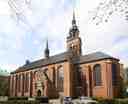
To spot the Church of the Holy Ghost, look for the bold red brick walls rising up ahead of you. The church has tall, arched windows and an eye-catching entrance topped with sculpted decorations. The spire shoots straight into the sky from the middle of the building, while a clock tower peers over the rooftops. If you see a building that seems to whisper stories from centuries past, surrounded by clipped bushes and parked cars… you’ve found it! Take a moment to imagine the buzz of medieval Copenhagen all around you. Step back in time to the year 1238, when this very spot was home to wandering monks. Back then, the Church of the Holy Spirit was more like a busy hostel and workshop-a place where monks dropped off their travel bags, maybe grabbed a snack, and swapped stories… kind of like an ancient Airbnb with more Latin and less Wi-Fi! The real drama happened in 1296, when Bishop Johannes Krag found himself with some less-than-happy townsfolk. They were so fed up that they tried to storm his palace! As part of keeping the peace, he agreed to build the House of the Holy Ghost-a refuge for the poor, sick, and anyone who needed help. Picture it: the clang of builders’ hammers, the shouting of orders, the promise of something good rising from a moment of tension. For hundreds of years, this spot remained a heartbeat of the city-sometimes peaceful, sometimes full of stir. In 1469, King Christian I transformed the hospital into a grand abbey, and soon the Pope in Rome made it official. The monks must have felt pretty special with such an upgrade! If you look closely at the church’s tower, you’ll see the brickwork changes halfway up, as if the church itself is wearing socks that don’t quite match-work on the tower stopped when the Reformation hit, and it finally got its spire years later. But even grand buildings have their dark days. In 1728, fire swept through Copenhagen and the church was badly damaged, its walls glowing orange against the night as flames leaped into the sky. Today, with the sun shining on its ancient bricks, it’s hard to imagine all the stories this place holds: peace turned to tension, then back to comfort. Even if you don’t need shelter or healing today, you can soak up the sense of history-just don’t expect any monks to offer you soup!
Open eigen pagina →You’re standing right at the corner where Amagertorv and Hyskenstræde meet. Look up and you’ll see a handsome red-brick building with pale stone trim, tall bay windows, and…Meer lezenToon minder
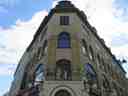
You’re standing right at the corner where Amagertorv and Hyskenstræde meet. Look up and you’ll see a handsome red-brick building with pale stone trim, tall bay windows, and striking green copper roofs. Don’t worry if you spot a lion above the main entrance-it’s not going to leap down. That’s your sign you’ve found the legendary Løveapoteket, or “The Lion Pharmacy.” Imagine Copenhagen back in 1620. The streets are busy, horses clip-clop by, and the smell of herbs and powders wafts out from this very corner. Folks in ruffled collars pop in, hoping to cure headaches, lovesickness, and maybe even a nasty case of the plague. Esaias Fleischer, the original owner, bustles behind the counter in a world just beginning to understand the power of medicine. He chose the lion as the pharmacy’s symbol, and let’s face it-wouldn’t you feel safer getting your potions from a place watched over by such a proud beast? Over the centuries, Løveapoteket passed through a parade of families, each one adding a new chapter. Some were so dedicated, they married into the business! At one point, the pharmacy even became the official supplier for the Danish Royal Court. Talk about a prescription for success. But life wasn’t always smooth-this spot was nearly swallowed up by the Great Fire of 1795. The flames roared through the city, but the pharmacy bounced back, rebuilt by a famous architect with a new lion to guard the door. Over time, Løveapoteket became a springboard for even bigger things-like the birth of Leo Pharma, a company now known worldwide, all starting right here with a handful of daring pharmacists and their roaring mascot overhead. Beneath your feet, thousands of Copenhageners once rushed to get cures for everything from fever to heartbreak. And while the doors closed for the last time in 1971, the lion still presides above the gate. So keep your eyes peeled for that noble relief-history has a funny way of sticking around, especially when there’s a lion involved. Alright, onward to our next stop-let’s hope we don’t need any pharmacy services along the way!
Open eigen pagina →
Toon 12 stops meerToon minder stopsexpand_moreexpand_less
Alright, you’re nearly at Vimmelskaftet! Take a look straight ahead-see that bustling stretch lined with shops and lively crowds, right in the middle of Strøget? That’s your…Meer lezenToon minder
Alright, you’re nearly at Vimmelskaftet! Take a look straight ahead-see that bustling stretch lined with shops and lively crowds, right in the middle of Strøget? That’s your target! It’ll look like a classic old street, with a mixture of stone buildings and narrow facades that seem to lean in for a gossip over your head. If you spot people darting from shop to shop and the air has a faint scent of freshly baked pastries, you’ve made it! Now, imagine Copenhagen hundreds of years ago-no big shopping chains, just craftsmen and traders calling out their wares from little booths. Vimmelskaftet is one of the city’s oldest streets, and the name itself is a bit quirky-it means “the spindle shaft,” inspired by the twisting shape the street creates along with its old neighbors. Try to picture medieval times: Stalls with leatherworkers hammering, shoemakers chatting to customers, and the air thick with the smell of fish wafting from the nearby market at Amagertorv… Maybe even the sound of a few lively arguments over prices. This street had many names before Vimmelskaftet stuck. Once, it was called Tyskemannegade, or “German Men’s Street,” because so many German merchants settled here-bringing not just their goods, but their own pointy-roofed, gabled houses. Talk about keeping things interesting for the neighbors! By the late Middle Ages, the gossipy chatter of local workers was everywhere, from tailors to tanners, all working for the royal court or the city leaders. And, of course, the city’s best taverns and inns were right here-imagine Copenhagen’s poets and thinkers squeezing into smoky rooms, trading ideas and a few pints. Number 47 used to house Café Bernina, a famous hangout for artists and writers. I bet if you listened closely enough, you’d hear the echo of passionate debates and the faint clink of coffee cups. Over at Number 49, the famous Danish thinker Grundtvig lived for a decade. During the March Revolution of 1848, he watched crowds surge past his window, demanding a new and more democratic government. At first, he figured it was just a rowdy mob. But soon enough, he changed his tune and became one of Denmark’s biggest champions of democracy. He’s proof that even the grumpiest neighbors can come around! So, as you stand here and watch modern shoppers hustle past, try to hear the distant footsteps of merchants, craftsmen, revolutionaries-and maybe some poets nursing an epic case of writer’s block. On this street, every cobblestone has a story-or at least a well-told joke-just waiting to be discovered.
Open eigen pagina →You’re now standing right where history took a fiery turn! If you look in front of you, you’ll spot a historical map - full of twisting, cramped streets and surrounded by…Meer lezenToon minder
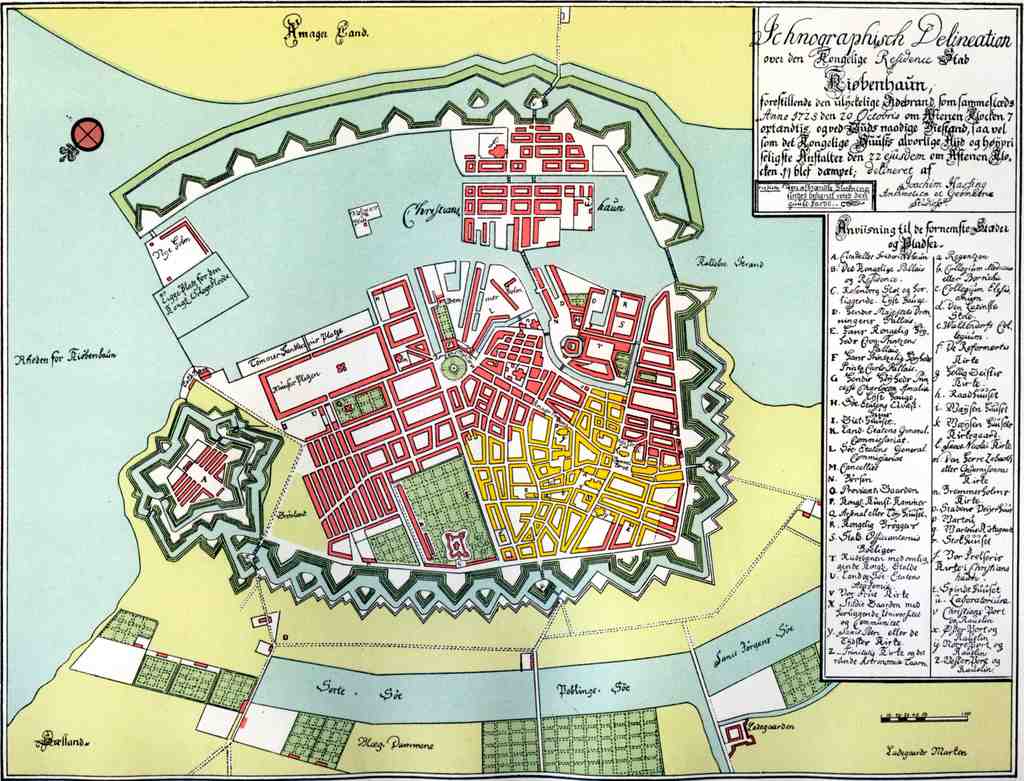
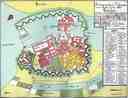
You’re now standing right where history took a fiery turn! If you look in front of you, you’ll spot a historical map - full of twisting, cramped streets and surrounded by star-shaped fortifications. To find the landmark, look for an old map or plaque showing Copenhagen as it looked centuries ago; the area in yellow and orange marks out the part that was destroyed by the fire of 1728. Imagine yourself right by one of those narrow, crowded lanes-almost lost in time. Let’s set the scene: It’s a chilly October evening in 1728. The city is alive with candlelight, narrow streets buzzing with people settling in for the night. Suddenly, a single candle tips over-maybe the work of a clumsy hand, or perhaps a little seven-year-old blamed for something he didn’t do. Within moments, flames begin to leap and dance. Now people are shouting, racing through those twisting alleys you see on the map, calling for help as the wind howls from the southwest, driving the fire into even more houses. Soon, both sides of Vestergade are glowing orange, sparks lighting up the night as the fire gulps down wooden roofs and ancient walls. Can you imagine the heat and the haze, the desperate cries as everyone tried to stop it-some even firing cannons at burning houses to force them to fall? People are racing to save what they can-books, clothes, drawings-and even priceless treasures from the University Library and the famed astronomer Tycho Brahe vanish forever in the blaze. By the time it’s over, almost a third of Copenhagen is gone, and the old medieval city will never be quite the same again. So, as you stand here by this map, picture the drama, the chaos, and the wind-fueled mystery of that night. And maybe be a little grateful your only challenge on this street today is crossing to the next bakery-and not outrunning a city-sized inferno! Seeking more information about the timeline, losses or the consequences? Ask away in the chat section and I'll fill you in.
Open eigen pagina →Up ahead, you'll see a striking white statue standing tall against a glowing golden wall. As you get closer, look for a figure with flowing robes, gentle eyes, and open arms,…Meer lezenToon minder
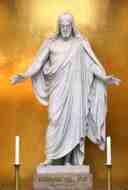
Up ahead, you'll see a striking white statue standing tall against a glowing golden wall. As you get closer, look for a figure with flowing robes, gentle eyes, and open arms, almost as if he’s about to offer you a big, comforting hug. His hands are stretched out, and right beneath his feet, you’ll see an inscription in Danish. Two elegant white candles keep him company on either side. This is the Christus statue-easy to spot, trust me. If you stand right in front, you’ll get the perfect view as his marble eyes seem to look right at you. Imagine yourself in 1833. The city is rebuilding after the horrors of war, fires have scorched the heart of Copenhagen, and hope feels a bit shaky. Out of the silence, a new masterpiece appears. Here stands Jesus, sculpted by Bertel Thorvaldsen, his arms wide open-almost like he’s saying, “Come on in, you’re safe now.” And just in case you missed the message, the base literally says, “Kommer til mig”-which means “Come unto me.” Now, here’s a fun fact: this isn’t just a local celebrity. The Christus has so many copies around the world, you could call it the pop star of statues! Chicago, Houston, Norway, even a giant version made out of 30,000 LEGO bricks in Sweden-this Jesus definitely gets around. The one you see here was made from glowing white Carrara marble, and even before the marble arrived, they put up a plaster version for the church’s reopening. They just couldn’t wait! Take in the peaceful feeling for a moment. Imagine candles flickering, the sound of footsteps on ancient floors, and the faint echo of centuries-old hymns bouncing off the walls. There’s a gentle power here-a quiet strength in that invitation to come closer. And as you gaze up at the statue’s open hands, remember that you’re standing right where history meets hope. Don’t forget to look for the scars on his hands-a little detail that carries a pretty big story. And hey, if you ever see another Christus statue on your travels, you can smile and think, “I know your roots!” Want to explore the original sculpture, sites of replicas or the lds church use in more depth? Join me in the chat section for a detailed discussion.
Open eigen pagina →Just ahead of you is the Metropolitan School, or Metropolitanskolen, easily spotted by its long, sand-colored walls and classic, rectangular windows. The building stretches…Meer lezenToon minder
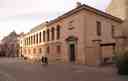
Just ahead of you is the Metropolitan School, or Metropolitanskolen, easily spotted by its long, sand-colored walls and classic, rectangular windows. The building stretches gracefully along the street, with a row of tall arched windows just above eye level. Look for the sturdy, brown main door with a pointed stone pediment above it. If you’re facing a structure that almost feels like it’s watched centuries of Copenhagen rush by, you’ve found it! Imagine stepping back to the early 1200s, right here. This school was first founded in 1209 by Bishop Peder Sunesen-yes, that's over 800 years ago! In its earliest days, it was a Catholic monastery school, but, just like a student who keeps changing majors, Metropolitanskolen later became the top Latin school for Denmark’s elite. You might say it was Copenhagen’s version of Hogwarts… only with more Latin and less flying. All this time, students here weren’t called “students.” Oh no, they had a special name: “peblinge.” That comes from an old Danish word meaning “little priest.” Supposedly, the name Peblingesøen, a lake nearby, comes from those energetic students sneaking off for a swim. The school had its fair share of drama-not just final exams, but fires, reforms, and bombings. In 1728, the school burned down during the great Copenhagen fire. But by 1731, it was back up again, stubborn as ever. Then, in 1807, during another disaster, the building got destroyed again. Classes shuffled between various locations until a new building was finished right here in 1816. Picture it: 132 nervous students, all in their finest clothes, gathered for the grand opening, eyes wide as King Frederik VI himself showed up! Over time, the school changed from a poor boys’ school to a place for the city’s elite, especially after parents started paying tuition instead of sending their kids to sing in the churches. There was even a squabble over its name-when it tried to become the “Cathedral School of Copenhagen,” another school in Roskilde wasn’t too happy and kicked up a fuss! For its last chapter, it merged into Gefion Gymnasium in 2010 after 800 years of history. But it’s even more famous among Danes thanks to a satirical novel and film called “Det forsømte forår”-or “Stolen Spring”-that poked fun at the strict teachers and sometimes gloomy atmosphere inside these very walls. So, even if you’re not studying Latin or dodging strict headmasters, give a little nod to the thousands of “peblinge” and students who studied (and maybe got up to some mischief) on these very cobblestones.
Open eigen pagina →Look ahead and just a little to your right-you’ll see a sturdy, rectangular building with soft yellow bricks and tall, narrow windows framed in a dark trim. There’s a black fence…Meer lezenToon minder
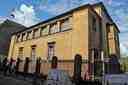
Look ahead and just a little to your right-you’ll see a sturdy, rectangular building with soft yellow bricks and tall, narrow windows framed in a dark trim. There’s a black fence in front with stone gateposts, and the windows have a distinct criss-cross pattern. The synagogue’s facade is clean and simple, with a touch of grandeur in its symmetry and subtle details. With no towering spires, it might seem a bit quiet and reserved from the outside, but it’s full of stories on the inside. Welcome to the Great Synagogue of Copenhagen! Take a deep breath and imagine the year is 1833; the city is bustling with horse-drawn carriages rolling along the cobblestones, and you hear the distant chatter of market vendors. This building isn’t just a place for worship; it’s a survivor, a storyteller, and a symbol of resilience. The first Jewish congregation in Copenhagen began back in the 1600s, and after a fire destroyed their old synagogue in 1795-so devastating that for 30 whole years, families gathered in homes, waiting and hoping for a united new place to pray. Finally, their hope was answered here, at Krystalgade 12. The synagogue stands out by blending styles-not your usual Danish church. Inside, you’d discover hints of ancient Egypt in the columns and ceiling decorations, making this one of very few synagogues from that era with such a twist. It was designed by Gustav Friedrich Hetsch, who really liked to mix things up. The plain outside might trick you, but the inside shines with color and pattern-like a plain donut hiding a surprise filling! Denmark’s Jews were granted equal rights in 1814, leading to this synagogue being built. The building has stood through times of celebration, as well as moments of danger: During World War II, the sacred Torah scrolls were carefully whisked away and hidden in Trinitatis Church-not exactly what you expect to borrow from the neighbors! Tragedy has touched this place too. In 1985, a bomb exploded here; thankfully, no one was hurt, but it was a chilling reminder of turbulent times. And in 2015, the Jewish community was rocked again by a shooting right here at the gates, in the wake of controversial debates about art and religion. Stand here a moment, feeling the weight of all those stories-a community’s highs and lows, secrets hidden and revealed, courage tested again and again. Through it all, the synagogue remains, watching the city change and reminding us just how much history can live in one place. And hey, if you’re wondering-no worries, I’ll never ask you to carry a Torah scroll to safety! Let’s continue the adventure.
Open eigen pagina →Look just above the treetops ahead of you. You’ll spot a roof topped by a small, elegant spire - it almost looks like a magician’s hat with golden decorations glinting in the sun.…Meer lezenToon minder
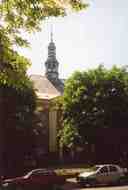
Look just above the treetops ahead of you. You’ll spot a roof topped by a small, elegant spire - it almost looks like a magician’s hat with golden decorations glinting in the sun. Right underneath, peeking out from between the leafy branches, you’ll find tall, arched windows of deep red brick and, if you’re lucky, a clock face telling the most stylish time in Gothersgade. That’s your clue: you’re facing the Reformed Church, Copenhagen! Imagine the year is 1689. The city buzzes with the sound of horses’ hooves and market chatter, but here, across from the grandeur of Rosenborg Castle, something rare is happening. Queen Charlotte Amalie, who was anything but ordinary, is making sure that people from all over Europe - Germans, Dutch, French - have a place to worship the way they choose. She’s not just the queen, she’s also a German Calvinist on a mission, and she gets her wish: this church, built from striking red brick, stands as her gift to the Reformed congregation. During the day, sunlight dances off the copper spire, which rises more than thirteen meters above the black-tiled roof. Inside, if you could slip past those tall doors, you’d find carved wooden decorations and a pulpit so high that the preacher could practically see into next Sunday. The rich, baroque flair inside makes you half expect powdered wigs and swishing silk dresses to appear at any second. The church survived Copenhagen’s great fire in 1728, although not without scars. But the city’s best craftsmen rushed in to rebuild, and they didn’t hold back: beautiful new fittings, a grand organ brought over from an old castle, and special boxes reserved for the city’s elite. There was even an old age home, a school, and an orphanage wrapped into the church’s embrace. Talk about multitasking - this was never just a regular Sunday stop. Take a look just above the entrance if you can edge a little closer. You might spot two royal monograms - one for King Christian V, the other for the ever-determined Queen Charlotte Amalie, along with an inscription in Danish from Isaiah, cheering on everyone who seeks wisdom. Out back, the old churchyard whispers stories of refugees, noble merchants, clockmakers, and sea captains. The French section still keeps its gravestones, and among them rests a brave admiral from the Battle of Copenhagen. Imagine the secrets these stones hold, tales of those who fled their homelands hoping for a fresh start in Denmark. Today, the church still opens its doors to German, French, and even Korean congregations, echoing with prayers in three languages. Talk about a melting pot - or maybe a melting church? So, next time you hear the chime from that lovely spire, give a little thanks to a queen who didn’t just want a crown, but a place for everyone to belong. Intrigued by the architecture, interior or the churchyard? Make your way to the chat section and I'll be happy to provide further details.
Open eigen pagina →Right in front of you, rising above the gardens, you’ll spot Rosenborg Castle - you can’t miss it! Just look straight ahead for a grand, chocolate-brown structure with tall, green…Meer lezenToon minder
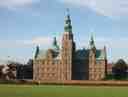
Right in front of you, rising above the gardens, you’ll spot Rosenborg Castle - you can’t miss it! Just look straight ahead for a grand, chocolate-brown structure with tall, green copper rooftops and pointy towers. The castle stands out like a fairy tale mansion with its symmetrical towers and neat rows of big windows. It almost looks like a giant toy castle waiting for an adventure to begin. Now, take a deep breath and let’s step into a royal story. Imagine, just over 400 years ago, this very spot wasn’t filled with tourists and blooming gardens, but wild countryside. Suddenly, there’s the sound of hammers and saws filling the air as workers build a brand new summer house for King Christian IV. Little did they know, they were creating one of Copenhagen’s most magical landmarks. Rosenborg Castle is built in Dutch Renaissance style, with red bricks and green copper rooftops that shine in the sun. Built between 1606 and 1624, this castle wasn’t just for show - it was Christian IV’s special getaway, where he could escape the noisy city and, well, maybe avoid a royal headache or two. The castle is named after rose gardens planted all around - so be sure to take a whiff if you’re here in the summer! Over the centuries, Danish kings and queens have stayed at Rosenborg, not just for parties and fancy balls in the impressive Long Hall, but also when things got a little too hot elsewhere. In fact, after the Christiansborg Palace burned down and during the frightful British attack on Copenhagen, the royals ran here for refuge. I mean, who wouldn’t feel safer with three giant silver lions guarding the throne? If you peek in the windows, you might catch a glimmer - that’s because the castle holds Denmark’s sparkling Crown Jewels and royal treasures. Deep inside, the Long Hall, once a dance floor for the elite, now displays royal thrones, shiny silver furniture, and tapestries of battles bravely won. Look up when you’re inside: the stucco ceiling is a masterpiece, with a parade of coats of arms and heroic events sculpted above your head. And don’t forget, outside in the King’s Garden, people of all ages come to picnic, read, and relax just like the nobles once did. It’s Copenhagen’s oldest royal garden, and sometimes, if you listen closely, you can almost hear laughter from old royal banquets carried on the breeze. And of course, next to the castle, you’ll spot the dark uniforms of the Royal Life Guards. They keep watch over these royal treasures, just in case another emergency hits. But don’t worry - no invaders today, just happy tourists and maybe a squirrel or two plotting to steal a snack. So, ready to explore centuries of secrets, treasures, and maybe invent your own royal adventure? Let’s step inside when you’re ready - but keep an eye out for those silver lions! Yearning to grasp further insights on the architecture, rosenborg collections or the gardens? Dive into the chat section below and ask away.
Open eigen pagina →You’ve made it to our final stop-the beating heart of Danish travel, the headquarters of DSB, the Danish State Railways! If you listen carefully, you might just hear the…Meer lezenToon minder
You’ve made it to our final stop-the beating heart of Danish travel, the headquarters of DSB, the Danish State Railways! If you listen carefully, you might just hear the centuries-old echoes of steam whistles, clanging signal bells, and rolling wheels from the world’s coziest kingdom. Don’t worry, there are no actual ghosts of old conductors lurking behind the timetable screens... although, wouldn’t that make rush hour a lot more interesting? Close your eyes and imagine Copenhagen in the late 1800s-not quite the city of cyclists yet, but a place where the future was arriving on iron rails. DSB wasn’t always the giant it is now. It was born in 1885 when two competing railway companies-one ruling the lands of Jutland and Funen, the other reigning over Zealand-finally decided to join forces. Picture businessmen with grand mustaches and top hats shaking hands over massive railway maps, grumbling about the complications of ferrying trains across the Great Belt. It wasn’t until 1893 that this grand merger was truly complete, and Denmark became a little more connected. In those early days, railways were risky business. British engineers and workers arrived, bringing their expertise (and probably their taste for strong tea) to teach the Danes everything from locomotive maintenance to signaling. Imagine yourself in a noisy train yard of the 1870s: sparks from coal-fired engines, the shout of a station master, and the sudden hiss of steam turning cold Danish air into thick clouds-almost like the city itself was breathing with excitement. And innovation didn’t stop there. By the 1930s, DSB had a new ambition: why not make trains as fast as lightning? Enter the ‘lyntog’, the original “lightning trains”. They zipped across Denmark at a breakneck 120 kilometers per hour-so fast, passengers might have worried their hats would fly off. Add in comfy seats, panoramic windows, and a sense of adventure, and you’ve got yourself a recipe for train travel success. Through wars, occupations, and fuel shortages, DSB kept rolling. When diesel was short, coal-fired engines came chugging back, making platforms echo with that unmistakable rhythm of a departing train. Even when bridges were finally built over Denmark’s waters-one mighty leap over the Little Belt in 1935-DSB was there, replacing slow, choppy ferry rides with smooth crossings and a chorus of “All aboard!” Today, DSB connects people from Copenhagen and far beyond-whether you’re heading to the suburbs on the S-train, or dreaming of a Scandinavian rail adventure. As you stand here, look around and think of all those travelers-students, business folks, lovebirds, even visiting royalty-who have passed through these doors, each one on their own little journey through Danish history. Now, before you rush off to catch your train or grab a well-deserved Danish pastry, let me leave you with this: DSB has mastered connecting people for over a hundred years, and unlike my jokes, its schedule usually runs on time. Thanks for joining me on this tour-watch the gap, mind the rails, and may your travels through wonderful Copenhagen be as smooth as a lightning train!
Open eigen pagina →

Veelgestelde vragen
Hoe begin ik de tour?
Download na aankoop de AudaTours-app en voer je inwisselcode in. De tour is direct klaar om te starten – tik gewoon op afspelen en volg de GPS-geleide route.
Heb ik internet nodig tijdens de tour?
Nee! Download de tour voordat je begint en geniet er volledig offline van. Alleen de chatfunctie vereist internet. We raden aan om te downloaden via wifi om mobiele data te besparen.
Is dit een groepsrondleiding met gids?
Nee - dit is een audiotour met eigen gids. Je verkent zelfstandig op je eigen tempo, met audiovertelling via je telefoon. Geen tourguide, geen groep, geen schema.
Hoe lang duurt de tour?
De meeste tours duren 60-90 minuten, maar jij bepaalt het tempo volledig. Pauzeer, sla stops over of neem pauzes wanneer je wilt.
Wat als ik de tour vandaag niet kan afmaken?
Geen probleem! Tours hebben levenslange toegang. Pauzeer en hervat wanneer je wilt – morgen, volgende week of volgend jaar. Je voortgang wordt opgeslagen.
Welke talen zijn beschikbaar?
Alle tours zijn beschikbaar in meer dan 50 talen. Selecteer je voorkeurstaal bij het inwisselen van je code. Let op: de taal kan niet worden gewijzigd na het genereren van de tour.
Waar vind ik de tour na aankoop?
Download de gratis AudaTours-app uit de App Store of Google Play. Voer je inwisselcode in (verzonden per e-mail) en de tour verschijnt in je bibliotheek, klaar om te downloaden en te starten.
Als je niet tevreden bent met de tour, betalen we je aankoop terug. Neem contact met ons op via [email protected]
Veilig afrekenen met 


