AudaTours logoAudaTours

Aarhus Audiotour: Aarhus Kunst, Geschiedenis en Moderne Wonderen Audio Odyssee

Audiogids11 stops

In Aarhus lijkt zelfs de lucht eeuwenoude geheimen met zich mee te dragen – waar wilde tuinen zich verschuilen onder stadstraten en brouwerijen ooit de koninklijke familie van elke gouden druppel voorzagen. Deze zelfgeleide audiotour ontsluit lagen van de stad die de lokale bevolking nauwlettend bewaakt, en leidt je van rustige botanische oases naar geplaveide straatjes die door de stoutmoedigen zijn bewaard, naar historische brouwerijen die echoën van vroegere vieringen en schandalen. Ontdek de verhalen achter bezienswaardigheden die je dacht te kennen. Welke ramp veegde bijna een geliefde historische stad van de kaart vóór de rebellie van een eenzame leraar? Waarom zijn delen van Den Gamle By zowel boven als ondergronds verborgen, in het volle zicht? En welk Deens bier vond zijn weg naar de handen van Europese aristocraten – en veroorzaakte mogelijk een internationaal schandaal? Volg de levende geschiedenis door parken, vergeten theaters en herrezen industriële locaties. Dwaal waar revolutionairen plannen smeedden, kinderen speelden tussen de lelies, en legendarische brouwers de traditie trotseerden. Zie Aarhus voor je ogen transformeren. Begin de reis nu – pel het serene oppervlak van Aarhus af en zie wat er werkelijk onder ligt.

Tourvoorbeeld

map

Over deze tour

  • schedule
    Duur 30–50 minsGa op je eigen tempo
  • straighten
    3.4 km wandelrouteVolg het geleide pad
  • location_on
  • wifi_off
    Werkt offlineEén keer downloaden, overal gebruiken
  • all_inclusive
    Levenslange toegangOp elk moment opnieuw afspelen, voor altijd
  • location_on
    Start bij Botanische Tuin

Stops op deze tour
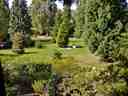
  1. Take a good look around-can you spot the wide green lawns rolling out beneath scattered groups of towering pine and leafy trees? If you see a peaceful pond bordered by tall…Meer lezenToon minder

    Take a good look around-can you spot the wide green lawns rolling out beneath scattered groups of towering pine and leafy trees? If you see a peaceful pond bordered by tall grasses, and maybe a picnic or two happening under the shade, then you’ve arrived! You’re standing at Aarhus’ Botanical Garden, a green oasis right in the heart of the city. Just follow the fresh scent of grass and the cheerful chatter of people relaxing-you can’t miss it. Now, imagine stepping back in time to 1873. Aarhus, still a growing city, decides it needs a little patch of wild beauty to stretch out and breathe in. So, they let a group of garden lovers set up right here. Back then, it was known as Haven ved Vesterbro-a mouthful, I know! Since then, these gardens have grown into a whopping 21.5 hectares of parkland, nearly the size of 40 football fields. There’s a secret: parts of the garden now hide the expanded Den Gamle By, tucked away both above and underground. Mysterious, right? In front of you, the garden is full of themed corners. There’s the Flower Valley with roses, soft grasses, and even lilies that love the shade. Wander off and you’ll find an arboretum with trees from all over the world-perfect for a game of “Name That Tree!” If you were here in 1948, you’d hear giggling children at the outdoor amphitheater, which has recently been completely renewed. Keep your eyes peeled for the enormous glasshouses. These aren’t just greenhouses; they’re home to plant royalty from every climate, including a tropical house where the air is as thick as a summer’s day and leaves grow bigger than your head! The best part? There’s even a café and shop, so you can sip coffee surrounded by the scent of fresh soil, and pretend you’re a botanist while people-watching. Funny enough, the whole place was almost set aside just to keep the biodiversity safe. In 2015, they decided to protect the land, though even city officials got a bit stressed about losing playground space. Speaking of which, you might hear the joyful chaos from the giant playground opened in 2019-and no need to be shy, it’s not just for kids! So, take a deep breath, soak in the green peace, and let yourself imagine all the stories these winding paths have seen-friends, families, curious plant fans, and even a few sneaky squirrels plotting their next picnic heist! Ready to explore together?

    Open eigen pagina →
  2. Right in front of you, you can’t miss Den Gamle By! Look for a row of tall, timber-framed houses with red brick and deep brown beams, topped with those classic orange tiled roofs…Meer lezenToon minder

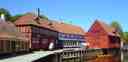
    Right in front of you, you can’t miss Den Gamle By! Look for a row of tall, timber-framed houses with red brick and deep brown beams, topped with those classic orange tiled roofs that look like they’ve seen centuries of sunshine and Danish rain. One of the buildings is painted a striking brick red and extends out over the water, supported by dark wooden stilts - almost as if it’s daring you to guess its age. If you spot a little yellow rowing boat bobbing by the water’s edge and can imagine the faint sound of wagon wheels rumbling over cobblestone, you’re in the perfect place. Welcome to Den Gamle By - The Old Town! Close your eyes for a second and breathe in deeply; can you smell old wood, or maybe freshly baked bread from a hidden bakery? Now open your eyes to a village taken straight out of Danish history. This isn’t make-believe - this is a living, breathing museum with more than 75 buildings whisked here from all across Denmark. Imagine wandering down streets filled with real workshops, groceries, gardens, and even a theatre - all just as they were hundreds of years ago. More than 400,000 people visit every year, and some even start speaking in old-timey Danish accents after a stroll here - don’t worry, it’s not contagious! Den Gamle By began in 1914 as Denmark’s very first open-air museum that celebrates not country life, but city life. Back then, folks were about to tear down the grand Old Mayor’s House, but a heroic teacher, Peter Holm, couldn’t bear the thought. He managed to save it, brick by brick, and reassembled it right here instead of letting it become firewood. As you wander, you might meet a blacksmith hammering at his anvil, or merchants hawking their goods just like in centuries past. The rooms and shops are filled with furniture, toys, silverware, and all sorts of treasures left behind by time - or generously donated by people who wanted to share the magic of their past. It’s a place where, if you listen closely, you might just hear the echo of a child’s laughter from 1850, the creak of a merchant’s cart, or the secret whispers of yesteryear’s townsfolk. And if you see someone wandering around in costume, don’t be surprised - they’re part of this living museum, playing the roles of townspeople just to make things that much more real. So, welcome to Denmark’s time machine! If you feel the urge to jump back a few centuries, you’re absolutely in the right spot. Just don’t challenge any blacksmiths to an arm-wrestling contest - those guys are seriously tough! Ready to delve deeper into the buildings, exhibits or the gardens? Join me in the chat section for an enriching discussion.

    Open eigen pagina →
  3. To spot the former Ceres Brewery, look just beyond the patch of trees and bushes in front of you, across the water. Keep your eyes peeled for a large, pale yellow building with…Meer lezenToon minder

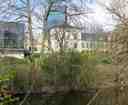
    To spot the former Ceres Brewery, look just beyond the patch of trees and bushes in front of you, across the water. Keep your eyes peeled for a large, pale yellow building with many windows and a tall, more modern glass building rising just behind it. The brewery’s classic architecture stands out next to the sleeker, newer buildings around it, almost like someone put a bit of old Aarhus right next to the future. Alright, you’ve arrived at one of the most legendary spots for beer lovers in Denmark. Welcome to Ceres, a place where the air once smelled of hops, barley, and maybe, if you were lucky, a hint of mischief. Just imagine barrels rolling over cobblestone and the chatter of workers swapping stories in the heart of the city. Ceres was founded way back in 1856-yes, before your great-grandparents’ great-grandparents were even born! It was named after Ceres, the Roman goddess of grain and fertility, and honestly, you’d need some goddess power to keep up with all the thirsty Danes. The brewery grew quickly, modernizing, expanding, and gaining fans well beyond Aarhus. At one point, Ceres even became a supplier to the Royal Danish Court. That means actual royalty might have toasted with a Ceres Top or one of their legendary pilsners. But it wasn’t just royal approval that set Ceres apart. By the 1920s, horse-drawn carts were swapped for delivery trucks, and the place buzzed like a beehive of innovation. In 1985, their Royal Export was crowned “Beer of the Year.” Trust the Danes to celebrate beer like kings! Sadly, in 2008, the brewery doors closed after more than 150 years, and production moved to Odense and Faxe. Still, the spirit of Ceres lives on-not just in bottles and cans, but right beneath your feet. The grounds here have been reborn as “CeresByen,” an area full of new life, education, homes, and businesses. If you listen closely, you might just hear a ghostly echo of laughter from old brewers, or maybe the clink of a bottle opening to say “Skål!” The Ceres name remains, especially beloved in Italy, believe it or not-maybe there’s an Italian grandma somewhere, raising a Ceres beer in your honor right now. Take a moment to soak in the surroundings and imagine what secrets this place could tell. And if you’re suddenly feeling a mysterious thirst, well, that’s just history working its magic! Let me know when you’re ready to move on to your next adventure.

    Open eigen pagina →
Toon 8 stops meerToon minder stopsexpand_moreexpand_less
  1. You’re looking right at Godsbanen! To spot it, look for a long red-brick building with loads of identical white-paned windows, and an eye-catching roof covered in orange tiles.…Meer lezenToon minder

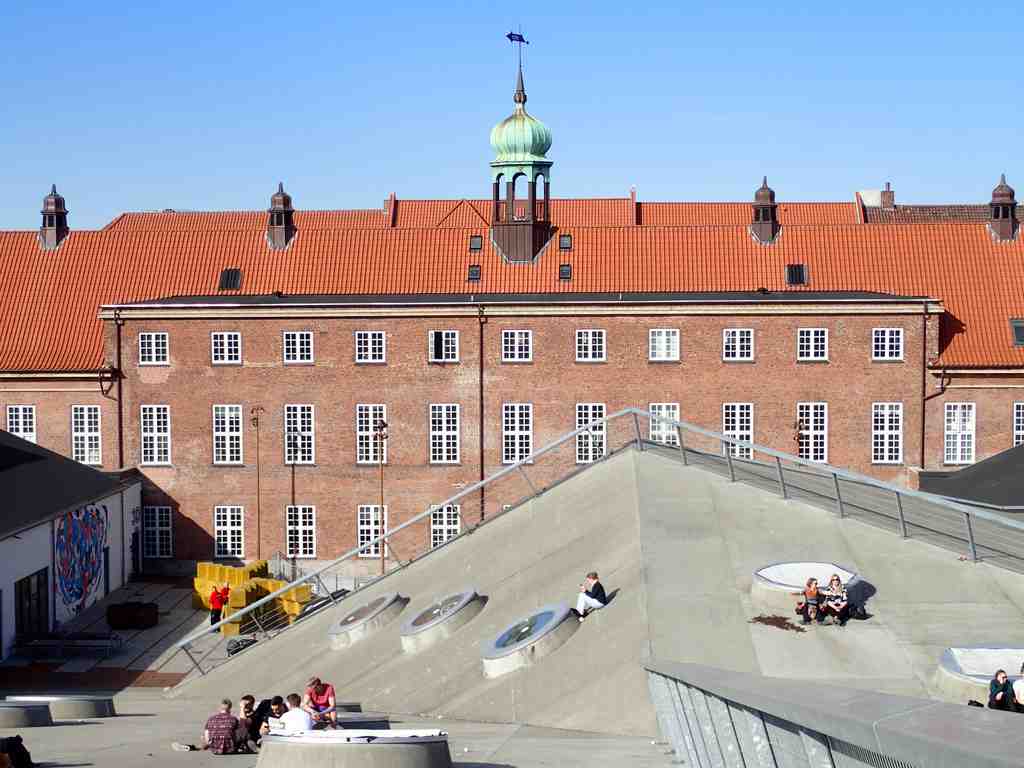
    You’re looking right at Godsbanen! To spot it, look for a long red-brick building with loads of identical white-paned windows, and an eye-catching roof covered in orange tiles. The real giveaway? Look up. You’ll see a green-copper dome perched in the middle of the roof, topped off with a whimsical spire that looks like it could be home to a wizard-or at least a very fancy weather vane. In front of you is a sloping modern concrete structure, dotted with round skylights and people lounging in the sun. It's almost as if the old meets the new in one dramatic overlook! If anyone nearby starts breakdancing, don’t worry-you’re in the right spot. Imagine you’re standing here a hundred years ago-the sounds of steam trains screeching, workers shouting, and the gritty clatter of crates being unloaded. This was once the busy Aarhus Goods Station, known as Aarhus Godsbanegård. For decades-from 1923 to 2000-this spot was the beating industrial heart of Aarhus. The idea to move the goods yard here floated around for years before politicians finally agreed (I guess Danish politicians liked to take their time. Maybe they were busy eating pastries?). And when they finally built it, it wasn’t easy; tough soil meant 3,000 fir trunks had to be hammered deep into the ground, plus mountains of soil moved-by hand! I hope someone brought snacks. And just look at that building. Architect Heinrich Wenck designed it in a style called Neo-Baroque. It’s full of drama: great red bricks, copper details glinting in the sun, a grand hipped roof with little towers and that unique onion-shaped dome. Wenck was the Danish State Railways’ chief architect, and this was one of his final masterpieces. But times change, and trains don’t thump in here anymore. In 2012, Godsbanen came back to life-not with noisy engines and freight, but with music, art, and ideas. Today it’s a creative powerhouse, buzzing with theatre, music, films, workshops, festivals, and even business networking. There’s a lively café where the food is proudly sustainable and organic, changing hands and faces but always filled with the local spirit. So whether you’re looking for a cool art event or just a cozy coffee break, this is the place. Go ahead-walk around, peek in the windows, and soak up the mix of history and energy. Just remember, if you feel like bursting into spontaneous dance or poetry, you’ll fit right in!

    Open eigen pagina →
  2. To spot Det Jyske Musikkonservatorium, just look ahead for a long, modern building with brown panels and eye-catching white horizontal slats stretching along the façade. You’ll…Meer lezenToon minder

    To spot Det Jyske Musikkonservatorium, just look ahead for a long, modern building with brown panels and eye-catching white horizontal slats stretching along the façade. You’ll notice narrow windows both above and below these striking blinds, and right in front, there’s a row of green bushes and a few parked cars. If you squint a little and let yourself imagine, it almost looks like the building is wearing a super stylish pair of sunglasses. Now that you’re here, let’s slip into the world of music and creativity. Picture this: you’re standing in front of one of Aarhus’s most dynamic spots, where the sound of pianos, guitars, and even the occasional wild trombone echo through the walls. This is the Royal Academy of Music, better known by its Danish name, Det Jyske Musikkonservatorium. It’s not just any school-it’s one where dreams of becoming a musician or a music teacher come alive, all under the careful watch of Denmark’s Ministry of Culture. It’s like Hogwarts, but for music wizards! Every day inside, over 350 students dive into everything from classic symphonies, to jazz improvisations, to electronic beats that could make a robot dance. Founded back in 1927 by an adventurous violinist named Johan Nilsson, this place first ran privately-imagine Nilsson dashing down the halls, violin case in hand, making sure the show went on. When he handed over the reins, the teachers took charge, and by 1944, it was a full institution led by its own board. There’s something magical about knowing you’re standing right outside where future stars perfect their craft, rehearsing until their fingers are tired and their hearts are full. And if you listen carefully, maybe you’ll catch the faint sound of a melody floating through a window, like a secret invitation into Aarhus’s musical heart. So, whether you’re tone deaf or a shower-singing champion, take a moment to enjoy the musical spirit in the air. Don’t worry, I won’t ask you to sing-unless you really want to, in which case, rock on!

    Open eigen pagina →
  3. Take a deep breath and listen closely-can you almost hear the echo of piano keys and violin strings? Right in front of you stands a place where musical dreams took root and grew.…Meer lezenToon minder

    Take a deep breath and listen closely-can you almost hear the echo of piano keys and violin strings? Right in front of you stands a place where musical dreams took root and grew. The Nordjysk Musikkonservatorium began its story back in 1930, all thanks to a passionate duo, Johan and Magda Nilsson. Picture the scene: a crisp Danish morning, sheet music fluttering in the breeze, and hopeful students hurrying inside clutching their instruments, hearts pounding with excitement and maybe just a hint of stage fright. For decades, this was the heart of music in northern Denmark-a spot where the notes of Mozart, jazz rhythms, and brand-new tunes from aspiring composers would float out of open windows. If walls could sing, these would know every scale by heart. The conservatory belonged to Klaus, Magda, and all the students who called it home, until the government decided music was too good not to share more widely and took over in 1972. There's always one person who wants to join the band, right? By 2010, the name changed to Det Jyske Musikkonservatorium, Aalborg, and in 2013, the school swapped its old address for a waterfront spot in Musikkens Hus. Out with the old Ryesgade, in with stunning new views and more space for song. Today, future maestros and jazz legends study for bachelor’s and master’s degrees, learning not just how to play, but how to perform and inspire. They even offer advanced classes-because in Denmark, the music never stops, it just gets louder! So, while you may not see students bustling in and out here anymore, the spirit of Nordjysk Musikkonservatorium is like an endless melody-always moving forward, always looking for the next big crescendo. Who knows, maybe you’ll hum a little tune while you walk to our next stop!

    Open eigen pagina →
  4. You’re now standing in front of the Concert Hall Aarhus! Look ahead for a huge glass building, especially if it’s evening-the entire facade glows with colors and you might catch…Meer lezenToon minder

    You’re now standing in front of the Concert Hall Aarhus! Look ahead for a huge glass building, especially if it’s evening-the entire facade glows with colors and you might catch its shimmering reflection in the calm pool right in front. The glass panels stretch wide and tall, so just follow the light and sound of laughter drifting from the crowd. You really can’t miss it! Alright, time to step into a world where music and magic come alive! Imagine the buzz here-inside this giant glass house, six different halls and nine separate stages are just waiting for someone to burst into song or laughter. Every year, the Concert Hall hosts about 1,500 shows, from hip-hop to opera, comedy nights to wild musicals. There’s always a new sound echoing through these walls. This place isn’t just a concert hall, it’s like a music city under one roof! You’ll find the Aarhus Symphony Orchestra getting ready to whisk you away, the Jutland Conservatory of Music training up future stars, and a busy restaurant and café where even the waiters hum as they serve cake. Imagine sitting in a chair and, who knows, maybe it’s the seat Tina Turner or Bob Dylan once warmed up! That’s right-world legends like Leonard Cohen, The Beach Boys, and Queen Margrethe herself have all been here. It’s a place where anyone might be outshone by the jazz hands next to them! When this building was finished in 1982, it was the talk of the town-huge, new, modern! It quickly grew, and by 2007 after another big upgrade, it became the largest concert house in all of the Nordics. Now we’re talking 35,000 square meters, with more than 500 rooms-if you tried to count them all, you'd probably get lost and end up on stage by accident. Just imagine: the soft touch of velvet seats, spotlights beaming through the glass, and the sound of over 1,500 music lovers settling in for the show. And if you’re lucky, an outdoor concert in summer might fill the entire park with music and dancing. So, take it all in, listen for a melody floating through the glass, and picture yourself on stage-or maybe just grabbing a pastry in the café. Either way, the Concert Hall Aarhus is waiting for you to join the performance!

    Open eigen pagina →
  5. To spot Aarhus Festuge in front of you, look out for a striking sign that forms the shape of a letter “A.” On one side, it’s painted a bold, firetruck red, and on the other, a…Meer lezenToon minder

    To spot Aarhus Festuge in front of you, look out for a striking sign that forms the shape of a letter “A.” On one side, it’s painted a bold, firetruck red, and on the other, a cool, sky-blue. Right at the bottom, you’ll spot a blue dot-almost like an exclamation point, except the excitement here is all around you. If you see that splash of color and the distinct “Aarhus Festuge” text below, you’re in the right place! Standing here, you’re at the very heart of Aarhus’ wildest ten days of the year. Imagine it: fireworks in the air, bands tuning up their guitars, laughter and chatter swirling through the city squares. It all kicked off back in 1965, when the city decided, “You know what we need? More arts, more music, and a whole lot more fun.” They wanted to tie Aarhus together and show everyone that this town was more than just wind, rain, and... well, Vikings! The first festival was such a blast, it’s happened every year since. Fast forward to today, and it’s grown into a true mega-festival-one of the largest in Northern Europe, if you can believe it. Over 1,000 events packed into ten days. Maybe right now, if you close your eyes, you can hear a jazz band playing at one corner and kids shrieking with delight at a puppet show around the next block. Aarhus Festuge is for everyone: kids, teens, families, people who love theatre, wild art, tasty local food, or just watching people dance awkwardly in the streets. Every year, the festival has a special theme that ties everything together. For 2023 to 2025, it’s ‘Mind the Gap.’ No, it’s not just a warning for train stations, but a cheeky way to get artists and dreamers thinking outside the box about connection, difference, and creativity. The festival’s poster-always made by a different artist each year-becomes the official badge for the entire event. Here’s a fun bit: while Aarhus Festuge is the headliner, nearby cities like Randers and Vejle throw their own parties at the same time. It’s like the entire region forgets it ever had homework and just decides to celebrate. So, are you ready to jump into the bustle? There’s only one rule: expect the unexpected. After all, with a city this spirited, you never know when you might be swept into a spontaneous parade, an outdoor art show, or a dance circle that refuses to end! For a more comprehensive understanding of the description, themes or the gallery, engage with me in the chat section below.

    Open eigen pagina →
  6. As you approach Rådhusparken, take a look just ahead - you’ll see a dramatic cluster of tall, bare trees pruned in such a way that they almost look like natural sculptures…Meer lezenToon minder

    As you approach Rådhusparken, take a look just ahead - you’ll see a dramatic cluster of tall, bare trees pruned in such a way that they almost look like natural sculptures themselves. They stand in neat circles with a few tidy hedges at their base, reaching upwards into the mist. In between the trees, keep your eyes peeled for bronze and stone figures dotted around, standing quietly and watching over you as you walk by. It’s especially striking on a foggy day like today - the branches almost vanish into the grey sky, and the sculptures seem to appear out of nowhere, like secrets revealed only to careful observers. Standing right here, you’re in the heart of Aarhus, in Rådhusparken - or City Hall Park, which sits at the feet of the City Hall itself. This spot is a meeting place for the city’s soul: right around you are the concert hall, the art museum, and even the city hall itself, all gathered like a group of old friends. If you listen carefully, you might even hear the sound of classical music drifting over from the concert hall, or maybe the soft rustle of linden trees overhead (unless it’s winter - then maybe it’s just your own teeth chattering!). The park’s main entrance is dramatic, with broad cobbled stairs and a tunnel of linden trees leading straight to the square by city hall. You can wander along paths taking you to a round plaza lined with those very same tall, pollarded linden trees. Here, the air is sometimes sweet with the scent of blooming magnolias or crocuses, and no matter the time of year, something new is always growing. If you’re lucky, you might even spot the bright yellow of daffodils poking through the grass. Nestled by the city hall itself, there’s a quiet little garden with benches, all rimmed with rhododendrons. It’s the perfect spot to pause and watch city life wander by - unless the squirrels get there first. The garden here is all about gentle greens, clean whites, and sunny yellows, just like a little forest glade imagined right in the middle of the city. But the real characters in this park are its sculptures - four women frozen in time. There’s “The Fated,” carved from black granite, right at the center of the rotunda. She stands strong and silent, a bit mysterious, as if she’s holding old stories close. Close by is “Waking Woman,” who looks as if she’s just stretching awake from a long, dreamy sleep. She had to move here after a fire elsewhere in the city - they say she quite enjoys the change of scenery. “Girl of 1940” stands holding her arms protectively overhead, a powerful memory from World War II, reminding us of how people tried to shield themselves during scary times. And don’t miss “Atalanta,” the bold figure from Greek myth, always ready to run or leap into a new adventure. It’s hard to imagine now, but before it was a park, this area was a cemetery, right up until 1926. The city decided to turn it into a green space, but it took a while, and for many years it was strictly off limits - they even had uniformed guards! Later on, as life rushed back in, the old bomb shelters from the war became playgrounds for local children, with much less drama and a lot more giggling. As you stand among these trees and sculptures, you’re truly in a place where history, art, and the heartbeat of Aarhus all come together. But don’t worry about the ghosts - they’re all much too busy admiring the park’s beautiful flowers. Ready to head on to our next stop? Let’s keep wandering!

    Open eigen pagina →
  7. Look ahead for a large, modern building made of light yellow bricks, with tall windows punctuating its facade. The windows here are arranged in almost playful patterns-some are…Meer lezenToon minder

    Look ahead for a large, modern building made of light yellow bricks, with tall windows punctuating its facade. The windows here are arranged in almost playful patterns-some are long, some are square, and many are surrounded by smaller brick rectangles that look almost like Morse code. If you spot a digital information screen and the name “Stiften” on the lower part of the front, you’ve landed right in front of Århus Stiftstidende. You can’t miss the crisp, geometric style, and the way the glass at the top floor wraps all the way around, catching the Danish light. Now, let’s step closer-imagine the buzz in the air! You’re standing in front of one of Denmark’s oldest newspapers, Århus Stiftstidende, known by locals as “Stiften.” This isn’t just any old newsstand; this place is a time machine. The paper has been the city’s storyteller since 1794. Picture the city back then: no cars, just horse-drawn carts and candlelit windows. Niels Lund, a clever printer, kicked things off with the king’s special permission to set up shop and start telling Aarhus what was happening-if you think your morning news is brief, Lund’s first papers were even thinner! As time passed, Århus Stiftstidende grew from a humble notice sheet into a favorite provincial newspaper-a place where scandal, triumph, and the odd recipe all rubbed shoulders. Whole family dynasties ran the press: think editors' sons, then their wives stepping in, then sons again! Imagine the smell of ink, the clatter of the printing press, and columns upon columns of big news and local gossip. Through world wars, fierce rivalry, and more than a few squabbles over who had the best headlines, “Stiften” became a city institution. Other newspapers fell away-sometimes dramatically, like ships sinking after a stormy contest for readers and ads. At one point, it felt like two captains fighting for the same treasure chest of advertisers, until in 1976, they finally called a truce! Things haven’t always been easy; with the internet, the world of paper got shaken like a snow globe. But today, Århus Stiftstidende stands as part of Denmark’s second largest media house, still dedicated to bringing you the news-sometimes even before your coffee is ready! So next time someone tells you “print is dead,” just point to this building and say, “Not in Aarhus!” Let’s keep moving, but if you want to feel like a true journalist, just pause here for a second, imagine popping into the old newsroom, and maybe ask yourself: What’s the headline you’d write if you owned the city’s press for one day?

    Open eigen pagina →
  8. Look just ahead! Bruun’s Gallery is right in front of you-a huge, modern building with plenty of glass and gentle curves, and a roof that lets daylight pour in. If you scan…Meer lezenToon minder

    Look just ahead! Bruun’s Gallery is right in front of you-a huge, modern building with plenty of glass and gentle curves, and a roof that lets daylight pour in. If you scan around, the shiny escalators and big open balconies are a dead giveaway. Just follow the crowds-people here are usually on a mission, whether it’s for shopping or a juicy movie snack. Now, take a deep breath and listen-do you hear that gentle rumble? That’s the sound of Denmark’s busiest shopping center waking up. Bruun’s Gallery isn’t just any mall; it’s the beating heart of Aarhus shopping. Bursting out from beside the main train station, this place is massive-140,000 square meters huge, with over 100 shops and two floors to explore. And yes, it’s got CinemaxX cinemas with space for 2,000 popcorn lovers! Since opening back in 2003, Bruun’s Gallery has pulled in crowds like no other-11 million people visited here in 2010 alone! That makes it number one for visitors in all of Denmark, far ahead of the runner-up, Field’s, over in Copenhagen. With numbers like that, if shopping were a sport, Bruun’s Gallery would take home the gold medal-and a few shopping bags too. Curious about the name? It’s inspired by Mads Pagh Bruun, a local bigwig from way back when-his name’s on the streets and the bridge next to the center. And “Galleri”? No, you won’t only find art here; think of the fancy Italian word “Galleria,” which means a grand indoor mall packed with goodies instead of galleries full of paintings. Of course, Bruun’s Gallery stirred things up when it first opened. Some neighbors worried about traffic jams and the building’s towering size-turns out, it was even taller than folks expected. To try and keep things moving, the city built a stylish ramp and expanded the crosswalks leading to the buzzing pedestrian street, Strøget. And the story isn’t over yet! The center’s owners dream of even more-imagine a giant new wing stretching right over the train tracks, filled with new shops, homes, and businesses above the city’s heartbeat. So, whether you come for a new pair of shoes, a slice of cake, or just to marvel at how many people can fit into a shopping center, you’re standing at Denmark’s most visited retail playground. And if you get lost-just follow the sound of rolling suitcases and happy chatter. If only wallets could talk, I’m sure they’d tell quite a tale about this place!

    Open eigen pagina →

Veelgestelde vragen

Hoe begin ik de tour?

Download na aankoop de AudaTours-app en voer je inwisselcode in. De tour is direct klaar om te starten – tik gewoon op afspelen en volg de GPS-geleide route.

Heb ik internet nodig tijdens de tour?

Nee! Download de tour voordat je begint en geniet er volledig offline van. Alleen de chatfunctie vereist internet. We raden aan om te downloaden via wifi om mobiele data te besparen.

Is dit een groepsrondleiding met gids?

Nee - dit is een audiotour met eigen gids. Je verkent zelfstandig op je eigen tempo, met audiovertelling via je telefoon. Geen tourguide, geen groep, geen schema.

Hoe lang duurt de tour?

De meeste tours duren 60-90 minuten, maar jij bepaalt het tempo volledig. Pauzeer, sla stops over of neem pauzes wanneer je wilt.

Wat als ik de tour vandaag niet kan afmaken?

Geen probleem! Tours hebben levenslange toegang. Pauzeer en hervat wanneer je wilt – morgen, volgende week of volgend jaar. Je voortgang wordt opgeslagen.

Welke talen zijn beschikbaar?

Alle tours zijn beschikbaar in meer dan 50 talen. Selecteer je voorkeurstaal bij het inwisselen van je code. Let op: de taal kan niet worden gewijzigd na het genereren van de tour.

Waar vind ik de tour na aankoop?

Download de gratis AudaTours-app uit de App Store of Google Play. Voer je inwisselcode in (verzonden per e-mail) en de tour verschijnt in je bibliotheek, klaar om te downloaden en te starten.

verified_user
Tevredenheid gegarandeerd

Als je niet tevreden bent met de tour, betalen we je aankoop terug. Neem contact met ons op via [email protected]

Veilig afrekenen met

Apple PayGoogle PayVisaMastercardPayPal

AudaTours: Audiotours

Vermakelijke, budgetvriendelijke wandeltours met eigen gids

Probeer de app arrow_forward

Geliefd bij reizigers wereldwijd

format_quote Deze tour was een geweldige manier om de stad te zien. De verhalen waren interessant zonder te gekunsteld aan te voelen, en ik vond het heerlijk om op mijn eigen tempo te verkennen.
Jess
Jess
starstarstarstarstar
Tbilisi-tour arrow_forward
format_quote Dit was een prima manier om Brighton te leren kennen zonder je als toerist te voelen. De vertelling had diepgang en context, maar overdreef het niet.
Christoph
Christoph
starstarstarstarstar
Brighton-tour arrow_forward
format_quote Begon deze tour met een croissant in de ene hand en nul verwachtingen. De app gaat gewoon mee met je, geen druk, gewoon jij, je koptelefoon en gave verhalen.
John
John
starstarstarstarstar
Marseille-tour arrow_forward

Onbeperkte audiotours

Ontgrendel toegang tot ELKE tour wereldwijd

0 tours·0 steden·0 landen
all_inclusive Onbeperkt verkennen