AudaTours logoAudaTours

시애틀 오디오 투어: 파이어니어 스퀘어의 전설과 랜드마크

오디오 가이드7 정류장

이 유서 깊은 시애틀 거리에서는 회색 대리석이 로마 기둥의 그림자 아래 빛나고, 벽돌 아치는 황금 시대의 비밀을 속삭입니다. 이 셀프 가이드 오디오 투어는 대부분의 방문객이 그냥 지나치는 전설과 숨겨진 드라마를 발견하며 다운타운의 활기찬 분위기를 거닐도록 초대합니다. 어떤 비밀스러운 생존 싸움이 파이어니어 빌딩을 영원히 지워버릴 뻔했을까요? 시애틀 추장의 청동 시선은 왜 그의 도시를 자부심과 슬픔으로 동시에 지키는 것처럼 보일까요? 그리고 웅장한 은행 홀 아래 지하 금고에는 어떤 기묘한 계획들이 숨어 있었을까요? 높이 솟은 파사드와 조용한 광장 사이를 거닐며 발밑에서 과거가 살아나는 것을 느껴보세요. 변화하는 운명, 경쟁적인 꿈, 시민 간의 불화, 그리고 결코 멈추지 않으려는 도시를 형성한 빛나는 순간들을 따라가 보세요. 각 정거장은 잃어버렸거나, 되찾았거나, 혹은 맹렬히 지켜낸 순간들—또 다른 층을 드러냅니다. 대리석 홀이 기다리고 있습니다. 더 가까이 다가가 시애틀 역사의 숨겨진 심장 박동을 발견하세요.

투어 미리보기

map

이 투어에 대하여

  • schedule
    소요 시간 30–50 mins나만의 속도로 이동
  • straighten
    0.7 km 도보 경로안내 경로 따라가기
  • location_on
  • wifi_off
    오프라인 작동한 번 다운로드, 어디서든 사용
  • all_inclusive
    평생 이용언제든지 다시 재생 가능
  • location_on
    캘리포니아 은행 건물에서 시작

이 투어의 정류장

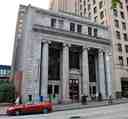
  1. To spot the Bank of California Building, look for a grand, gray stone-clad structure at 815 2nd Avenue, right next to the towering Exchange Building, with four massive Roman-style…더 보기간략히 보기

    To spot the Bank of California Building, look for a grand, gray stone-clad structure at 815 2nd Avenue, right next to the towering Exchange Building, with four massive Roman-style columns guarding its front and a set of tall windows that seem to invite you into the past. Alright, take a deep breath, smell that mix of city air and a hint of old marble-because you’re standing in front of one of Seattle’s most stately survivors, the Bank of California Building. Let’s wind the clock back a hundred years: it’s the roaring 1920s, jazz is hot, “talkies” are taking over the movie theaters, and here in Seattle, bankers are dreaming big. The Bank of California, already a west coast banking powerhouse after gobbling up a few rivals, had just decided their tiny old office at 2nd and Columbia wasn’t cutting it anymore. They wanted something bold, something to show off their money-and honestly, who doesn’t want to flex a little in the 1920s? So, in classic bank style, they bought up the Epler Block just up the street from their old spot, where a four-story building had stood since the ashes cooled after Seattle’s infamous Great Fire. The plan? Tear it down, make something new, something that would scream ‘trust,’ ‘security,’ and-importantly-‘we have a lot of really nice marble inside.’ Fast-forward a bit-by early 1924, after months of noisy demolition, the building’s concrete frame rose quickly. Imagine the city full of horse-drawn wagons, the clang of hammers, the smell of wet cement, and everyone wondering just how grand these bankers were going to go. By August, the doors opened and Seattle saw what “strict Italian Renaissance style” really looked like: a 60-foot facade dressed up in smooth, gray terra cotta, those four showy Ionic columns (let’s be honest-columns this big would make even an ancient Roman emperor jealous), and a beautifully arched pediment that proudly displayed the building’s birthdate. Don’t just stare at the outside-imagine stepping through those front doors back in 1924. You’d be greeted by a dazzling sunlit bank chamber stretching up 40 feet high, with a semi-octagonal ceiling painted in warm, Mediterranean colors. Bronze torch lights cast a golden glow on polished walnut woodwork, marble counters, and-true story-huge clocks made with fancy imported stone from France. Even the air inside would’ve felt rich (though not in the dollar-bill sense). There were offices on the balconies above, and downstairs, employees had luxurious recreation rooms and vaults stashed away from prying eyes. If you were really lucky (and probably in the right suit), you might’ve gotten invited to the exclusive club room upstairs. Now, not everything went as planned-you know how construction costs always “slip a little”? Their $200,000 plan ballooned by an extra $50,000, making this place even more precious in bank ledger terms. And here’s a twist that’s a bit funny: at one point, they dreamed up an ultra-modern idea-putting a customer parking garage in the basement. Nobody’s quite sure whether that made the final cut, but hey, it would’ve been the height of luxury for 1920s Seattle drivers. Time marched on, and by the 1970s, the bank had grown so much they built an even bigger, shinier Union Bank of California Center nearby. Here comes the irony: while their new skyscraper now sells cough drops and energy drinks as a Bartell Drugs, it’s this sturdy, classic 1924 building that’s still operating as a bank today, now under the Key Bank name. Well, that’s what you call good bones! It survived mergers, lawsuits (yes, rival banks were not happy when the Bank of California tried to keep both locations open), and more than a few name changes. So, as you stand here on the sidewalk, picture the swirling energy of the twenties. Imagine dapper customers striding through those big doors, the echo of their footsteps bouncing off marble floors, the shine of all that bronze and stone. This building has seen Seattle through booms, busts, and everything in between, and it still stands as proud today as it did when couples jitterbugged downtown and bankers dreamed of world domination-one loan at a time. Now, ready to march over to the next Seattle treasure? I promise, fewer columns-maybe more totem poles!

    전용 페이지 열기 →
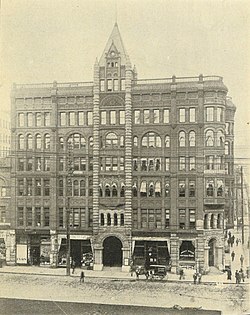
  2. You’re looking for a grand, red-brick and stone building with sweeping arches, tall windows, and a pointed tower centered high above the entrance-it sits right on the busy…더 보기간략히 보기

    You’re looking for a grand, red-brick and stone building with sweeping arches, tall windows, and a pointed tower centered high above the entrance-it sits right on the busy northeast corner of First Avenue and James Street, so keep your eyes peeled for those impressive arches and ornate details! Alright, now that you’re standing in front of the Pioneer Building, let’s take you time-traveling through some of Seattle’s juiciest stories and wildest transformations-because this building has seen it all. Imagine the year is 1892. Horse-drawn carriages rattle over the road, the smell of fresh sawdust and coal hangs in the air, and the city is still shaking off the ashes of the Great Seattle Fire. This corner right here used to be home to Henry and Sarah Yesler, Seattle’s original power couple. Their orchard stretched out where the rumble of streetcars now rolls, and their old wooden house was the heart of frontier hospitality-if you wanted to find out the latest gossip or grab some strong coffee, the Yesler home was the place to be. But Seattle was changing fast. In the 1880s, fortunes were rising, and Henry Yesler-perhaps inspired by the thunder of industry and the thick scent of opportunity in the air-moved his house back on the lot and packed the street edge with a jumble of relocated buildings: a sort of architectural game of musical chairs. By 1888, Yesler drew up bold plans for a new office building meant to tower above its neighbors, with the architects Fisher & Clark promising it would be the grandest North of San Francisco. The local press was all abuzz! Now, not everything went smoothly. You’d think, with all the forests nearby, stone would be easy to come by-but alas, Seattle faced a stone shortage! Crews could only get their hands on a sliver of what they truly needed. Yet after the Great Fire of 1889 tore through downtown-flattening 32 blocks-this corner became a symbol of rebirth and resilience. The Pioneer Building rose from the very spot, built of strong gray sandstone, shining red brick, and terra cotta flourishes that glistened in the rare Seattle sun. Step closer, and you can trace a tug-of-war in the style-there’s the heavy, almost brooding Romanesque arches over the doors and windows, set off by the gridded vertical pilasters and crisp lines that hint at Victorian ideas of order and beauty. Imagine the clamoring sounds of miners, lawyers, and businessmen stomping up the granite steps, the low hum of a thousand dreams packed into 185 office rooms, each one glowing with light from two massive atria overhead. Business boomed, especially when gold fever struck in 1897: the Klondike Gold Rush turned this building into a gold-seeker’s palace, with 48 mining companies hustling inside its walls. If you listened closely back then, you might have heard deals being whispered in shadowy corners, or, sneaking through a side door, found the first speakeasy in Seattle doing a not-so-quiet trade during the Prohibition days. But the good times didn’t last forever. By the 1950s, the boom had faded, and this whole district began to wilt. Empty offices, boarded windows, and echoes of footsteps in the halls painted a sadder picture. The city almost lost its historic heart-this very building was moments away from the bulldozer, ready to make way for yet another parking garage. Thankfully, Seattle citizens kicked up a dramatic fight, and their efforts saved not just the Pioneer Building but the whole Pioneer Square Historic District. Instead of wrecking balls, the National Register of Historic Places came to the rescue. There’s a quirky twist: in 1971, the government nearly turned this place into a national park exhibit for Klondike Gold Rush stories, but private entrepreneurs snagged it and breathed new life into its halls. By 1977, alongside the famous pergola and totem pole you’ll see soon, this building officially became a National Historic Landmark. Today, the pulse of invention beats strong again. The offices inside house everyone from lawyers to mini-golf designers to Henry’s Bail Bonds-talk about covering all your bases! You can even grab tickets for the underground tour, which starts just steps from where you stand. The Pioneer Building now serves as a hive for modern entrepreneurs, all hustling within these timeless walls. So, as you gaze up at those arched windows and heavy stone pillars, remember: you’re not just looking at a building. You’re standing where pioneers dreamed, miners schemed, and Seattle picked itself back up, dusted off its boots, and decided to shine even brighter-rain or shine! Yearning to grasp further insights on the location, design or the current use? Dive into the chat section below and ask away.

    전용 페이지 열기 →
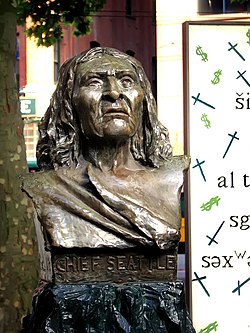
  3. To spot the landmark, look in front of you for a bronze bust with the name “Chief Seattle” carved on its base, its thoughtful eyes gazing over the busy intersection beside a…더 보기간략히 보기

    To spot the landmark, look in front of you for a bronze bust with the name “Chief Seattle” carved on its base, its thoughtful eyes gazing over the busy intersection beside a cluster of trees and city signs. Alright, you’re standing just feet away from Chief Seattle himself! Well, his bronze likeness, anyhow. Imagine it’s the year 1909: horses and dogs strut the muddy Seattle streets, men tip their hats, and right here at the corner of First Avenue and Yesler Way, this very bust stood watch over a fountain where both people and their furry companions could stop for a drink. Chief Seattle-whose real name was Si’ahl-was the leader of the Suquamish and Duwamish people, and his wisdom cast a long shadow over this land. The artist, James A. Wehn, captured the chief’s powerful presence in this sculpture, his face full of quiet strength and worry lines earned from leading his people through tough times. Now, imagine the excitement of the Alaska-Yukon-Pacific Exposition. Seattle was buzzing, and this bust was commissioned as a proud tribute, anchoring the city to its roots. Over the years, the bust has seen plenty-festivals, protests, even the odd pigeon-but it stands resilient as ever. And get this: there’s another twin bronze of Chief Seattle at Seattle University, but this one? This is where the heart of the city beats. Who knew a watering hole for horses could leave such a lasting legacy, eh?

    전용 페이지 열기 →
4개 정류장 더 보기정류장 적게 보기expand_moreexpand_less
  1. Look to your right-you’ll spot a tall, carved wooden pole with bold faces and animal figures stacked one above the next, rising high above the small patch of greenery in the…더 보기간략히 보기

    Look to your right-you’ll spot a tall, carved wooden pole with bold faces and animal figures stacked one above the next, rising high above the small patch of greenery in the square. Standing here in front of the Pioneer Square totem pole, you’re looking back through more than two centuries of stories, adventures, and even a little mischief. Imagine yourself on the edge of a misty Alaskan village in 1790. The sharp scent of hemlock fills the air, and you hear the steady rhythm of carving tools against wood. In the Tlingit village of Tongass Island, the Kinninook family is gathered, hoping to honor the memory of a beloved leader-Chief-of-All-Women, a woman of such wisdom and heart that her story must be told to generations yet to come. They hire a master carver and share with him their most important stories to shape into the wood: legends of Ravens, frogs, whales, and family, all woven with magic and mystery. When the pole is finally standing tall, a magnificent potlatch fills the village with celebration, drums, and laughter. Not many totem poles were dedicated to women, but this one was for her. Flash forward a hundred years or so, and we switch scenes! Instead of a quiet Alaskan village, you’re on the bustling decks of the steamship City of Seattle, full of would-be adventurers, business leaders, and reporters from Seattle itself during the Klondike Gold Rush days. But instead of finding gold, this group became obsessed with finding a souvenir to show off Seattle’s new status as the “Gateway to Alaska.” And what better souvenir than a totem pole, they thought. With the village folk away for their fishing season, a handful of Seattle’s guests spot the majestic pole, chop it down, and saw it in two to cart it off-but, of course, they accidentally smash the beak of one of the figures! They float the pole home and pay the third mate a whopping $2.50 for his tree-chopping efforts. The totem pole makes its way to Seattle, where it’s patched up, given a coat or two of non-traditional paint, and gets gifted to the city in October 1899. At its public unveiling in Pioneer Square, the crowd goes wild! Some folks cheer for this dramatic new “gateway” centerpiece, while others grumble, calling it a “blot” and “ridiculous.” Rival newspapers even exchange jabs over the event-one paper draws a cartoon poking fun, with a sign on the pole advertising their competition as grave-robbers! Clearly, civic pride can be a double-edged sword. But the story doesn’t end there. When the Tlingit villagers and the Kinninook family return home from fishing, discovering their beloved pole missing, anger and shock ripple through the community. They call for justice, file lawsuits, demand compensation, and even get federal grand juries involved! Eventually, a legal settlement is hammered out and a few thousand dollars exchange hands-but not before Seattle’s business leaders get more than one nervous night’s sleep. Without regard for its complex origin, the pole quickly becomes part of Seattle’s identity: featured on postcards, advertisements, and even as the mascot for the city’s hockey team, the Seattle Totems. Ironically, the Coast Salish-peoples native to the Seattle region-never traditionally carved totem poles at all! Seattle’s love of this borrowed symbol grew anyway. Then, like any figure that stands out in a crowd, the totem pole faced misfortune. In 1938, arson scorched its carvings, and experts declared it too damaged to save. The city sent the burned remains back to Alaska for Tlingit carvers to do what they’d always done best-repair the spirit through art. Charles Brown and his team, including members of the Kinninook family, worked for months, and in 1940, their new red cedar replica returned home to Seattle. It now stands proudly where the spirit of Chief-of-All-Women still tells her stories to all who pass by. So if you gaze up, you’ll see more than just wood or paint. Carved into this pole are three epic Tlingit stories: Raven, the trickster, stealing the sun, stars, and moon by transforming himself and outsmarting a powerful chief; the woman who married a frog, whose children became human and spread far from their watery home; and Mink and Raven’s wild escape from inside a hungry whale. Each figure is stacked from top to bottom, colors returned to their Tlingit roots-black, red, and blue-green-a story in every twist of wood. So, as you stand here, let yourself be transported back: to the laughter of a potlatch, the chaos of a gold rush steamer, the embers of loss, and, finally, the healing return. Even a stolen story can bring new meaning in a city always on the move.

    전용 페이지 열기 →
  2. To spot the Pioneer Square Pergola, look right in front of you at the edge of the park where sunlight peeks through the trees-a long, ornate cast-iron and glass shelter with…더 보기간략히 보기

    To spot the Pioneer Square Pergola, look right in front of you at the edge of the park where sunlight peeks through the trees-a long, ornate cast-iron and glass shelter with elegant Victorian columns and decorative arches stretching toward the street. Alright, imagine it’s 1909. You step onto the bustling streets of Seattle, cobblestones underfoot, horses clopping past, streetcars rattling by-and there, gleaming in the afternoon sun, is this brand-new architectural marvel: the Pioneer Square Pergola. At 60 feet long and topped with glimmering glass, it was built to shelter crowds waiting for the cable cars at James Street and Yesler Way, a triangle of shelter in a busy city square. Pause for a moment and you can almost hear the click of heels and the muffled conversation beneath its ironwork as people came and went, newspaper boys shouting headlines, and the distant clang of streetcars. But the pergola wasn’t just a fancy waiting room-it was Seattle’s answer to a 20th-century comfort crisis! Under your feet was one of the first, most lavish underground public bathrooms west of the Mississippi-a veritable palace for a pitstop. Think terrazzo floors like shining seashells, brass and nickel fixtures glinting under gaslight, and Alaskan white marble stalls. Sixteen stalls for men, nine for women-my, how the city was growing! It was so nice, rumor has it, that people nearly dressed up just to use the restroom. Of course, not everyone was thrilled; some in the community cried, “Eyesore!” And indeed, as the cable cars rumbled to a stop above, local newspapers questioned if this underground affair was a bit too posh for its own good. Yet as time ticked on, cable cars disappeared, the bustling crowds faded, and the pergola began to wilt. The grand restroom closed up in 1948, its glory days flushed away, and the ironwork above was slowly stripped and neglected. By the late ’40s, the grand old lady of Pioneer Square had become a shadow of her former self. Enter the hero of our story-James E. Casey, founder of United Parcel Service! In 1972, with a generous gift and a deep nostalgia for the old neighborhood, he led the charge to save the pergola. Restoration crews studied original blueprints, recreated its frilly roof and light fixtures, and soon enough, the pergola returned to its shimmering self, minus the underground palace. And yes, someone even tried to reopen that restroom for the Seattle Underground Tour, but the city wasn’t quite ready for that level of adventure! Of course, meaningful restoration is never the end of the tale. In 2001, the pergola met its greatest nemesis: a semi-truck making a sharp turn. With a clang and a crunch that echoed through the streets, the essence of Pioneer Square collided with modern day traffic. The crash destroyed the entire structure! But Seattle loves a comeback, and soon, architects, craftspeople, and even a foundry owner-who had to sell his own house and wedding rings to pay for the rebuild-rallied together. Piece by piece, a stronger, steel-reinforced pergola rose again, using iron from the original and just a trickle of new materials, at a cool $3.9 million price tag. But the trials didn’t end there! To protect the pergola from any more bumper-to-bumper horror stories, the city installed sturdy poles and bollards, deflecting not one but two more truck attacks. The local Seahawks fans, so excited by their Super Bowl win, clambered onto the roof one wild February night and shattered twenty glass panes-don’t worry, fans and businesses crowdfunded repairs and the pergola got a temporary fence, just in case. Standing here now, look up. See the swirling ironwork, the play of light in the glass, and imagine the layers of history: bustling pioneers, elegant commuters, the clang of disaster, spirited restoration, and the surreal joy of championship celebration. The Pioneer Square Pergola-Seattle’s most dramatic bus stop, beloved survivor, and the only shelter in town where the real danger is an overexcited football fan!

    전용 페이지 열기 →
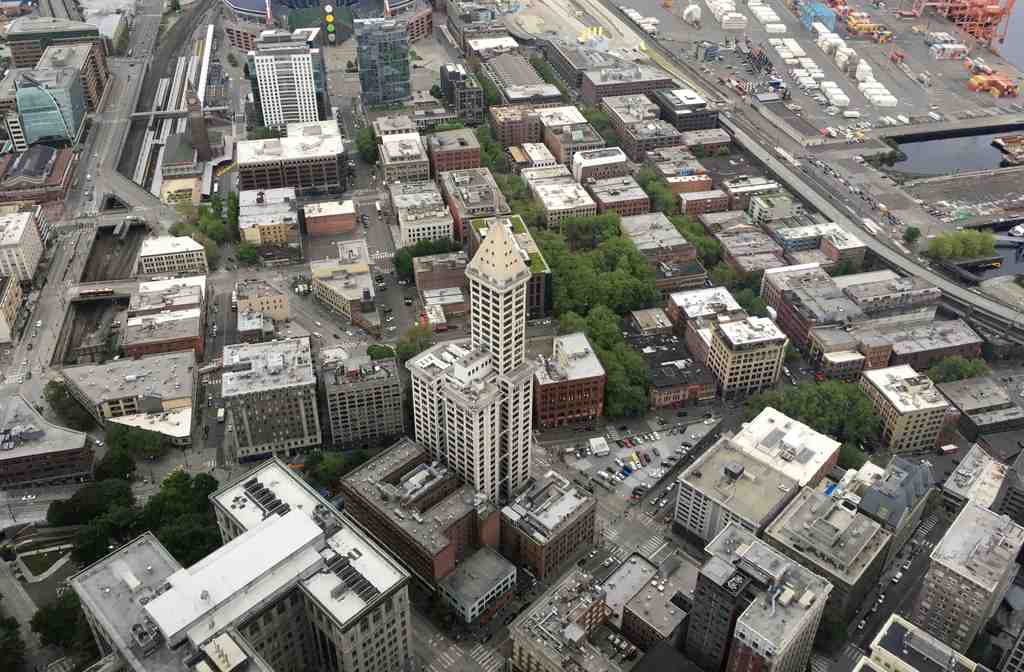
  3. To spot Pioneer Square, look for a cluster of handsome red-brick and stone buildings with a small, leafy park nestled among them, just to the west of the tall, white Smith Tower…더 보기간략히 보기

    To spot Pioneer Square, look for a cluster of handsome red-brick and stone buildings with a small, leafy park nestled among them, just to the west of the tall, white Smith Tower and near the train tracks and piers. Alright, traveler, you’re standing in the beating heart of Seattle’s history-Pioneer Square. Imagine yourself stepping into a time machine-the pavement rattles under your feet as streetcars jangle by, brick buildings rise up around you, and the salty breeze brings a whiff from Elliott Bay. Back in 1852, Seattle's founders landed here, possibly a little soggier than they'd hoped after braving the wilderness across the bay at Alki Point. They settled this spot for a very practical reason: Henry Yesler wanted to build a lumber mill, and who can blame him? The city grew right out of the mud and water, with early settlers filling in marshy ground and leveling bluffs to lay out the first streets. It wasn’t exactly a neat grid-cross Yesler Way, and suddenly even the roads couldn’t agree on which way to run. In those days, this area was a wild jumble of wooden buildings, bustling wharves, and a mix of pioneers, dreamers, and more than a few folks seeking trouble. Yesler Way itself became famous for more than its sawmill; it drew the line between the more “proper” north and the so-called “restricted district” to the south-otherwise known as Skid Road. It was a place where deals, dice, and the occasional dubious decision flowed freely-I wouldn’t advise you to check your wallet too thoroughly, though; rumor has it even the police only entered in teams. Disaster struck in 1889. The Great Seattle Fire roared through these very streets, turning nearly everything to ash and cinders. But the city wasn’t going to let a little thing like total destruction slow it down! Within a year, dozens of sturdy brick and stone buildings rose from those ashes in late 19th-century armadillo-skinned style-Richardsonian Romanesque, if you want to sound fancy at dinner parties. Pioneer Square’s distinctive look comes from those determined folks stacking bricks, plunking arches over windows, and building with dreams. By the time the gold-lust of the Klondike Gold Rush hit in the late 1890s, stampeders swarmed through Pioneer Square on their way north. Merchants grew rich, and, I bet, more than one hopeful prospector lost their savings to a sharp card game or a piano-playing charmer. Speaking of notorious legends, you’re walking streets that once saw brothels, saloons, and “box houses”-rowdy places full of theater, music, and all manner of entertainment, honest or otherwise. There’s an art to chaos, and Pioneer Square had it in spades. (If the sidewalks seem a little high, by the way, you’re not imagining things! The city literally raised the streets to fix drainage, leaving some old storefronts buried below-a mystery you can still explore in the city’s famous Underground Tour.) Keep your eyes out for the art around you-not just the totem pole and pergola, but galleries tucked into old buildings and public art woven into alleyways thanks to the Forest For The Trees project. With installations brightening up brick walls and small passageways, the neighborhood now mixes the buzz of history with a splash of modern creativity. If you’re here in early June, you might just stumble upon the Pioneer Square Fire Festival. The area fills with the wail of sirens and cheer of crowds as firefighters parade past-celebrating the men and women who keep Seattle safe, and honoring the fallen with the solemn bronze of the Firefighter’s Memorial. Pioneer Square is a place where every corner tells a story: from bawdy cabarets and parlor houses (run, fun fact, by some celebrity madames-Lou Graham, Lila Young, and Raw McRoberts, anyone?) to Seattle’s first Catholic church founded by Father Francis Xavier Prefontaine-whose name lives on in the nearby street. You can feel the pulse of history in the hodgepodge street grid, the echo of cable car bells, and the lively crowds packing cafés and bars. So, as you stand here, let your imagination walk alongside dockworkers, dreamers, and the tides of fate that built Seattle. And don’t worry-if you get lost in all these stories, just look for the Smith Tower looming nearby; it’s been pointing the way in Pioneer Square since 1914. Just try not to confuse it for the “Sinking Ship” parking garage across the way-unless, of course, you’re due for a good pirate joke!

    전용 페이지 열기 →
  4. Look just ahead for a wide, round concrete fountain with a bright blue tiled basin and little sculpted turtles perched on the rim-trust me, those turtles aren’t going anywhere…더 보기간략히 보기

    Look just ahead for a wide, round concrete fountain with a bright blue tiled basin and little sculpted turtles perched on the rim-trust me, those turtles aren’t going anywhere fast! Now imagine Seattle almost a hundred years ago, when this small patch of park was busy with horse-drawn wagons and early automobiles rattling down the street. Prefontaine Fountain was finished in 1925, and right from the start it was a bit of a showstopper. Picture crowds gathering for its grand opening, the air full of excitement (and probably a whiff of wet concrete). But behind its bubbly beauty is the story of a generous spirit-Father Francis X. Prefontaine, who built Seattle’s first Catholic church. He loved this city so much he donated $5,000 (which bought quite a lot more than a coffee and a donut in those days!) to build this fountain in his honor. The fountain is like a friendly old neighbor-Seattle’s oldest one, in fact-standing watch as the city has changed around it. And although the fountain’s area is now fenced off, you can still spot the blue mosaic tiles, gleaming like the surface of a pond on a rare sunny day, and those turtles, frozen forever in a race they’ll never win. So tip your hat to old Father Prefontaine and his turtle troupe-after all, they’ve been waiting almost a century for this moment with you!

    전용 페이지 열기 →

자주 묻는 질문

투어는 어떻게 시작하나요?

구매 후 AudaTours 앱을 다운로드하고 교환 코드를 입력하세요. 투어를 바로 시작할 수 있습니다 - 재생을 탭하고 GPS 안내 경로를 따라가시면 됩니다.

투어 중 인터넷이 필요한가요?

아닙니다! 시작 전에 투어를 다운로드하면 완전히 오프라인으로 즐길 수 있습니다. 채팅 기능만 인터넷이 필요합니다. 모바일 데이터 절약을 위해 WiFi에서 다운로드하시는 것을 권장합니다.

이것은 가이드가 안내하는 단체 투어인가요?

아닙니다 - 이것은 셀프 가이드 오디오 투어입니다. 폰을 통해 오디오 나레이션을 들으며 나만의 속도로 독립적으로 탐험합니다. 투어 가이드도, 단체도, 일정도 없습니다.

투어는 얼마나 걸리나요?

대부분의 투어는 60-90분이 소요되지만, 속도는 전적으로 본인이 조절합니다. 원할 때 언제든지 일시정지하거나, 정류장을 건너뛰거나, 휴식을 취하세요.

오늘 투어를 끝낼 수 없으면 어떻게 하나요?

괜찮습니다! 투어는 평생 이용이 가능합니다. 원할 때 언제든지 일시정지하고 다시 시작하세요 - 내일, 다음 주, 또는 내년에도. 진행 상황이 저장됩니다.

어떤 언어를 이용할 수 있나요?

모든 투어는 50개 이상의 언어로 이용 가능합니다. 코드를 교환할 때 원하는 언어를 선택하세요. 참고: 투어 생성 후에는 언어를 변경할 수 없습니다.

구매 후 투어는 어디에서 이용하나요?

App Store 또는 Google Play에서 무료 AudaTours 앱을 다운로드하세요. 교환 코드(이메일로 전송됨)를 입력하면 라이브러리에 투어가 나타나며, 다운로드하여 시작할 수 있습니다.

verified_user
만족 보장

투어가 마음에 들지 않으시면 환불해 드립니다. 문의: [email protected]

안전한 결제

Apple PayGoogle PayVisaMastercardPayPal

AudaTours: 오디오 투어

재미있고, 경제적이고, 자유로운 셀프 가이드 워킹 투어

앱 체험하기 arrow_forward

전 세계 여행자들에게 사랑받고 있습니다

format_quote 이 투어는 도시를 보는 정말 좋은 방법이었습니다. 이야기들이 너무 대본처럼 느껴지지 않으면서도 흥미로웠고, 나만의 속도로 탐험할 수 있어서 좋았습니다.
Jess
Jess
starstarstarstarstar
Tbilisi 투어 arrow_forward
format_quote 관광객처럼 느끼지 않으면서 Brighton을 알아가는 훌륭한 방법이었습니다. 내레이션에 깊이와 맥락이 있었지만 과하지 않았습니다.
Christoph
Christoph
starstarstarstarstar
Brighton 투어 arrow_forward
format_quote 크루아상을 한 손에 들고 아무 기대 없이 시작했습니다. 앱이 그냥 자연스럽게 함께해 주는 느낌이에요, 부담도 없고, 그냥 나와 이어폰과 멋진 이야기들.
John
John
starstarstarstarstar
Marseille 투어 arrow_forward

무제한 오디오 투어

전 세계 모든 투어의 잠금을 해제하세요

0 투어·0 도시·0 국가
all_inclusive 무제한 탐험