AudaTours logoAudaTours

스크랜턴 오디오 투어: 철도에서 플랫츠의 문화까지

오디오 가이드11 정류장

한때 스크랜턴 육군 탄약 공장 위로 연기가 피어올랐고, 조용한 교회들은 도시의 영혼을 위한 자신들만의 전투를 계획했습니다. 대부분의 방문객들은 스크랜턴 과거의 그림자만을 봅니다. 이 셀프 가이드 오디오 투어에서 플랫츠, 웅장한 스크랜턴 교구, 그리고 알브라이트 기념관의 고요한 홀 뒤에 숨겨진 이야기들을 풀어보세요. 20세기 초 교구의 심장을 뒤흔든 비밀 스캔들은 무엇이었을까요? 도시가 보지 않는 사이에 누가 몰래 탄약 공장 깊숙이 잠입했을까요? 그리고 연구자들은 왜 알브라이트 기념관 기록 보관소 어딘가에 숨겨진 잃어버린 지도에 대해 속삭일까요? 번화한 거리와 예상치 못한 골목길을 거닐어 보세요. 반항적인 반군, 정치적 음모, 그리고 잊혀진 몽상가들의 희미한 발자국 사이의 연결고리를 찾아보세요. 각 랜드마크는 도시의 진정한 과거를 엿볼 수 있는 새로운 창을 제공하며, 소수의 사람들만이 진정으로 본 스크랜턴을 통해 여러분을 안내합니다. 눈에 보이는 곳에 숨겨진 이야기들을 찾을 준비가 되셨나요?

투어 미리보기

map

이 투어에 대하여

  • schedule
    소요 시간 30–50 mins나만의 속도로 이동
  • straighten
    3.4 km 도보 경로안내 경로 따라가기
  • location_on
  • wifi_off
    오프라인 작동한 번 다운로드, 어디서든 사용
  • all_inclusive
    평생 이용언제든지 다시 재생 가능
  • location_on
    델라웨어, 래커원나 및 서부 철도 야드-딕슨 제조 회사 부지에서 시작

이 투어의 정류장
  1. On one side, the mighty Steamtown National Historic Site stretches before you, showcasing structures like the Gas House, the ancient Maintenance Shop, and the iconic…더 보기간략히 보기

    On one side, the mighty Steamtown National Historic Site stretches before you, showcasing structures like the Gas House, the ancient Maintenance Shop, and the iconic roundhouse-yes, where real locomotives would spin dramatically on the turntable. The office and storage buildings here could tell tales of frantic orders during snowstorms and the odd sandwich forgotten by a tired engineer. Now picture the Scranton Army Ammunition Plant, with its Pattern Shop and Blacksmith Shop from the early 1900s-imagine the fiery forge lighting up determined faces as they built what the country needed most. All these pieces joined together like a massive mechanical puzzle, earning the whole site a well-deserved spot on the National Register of Historic Places in 1990. Some come here for the history, some for the locomotives, but I say come for both-and perhaps a puff of imaginary steam in your hair.

    전용 페이지 열기 →
  2. Look ahead for the impressive stone ruins with tall arches and a shelter on top-those mighty gray walls are the Scranton Iron Furnaces. Imagine the clang of hammers and the roar…더 보기간략히 보기

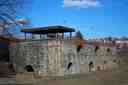
    Look ahead for the impressive stone ruins with tall arches and a shelter on top-those mighty gray walls are the Scranton Iron Furnaces. Imagine the clang of hammers and the roar of blazing fires-right where you’re standing, Scranton’s iron heart beat the loudest in America! These stone giants were built between 1848 and 1857, and in their heyday, men hurried about in a haze of smoke, making the iron rails that would stretch across the country-rails for the Erie Railroad laid here before you in 1847. The iron flowed so fast that, by 1865, this spot had the largest production in the U.S. and later fired up steel, too! By 1880, the furnaces spit out 125,000 tons of pig iron a year-enough to make a train conductor dream of piggy banks. The furnaces finally retired in 1902 when production chugged off to New York, but today the site stands as a monument under the care of the Pennsylvania Historical and Museum Commission. Fun fact-Al Gore even rallied a crowd here in 2000. Every arch whispers stories of sweat, ambition, and the sparks that built a nation-who knew piles of old stone could be so dramatic?

    전용 페이지 열기 →
  3. You’re standing in front of the Scranton Army Ammunition Plant, and if you listen closely, you might just catch the distant echo of heavy metal being forged and molded-a true…더 보기간략히 보기

    You’re standing in front of the Scranton Army Ammunition Plant, and if you listen closely, you might just catch the distant echo of heavy metal being forged and molded-a true industrial symphony, not the kind played by a string quartet, unless the violins were replaced with 120 hydraulic tracer lathes. Let’s step back in time for a second. In 1908, this land was bustling with a different kind of energy: it was a locomotive repair and erecting facility, part of Scranton’s proud railroading heritage. Imagine hot steam billowing, men in coveralls carrying hefty tools, and the steady rhythm of riveting and hammering. Scranton’s heart was iron and its blood was steam. All that changed in 1953, when the U.S. Army set up the Scranton Army Ammunition Plant, or SCAAP for short. They swapped out locomotives for big metal shells. If you’ve ever seen a 155mm artillery shell-or more likely, seen it in a movie-there’s a good chance it had its origins right here! SCAAP hammers out the mighty shells for howitzers, large-caliber mortars, and even naval guns, supporting the U.S. Armed Forces and their allies. The plant’s lineup is almost like a fireworks display, if your fireworks were the kind you really, really wouldn’t want to have explode in your backyard. You know you’re in a serious industrial place when you spot heat-treat furnaces, forge presses, welding stations, and automated paint lines. Imagine the soundscape inside: press arms punching steel, furnaces roaring, and hissing as metal is cooled and tested. It’s just what you’d expect from a facility producing up to a million metal parts per year! And here’s a fun fact: production really ramped up during the recent Russo-Ukrainian war. Before those events, SCAAP was producing around 14,000 shells monthly. Today, it’s churning out more than double that-36,000 shells in just a month. With every blast of a forge and every clang on the assembly line, history is made. The shells produced here have found their way to Ukraine and to militaries around the world. Funny how these quiet Scranton streets have played host to machines that build something heard in places far, far away. If you’re wondering just how cutting-edge this place is, just know it’s been awarded the Army’s Superior Unit Award multiple times, and even racked up some major green credentials-capturing and reusing more than three million gallons of water, cutting energy use and emissions, and outpacing its own energy-saving goals. I’d say they’ve figured out how to clean up with style! So, as you gaze at SCAAP’s sturdy walls, picture the ghosts of steam engines and soldiers’ boots echoing side by side. If only these bricks could talk! They’d probably say, “Watch your step, and maybe your hearing, too.” Onwards, soldier! Intrigued by the capabilities, facilities or the accreditation and certification? Make your way to the chat section and I'll be happy to provide further details.

    전용 페이지 열기 →
8개 정류장 더 보기정류장 적게 보기expand_moreexpand_less
  1. There’s something magical about standing here on Lackawanna Avenue, surrounded by a parade of buildings that refuse to take just one style for an answer. Look around-Late…더 보기간략히 보기

    There’s something magical about standing here on Lackawanna Avenue, surrounded by a parade of buildings that refuse to take just one style for an answer. Look around-Late Victorian flair jostles elbows with the proud columns of Classical Revival, while Art Deco flourishes add a glamorous twist. Most of these beauties are three or four stories tall, stretching up with their brick and stone facades, each building telling its own story from a different chapter in Scranton’s fast-paced past. Daydream about shopkeepers in bowler hats hurrying along, customers chattering as they eyed the latest fashions, and the city coming alive as the trains rolled in and out just a few blocks away. Among these stands the grand Dime Bank Building-so important it’s listed all on its own. Picture folks lining up on payday, maybe even dragging in a squeaky wheelbarrow full of coins, trying to impress the bank teller. In 1983, this entire avenue’s charm was officially recognized by the National Register of Historic Places-clearly, Scranton takes its architecture as seriously as it takes its pizza. Soak it in; you’re not just looking at buildings-you’re in the heart of almost 150 years of ambition, invention, and daily adventure.

    전용 페이지 열기 →
  2. Look ahead for a stately red-brick cathedral with tall double towers topped by crosses and rows of grand arched windows-it stands proudly above the street with “Saint Peter’s…더 보기간략히 보기

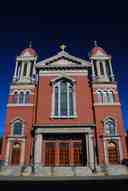
    Look ahead for a stately red-brick cathedral with tall double towers topped by crosses and rows of grand arched windows-it stands proudly above the street with “Saint Peter’s Cathedral” engraved over its entrance, so just glance up and you can't miss it. Now, as you stand here, imagine the year is 1868. The Civil War is over, and Scranton is bustling with coal dust and big dreams. Suddenly, the city’s heart skips a beat-Pope Pius IX creates the Diocese of Scranton, with this very cathedral as its crown jewel. Picture people from all over northeastern Pennsylvania, from Wilkes-Barre and Williamsport to tiny towns you’d need three maps to find, gathering at this site for their biggest life moments-weddings, holidays, absolute faith…and November snowstorms. Scranton was a magnet. Irish, German, Polish, Slavic, and Italian folks poured in, lured by jobs deep in the earth’s black seams. Back in the 1700s, Pennsylvania was unusual: Catholics weren’t banned here like in other colonies-but if you wanted to be mayor, you still had to say mass was “idolatrous.” Doesn’t sound very neighborly, right? But by 1791, the Bill of Rights finally granted freedom of worship. That’s when Scranton’s faith story took off like a well-aimed snowball. It wasn’t always easy. In the earliest days, priests had to travel for days along rugged Susquehanna trails, sometimes dodging angry geese and worse, just to reach settlements. They built churches in Friendsville and Silver Lake using more sweat than money-imagine hauling stones with nothing but enthusiasm and a borrowed donkey. The very first permanent Catholic church in Scranton? Built on this block in 1852. Fast-forward to the coal-fueled boom: so many new parishioners, the air practically hummed in a dozen languages. But not everyone got along. In the 1890s, a mighty parish schism erupted-a recipe with equal parts mistrust, stubbornness, and cabbage. When Polish miners at Sacred Hearts Parish felt ignored, they set out and built their own church, Saint Stanislaus, sparking decades of tension and an entire splinter denomination. That’s Scranton for you: if you can’t agree, someone just builds a whole new church. Over the years, the diocese weathered economic crashes, mine closures, the Depression-plus the occasional priest who could rival a rock star with a good sermon. Some bishops guided huge growth; others made tough calls, like merging schools or closing beloved parishes. When times got rough, folks found comfort right where you’re standing, at these solid stone steps and mahogany doors. But the Diocese’s story isn’t just one of celebration. In recent decades, the church here, like so many across the country, faced the terrible pain of abuse scandals. The ringing bells that once called children to school or mass sometimes masked darker stories. Grand jury investigations exposed what had been hidden. Some names that once adorned chapels have since been taken down in reckoning, as the community continues its search for healing and trust. Through all this, the Diocese of Scranton kept evolving, from building the first Catholic college in 1842 (which was unfortunately lost to fire-not a recommended graduation ceremony), to launching high schools and universities run by nuns, brothers, and, yes, a few exhausted Jesuits. Today, the Diocese stretches over 8,000 square miles and stands for hope and resilience. Its leaders have been teachers, reformers, and the occasional firebrand. And Scranton itself-the city of steeples-remains famous for its hearty faith, unstoppable parades, and the world’s most competitive pierogi-eating contests. So take a moment at these cathedral steps: you’re standing in the middle of an epic, sometimes messy, always unforgettable story. Shall we head on to our next stop before a choir practices inside and thinks you want to audition? For further insights on the territory, bishops or the education, feel free to navigate to the chat section below and inquire.

    전용 페이지 열기 →
  3. Look up ahead for the big, curly green letters that spell “Farley’s Eatery & Pub” right above a glass door, making it hard to miss! Now, imagine Scranton in its heyday and you…더 보기간략히 보기

    Look up ahead for the big, curly green letters that spell “Farley’s Eatery & Pub” right above a glass door, making it hard to miss! Now, imagine Scranton in its heyday and you catch a mouthwatering scent wafting from Farley’s Eatery & Pub-locals will tell you this place had the best steak and seafood in downtown. For 30 years, Farley’s wasn’t just a restaurant; it was a landmark, drawing hungry folks and laughter from every corner of the city. The pub glowed with warm lights, clinking glasses, and stories from Scrantonians who considered it a second home. But what really launched Farley’s into legend-even after its doors closed in 2012-was a little television show you might’ve heard of: The Office. Yes, that’s right, Farley’s earned a cameo in the hearts of America when Michael Scott challenged his crew with a basketball game where the winners would feast on Farley’s finest. Fans still giggle at the thought of Steve Carell promising to “cut the ribbon” himself if the elusive Michael Scott Burger was ever added-spoiler alert, it was! Though Farley’s is now just a memory, you can almost hear the echoes of cheers and sitcom stardom as you stand here, hungry for just one bite of Scranton history.

    전용 페이지 열기 →
  4. You’ve found it! Right in front of you stands a big stone building with a tall five-story clock tower wearing a sharp green-topped hat, edged by deep-set arches and topped with a…더 보기간략히 보기

    You’ve found it! Right in front of you stands a big stone building with a tall five-story clock tower wearing a sharp green-topped hat, edged by deep-set arches and topped with a red-tiled roof-the Lackawanna County Courthouse is hard to miss when you look up. Now, picture yourself strolling here in 1884: horses clattering by, judges in stately robes, and this brand-new Romanesque Revival courthouse rising from the ground. When they built it, it was only three stories high, but after Scranton stretched its toes, they added another level in 1896, giving the tower a crown and a few more eclectic flourishes. Those roof tiles? Specially made Conosera tiles, courtesy of Ludowici, probably tougher than any umbrella in a Pennsylvanian thunderstorm. This building isn’t just about somber verdicts and gavel-banging, though. In 1902, furious coal miners and powerful bosses watched history unfold inside, as the first session of the Anthracite Coal Strike Commission tried to settle labor tensions hotter than a summer furnace. Step outside and you’ll spot a monument to John Mitchell, the miners’ champion-encased in granite and bronze since 1924, standing guard over justice and memory alike. And if you’re curious, yes, even courthouses need an extra room sometimes-a new wing was added in 1964. Quite a place, isn’t it?

    전용 페이지 열기 →
  5. To spot the William J. Nealon Federal Building and United States Courthouse, just look straight ahead for a wide, four-story limestone and brick building with a striking…더 보기간략히 보기

    To spot the William J. Nealon Federal Building and United States Courthouse, just look straight ahead for a wide, four-story limestone and brick building with a striking glass-and-steel atrium at the center, flanked by classical columns and colorful decorative trim. Now, let’s imagine stepping back in time as you stand before this imposing courthouse, feeling the sun bounce off its bright limestone, the cool breeze rolling across Courthouse Square, and maybe, just maybe, the faint echo of heels clicking on marble floors somewhere inside. Picture Scranton in the late 1800s-a bustling city growing so fast that its very first post office had to bounce around rented rooms just to keep up with everyone’s mail! By 1894, Scranton finally landed its own grand post office, but the city didn’t stop growing. Soon, even that building was bursting at the seams, especially after the Middle District Federal Court rolled into town. The feds decided, “Okay, Scranton, you win.” They threw $2.5 million into the pot, tore down the old post office, and in 1930… a new era began. The year was 1931. Louis A. Simon and his team of architects drew up plans worthy of the site-a marriage of Neoclassical grandeur and fresh Art Deco flair. As construction buzzed, the N.P. Severin Company hammered away, laying granite bases and raising terracotta-trimmed columns that wouldn’t look out of place at a Roman palace. Oak, marble, and bronze filled the interiors. When it was officially dedicated that October, locals must’ve rushed over, craning their necks to marvel at those gleaming green serpentine columns and the ornate, polychrome detailing that bordered the building, all while the city bustled with life just outside. Inside, two grand courtrooms waited on the top floor. You can almost smell the polish of the oak wainscoting and see sunlight glancing across the marble trim. In Courtroom No. 1, a mysterious mural called “Justice with Peace and Prosperity” sits behind the judge’s bench. No one remembers exactly who painted it, which honestly makes it all the more dramatic. Imagine all the arguments, decisions, and a few nervous “Your Honors” that have bounced off these walls! But a building this impressive doesn't just rest on its original glory. In 1981, the U.S. Postal Service moved its main office elsewhere (I guess they wanted more room for all the junk mail?), selling the building to the GSA, which promptly rolled up its sleeves and got to work restoring all those historic features. Doors, light fixtures, interior finishes-$4.3 million of TLC went into making the building shine again. Flash forward to 1999, and the courthouse got a futuristic facelift: a brand-new annex and an airy glass-and-steel atrium connecting old and new. It’s a bit like Grandpa getting a pair of super-cool sunglasses-suddenly modern and classic all at once! The annex was designed to fit right in, using limestone to match the original, but with its own subtle personality. Prize-winning, in fact-a GSA Design Award and a Pennsylvania AIA Merit Award hang on its metaphorical wall. Inside the annex, new courtrooms offer daylight and clever layouts-no more squinting at paperwork in dim, crowded chambers. And through that glimmering atrium, artist Paul Housberg’s glass installation, “Lightfall,” washes the space in color and light, making even the most jaded visitor pause in awe. So, next time you walk by, remember: These walls have seen over 90 years of Scranton’s federal history. They’ve handled letters, court cases, and million-dollar renovations. Who knows? Maybe the next sound you hear will be the echoes of history whispering, “Order in the court!”

    전용 페이지 열기 →
  6. Look for a massive, castle-like stone building with tall, arched windows and decorative masonry, stretching wide across the block in front of you-it’s the one with banners and…더 보기간략히 보기

    Look for a massive, castle-like stone building with tall, arched windows and decorative masonry, stretching wide across the block in front of you-it’s the one with banners and several sets of heavy wooden doors. Now, get ready to enter a place where secret symbols, Broadway dreams, and echoes of tuxedoed parties all come together under one mighty limestone roof! The Scranton Cultural Center, towering in front of you, was born from a truly grand vision-a marvel designed by famed architect Raymond Hood. Picture it: the 1920s are roaring, jazz is playing, flappers are dancing, and here on this spot, workers began transforming the land where two old mansions stood into something the city had never seen before. Over three years, cranes clanked, stone blocks thudded into place, and the sound of hammers filled the air until January 2nd, 1930, when the building glittered for its first official gathering. But this wasn’t just any building! Imagine yourself walking up those steps, surrounded by Indiana limestone, gazing at arches that could make even the grand cathedrals of Europe jealous. The design is a mash-up of Gothic Revival, Romanesque, and just a dash of Art Deco-a style cocktail, you might say, shaken with a Masonic twist. The whole structure is loaded with mysterious symbols: shield motifs, two-headed eagles gazing into the past and the future, Crusader figures, and secret objects (like a shovel, pick, and crowbar) proudly displayed, hinting at the building’s dual identity as both Masonic lodge and public gathering space. Back in the day, the Masonic Temple and Scottish Rite Cathedral (as it was first known) could host everything from spellbinding theater shows to secret brotherhood meetings. While some were in robes debating philosophical mysteries upstairs, folks downstairs could Waltz through the region’s grandest ballroom-big enough in 1930 to seat 1,000 dinner guests, with ceiling decorations so elaborate you might get dizzy just looking up. And, in the Weinberg Theatre and Shopland Hall, mighty pipe organs would belt out music that vibrated right down to your bones. The fun didn’t stop there though! Over the years, this building has become Scranton’s living room-a place for everyone. It’s hosted everything from Broadway hits like "Les Miserables" and "Mamma Mia!" to pirate-themed proms, wild comedians, and bands that got even the stone lions outside tapping their paws. Let’s just say, if these doors could talk, they’d probably sing, tell jokes, and maybe spill some wedding cake in the process! Maybe you came for a lecture, or maybe you stumbled in for the local orchestra. There’s even been performances by Alice Cooper, Maroon 5, and Backstreet Boys-imagine the crowd roaring as the spotlights swirled across this grand old hall. Or perhaps you’re here for a summer camp or a children’s academy production these days, tumbling around a recently renovated Junior Ballroom where once there were bowling lanes. (Fun fact: They added air conditioning! So you can keep your cool now, unlike back in the 1930s when things heated up on dance night.) But like any star, this place needs a little TLC now and then. That’s why restoration crews are hard at work, bringing back sparkling walls and gilded ceilings, updating the doors, windows, lighting, and even modernizing the organ and sound system. Just last year, the roof got a makeover-because after nearly a century, even the most stylish cultural icons need to keep dry! So go ahead, take in the details-those carved symbols above the entrance, the majesty of the archways, maybe even catch a whiff of anticipation as performers warm up behind the scenes. The Scranton Cultural Center isn’t just a place to see a show; it’s where Scranton’s story comes alive, one curtain rising at a time.

    전용 페이지 열기 →
  7. As you pause here on the corner of Vine Street and Washington Avenue, the Albright Memorial Library rises before you, an enchanting stone mansion with lions crouched on guard and…더 보기간략히 보기

    As you pause here on the corner of Vine Street and Washington Avenue, the Albright Memorial Library rises before you, an enchanting stone mansion with lions crouched on guard and wise owls surveying passersby. One glance and you might doubt you’re in Scranton at all-this building’s design was inspired by a real French museum, the Musée de Cluny in Paris. Joseph J. Albright, the original owner, must have really loved Parisian flair and must have had a thing for owls, since you’ll spot a few carved into the limestone walls, keenly keeping an eye on Scranton’s reading habits. The tale of this library starts with coal, trains, and family ties. Joseph J. Albright arrived here as a coal agent for the Delaware, Lackawanna, and Western Railroad, settling with his wife Elizabeth and their children in a stately house right where you now stand. By the time Joseph and Elizabeth had both passed away, their children decided on a gift that changed the city: they donated this prime plot directly to Scranton, with a vision for a library rising from their childhood home’s old foundations. It’s not every day your living room turns into a reading room for thousands, is it? In a feat of engineering and enthusiasm, construction began in 1891 and the library opened its doors in May 1893-a full two months ahead of schedule. At the grand reception, the Albright family handed over the deed in a ceremony that was only slightly less exciting than a bestselling mystery novel. Henry Carr, the first librarian, hauled in a collection of 10,600 books, covering everything from theology and philosophy to poetry, science, and-naturally-a whole lot of fiction and drama. By mid-June, 1,500 library cards had been snapped up. The local paper declared that 200 to 350 books were already flying off the shelves each day. Scranton quickly became a city of readers-and the occasional late book returner. Now, let’s take a moment to imagine this landmark not only as a sanctuary for readers but also as a war hero’s base. During World War II, the library joined the Victory Book Campaign, collecting nearly 35,000 books for soldiers in 1942. Picture people bustling in to donate their well-loved novels and history tomes, and a special phone line ringing off the hook to help coordinate the gift of knowledge and comfort for troops far from home. Even in wartime, stories connect and comfort. Step closer and let your eyes wander over the exterior-notice the Medina stone, the railings, and the Spanish tiles on the roof. The legendary Frederick Law Olmsted, famous for co-designing Central Park, crafted the grounds’ original landscape design. Imagine garden paths lined with shrubs, tree canopies overhead, and a dogwood tree donated by the Daughters of the American Revolution gracing the front lawn. While time and taste have changed the garden repeatedly, it was restored in 2001 to echo Olmsted’s vision with a blend of historic charm and a sprinkle of modern landscaping. Through crises and comebacks, this library has rarely shut its doors: not for floods or blizzards, but only for critical renovations, the Spanish Flu pandemic, and, in recent memory, COVID-19. Yet, like a determined protagonist, Albright Memorial keeps the books circulating and the community coming through. Inside, marble mosaics gleam underfoot while Mycenaean marble pillars support the upstairs. Richly carved wood and bright stained glass windows fill the interior with color and stories-each small window nods to famed bookbinders, each larger piece celebrates historic patrons. Four grand portraits look on: the Albrights, dignified and serious, as if silently judging your overdue fines. Don’t forget, on your left stands the Children’s Library in its own building. This came from next-door expansion in 1987, but the seed of the idea started right here when the collection outgrew the main floor. For decades, murals by Elizabeth Arthur, painted between 1933 and 1951, have sparked young imaginations with Robin Hood, Lassie, and a galloping Pony Express. So, right here in Scranton, a grand mansion from the ashes of a family home has become a center for learning, laughter, and local lore. The Albright Memorial Library stands as a true sanctuary for every chapter of the community’s story-and yours, if you’re looking for your next great read! If you're keen on discovering more about the building information, artworks or the gallery, head down to the chat section and engage with me.

    전용 페이지 열기 →
  8. To spot the Lackawanna County Children's Library, look for a grand, light stone building with tall columns and wide steps leading up to big doors, right ahead of you. Now, take a…더 보기간략히 보기

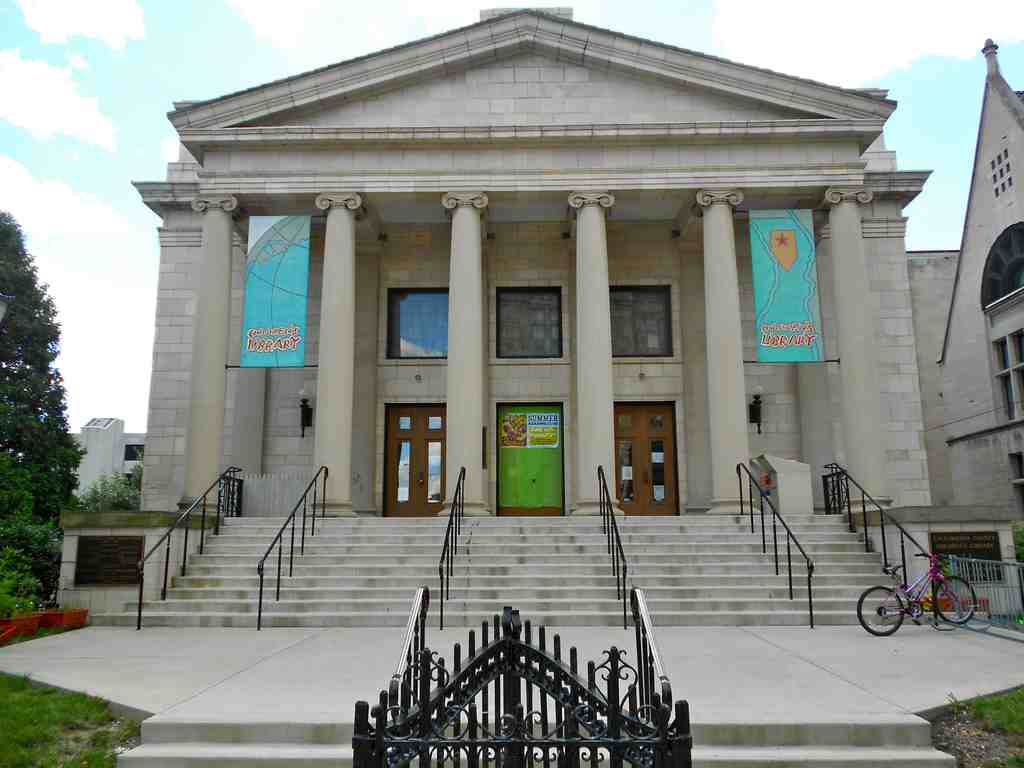
    To spot the Lackawanna County Children's Library, look for a grand, light stone building with tall columns and wide steps leading up to big doors, right ahead of you. Now, take a deep breath and imagine the echoes of footsteps on these stone steps, the sun glinting off the Indiana limestone, and banners happily declaring: “Children’s Library.” But rewind over a hundred years, and you’d find yourself in the heart of Scranton’s spiritual life, when this very spot was the proud First Church of Christ, Scientist. Designed by Albert J. Ward, its stained glass glistened, and the inside brimmed with hand-carved wood and sparkling white plaster. Back then, the church hummed with people, led by the one and only Judge S. J. Hanna and later supported by Col. Louis A. Watres, a real Scranton VIP-he’d even been lieutenant governor! Together, they stirred up enough excitement (and money) to turn their dream into a glorious new church, which first opened its doors in 1915. But time has a way of shuffling stories. By the 1980s, the congregation had faded and the grand building was almost empty, echoing with memories instead of music. Ideas for its future were as wild as a children’s imagination: museum, art gallery, a storage spot for “hidden treasures…” One suggestion that really stuck out? Transforming it into a library for Scranton’s youngest book lovers! Lackawanna County jumped in with both feet, bought the building in 1985, and set out on an adventure of their own. When remodeling began, workers discovered a secret stash hidden in the cornerstone-old Bibles, a crisp Christian Science Monitor, and a trove of books-a perfectly mysterious twist! In 1987, after much transformation, the old church opened a brand-new chapter as the Children’s Library. And in 1988, the nation officially recognized its story by adding it to the National Register of Historic Places. So here you stand, right by Scranton’s time machine-a place that once echoed with hymns and now buzzes with the laughter of kids discovering their next great story.

    전용 페이지 열기 →

자주 묻는 질문

투어는 어떻게 시작하나요?

구매 후 AudaTours 앱을 다운로드하고 교환 코드를 입력하세요. 투어를 바로 시작할 수 있습니다 - 재생을 탭하고 GPS 안내 경로를 따라가시면 됩니다.

투어 중 인터넷이 필요한가요?

아닙니다! 시작 전에 투어를 다운로드하면 완전히 오프라인으로 즐길 수 있습니다. 채팅 기능만 인터넷이 필요합니다. 모바일 데이터 절약을 위해 WiFi에서 다운로드하시는 것을 권장합니다.

이것은 가이드가 안내하는 단체 투어인가요?

아닙니다 - 이것은 셀프 가이드 오디오 투어입니다. 폰을 통해 오디오 나레이션을 들으며 나만의 속도로 독립적으로 탐험합니다. 투어 가이드도, 단체도, 일정도 없습니다.

투어는 얼마나 걸리나요?

대부분의 투어는 60-90분이 소요되지만, 속도는 전적으로 본인이 조절합니다. 원할 때 언제든지 일시정지하거나, 정류장을 건너뛰거나, 휴식을 취하세요.

오늘 투어를 끝낼 수 없으면 어떻게 하나요?

괜찮습니다! 투어는 평생 이용이 가능합니다. 원할 때 언제든지 일시정지하고 다시 시작하세요 - 내일, 다음 주, 또는 내년에도. 진행 상황이 저장됩니다.

어떤 언어를 이용할 수 있나요?

모든 투어는 50개 이상의 언어로 이용 가능합니다. 코드를 교환할 때 원하는 언어를 선택하세요. 참고: 투어 생성 후에는 언어를 변경할 수 없습니다.

구매 후 투어는 어디에서 이용하나요?

App Store 또는 Google Play에서 무료 AudaTours 앱을 다운로드하세요. 교환 코드(이메일로 전송됨)를 입력하면 라이브러리에 투어가 나타나며, 다운로드하여 시작할 수 있습니다.

verified_user
만족 보장

투어가 마음에 들지 않으시면 환불해 드립니다. 문의: [email protected]

안전한 결제

Apple PayGoogle PayVisaMastercardPayPal

AudaTours: 오디오 투어

재미있고, 경제적이고, 자유로운 셀프 가이드 워킹 투어

앱 체험하기 arrow_forward

전 세계 여행자들에게 사랑받고 있습니다

format_quote 이 투어는 도시를 보는 정말 좋은 방법이었습니다. 이야기들이 너무 대본처럼 느껴지지 않으면서도 흥미로웠고, 나만의 속도로 탐험할 수 있어서 좋았습니다.
Jess
Jess
starstarstarstarstar
Tbilisi 투어 arrow_forward
format_quote 관광객처럼 느끼지 않으면서 Brighton을 알아가는 훌륭한 방법이었습니다. 내레이션에 깊이와 맥락이 있었지만 과하지 않았습니다.
Christoph
Christoph
starstarstarstarstar
Brighton 투어 arrow_forward
format_quote 크루아상을 한 손에 들고 아무 기대 없이 시작했습니다. 앱이 그냥 자연스럽게 함께해 주는 느낌이에요, 부담도 없고, 그냥 나와 이어폰과 멋진 이야기들.
John
John
starstarstarstarstar
Marseille 투어 arrow_forward

무제한 오디오 투어

전 세계 모든 투어의 잠금을 해제하세요

0 투어·0 도시·0 국가
all_inclusive 무제한 탐험