버팔로 오디오 투어: 델라웨어 애비뉴의 웅장함의 메아리
한때 버팔로의 우아한 지붕 아래에서는 비밀 결사대가 음모를 꾸몄고, 불과 몇 걸음 떨어진 촛불 밝힌 예배당에서는 혁명가들이 속삭였습니다. 이 도시는 번화한 거리와 대담한 외관 아래에 수많은 미지의 이야기들을 숨기고 있습니다. 이 셀프 가이드 오디오 투어를 통해 이 모든 것을 탐험해보세요. 앨런타운의 생생한 거리를 걷고, 전설적인 새턴 클럽의 철문을 지나, 제일 장로교회 안으로 들어가 보세요. 대부분의 여행자들이 결코 듣지 못하는 진실과 전설을 발견하세요. 어떤 악명 높은 클럽 결투가 버팔로 엘리트들에게 충격을 주었을까요? 제일 장로교회의 고대 돌에는 어떤 수수께끼 같은 메시지가 새겨져 있을까요? 1920년대 시장은 그가 즐겨 찾던 곳에서 단 한 번의 자정 투표 후 왜 사라졌을까요? 버팔로의 정치적 충돌, 반항적인 밤, 그리고 신비로운 동맹들이 당신 주변에서 생생하게 살아나는 동안 시간과 비밀 통로를 통해 이동하세요. 오래된 의자와 떠들썩한 응접실 사이에서 예상치 못한 연결고리가 형성되는 것을 목격하세요. 도시의 비밀이 모든 발걸음을 안내하게 하세요. 당신의 여정은 지금 시작됩니다.
투어 미리보기
이 투어에 대하여
- schedule소요 시간 30–50 mins나만의 속도로 이동
- straighten4.0 km 도보 경로안내 경로 따라가기
- location_on
- wifi_off오프라인 작동한 번 다운로드, 어디서든 사용
- all_inclusive평생 이용언제든지 다시 재생 가능
- location_on클라인한스 음악당에서 시작
이 투어의 정류장
Take a look to your left for a striking, modernist building with smooth, sweeping curves and pale, buff-colored walls rising beside a reflecting pool-that’s the Kleinhans Music…더 보기간략히 보기
Take a look to your left for a striking, modernist building with smooth, sweeping curves and pale, buff-colored walls rising beside a reflecting pool-that’s the Kleinhans Music Hall. Now, imagine Symphony Circle back in the late 1930s: traffic noises a little quieter, the air buzzing with anticipation as Buffalo prepared to welcome a true masterpiece of music and design. That round, graceful shape you see before you was inspired by the hull of a ship-appropriate, don't you think, for a city on the shores of Lake Erie? The father-and-son team of Eliel and Eero Saarinen-design geniuses-joined forces with some local Buffalonian talent to create this extraordinary hall. They skipped over heavy ornamentation and bold colors, opting instead for simplicity, clean lines, and a perfect acoustic design-after all, you wouldn’t want the violin’s whisper to get lost in a muddle, would you? Step a bit closer-do you hear a phantom orchestra warming up inside? Since 1940, this has been the home of the Buffalo Philharmonic Orchestra, where famed musicians and famous figures alike have taken the stage. The main auditorium, with its parabolic ceiling, was shaped with such acuity that if you were to drop a pin on stage, even the folks way in the back of the balcony could jump at the sound. That’s thanks to acoustical advisor Charles Potwin, who apparently believed every listener, from prince to pauper in row Z, deserved a perfect symphony. But this building isn’t just grand for music. In 1964, crowds shuffled through these doors to see Robert F. Kennedy, and in 1967, after Buffalo’s summer of tumult and tension, Dr. Martin Luther King, Jr. inspired hope on this very stage with his speech “The Future of Integration.” Imagine the weight of those words echoing through the hall-the power of music and history intertwining in a space designed to amplify every note, every syllable. All of this became reality because Edward Kleinhans, of a wildly successful men’s clothing family, wanted to honor his wife and his mother in a way that would create joy for generations. With his family’s entire estate-and a boost from FDR’s Public Works Administration-the hall became a gift to Buffalo, opening in 1940 with a triumphant inaugural concert. Whether you catch a world-class symphony, a children’s violin recital, or just your own reflection in the pool, Kleinhans stands as a monument to vision, generosity, and the beautiful sound of a community coming together. And let’s be honest, there’s not a bad seat-or a bad beat-in the house!
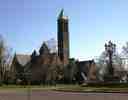
전용 페이지 열기 →To spot the First Presbyterian Church, look for the tall, square stone tower topped with a green pointed roof, standing high above the tree line-right there at the center of…더 보기간략히 보기
To spot the First Presbyterian Church, look for the tall, square stone tower topped with a green pointed roof, standing high above the tree line-right there at the center of Symphony Circle. Now, let’s step back in time together. Imagine it’s 1812. Buffalo isn’t the bustling city it is today; picture muddy roads, scattered cabins, and the wild west of New York State-minus the cowboy hats. The First Presbyterian Church was born on this rough-and-tumble frontier, formed by a dozen brave souls in a borrowed schoolroom, led by a traveling missionary named Reverend Thaddeus Osgood. Picture these pioneers, too few and too poor for their own building, passing around candles as they worshiped wherever they could-a classroom, a tavern, or even someone’s half-built house. As storms of war battered Buffalo in 1813, the town burned and worship screeched to a halt. But once the smoke cleared, these faithful folks picked up where they’d left off, meeting in old taverns and even the courthouse. By 1824, they scraped together enough for a tiny wooden church-just forty by fifty feet-lit by flickering candles each evening, warmed by foot warmers packed with hot coals. If you ever thought winter services here might be chilly, you weren’t wrong! That humble little building had a wild journey, serving everyone from Methodists to German immigrants, then ending its days as a brewery icehouse before finally catching fire in 1882. Talk about a dramatic exit! The congregation kept growing, and soon that tiny church couldn’t keep up. In 1827, out came the stops for what became known as “Old First,” a grand red brick structure with a clock, bell tower, and a golden shimmering ball up top-even acting as a landmark for sailors on Lake Erie. Imagine standing outside on a Sunday, the giant doors swinging open, and crowds streaming into a sanctuary that seemed to echo with every organ note. Speaking of organs, when they brought the first one in around 1860, some parishioners feared it was the devil’s work! Before that, it was all flute, cello, and bass viol-maybe not the most rocking Sunday, but unique all the same. The mighty church bell was so loud it doubled as Buffalo’s fire alarm. Of course, it cracked during a fire-but was quickly recast. That bell just wouldn’t quit! As the decades rolled on, industry boomed, and Buffalo covered itself in brick and business. The church found itself boxed in, surrounded by clattering carts and busy beer wagons, with much of its congregation moving uptown. Internal drama brewed, as only church drama can, and debates over moving to a quieter spot landed in courtrooms and headlines. Eventually a generous member, Mrs. Truman G. Avery, donated land right here across from where you stand, and so, in the late 1880s, the church packed up for Symphony Circle-leaving behind a home about to become a bank. Now, feast your eyes on the church before you-a masterpiece by famous architects Green & Wicks, completed between 1889 and 1897. The Romanesque exterior, thick stone walls, and towering central spire were designed not only to inspire faith but to leave a mark on the city’s skyline. Inside, the sanctuary dazzled with Byzantine-revival touches and would go on to host everything from Roosevelt visits to world-famous organ concerts. Did you know Theodore Roosevelt worshiped here during the Pan-American Exhibition? He even had breakfast with the church’s pastor after his infamous inauguration in Buffalo. President, preacher, pancakes-now that’s a churchy trifecta! Across the years, the church’s halls have echoed with celebrations, renovations, and the sounds of laughter and music. Stained glass windows now cast colored light onto well-worn pews, the great organ’s pipes have changed with the times, and even the Tiffany chandelier eventually found a new home-Texas, of all places. Today, as you stand on Symphony Circle, picture the church’s wild journey-from schoolrooms and taverns to this proud stone landmark-still a pillar of faith and Buffalo history, weathering every storm this city can throw its way. And hey, if these old walls could talk, you can bet they’d have some stories... and maybe a joke or two about surviving as a brewery icehouse!
전용 페이지 열기 →To spot Allentown, Buffalo, just look ahead for the bright, colorful mural splashed across the side of a building, with bold artwork and a red “Liquors” sign hanging overhead-this…더 보기간략히 보기
To spot Allentown, Buffalo, just look ahead for the bright, colorful mural splashed across the side of a building, with bold artwork and a red “Liquors” sign hanging overhead-this vibrant scene lets you know you’ve made it to one of Buffalo’s liveliest neighborhoods! Welcome to Allentown! If you can smell coffee in the air and hear distant laughter from folks on patios, that’s not your imagination working overtime-this is the beating heart of Buffalo’s creative soul. Now, let’s take a step back in time-but don’t worry, you won’t need a top hat or a monocle for this journey. Picture it: the year is 1827, and a fellow named Lewis F. Allen arrives in Buffalo. He wasn’t just another face in the crowd-Lewis was the corporate secretary for an insurance company, but also a farmer with more cows than sense. When he needed somewhere for his cattle to graze, his neighbor Thomas Day generously said, “Go ahead! Use my land between Buffalo and Black Rock.” I doubt he realized that Allen’s cattle would stomp out a path that would one day become the bustling Allen Street you’re standing by now. But Allentown is more than just a spot for wayward cows. Lewis Allen was something of a mover and shaker-he helped found the Buffalo Historical Society and the beautiful Forest Lawn Cemetery, where he now rests. Oh, and his family links would help launch a U.S. president! His wife’s nephew, Grover Cleveland, found his way into politics thanks to Uncle Lewis, after being introduced to just the right crowd. So you could say Allen wasn’t just herding cattle, he was herding future presidents too! Now, back to the present-Allentown brushes right up against downtown Buffalo, stretching from the bright theater district up to North Street. At the heart of it all is Allen Street and Elmwood Avenue-the main arteries for quirky shops, live music, and enough good eats to keep anyone happy. This isn’t just an ordinary neighborhood; it’s where bohemian artists, lovers of all things vintage, and even the hipsters flock. There’s history in every sign and every brick here. The Allentown Historic District itself is bursting at the seams-with over 730 buildings showing off every flavor of architecture imaginable: Gothic Revival, Italianate, Queen Anne, Colonial, and even shingle-styled homes. Imagine the ghosts of history peeking out of every window as you walk past. The parks here were even redesigned by the legendary Frederick Law Olmsted. He built Symphony Circle and added his magic to Day’s Park and Arlington Park-he even put in a circular walkway to keep kids from trampling the grass. Believe it or not, Frank Lloyd Wright, the world-famous architect, once called Arlington Park his home while working right here in Buffalo! Then there’s the art-a tradition that started in 1958, when business was slow and a few hopeful locals flung up tents and displayed their art. They probably didn’t expect it to become Buffalo’s splashiest cultural bash, but the Allentown Art Festival quickly drew crowds from every corner of the city. Today, it’s a can’t-miss event, alive with artists, music, and color wherever you look. So take a stroll, keep your eyes peeled for multi-colored murals and funky record shops. Whether you’re here for a late-night bite, art that makes your heart skip, or just to see where presidents and architects once strolled, Allentown’s got stories waiting for you around every corner. And hey, don’t let the ghosts of old Buffalo talk your ear off-they never seem to leave during festival season! Yearning to grasp further insights on the geography, historic district or the notable places? Dive into the chat section below and ask away.
전용 페이지 열기 →
8개 정류장 더 보기정류장 적게 보기expand_moreexpand_less
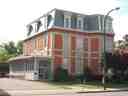
To spot the William Dorsheimer House, just look for the impressive red-brick building with a slate-covered mansard roof and gray sandstone stripes stretching across its bold…더 보기간략히 보기
To spot the William Dorsheimer House, just look for the impressive red-brick building with a slate-covered mansard roof and gray sandstone stripes stretching across its bold facade-it’s the one with three levels and big dormer windows popping out from the top floor, right on Delaware Avenue. Now, let’s step back in time and imagine you’re standing on this very spot on a crisp morning in 1868. Horses clatter down the street, and here stands William Dorsheimer’s brand-new home, freshly built by a young architect who-believe it or not-would go on to become a superstar in the world of design: Henry Hobson Richardson. The house might seem simple at first glance with its neat square lines, but look closer; there’s a parade of carved stone rosettes and triglyphs-a little party of patterns, if you will-running along those sandstone bands. It’s like the bricks are wearing a French-inspired suit, right after the Civil War, all stylish and confident. William Dorsheimer himself was a big deal-a sharp lawyer, eventually Lieutenant Governor of New York, and a master of throwing a good party. Picture the halls echoing with political debates and laughter as Buffalo’s elite gathered under that graceful slate roof. But here’s the plot twist: this house changed the fate of architecture in Buffalo. Richardson’s work here opened up doors for him across the city and beyond, leading to grand commissions like the Buffalo State Hospital, and even all the way to the New York State Capitol. Fast forward to today, and you’ll find the inside looks quite different-remodeled for modern business, but the main curving staircase still sweeps up from the north entrance, a secret passageway to the building’s storied past. So, as you stand here, you’re not just looking at a brick building. You’re gazing at a launching pad for artistic innovation and some good old-fashioned Buffalo ambition-a place where history and creativity shook hands and decided to stick around. Pretty inspiring, right? Or at least more interesting than your average house, unless your house hosted state governors and famous architects on the regular!
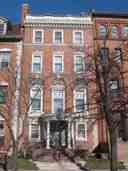
전용 페이지 열기 →Standing right in front of you is the Birge-Horton House, a tall, four-story brick row house with neat white stone trim and an elegant entryway, nestled right in the middle of a…더 보기간략히 보기
Standing right in front of you is the Birge-Horton House, a tall, four-story brick row house with neat white stone trim and an elegant entryway, nestled right in the middle of a line of grand homes-just look for the house with “PRATT HORTON HALL” etched above its curved front steps. Now, let’s imagine the year is 1895-a time when Buffalo’s Delaware Avenue was the place to be if you fancied a bit of luxury, a dash of competition with your neighbors, and maybe the occasional fancy wallpaper dispute. The architects Green and Wicks, a powerhouse design team in Buffalo, drew up the Birge-Horton House in the Georgian Revival style-think classic, stately, and just a hint of “look at me!” This house was one of a rare batch of thirteen luxury row houses, all tall and proud, but each with its own personality. The Birge-Horton was the last to go up, making it the grand finale on “the Midway”-smack-dab between the city center’s bustle and the peaceful stone angels of Forest Lawn Cemetery. Back then, Delaware Avenue was Buffalo’s top address. Henry Birge-of wallpaper fame-wanted a place that matched his style, and he didn’t skimp. Picture yourself climbing a grand staircase that spirals four stories up, six marble fireplaces glowing in the winter, and colored sunlight pouring through leaded glass windows. Talk about a home that says, “You’ve made it!” After the Birges came Katharine Pratt Horton in 1906, a powerhouse of a woman who filled these rooms with the energy of social gatherings and the quiet dignity of civic service. She loved it so much that she finally bought it-and when she passed, the house was passed on to the Daughters of the American Revolution, who keep it almost exactly as it was nearly a century ago. Imagine the layers of laughter, whispered secrets, and maybe a couple of heated wallpaper debates echoing through these halls. And today? It stands as the only house in the row that hasn’t changed a bit, a living memory right in the heart of Buffalo. How’s that for hanging onto history?
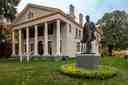
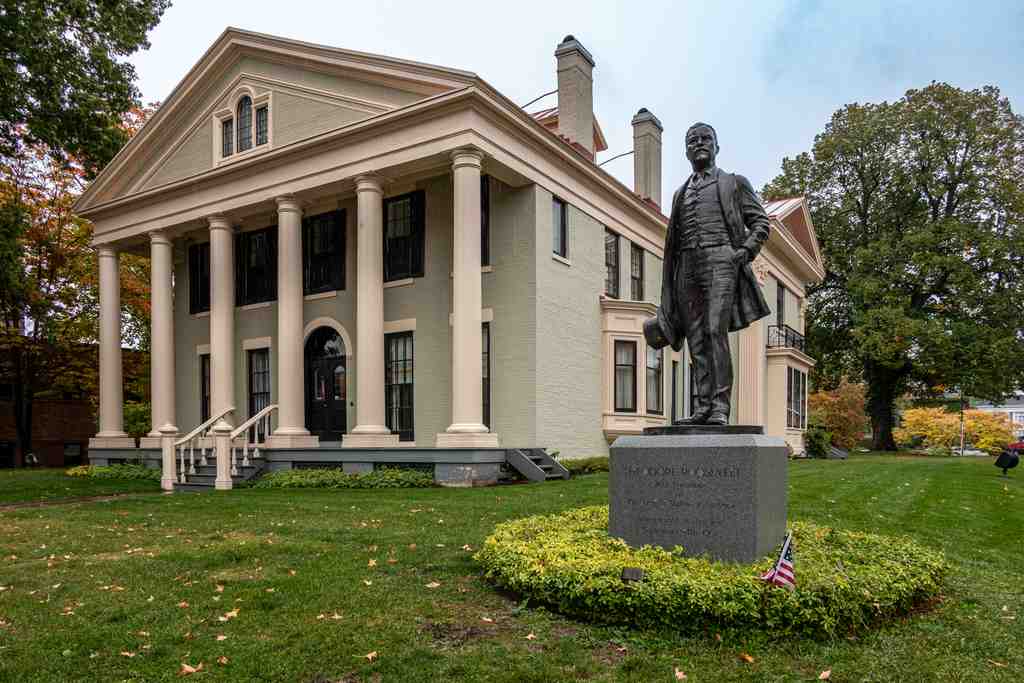
전용 페이지 열기 →Look ahead and you’ll spot a prominent classical house with pale columns, a stately porch, and a bold bronze statue welcoming you from the lawn-this is the Theodore Roosevelt…더 보기간략히 보기
Look ahead and you’ll spot a prominent classical house with pale columns, a stately porch, and a bold bronze statue welcoming you from the lawn-this is the Theodore Roosevelt Inaugural National Historic Site. Imagine you’re here in Buffalo, but not just any day-it's September 1901, and the city is swirling with tension and whispers. The Pan-American Exposition is in full swing, but suddenly, the festivities are shattered: President William McKinley has been shot, sending shockwaves through the crowds. While nervous men in suits dart through telegraph offices and headlines frantically change, Vice President Theodore Roosevelt speeds toward Buffalo, unaware he’s about to make history in the house right before you. This grand building you’re looking at might seem like just another fine mansion, but it has layers of stories hiding inside its walls. The oldest parts of this house go back to the days when Buffalo braced itself against British Canada-these were once military officers’ quarters, part of Buffalo Barracks built in the 1840s. After soldiers marched away and the cannons fell silent, families made it their home, adding parlors, tearing out barns, and even planning renovations you can still find tucked away in the archives here. But the house’s quiet days ended when tragedy struck nearby. The President’s condition takes a dramatic turn for the worse, and with hardly any time to breathe, word arrives-President McKinley has died. You can feel the suspense: the city is anxious, officials are clamoring, and a decision is made. The closest, safest, and most respectable place to swear in the new president is right here, the Wilcox House. Inside, the front library fills with fifty anxious dignitaries; cabinet members stand shoulder-to-shoulder as Federal Judge John R. Hazel administers the oath. Oddly enough, no photos were taken during the ceremony, so you’ll have to picture Roosevelt with his hand raised, surrounded by heavy velvet drapes, gaslights flickering, and shined shoes shifting on the rug. The Wilcox family would live here until the 1930s, but after they passed, the home transformed dramatically. Picture dinner guests gossiping in the Kathryn Lawrence Restaurant that took its place-bye-bye, stately calm; hello, clinking glasses and buzzing chatter. Eventually, the house would be restored and reopened as a museum, carefully preserving Roosevelt’s inauguration room and treasures from the Pan-American Exposition-including some very presidential wine glasses in case you’re thirsty for history! Take a deep breath, look around, and imagine this building as the crossroads of America’s story-a place where, in a moment of crisis, a new president and a new era began. Pretty wild to think all that happened right where you’re standing now, isn’t it?
전용 페이지 열기 →Directly in front of you, you’ll see the Williams-Pratt House, a stately red-brick mansion with a grand, two-story porch held up by six towering Ionic columns-just look for that…더 보기간략히 보기
Directly in front of you, you’ll see the Williams-Pratt House, a stately red-brick mansion with a grand, two-story porch held up by six towering Ionic columns-just look for that impressive columned entrance rising above the steps! Now, take a moment to soak in the sight of this three-story giant-a house so big it needed over 11,000 square feet for its main residence alone. The Williams-Pratt House was built around the turn of the century, back when having a fancy architect was essential for Buffalo’s elite; in 1895, Charles Howard Williams and his wife Emma asked the famous architect Stanford White to make their dream home a reality. Imagine the plot: two brothers, two mansions, side by side on Delaware Avenue! Must have been quite the sibling rivalry-maybe even some competitive lawn mowing. Charles Williams was no ordinary Buffalonian; he sat on the boards of major banks, owned heaps of real estate, and wanted a house to match his status, complete with iron railings by August Feine & Sons and a true Buffalo touch-the fence and gate came from John H. Williams Iron Works, just up the street. So you’re standing in front of local craftsmanship and Gilded Age ambition! If you walk around the north side, you’d spot the grand porte-cochère. It’s like an old-fashioned carport, but way fancier-perfect for rolling up in your carriage in style. Step back in time, and suddenly, it’s a chilly winter night in 1900. The mansion is glowing with gaslights and echoing with laughter-in the midst of this lavish life, disaster strikes: a fire erupts in Charles’ bedroom, crackling through heavy woodwork and waking the entire household. Luckily, most of the mansion survived, but the damage to the bedrooms and bathroom cost thousands. Apparently, even the fanciest houses can’t escape surprise wake-up calls. After Charles and Emma’s passing in 1909, their daughter Jeannie and her husband Frederick Pratt moved in. This is where things get truly grand-picture extravagant parties, like the 1926 “Oriental Ball.” The house transformed into a dazzling fantasy: the portico turned into an Egyptian ballroom, one living room became an East Indian smoking lounge. Everywhere you looked, there were silks, glowing lanterns, and Buffalo’s finest twirling in costume. Can you hear the music and laughter bouncing off these brick walls? For a while, the Williams-Pratt House was Buffalo’s ultimate party pad. But times change, fortunes fade. After Frederick’s death and the Great Depression, Jeannie lost much of her wealth, and the City of Buffalo took over the house for back taxes. From grand soirées to vacancy-and then, in 1941, a new chapter: the house became GAR Memorial Hall, a meeting place for Civil War and Spanish-American War veterans. Imagine old soldiers meeting here, swapping tales and keeping history alive. Buffalo almost lost this mansion in the 1950s, when developers hoped to tear it down, but the veterans and the city stood their ground. The structure survived, eventually becoming home to businesses-at one point, you could call this an office with serious historic flair. Today, it still stands, regal and proud, right where glamour, drama, and Buffalo’s boldest stories collide.
전용 페이지 열기 →Look ahead at the striking modern building with scalloped concrete walls and dramatic stained-glass windows, just to the left of the “Temple Beth Zion” sign. Temple Beth Zion…더 보기간략히 보기
Look ahead at the striking modern building with scalloped concrete walls and dramatic stained-glass windows, just to the left of the “Temple Beth Zion” sign. Temple Beth Zion isn’t just any building-it’s a bold marvel of modern design, shaped like a scalloped oval with 10 massive curving walls, each one representing a Commandment. Designed by Max Abramovitz, the structure looks as if it’s reaching up toward the sky, and when you stand here, you might feel tiny next to its soaring 45-foot walls-don’t worry, no giants are attending services inside! Peek through those spectacular stained-glass windows, the handiwork of artist Ben Shahn, who also designed the menorah and those epic 30-foot-high commandment tablets at the entrance. Now, imagine stepping inside as a warm beam of colored light washes over you from the giant windows--and the sound of the synagogue’s huge 4,000-pipe organ fills the space, shaking the very floor beneath your feet. If these walls could talk, they’d tell stories from 1850, when the congregation was founded, right through a dramatic fire in 1961 that destroyed their previous Byzantine-style temple, with its copper dome shining in the Buffalo sun. And while you’re here, don’t miss the adjacent Judaic museum, where a rotating cast of treasures brings the congregation’s history to life. Today, Temple Beth Zion stands not just as Western New York’s largest Jewish congregation, but as a living symbol of renewal, resilience, and the power of community.
전용 페이지 열기 →To spot the Delaware Avenue Historic District, look just ahead along the west side of Delaware Avenue between North Street and Bryant Street-it's that impressive stretch of grand…더 보기간략히 보기
To spot the Delaware Avenue Historic District, look just ahead along the west side of Delaware Avenue between North Street and Bryant Street-it's that impressive stretch of grand old mansions with elegant stonework and soaring decorative details lining the block. Welcome to what was once known as Millionaires’ Mile-go ahead, take a deep breath! Can you imagine the air thick with the scent of fresh-cut grass and the distant clip-clop of horse-drawn carriages, back when this avenue was the place to see and be seen? In the late 1800s and early 1900s, Buffalo had more millionaires per person than anywhere else in America, and this very stretch of road was their red carpet. Picture dazzling parties spilling out onto manicured lawns, guests in tuxedos and ball gowns chatting beneath gas lanterns. Each mansion you see here-like the Williams-Butler House or the intricate Clement House-was a trophy for its owner, built in bold Renaissance Revival or Gothic Revival styles that screamed, “I’ve made it!” Sometimes it must have felt like the buildings themselves were trying to outdo each other. Would you believe the famous Temple Beth Zion was here in two incarnations, each more striking than the last? Stories echo from every stoop: the thunderous laughter of a socialite’s gala, whispered deals over cigars on grand porches, and, of course, the silent pride of architects like McKim, Mead & White and E.B. Green, who worked their magic here. Over a century later, the old mansions host new dreams-Red Cross workers, temple-goers, and everyday Buffalonians. Even though times have changed, the avenue stands as a testament to both the ambition and imagination that made Buffalo sparkle. Millionaires may come and go, but legend? Now that sticks around. Don’t be surprised if you find yourself wishing you could sneak through one of those gilded doors and join a ball of your own!
전용 페이지 열기 →To spot the Women & Children's Hospital of Buffalo, just look for the large, multi-story building with rows of windows and a distinctly modern entrance marked “THE CHILDREN’S…더 보기간략히 보기
To spot the Women & Children's Hospital of Buffalo, just look for the large, multi-story building with rows of windows and a distinctly modern entrance marked “THE CHILDREN’S HOSPITAL” in bold letters on your right. Now, take a deep breath and imagine this place as it would have been back in the 1890s. Picture kids laughing (or maybe crying a bit, let’s be honest) and the steady footsteps of nurses hustling through wide halls. This was no ordinary hospital-in 1892, Dr. Mahlon Bainbridge Folwell had a wild idea: kids shouldn’t have to recover in the same rooms as adults, with giant medicine bottles and scary old equipment looming over their tiny beds. Instead, he dreamed up a place just for them. It took some convincing, but thanks to Mrs. Williams and her daughter Martha, they turned an old house on Bryant Street into a sanctuary for sick kids and soon-to-be moms. Right from the start, the hospital was packed-so packed that within a year, they had to pile in 40 more beds to fit everyone! Through the decades, the building grew and buzzed with energy, adding high-tech gear, teaching future doctors, and treating babies, teenagers-even young adults up to 21. Imagine the nervous excitement as families rushed through these doors, or the pride when the hospital’s pediatric care was ranked among the best in the country. Eventually, in 2017, the doors closed for the last time, and the hospital’s heart moved to a shiny new home nearby. But the spirit of those caring hands and hopeful hearts-well, you can still feel a little bit of that right here on Bryant Street.
전용 페이지 열기 →If you're looking for the Saturn Club, focus straight ahead for a grand, castle-like brick building with steep stone trim, leaded windows, and a fancy wooden door beneath a carved…더 보기간략히 보기
If you're looking for the Saturn Club, focus straight ahead for a grand, castle-like brick building with steep stone trim, leaded windows, and a fancy wooden door beneath a carved Saturn planet-trust me, you can't miss that big ringed planet over the entry! Now, as you stand on this tree-lined sidewalk, just imagine the year is 1885, and thirteen young men are sneaking out of their fathers’ stuffy, old-fashioned clubs, eager to start something a bit more fun-somewhere to play cards, swap stories, and loosen those starched collars on a Saturday night. That’s how the Saturn Club was born, and if you listen closely, you might just hear the echoes of laughter coming from their first meeting place: a humble family house, with members toting in their own chairs as an “initiation” fee. Those early days were spirited-literally and figuratively! Dues were ten bucks a month, which would have bought them a ton of pizza today, but back then, it was just enough to rent a few rooms around town as their club quickly outgrew every space. By 1890, these social pioneers, with names like Carlton Sprague, William F. Kip, and Francis Almy, pooled their money and built a three-story meeting house. Baseball games, debates, lectures, plus a library filled the calendar with fun and drama. At one debate, you can imagine the energy fizzing in the air, as club members faced off with their rivals from the Buffalo Club or the University Club-if these walls could talk, they’d probably argue right back! By 1900, even Theodore Roosevelt-yes, the future president-stopped in for dinner. Picture the room buzzing with anticipation, the smell of roast beef in the air, and Roosevelt himself giving a hearty laugh, the kind that rattles the silverware. Fast-forward to the roaring 1920s, and you get a taste of mischief! The Saturn Club had a bar, a bartender, and a curious little sliding door through which mysterious “ingredients” for drinks were passed-just not the spirits themselves, of course, wink, wink. During Prohibition, the club’s basement must have been packed with whispering members stashing bottles in private lockers (), until one fateful night in 1923 when federal agents-led by their very own club member, no less-raided the place. Sixty quarts of whiskey, moonshine, gin... it all made the front page. I imagine the club’s “House Committee” playing shocked, but deep down, probably a little impressed by their members’ creativity! The building you see now-the Tudor Revival beauty standing before you-was dedicated in 1922, stone by stone, with a stately courtyard in the center and all the grandeur you’d expect from Buffalo’s fanciest social club. Over the years, the Saturn Club polished up its act: they added squash courts, gave the place a million-dollar facelift, and welcomed women as full members by the mid-1980s-a little late to the party, but better late than never. Take a peek through those big, leaded windows-inside, spicy debates once flew across rooms dressed in deep red and gleaming wood. In the Red Room, a fireplace would crackle away as stories and secrets were swapped under the watchful gaze of the Saturn emblem. The Delaware Room still tells tales of seaside murals and easy elegance. Today, the Saturn Club is a living piece of Buffalo’s social history: a place for camaraderie, a splash of scandal, a dash of athletic competition, and a whole galaxy of stories. So, if you ever wonder how to create a club with personality, remember-you only need a handful of lively folks, one big idea, and maybe, just maybe, a sliding door for the “special ingredients”! Thanks for traveling this historic stretch of Buffalo-if you’re lucky, maybe you’ll hear a ghostly debate or a soft clink of glasses as you walk past. Your tour ends here, but the stories go on!
전용 페이지 열기 →
자주 묻는 질문
투어는 어떻게 시작하나요?
구매 후 AudaTours 앱을 다운로드하고 교환 코드를 입력하세요. 투어를 바로 시작할 수 있습니다 - 재생을 탭하고 GPS 안내 경로를 따라가시면 됩니다.
투어 중 인터넷이 필요한가요?
아닙니다! 시작 전에 투어를 다운로드하면 완전히 오프라인으로 즐길 수 있습니다. 채팅 기능만 인터넷이 필요합니다. 모바일 데이터 절약을 위해 WiFi에서 다운로드하시는 것을 권장합니다.
이것은 가이드가 안내하는 단체 투어인가요?
아닙니다 - 이것은 셀프 가이드 오디오 투어입니다. 폰을 통해 오디오 나레이션을 들으며 나만의 속도로 독립적으로 탐험합니다. 투어 가이드도, 단체도, 일정도 없습니다.
투어는 얼마나 걸리나요?
대부분의 투어는 60-90분이 소요되지만, 속도는 전적으로 본인이 조절합니다. 원할 때 언제든지 일시정지하거나, 정류장을 건너뛰거나, 휴식을 취하세요.
오늘 투어를 끝낼 수 없으면 어떻게 하나요?
괜찮습니다! 투어는 평생 이용이 가능합니다. 원할 때 언제든지 일시정지하고 다시 시작하세요 - 내일, 다음 주, 또는 내년에도. 진행 상황이 저장됩니다.
어떤 언어를 이용할 수 있나요?
모든 투어는 50개 이상의 언어로 이용 가능합니다. 코드를 교환할 때 원하는 언어를 선택하세요. 참고: 투어 생성 후에는 언어를 변경할 수 없습니다.
구매 후 투어는 어디에서 이용하나요?
App Store 또는 Google Play에서 무료 AudaTours 앱을 다운로드하세요. 교환 코드(이메일로 전송됨)를 입력하면 라이브러리에 투어가 나타나며, 다운로드하여 시작할 수 있습니다.
투어가 마음에 들지 않으시면 환불해 드립니다. 문의: [email protected]
안전한 결제