
솔즈베리 오디오 투어: 신성한 첨탑에서 역사적 위기까지
하나의 돌 첨탑이 솔즈베리의 스카이라인을 가로지르지만, 그 그림자 아래에는 비밀과 장관이 겹겹이 쌓인 도시가 있습니다. 이 셀프 가이드 오디오 투어는 엽서 속 풍경을 넘어, 대부분의 방문객이 거의 알아차리지 못하는 조용한 안뜰과 잘 가꿔진 잔디밭에서 스캔들, 야망, 속삭이는 음모의 이야기를 풀어냅니다. 건축가들은 왜 404피트 높이의 돌을 쌓아 영국에서 가장 높은 대성당 첨탑을 만들면서 재앙을 무릅썼을까요? 조지 왕조 시대의 한 가족은 무엇 때문에 몬페손 하우스에서 왕실 행사처럼 결혼식을 선보였을까요? 그리고 금지된 마법과 심야 정치 거래는 어떻게 아런델스의 유산을 형성했을까요? 발걸음마다 주교들이 운명과 도박을 하고, 귀족들이 촛불 아래서 잔을 부딪치고, 총리들이 문자적이고 정치적인 유령들과 마주했던 구불구불한 길을 따라가 보세요. 솔즈베리를 반란, 재창조, 그리고 시간이 잊은 호기심 가득한 구석들을 위한 살아있는 무대로 발견하세요. 첨탑이 하늘과 만나는 곳에서 전설을 쫓을 준비가 되셨나요? 솔즈베리의 숨겨진 심장부로의 여정이 지금 시작됩니다.
투어 미리보기
이 투어에 대하여
- schedule소요 시간 40–60 mins나만의 속도로 이동
- straighten3.6 km 도보 경로안내 경로 따라가기
- location_on
- wifi_off오프라인 작동한 번 다운로드, 어디서든 사용
- all_inclusive평생 이용언제든지 다시 재생 가능
- location_on솔즈베리 대성당에서 시작
이 투어의 정류장
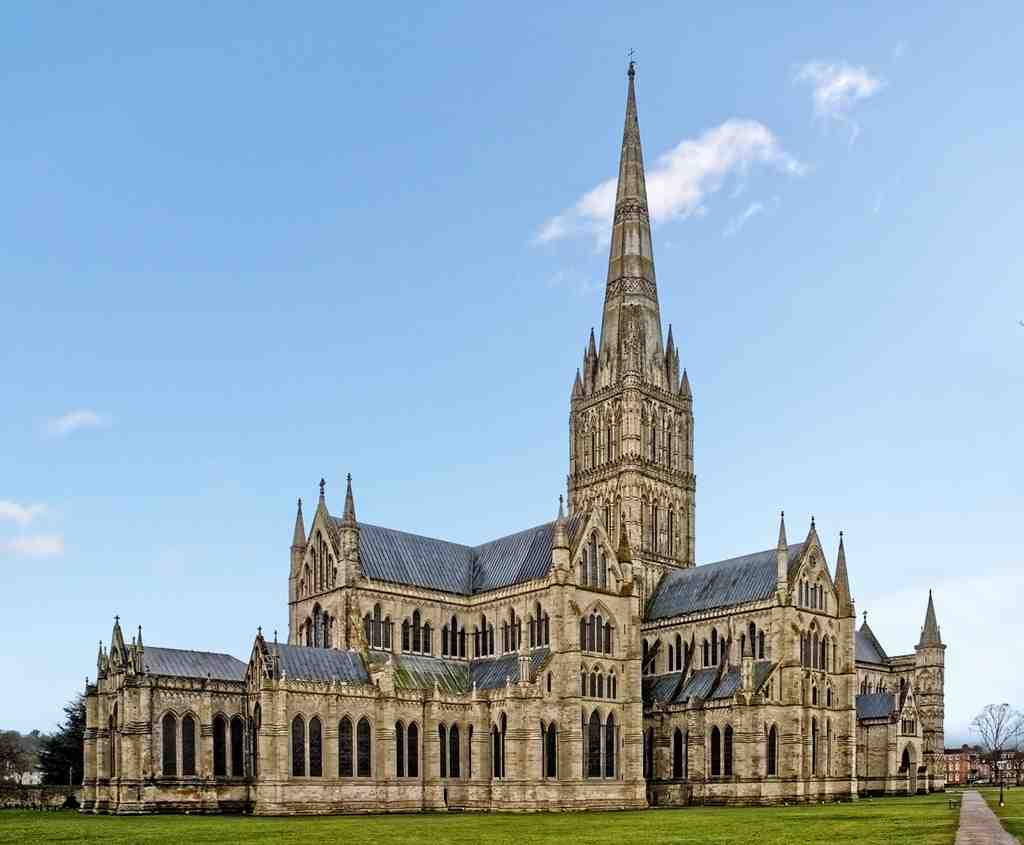
If you look ahead, you can’t miss Salisbury Cathedral-it’s the enormous, pale stone building with its dramatic, sky-piercing spire rocketing up above the trees and rooftops. The…더 보기간략히 보기
If you look ahead, you can’t miss Salisbury Cathedral-it’s the enormous, pale stone building with its dramatic, sky-piercing spire rocketing up above the trees and rooftops. The spire looks almost like an enormous stone needle, and if the sun’s out, you might even see it catching the light. The grassy area around helps the cathedral stand out, so keep your eyes peeled for that towering pinnacle above everything else. Now, as you’re standing beside this medieval giant, imagine the world around you over 800 years ago. The year is 1220, and the air is full of the sound of mallets and chisels bouncing off stone. Men are hauling huge blocks of pale limestone-some weighing as much as a small car!-across muddy ground, all to build the most beautiful cathedral for miles. Legend has it that this spot was chosen in the quirkiest of ways: the bishop fired an arrow, and it struck a deer, which fell right where you stand. Good thing he didn’t hit a squirrel, or history might have been very different! Salisbury Cathedral is truly a marvel of its time. It was built shockingly fast for such a massive structure-just 38 years! That’s like ordering a castle and getting next-day delivery. Everything you see in front of you, from the delicate lancet windows to the huge nave and the towering spire, was made during a single burst of enthusiasm, which means it all has a lovely matching style. People in the Middle Ages didn’t do things by halves-they used 70,000 tons of stone, 3,000 tons of wood, and 450 tons of lead on this single building. That spire? It's the tallest in England at 404 feet. Look up and let your gaze climb toward the clouds-no other church roof in the country beats it. Funny enough, two other cathedrals used to be even taller, but their spires collapsed. I guess theirs just couldn’t handle the competition. If you could step inside, you’d discover treasures like one of the world’s oldest working clocks and one of the four original Magna Carta documents. But for now, take a deep breath, feel the ancient stones and the peace of this grassy close-the largest cathedral close in Britain. So, whether you’re here for the history, the legends, or just to stretch your neck staring at that spire, Salisbury Cathedral is ready to welcome you-just as it has travelers for nearly eight centuries. And remember: if a bishop ever offers you an archery lesson, duck! Exploring the realm of the building and architecture, depictions in art, literature and television or the diocese, dean and chapter? Feel free to consult the chat section for additional information.
전용 페이지 열기 →

12개 정류장 더 보기정류장 적게 보기expand_moreexpand_less
Look ahead-just beyond the delicate yellow daffodils swaying by the path, you’ll spot a long, elegant brick building with tall sash windows, crisp white stone edging, and a smart…더 보기간략히 보기
Look ahead-just beyond the delicate yellow daffodils swaying by the path, you’ll spot a long, elegant brick building with tall sash windows, crisp white stone edging, and a smart doorway right at the center. Don’t miss the spire of Sarum College peeking from behind-if you see that tower keeping watch, you’re in exactly the right place! Now, as you stand here, let your imagination tune in for a moment-can you hear the distant echo of choir voices drifting on the air? This is the Royal School of Church Music, known to its friends as the RSCM. It’s not just a beautiful place-it’s where music comes alive, especially the kind you’d hear soaring in churches. Started way back in 1927 by Sir Sydney Nicholson, this organisation has made it its mission to teach, inspire and fill churches with glorious sound. At first, it was just for Anglicans, but now it welcomes all sorts of choirs and musicians from over 40 countries. That’s a lot of organists looking for their keys! And as of 2024, King Charles III himself is the RSCM’s Patron-so you’re practically walking on royal musical turf. Look closely, and you might spot some proud singers with medals-RSCM awards that come in blue, red, or yellow ribbons, earned through singing and learning new skills. Earning one is almost as hard as resisting picking the daffodils! Not only does the RSCM help run all sorts of training and exams, it’s also famous for courses, choirs and music books. In fact, some of its choirs, like the Millennium Youth Choir, have even sung live on the radio. Imagine those voices bouncing off the ancient walls. The RSCM’s home has moved around a bit over the years-from Chislehurst to Canterbury, to grand Addington Palace, and all the way here to Salisbury in 2006. Wherever it goes, the music follows. And just think: all this began with church musicians who wanted to make Sunday mornings a little less sleepy, and a lot more joyful! Before you go, pause for a moment-can you hear the rustle of sheet music as a new group gets ready for rehearsal? That’s the sound of centuries of music history, still growing right here in Salisbury. Onward to the next stop-let’s keep our ears open for more hidden harmonies! Seeking more information about the activities, leadership or the awards and medals? Ask away in the chat section and I'll fill you in.
전용 페이지 열기 →As you walk towards Salisbury Cathedral School, look ahead for a grand building set within leafy grounds, right by the cathedral itself. The school sits inside what used to be the…더 보기간략히 보기
As you walk towards Salisbury Cathedral School, look ahead for a grand building set within leafy grounds, right by the cathedral itself. The school sits inside what used to be the sprawling old Bishop's Palace. Look for the elegant windows and creamy stone, and if you’re lucky, you might catch a glimpse of young students in smart uniforms darting across the path. With its towering chimneys, historic doorways, and a logo just like the one you see here-a shield with lilies in the centre-it’s hard to miss this true slice of English history. Picture this: The year is 1091. That’s nearly a thousand years ago, back when the air would’ve been thick with wood smoke and the only “bells and whistles” were, well, actual bells and whistles. Saint Osmund, cousin to the mighty William the Conqueror himself, founded this place. If these walls could talk, they’d sing and chant-quite literally! This is where the famous choristers of Salisbury Cathedral still train their voices, filling the air with music just as their predecessors did centuries ago. Imagine boys, and now girls too, in bright cloaks, reading by flickering candlelight, surrounded by cold stone and echoing halls. Maybe you would have bumped into John of Salisbury here-he was a real student way back in the 1100s and ended up dodging trouble with the infamous Thomas Becket. The school moved a few times, often following the heartbeat of the cathedral, and finally found its home here in the old Bishop’s Palace after World War II. The building itself is Grade I listed, which basically means it’s so special even the pigeons need permission to land on it! Fast forward to the 21st century-now there’s a library thanks to some book-loving alumni. Girls officially joined the school in 1987, and Salisbury became the first English cathedral with both boys and girls singing at the very top of their lungs. Oh, and a fun mystery for you next time you see the school crest-those lilies in the middle stand for purity, but the true secret is the stories of all the pupils, teachers, and almost certainly a few ghosts who’ve called this place home for nearly a thousand years. Okay, onward to our next stop before we accidentally sign up for a Latin lesson! For a more comprehensive understanding of the location, academics or the choir, engage with me in the chat section below.
전용 페이지 열기 →You’re now standing right at the heart of Salisbury! Take a look around: you’ll see a dynamic city scene where old and new meet. Towering spires peep above leafy treetops,…더 보기간략히 보기
You’re now standing right at the heart of Salisbury! Take a look around: you’ll see a dynamic city scene where old and new meet. Towering spires peep above leafy treetops, shopfronts dot the winding streets, and the gentle flow of the rivers Avon, Nadder, and Bourne come together just out of sight. To spot the essence of Salisbury, look for that beautiful mix of medieval stone, bustling market stalls, and inviting footbridges-sometimes with a bit of cathedral peeking through like a shy celebrity. Imagine yourself centuries ago, hearing the Ringing of market bells and the chatter of townsfolk. Salisbury’s story begins where rivers mingle-don’t worry, they’re friendlier than most social crowds! This city has drawn people together for centuries. Back in the day, all the action was up at Old Sarum, the enormous hill looming to the north. But picture the wind howling across those ramparts-brr!-so the locals decided life would be a bit warmer and wetter down by the rivers. Thus, in 1227, “New Sarum” was born, and the city you’re standing in began to rise. But Salisbury isn’t a one-name sort of place. Locals might say “Salisbury,” but through history it’s been SAWZ-bər-ee, Sarum, Sorbiodūnum (try saying that three times fast), Caer-Caradog-even the Romans couldn’t settle! And, if things weren’t spicy enough, the Vikings rolled in during 1003, setting everything alight. Don’t worry-they’re long gone, but their sense of drama still lingers in the air. This patch of earth saw conquering Saxons, busy Roman traders, and even a bishop with very grand ambitions. After a storm nearly toppled the first great cathedral, the city dusted itself off-so, if you ever drop your ice cream here, remember you’re in good company. Legends swirl here too: some believe Salisbury was once Cair-Caratauc, a legendary city of the Britons, and if you listen closely on a quiet evening, you might almost hear the shuffle of ancient traders reaching the crossroads. Salisbury grew up around its iconic cathedral, but its roots stretch back through battles, fires, feasts, and the odd bit of royal drama. Speaking of drama, Stonehenge, that mysterious monument, stands only eight miles away-never too far to borrow a cup of sugar. So, as you stand in Salisbury today, let the river breeze and historic whispers remind you-you’re on ground where every era left its footprint, and every street corner hides another story waiting to be told. To delve deeper into the toponymy, governance or the geography, simply drop your query in the chat section and I'll provide more information.
전용 페이지 열기 →To spot St Thomas’s Church, look for a grand stone building with a big, decorative front window filled with delicate stone patterns. To the right, you’ll see a tall, square tower…더 보기간략히 보기
To spot St Thomas’s Church, look for a grand stone building with a big, decorative front window filled with delicate stone patterns. To the right, you’ll see a tall, square tower with battlements along the top, crowned by the flag of St George fluttering in the breeze. The church sits just at the edge of the bustle of the market place-if you hear the faint clink of café cups behind you, you’re in the right place! Picture this: it’s the early 1200s, and builders working on Salisbury Cathedral needed a place to catch their breath and say a quick prayer. So, Bishop Poore gave them a wooden chapel right here. But workers must have been pretty rowdy, because in no time at all, they upgraded to a solid stone church! Fast-forward to the 15th century, the people of Salisbury-wealthy merchants with lots of coin jingling in their pockets-decided to give the church a fancy makeover. The result? This grand building in front of you, as sturdy as a banker’s vault and nearly as rich in history. Just imagine the clamor of the past: bells chiming overhead, footsteps echoing on stone floors, and the rustle of merchants’ robes. If you look up at the tower, look out for quarter-jacks-those old wooden figures on the clock, ready to strike the bells as if announcing a big secret! Inside it’s a treasure trove. There’s a gigantic doom painting, painted over 500 years ago, hanging above the chancel arch. This painting is not your usual Sunday afternoon doodle. It shows Jesus and the twelve apostles, with heaven and hell below-just in case anyone nodded off during the sermon! For over 250 years, it was hidden behind whitewash, like a great mystery waiting for some brave soul to rediscover it. When it finally emerged in the 1800s, everyone must have been gobsmacked. Looking at the building itself, the nave is filled with light-the windows are huge, perfect for catching Salisbury’s moody sunlight. Up above, carved angels hover on the roof beams, looking as dainty as if they’re about to flutter down and chat with you. The church is so big it could fit a flock of sheep-well, almost! It’s one of the largest churches in Wiltshire, with a huge footprint for gatherings, music, and market-day gossip. If you could peek inside right now, you might hear the soft creak of oak pews, the scent of ancient stone and polished wood, and maybe even the low hum of the organ-restored and rebuilt through the centuries, and still lifting spirits today. So, as you stand here, take in the sights, imagine all those generations who built, rebuilt, and adored this place. St Thomas’s Church is more than stone and glass-it’s a living memory bank, full of secrets, celebrations, and the odd creaky floorboard! Ready to keep exploring?
전용 페이지 열기 →Right in front of you is the old Salisbury power station-a building with a real sense of history! Look for a structure of solid red and flint stone, its roof covered with enough…더 보기간략히 보기
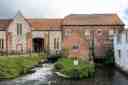
Right in front of you is the old Salisbury power station-a building with a real sense of history! Look for a structure of solid red and flint stone, its roof covered with enough pigeons to start their own parliament. You’ll see water rushing below, frothy and energetic, straight under the brickwork like the city’s own secret river highway. There’s a little white sign warning about diving and swimming-don’t worry, you’re perfectly safe where you are, unless you had plans to stage an Olympic diving event! Now, imagine it’s a chilly morning in 1898. This spot is buzzing with excitement, a sense of newness in the air, mixed with the chug and churn of early machinery. People here witnessed the dawn of electricity, when this unassuming building transformed from an old water mill to a hub of sparkling innovation. The first time the lights flickered on, I bet locals thought it was a bit of magic-or witchcraft, depending on how many Victorian novels they’d read! At first, all the power came simply from the rushing water of the River Avon. Picture the gentle but determined spin of a giant water turbine, slow and steady, sending just enough power to light up 1,000 lamps in the city. It grew and grew, firing up boiling steam and harnessing coal engines to supply even more. At its peak, the station could have powered a small army of toasters. As the decades ticked by, the building saw technology evolving faster than a squirrel on a caffeine binge. There were upgrades, new engines, dynamos with names that sound like Victorian superheroes, and later, those impressive-looking boilers and turbo-alternators that made the city’s lights even brighter. But it wasn’t always glamorous-war times saw electricity use drop here, as Salisbury stuck mostly to itself, not much industry to draw power. Nevertheless, the station kept humming away, right up until the 1970s, before bowing out gracefully in the face of new giants on the national grid. So as you stand here, listen to the water below and imagine the thrum of turbines and the glow of bulbs illuminating Salisbury for the very first time. A small building, a big leap for local life-and just think, all from a place best known nowadays for a bunch of pigeons doing their best rooftop impressions of oil barons.
전용 페이지 열기 →If you look straight ahead, you’ll spot the Corn Exchange by its grand, symmetrical stone façade. There are three big arches along the front-each topped with that elegant…더 보기간략히 보기
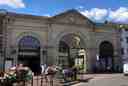
If you look straight ahead, you’ll spot the Corn Exchange by its grand, symmetrical stone façade. There are three big arches along the front-each topped with that elegant fan-shaped window, like the sun just rising over Salisbury. Right in the centre, look for a triangle-shaped roof with a clock, as if the building itself is keeping an eye on your punctuality. The words “Market Walk” hang over the left entrance, inviting you in. If you see lots of flowers and bustling people, you’re in the right spot-welcome to one of Salisbury’s busiest old meeting places! Now, imagine standing here back in the 1850s. Horses clop through the market square, their hooves echoing under the stone arches, while traders shout over the hubbub, and people weave in and out, carrying sacks of grain and baskets of produce. This building was the pride of Salisbury’s business folk-built to help farmers and townspeople trade, mingle, and swap stories. Underneath all this grand architecture, you can almost hear the old voices: “Two shillings for wheat!” “Fresh eggs, best in Wiltshire!” But wait-there’s a twist. Those clever local businessmen who built it in the first place decided they weren’t just going to make a new market-they were going to connect it to the railway. Yes, they built their very own branch line! Imagine steam engines puffing just behind you now, carriages rattling and children waving as farmers hurried to get the best spot for their grain. Inside, the main hall was the biggest and noisiest room, full of scenes that could rival any sitcom. Picture the local rifle volunteers practicing drill routines between the potato sacks. If you heard a musket drop with a clatter, it wasn’t always the groceries’ fault! Eventually, this place changed with the times. The famous “Corn Exchange” name stuck around, but after the Great Depression of British Agriculture, corn trading dwindled. The railway line closed, sadly not surviving the infamous Beeching cuts-though I’m sure plenty of folks here had opinions about that over their tea. And yet, the building has a knack for reinventing itself. That grand façade remains, but now when you step inside, it’s not just for buying corn. You’ll find a shopping mall, a library, and even an art gallery full of treasures donated by Edwin Young-who probably would have been amazed at how his collection found a home right here among the echoing footsteps and bustling shoppers. So, as you stand in front of the Corn Exchange, listen closely-you might just hear the laughter of market-goers from days gone by, or the distant whistle of a long-lost train. And if you ever feel lost in Salisbury, just look for the big clock… and don’t be late for the next adventure!
전용 페이지 열기 →Directly in front of you, you'll see the site where one of Salisbury’s most dramatic and talked-about railway events happened. To spot it, look for the area just alongside the…더 보기간략히 보기
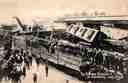
Directly in front of you, you'll see the site where one of Salisbury’s most dramatic and talked-about railway events happened. To spot it, look for the area just alongside the railway lines, marked today by a modern station setting. Picture a crowd, like in the old photo you’ve just seen, right by the tracks-rows of people peering at the wreckage and carriages awkwardly tipped at strange angles. Now, imagine it: It’s the night of July 1st, 1906. The air smells of coal and steam as a mighty express train from Plymouth thunders toward Salisbury station, going much, much too fast. If you listen closely, you might just hear the heavy chugging of the train’s engine straining. Suddenly, there’s a screech of metal on metal as the train tries-but fails-to make the sharp bend ahead. The whole thing derails, in a shower of debris, smashing into two other trains. A crowd gathers, whispering nervously, their faces ghostly pale in the dim light. Can you imagine the panic? People saying, “How could this have happened?” - especially with the driver going at more than twice the safe speed. Some say he wanted to show off, racing the rival Great Western line that had just opened a faster route. Others muttered wild rumors about rich passengers bribing for speed-now, wouldn’t that make quite the tale for a mystery novel? Yet, in truth, the real answer remains a bit of a mystery-no one truly knows what was going through the driver’s mind. After this disaster, all trains were forced to slow down and stop at Salisbury, and the speed limit was nearly cut in half. And next time you’re strolling around the Cathedral, peek inside-there’s a memorial tablet to those lost that somber night. Now, let's keep moving along your tour-hopefully at a sensible walking pace!
전용 페이지 열기 →Take a look just ahead of you-see that large silver-grey building with the wide numbered doors and a web of train tracks fanning out in front? That’s Salisbury TMD, the Traction…더 보기간략히 보기
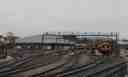
Take a look just ahead of you-see that large silver-grey building with the wide numbered doors and a web of train tracks fanning out in front? That’s Salisbury TMD, the Traction Maintenance Depot. It’s impossible to miss with all those bright yellow and black trains lined up as if they’re waiting for their own turn at a car wash, only these are much bigger and a lot harder to fit in your driveway. Imagine the early morning air is crackling with the hum and clang of busy mechanics. The smell? Think engine oil, metal, and the faintest whiff of diesel. Trains wait quietly, like steel beasts lined up for their daily checkup, as if the shed is some giant stable for mechanical horses. Back in the day, this spot was actually the Great Western Railway station, a place where steam hissed, and workmen’s shouts echoed off the brick walls. In 1856, a small engine shed stood here. But, as with all good things, it needed to move aside for bigger plans-so the London and South Western Railway shuffled things about, and sheds popped up and disappeared like rabbits from a magician’s hat, all along the city’s tracks. By the 1960s, the old sheds had their last hurrah, filled for a while with retired locomotives-probably telling each other tales of their glory days, if trains could talk. When the mighty Class 159 diesel multiple units chugged onto the scene in 1992, Salisbury became the chosen spot for their gleaming new workshop. Think of it as the pit stop in a Grand Prix. Every day, thirty Class 159 trains and eleven Class 158s cruise in here for their pampering and repairs, no cucumber slices involved-just a lot of grease and elbow effort. So, as you stand here, you’re at the heart of Salisbury’s ongoing railway story. Trains come and go, but the hum of rail life always remains. If you listen closely, you can almost hear echoes of steam engines, mixed with the modern thrum of today’s fleet. Now, keep your eyes peeled and don’t let any of the trains sneak up behind you-they might just be late for their spa session!
전용 페이지 열기 →Look straight ahead and you can’t miss it: St Paul’s Church stands proudly before you, with its sturdy flint walls and tall, square tower crowned by a steep, reddish, pyramidal…더 보기간략히 보기
Look straight ahead and you can’t miss it: St Paul’s Church stands proudly before you, with its sturdy flint walls and tall, square tower crowned by a steep, reddish, pyramidal roof. The building looks both ancient and inviting, with arched windows and a quirky stair-turret jutting out at the corner, as if it’s daring you to peek inside. Find the welcoming signs by the main entrance, just above the red-brick wall; you’re in the perfect spot! Now picture this: it’s 1853, and the bells of this very tower are ringing out over the northern edge of Salisbury. The old church, St Clement’s, has just been torn down, and St Paul’s is the shiny new kid on the block-built of rough flint, dappled with patches of lighter stone, a patchwork that looks almost like Salisbury’s own suit of armor. Not only does this place have history by the bucketload, it’s also got a few surprises. Some of the stones under your feet, and even the soaring arches above, were carted over from the ancient St Clement’s-so you might actually be standing on a piece of medieval mystery. The tower was built to fit the old bells, and some of those bells have rung out since the days when folks wore ruffles and rode horses everywhere. This is a church with a bit of attitude! Its stair-turret has been called "quirky," so I’d say it matches the personality of Salisbury folk pretty well. Over the years, the congregation here has embraced change, from adding a north aisle in the 1800s to sticking on a set of white, modern rooms in the 2000s-talk about not being afraid to mix the old with the new. Out back, where once there was the old village graveyard, there’s now a "secret garden"-a hidden world where the city’s wildlife sneaks in for a nap and volunteers tend flowers, year after year. Imagine the quiet buzz of bees and the distant chime of bells, blending past and present into everyday magic. So while you’re standing here, take a deep breath, look up at those flint walls, and let your mind wander. How many footsteps carried worries, weddings, laughter, and whispered prayers through those doors? Who knows-maybe you’ll catch an echo of those stories on the breeze! Intrigued by the predecessor church, construction or the parish? Make your way to the chat section and I'll be happy to provide further details.
전용 페이지 열기 →

자주 묻는 질문
투어는 어떻게 시작하나요?
구매 후 AudaTours 앱을 다운로드하고 교환 코드를 입력하세요. 투어를 바로 시작할 수 있습니다 - 재생을 탭하고 GPS 안내 경로를 따라가시면 됩니다.
투어 중 인터넷이 필요한가요?
아닙니다! 시작 전에 투어를 다운로드하면 완전히 오프라인으로 즐길 수 있습니다. 채팅 기능만 인터넷이 필요합니다. 모바일 데이터 절약을 위해 WiFi에서 다운로드하시는 것을 권장합니다.
이것은 가이드가 안내하는 단체 투어인가요?
아닙니다 - 이것은 셀프 가이드 오디오 투어입니다. 폰을 통해 오디오 나레이션을 들으며 나만의 속도로 독립적으로 탐험합니다. 투어 가이드도, 단체도, 일정도 없습니다.
투어는 얼마나 걸리나요?
대부분의 투어는 60-90분이 소요되지만, 속도는 전적으로 본인이 조절합니다. 원할 때 언제든지 일시정지하거나, 정류장을 건너뛰거나, 휴식을 취하세요.
오늘 투어를 끝낼 수 없으면 어떻게 하나요?
괜찮습니다! 투어는 평생 이용이 가능합니다. 원할 때 언제든지 일시정지하고 다시 시작하세요 - 내일, 다음 주, 또는 내년에도. 진행 상황이 저장됩니다.
어떤 언어를 이용할 수 있나요?
모든 투어는 50개 이상의 언어로 이용 가능합니다. 코드를 교환할 때 원하는 언어를 선택하세요. 참고: 투어 생성 후에는 언어를 변경할 수 없습니다.
구매 후 투어는 어디에서 이용하나요?
App Store 또는 Google Play에서 무료 AudaTours 앱을 다운로드하세요. 교환 코드(이메일로 전송됨)를 입력하면 라이브러리에 투어가 나타나며, 다운로드하여 시작할 수 있습니다.
투어가 마음에 들지 않으시면 환불해 드립니다. 문의: [email protected]
안전한 결제 


