AudaTours logoAudaTours

찬카야 오디오 투어: 기념물, 기억, 그리고 현대의 메아리

오디오 가이드9 정류장

히타이트 태양 나선이 하늘로 솟아오르며 고대의 힘으로 빛나는 원형 교차로가 있지만, 앙카라는 가장 좋은 이야기들을 윤기 나는 유리와 청동 뒤에 간직하고 있습니다. 이것은 단순한 찬카야 산책이 아닙니다. 법정 드라마, 제국의 미스터리, 그리고 대부분의 방문객이 결코 찾지 못하는 저항적인 희망의 순간들을 풀어내는 셀프 가이드 오디오 어드벤처입니다. 국가평의회에서 오가는 뜨거운 속삭임이 시장과 비둘기 모두의 운명을 결정한 이유는 무엇일까요? 황소가 지키는 태양 상징들은 오랫동안 잊혀진 왕들의 무덤에서 어떤 비밀을 지키고 있을까요? 그리고 아타튀르크 동상은 그의 승리적인 제막식 이후 거의 한 세기가 지나서야 왜 긴급 복원이 필요했을까요? 법정 싸움의 메아리가 울려 퍼지는 대리석 복도를 거닐고, 신화적인 교차로에서 시간을 거슬러 여행하며, 한 국가를 형성한 감시하는 눈빛 아래 서보세요. 각 단계는 정치, 전설, 잊혀진 음모의 층을 드러내며, 익숙한 거리를 혁명과 경이로움의 무대로 바꿉니다. 재생 버튼을 누르세요. 앙카라의 숨겨진 심장이 당신 앞에서 깨어나는 것을 보세요.

투어 미리보기

map

이 투어에 대하여

  • schedule
    소요 시간 30–50 mins나만의 속도로 이동
  • straighten
    2.2 km 도보 경로안내 경로 따라가기
  • location_on
  • wifi_off
    오프라인 작동한 번 다운로드, 어디서든 사용
  • all_inclusive
    평생 이용언제든지 다시 재생 가능
  • location_on
    국가평의회에서 시작

이 투어의 정류장

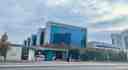
  1. To spot the Council of State, just look for the modern, glassy building reflecting the sky, with large white frames and the word “DANIŞTAY” near the entrance on your right. Ah,…더 보기간략히 보기

    To spot the Council of State, just look for the modern, glassy building reflecting the sky, with large white frames and the word “DANIŞTAY” near the entrance on your right. Ah, welcome to the Court of last administrative hope-and perhaps the shiniest set of windows in Ankara! Standing here, you can almost feel the steady heartbeat of Turkish democracy humming through the glass and metal. The Council of State isn’t just a fancy office building; it’s the final referee in the world of administrative disputes. Imagine a heated debate echoing down the marble halls, as judges in smart robes decide whether a mayor’s surprise new rule about pigeons is really legal-or just for the birds. Back in 1982, when the Turkish Constitution was drafted, someone had to make sure the rules about rules were being followed! Enter the Council of State. This place has the last word on tricky government decisions, whether it’s about public contracts, administrative disputes, or the mysterious circumstances under which people are allowed to string their laundry out the window. The key players here? Picture 156 stern and thoughtful members-the president, vice presidents, division heads, and dozens more-wielding law books like mighty swords. Of course, decisions in their 15 divisions aren’t made by rolling dice. No, it takes an ironclad majority and, I imagine, plenty of strong Turkish tea. Now, a little known fact-the president of this whole judicial ship is Zeki Yiğit, chosen by his own peers. Every member has a four-year term but can come back for a sequel if they’re called upon again-think of it like the best courtroom drama that just keeps getting renewed! So next time you pass by, picture whispers of old cases, urgent voices, and maybe a paper airplane or two making its way across the high ceilings. Justice never sleeps here-it just sometimes stops for lunch.

    전용 페이지 열기 →
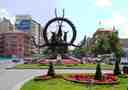
  2. Look straight ahead in the center of the roundabout and you’ll spot a large dark sculpture crowned with dramatic spirals and majestic bull figures, surrounded by colorful…더 보기간략히 보기

    Look straight ahead in the center of the roundabout and you’ll spot a large dark sculpture crowned with dramatic spirals and majestic bull figures, surrounded by colorful flowerbeds-trust me, it’s hard to miss! Now, picture yourself traveling back in time, thousands of years ago, to the mysterious world of the Hittites and the Hattiler, ancient peoples who loved the sun so much they built elaborate symbols to honor it. In front of you is the stunning Hittite Sun Course Monument, created in 1978 by the sculptor Nusret Suman. But here’s the twist: this isn’t just any monument-it’s actually a faithful replica of an ancient artifact discovered during excavations in Alacahöyük. Just imagine the excitement and suspense as archaeologists brushed away the dirt to reveal the original piece, once held in the tombs of powerful Hatti kings. Why is it here, you ask? In the 1970s, Ankara was searching for a symbol that captured the spirit of Anatolia. Along came Mayor Vedat Dalokay, who chose this sun disc as the city’s new emblem-a symbol shining over Ankara ever since. The monument was gifted to the people by Anadolu Sigorta in 1977, maybe hoping the sun would bring extra good luck with their insurance policies! And the sun keeps shining-recently, in 2022, it was carefully restored so that it can keep lighting up Ankara for many years to come. So let your imagination spin with those swirling arms, and feel the ancient energy of Anatolia right at your feet!

    전용 페이지 열기 →
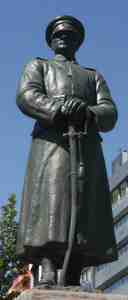
  3. To spot the Marshal Atatürk Monument, look straight ahead for a tall bronze statue of a man in a military coat and cap, standing upright with both hands resting on the hilt of his…더 보기간략히 보기

    To spot the Marshal Atatürk Monument, look straight ahead for a tall bronze statue of a man in a military coat and cap, standing upright with both hands resting on the hilt of his sword, perched on a stone base right in the middle of busy Atatürk Boulevard. Imagine the year is 1927. The city of Ankara is buzzing with excitement, its streets alive with people in their best clothes gathered at Zafer Square. There stands the brand-new monument: Mustafa Kemal Atatürk, the founder of modern Turkey, cast in bronze, his gaze set with determination toward Çankaya, hands firmly gripping his sword. It’s like he’s standing watch not just over the square, but over the whole future of the nation! An Italian artist, Pietro Canonica, worked his magic here, choosing not a dramatic pose, but a dignified, quiet strength-there’s no drama, just steady leadership. Atatürk is shown as a marshal, wearing his mighty uniform and long coat. The funny thing? For all this heroic history, the statue isn’t huge or towering-it’s actually quite modest and honest, just like the man himself. And here’s a bit of monument trivia: on big national holidays, people decorate this base with wreaths, and the torch carvings at its sides are “lit” to celebrate. Today, the monument stands surrounded by tall buildings and swirling traffic, but if you listen closely, you can almost hear the cheers of 1927 echoing off the marble. And don’t worry, the statue had a little spa day in 2022-a full restoration-so it’s shining a bit brighter for your visit. Now, ready to move on to our next stop?

    전용 페이지 열기 →
6개 정류장 더 보기정류장 적게 보기expand_moreexpand_less
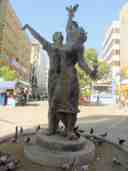
  1. You’ll spot the Statue of Peace right ahead, standing tall in the middle of the pedestrian area, where a young man and woman reach their arms to the sky together-and if you see a…더 보기간략히 보기

    You’ll spot the Statue of Peace right ahead, standing tall in the middle of the pedestrian area, where a young man and woman reach their arms to the sky together-and if you see a flurry of pigeons at their feet, you’re in the right place! Now, let’s step into a story set in 1979 Ankara, where the city was buzzing with hopes for peace, and people everywhere were dreaming of a new beginning. Imagine you’re here on Sakarya Street, and amongst the chatter and the hum of the city, an incredible stone sculpture has just taken its place. This is the work of Burhan Alkar, a sculptor with stone dust on his hands and a big idea in his heart: to build a monument for peace. But not just any old peace! Look closely at the figures-there’s a young woman and a young man, side by side, balancing on their toes like they’re about to leap right off the pavement. Their hands are stretched high above their heads, and together they launch a dove into the blue Ankara sky. If you listen closely (well, okay, maybe just use your imagination), you might even catch their laughter mixing with the flutter of wings. This statue isn’t only about standing still. It’s about movement, hope, and two ordinary people daring to set a dove-and maybe their dreams-free. In a world where peace can sometimes feel as hard to catch as, well, a pigeon in this square, this statue reminds us that peace is something you build together, stone by stone, hand in hand.

    전용 페이지 열기 →
  2. To spot Red Crescent Square, look for a huge glass-and-concrete shopping center boldly labeled “Kızılay,” with tall neighboring buildings decorated in Turkish flags and busy…더 보기간략히 보기

    To spot Red Crescent Square, look for a huge glass-and-concrete shopping center boldly labeled “Kızılay,” with tall neighboring buildings decorated in Turkish flags and busy streams of people flowing past the intersection. Now you’re in the very heart of Ankara! Here, the veins of the city-Ziya Gökalp Avenue, Atatürk Boulevard, Gazi Mustafa Kemal Boulevard-all come crashing together, like three great rivers meeting at a single roaring point. If you stand still for a second, you might almost hear the pulse of the city. Welcome to Red Crescent Square, or as the locals have always called it: Kızılay Meydanı. Why “Red Crescent,” you wonder? Well, nearly a century ago, back in 1929, the Turkish Red Crescent built its headquarters right on this very spot. Even though the original building has disappeared-now replaced by this dazzling shopping center that seems to stretch into the sky-the name stuck like honey to bread. Generations of Ankara residents have come here to shop, meet friends, or simply let time flow by as buses and metros rush underneath their feet. But the square’s history isn’t all about consumer paradise and coffee breaks! Oh no, Kızılay is the stage where Turkey’s big stories unfold. Whenever there’s a national holiday-the sort that sends waves of color and laughter through the streets-it’s here that parades kick off, marching bands boom, and crowds cheer together. Picture an ocean of people, banners fluttering, voices raised in song. Sometimes, though, the mood turns tense. Kızılay has been at the center of some of the most dramatic moments in Turkish history. In 1960, it was here that brave students confronted Prime Minister Adnan Menderes, their chants echoing off the buildings, making democracy feel raw and real. Civil protests, rallies, and gatherings-this square draws together people from every corner of the city, and sometimes even from all around the nation. One of the things that makes Kızılay so unique is the way it mirrors Ankara’s spirit. The names may change-sometimes after coups, sometimes after dramatic national events. For a time it was Hürriyet Meydanı, the “Freedom Square.” After the failed coup attempt of July 15, 2016, the city council gave it a new official title: “15 Temmuz Kızılay Millî İrade Meydanı”-the Square of National Will. Yet, no matter what you see on the signposts, everyone just calls it Kızılay. But not all the stories from this place are happy. Not long ago, tragedy struck right on the edge of the square. On a busy evening in March 2016, an explosion rocked Güvenpark and the bus stops nearby, cutting through the usual sounds of life with terror and sorrow. The city was shaken-38 lives lost, many more changed forever. Since then, security has grown tight, and you can still sense a faint tension in the air. Despite every twist and turn, Kızılay endures. It’s where the city celebrates, mourns, protests, and perseveres-a place that never sleeps, never grows old, and never loses its heartbeat. So as you stand here, look around and soak up the energy. You’re not just crossing a square; you’re stepping right into the living history of modern Ankara. And if you hear a distant shout or a bus horn, remember: that’s just Kızılay, welcoming you to its dance.

    전용 페이지 열기 →
  3. In front of you, you’ll see a busy boulevard lined with tall office and apartment buildings and plenty of yellow taxis; to spot the location, look for the intersection next to a…더 보기간략히 보기

    In front of you, you’ll see a busy boulevard lined with tall office and apartment buildings and plenty of yellow taxis; to spot the location, look for the intersection next to a green park area just off the main road, with traffic buzzing all around and a large cluster of bus stops nearby. Now, pause here for a moment - you’re standing at a spot that looks like just another busy city corner, but it holds the weight of a story that changed Ankara forever. Picture it: it’s a regular Sunday evening in March 2016. This area, Atatürk Boulevard near Güvenpark, is always alive, packed with commuters waiting for buses, rush-hour conversations mingling with the hum of engines and footsteps. On that day, just as people were heading home, chatting on phones or looking for their next ride, the everyday city noise was shattered by a roaring explosion. A car packed with explosives targeted the very buses that so many relied on. The blast tore through the area, shattering windows, knocking over trees, and leaving cars and a bus twisted and burning - the echo of that moment is hard to imagine standing here now, but if you listen closely, you can almost sense the shift from the chaotic energy of city life to a stunned, terrible silence. At least 37 lives were lost, with over a hundred more injured - people just like those you might see now, waiting by the curb, hurrying under the trees, or returning from football matches. A father of two who was just trying to get home, a student who dreamed of teaching, a volunteer who helped children, a taxi driver finishing his shift, and young students bursting with plans for the future - all caught in the wrong place at the wrong time. Some had only just stepped off the metro, others were waiting to catch their ride home. In their memory, things like science clubs, art projects, and even parks for children sprang up so their dreams could live on even after that terrible day. Security in Ankara was already tight, with threats lurking and warnings sent out - but no one expected the horror to strike here, in the very heart of the capital, at one of the most crowded intersections right by the metro and Ankaray stations. Bans on media coverage followed quickly, as authorities rushed to keep panic at bay and investigations secret - but it only made people’s anxiety sharper, as Facebook and Twitter ground to a halt, and the city held its breath. And like a plot from a suspenseful detective story, the police had been searching for suspicious cars, gathering whispers from intelligence. Even the US embassy had warned its citizens of potential threats, though they guessed a different neighborhood. In the end, a bomb-laden BMW appeared among the crowd, changing the city in a heartbeat. Responsibility was claimed by the Kurdistan Freedom Hawks a few days later, in the midst of Turkey’s struggle with militant groups and unrest in the southeast. The group offered a chilling apology for civilian casualties, warning such losses might continue. It was the third major attack in Ankara within just six months - the city’s nerves already stretched, its people worn down but still unbowed. The aftermath echoed through every corner of life here. Fighter jets thundered away for reprisals, while arrests swept across provinces. The economy barely blinked, but in homes and on the streets, fear and sorrow settled in long after the shock faded. Stores went quiet, and even the ever-hopeful shopkeepers wondered aloud when laughter and crowds would return. Official reactions poured in - from Turkish leaders vowing unity to journalists and politicians calling for remembrance, and international voices defending the hope for peace from Argentina to Australia. And yet, here where you stand, the real mark of history is in the invisible layer of stories - of school children, parents, friends, and everyday people whose journeys ended where yours continues down this very street. It’s a place of heavy memory, but also a symbol of resilience, reminding everyone in Ankara - and all of us visiting today - that tragedy leaves a shadow, yes, but also a stubborn ray of hope each time the city moves forward, one day at a time. Want to explore the background, attack or the victims in more depth? Join me in the chat section for a detailed discussion.

    전용 페이지 열기 →
  4. Look ahead for a large stone monument with imposing bronze statues of two men holding symbols of strength and security-if you spot a blocky stone base with dramatic carvings and…더 보기간략히 보기

    Look ahead for a large stone monument with imposing bronze statues of two men holding symbols of strength and security-if you spot a blocky stone base with dramatic carvings and lots of pigeons, you’ve found Güvenpark and its famous Security Monument. Now, take a deep breath of that city air mixed with a hint of fresh grass-welcome to Güvenpark, an oasis in the very heart of Ankara’s lively Kızılay neighborhood. If you listen closely, you’ll notice the steady hum of city buses and the cheerful calls of children running across the park, but behind all this bustle lies nearly a century of history and emotion. Picture the 1930s-a time when Ankara was still shaking off its sleepy village past and racing to embrace its new destiny as the capital. The great German planner Hermann Jansen rolled out his urban blueprint, and smack in the middle was this patch of green: a place meant for pedestrians, bikers, and nature-lovers, bringing a breath of fresh air to a rapidly growing city. It wasn’t long before the park took on its grand role as a city retreat-if only those trees could gossip, they’d have stories of giggling children, lunching office workers, and more than a few lovestruck teenagers. But don’t let the trees steal all the spotlight-the real showstopper here is just in front of you. Behold, the Security Monument, created by Austrian artists Anton Hanak and finished by Josef Thorak (who really had to chisel away after Hanak’s untimely passing). The monument’s broad stone base stretches a whopping 37 meters, and those bronze figures? They tower at 6 meters high-imagine the workout lugging those muscles around all day! The sculptures themselves aren’t just for show. They’re dedicated to Turkish security forces-the folks who keep order and peace, looking tough but, you know, probably just wanting a cup of tea like everyone else. Carved across the monument, you’ll see scenes of people from all walks of life-soldiers, artists, blacksmiths, kids, and yes, even those quick-footed paramedics who make everything look easy. Young, strong figures leap out from the foreground, while older, wiser faces linger behind-symbolizing Turkey’s proud transition from its past to its hopeful future. In fact, if you wander around, you might spot Atatürk himself, flanked by youthful companions, all gazing into a world of possibilities. There’s even a little wisdom inscribed here: "Türk, Öğün, Çalış, Güven!" ("Turk, boast, work, trust!"). Maybe not the snappiest slogan for a t-shirt, but packed with spirit. Of course, this park and monument have seen their share of drama. By the 1950s, the rush of traffic and the insatiable appetite for more bus stops nibbled away at the park’s peaceful spaces. The tranquil oasis was gradually invaded by dolmuş stops, metro entrances, and ventilation shafts. Twice in the past decade, the monument felt the sting of trouble-graffiti during protests in 2013, and worse still, shrapnel wounds from the chaos of the 2016 coup attempt. Each time, Ankara’s authorities lovingly patched it back up, determined to let history endure. And there’s more. In 2016, a shadow fell across Güvenpark. It was a typical evening, people rushing for buses home. Suddenly, a car bomb exploded near the bus stops at 18:45. The shock echoed through Ankara. Thirty-seven lives were lost, over a hundred injured-a tragedy that left the city holding its breath and asking hard questions. Was the attack intended for the security forces stationed here? People wondered, but the true answer remains lost among the city’s whispers. Yet even as time moves on and tram bells and police radios mark each passing day, Güvenpark stands firm-still green, still proud, refusing to let its spirit be drowned out by traffic, temptation, or tragedy. If monuments could talk, this one would tell you: through peace or turmoil, this little slice of the city stands as a beacon of hope, trust, and strength. And that’s no small feat, even for a 6-meter-tall bronze hero! So, sit under a tree, watch the pigeons, and remember-sometimes, the heart of a city beats strongest in its open spaces, where history, hope, and hot tea all come together. Intrigued by the location, park or the monument? Explore further by joining me in the chat section below.

    전용 페이지 열기 →
  5. To spot the Adnan Ötüken Provincial Public Library, look for a large, earthy red building with crisp white trim and a wide, welcoming entrance supported by a wooden canopy, right…더 보기간략히 보기

    To spot the Adnan Ötüken Provincial Public Library, look for a large, earthy red building with crisp white trim and a wide, welcoming entrance supported by a wooden canopy, right across the street and partly shaded by tall trees. Ah, you’ve arrived at one of Ankara’s coziest treasure chests for book lovers-the Adnan Ötüken Provincial Public Library! Now, picture this street not filled with cars and chatter, but echoing with the footsteps of eager readers and the rustle of autumn leaves. The story of this place reads like a gripping novel-full of twists, trouble, and, naturally, a few heroic rescues. Let’s rewind to nearly a century ago, when the idea for a public library in Ankara first fluttered into print on the pages of a popular newspaper, Hâkimiyet-i Milliye, back in 1921. Trouble was, Ankara was more prepared for sheep than for shelves of books! No proper building was ready, so they opened Turkey’s very first public library in a borrowed corner of the Ministry of Education’s ground floor. On July 25, 1922, the library opened its doors-and readers finally had a cozy place to read in the young Republic’s new capital. Planners dreamed up all sorts of ideas-maybe the old Seljuk-era Kızılbey Mosque could be a library? Or perhaps a fresh new building over the ancient Roman Baths? Yet, for years, there simply wasn’t enough space for all those eager bookworms. The library grew and wandered, moving its ever-bulging collection to a spot on Kediseven Street in Ulus. Even there, space ran out. Have you ever tried to fit 500,000 books in a small room? That’s a lot of heavy reading! There were disasters, too-like the great fire of 1947 that wiped out an entire collection left in the ministry’s storerooms. For a while, precious books even took refuge in the storerooms of Ankara Atatürk High School. They finally began building a real home in Cebeci in 1967, but it took until 1972 for the doors to open. Eventually, the library found its permanent place right here, in this fine building designed by architect Paul Bonatz, named in honor of Adnan Cahit Ötüken, the founder of Turkey’s National Library, in 1985. But here’s the plot twist-this isn’t just any library. It’s the most visited public library in Ankara, home to more than half a million items! The collection is sorted by four main themes: books in Arabic script from before Turkey adopted Latin letters, rare handwritten works gathered from closed religious sites, Turkish books printed with Latin script, and all sorts of foreign language materials. If only these walls could talk, imagine the stories they’d share from every corner of the world! And tucked away in the shelves is the jaw-dropping Sillogos Collection-almost 50,000 volumes gifted from the Greek Literature Association in Istanbul, kept safe here instead of heading to Greece after the Republic was founded. Plus, there’s an entire collection from the legendary Hacı Bektaş-ı Veli Lodge. So next time you’re searching for a quiet spot or the scent of old pages, remember-this building may look peaceful from the outside, but its story is a real page-turner!

    전용 페이지 열기 →
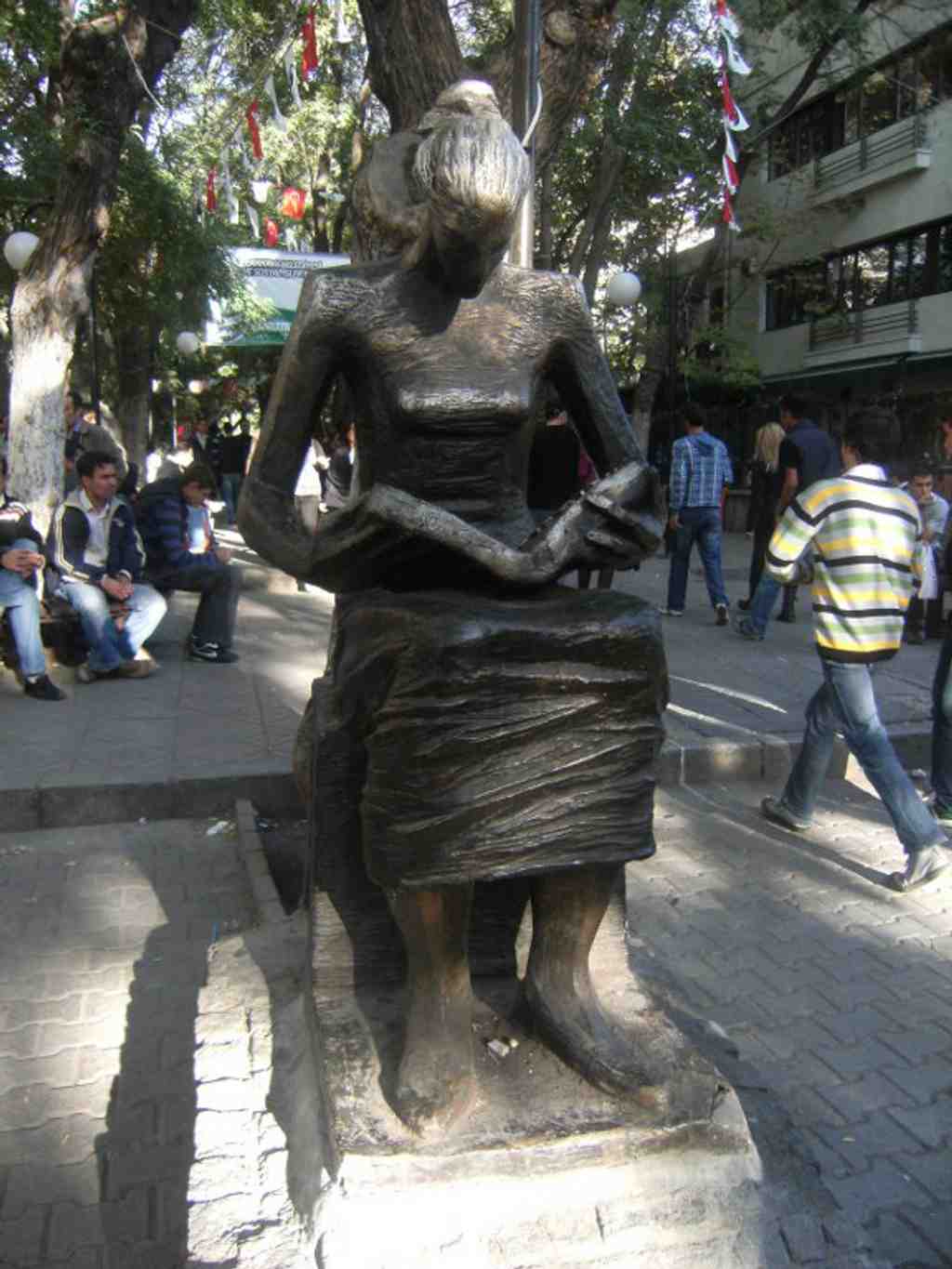
  6. To spot the Human Rights Monument in Ankara, look for a bronze statue of a calm woman sitting on a bench, reading from a paper right where Konur Street meets Yüksel Avenue-she’ll…더 보기간략히 보기

    To spot the Human Rights Monument in Ankara, look for a bronze statue of a calm woman sitting on a bench, reading from a paper right where Konur Street meets Yüksel Avenue-she’ll be at the center of the crossroads, beneath the trees. Alright, take a moment here and soak in the scene! Imagine you’re in the heart of Kızılay, and right before you sits a wise, peaceful woman cast in bronze, quietly reading the Universal Declaration of Human Rights. Now, don’t be fooled by her stillness-this spot has seen more excitement and drama than a soap opera marathon! Back in the late ‘80s and early ‘90s, this very intersection became the go-to spot for people wanting to speak up, challenge injustice, or just make their voices heard. The mayor at the time, Doğan Taşdelen, decided, “Hey, why not honor free expression here?” and asked sculptor Metin Yurdanur to create a symbol for it all. Metin imagined a statue as calm as a summer evening, with a thoughtful woman absorbed in her reading-no grand speeches, no raised fists. Just the quiet power of someone standing up for what’s right. The statue first appeared in 1990, but fun fact: it was fiberglass at first, only becoming bronze in 2010! Over the years, this monument became much more than a statue. Protesters, activists, and dreamers gathered around her, whether for human rights, social issues, or sometimes just to eat a sandwich and plot their next move. There’s been tension too-after the 2016 coup attempt, people starting hunger strikes here demanding their jobs back, and for more than a year, metal barriers tried to keep the monument silent. Spoiler alert: Ankara’s spirit doesn’t stay quiet for long! The barriers finally came down in 2018, proving that sometimes, statues do fight back. Now, every time you walk past or see someone gathering here, remember the statue’s history-this isn’t just a patch of bronze. It’s the living, breathing heart of free expression in Ankara. And hey, she’s always here to listen.

    전용 페이지 열기 →

자주 묻는 질문

투어는 어떻게 시작하나요?

구매 후 AudaTours 앱을 다운로드하고 교환 코드를 입력하세요. 투어를 바로 시작할 수 있습니다 - 재생을 탭하고 GPS 안내 경로를 따라가시면 됩니다.

투어 중 인터넷이 필요한가요?

아닙니다! 시작 전에 투어를 다운로드하면 완전히 오프라인으로 즐길 수 있습니다. 채팅 기능만 인터넷이 필요합니다. 모바일 데이터 절약을 위해 WiFi에서 다운로드하시는 것을 권장합니다.

이것은 가이드가 안내하는 단체 투어인가요?

아닙니다 - 이것은 셀프 가이드 오디오 투어입니다. 폰을 통해 오디오 나레이션을 들으며 나만의 속도로 독립적으로 탐험합니다. 투어 가이드도, 단체도, 일정도 없습니다.

투어는 얼마나 걸리나요?

대부분의 투어는 60-90분이 소요되지만, 속도는 전적으로 본인이 조절합니다. 원할 때 언제든지 일시정지하거나, 정류장을 건너뛰거나, 휴식을 취하세요.

오늘 투어를 끝낼 수 없으면 어떻게 하나요?

괜찮습니다! 투어는 평생 이용이 가능합니다. 원할 때 언제든지 일시정지하고 다시 시작하세요 - 내일, 다음 주, 또는 내년에도. 진행 상황이 저장됩니다.

어떤 언어를 이용할 수 있나요?

모든 투어는 50개 이상의 언어로 이용 가능합니다. 코드를 교환할 때 원하는 언어를 선택하세요. 참고: 투어 생성 후에는 언어를 변경할 수 없습니다.

구매 후 투어는 어디에서 이용하나요?

App Store 또는 Google Play에서 무료 AudaTours 앱을 다운로드하세요. 교환 코드(이메일로 전송됨)를 입력하면 라이브러리에 투어가 나타나며, 다운로드하여 시작할 수 있습니다.

verified_user
만족 보장

투어가 마음에 들지 않으시면 환불해 드립니다. 문의: [email protected]

안전한 결제

Apple PayGoogle PayVisaMastercardPayPal

AudaTours: 오디오 투어

재미있고, 경제적이고, 자유로운 셀프 가이드 워킹 투어

앱 체험하기 arrow_forward

전 세계 여행자들에게 사랑받고 있습니다

format_quote 이 투어는 도시를 보는 정말 좋은 방법이었습니다. 이야기들이 너무 대본처럼 느껴지지 않으면서도 흥미로웠고, 나만의 속도로 탐험할 수 있어서 좋았습니다.
Jess
Jess
starstarstarstarstar
Tbilisi 투어 arrow_forward
format_quote 관광객처럼 느끼지 않으면서 Brighton을 알아가는 훌륭한 방법이었습니다. 내레이션에 깊이와 맥락이 있었지만 과하지 않았습니다.
Christoph
Christoph
starstarstarstarstar
Brighton 투어 arrow_forward
format_quote 크루아상을 한 손에 들고 아무 기대 없이 시작했습니다. 앱이 그냥 자연스럽게 함께해 주는 느낌이에요, 부담도 없고, 그냥 나와 이어폰과 멋진 이야기들.
John
John
starstarstarstarstar
Marseille 투어 arrow_forward

무제한 오디오 투어

전 세계 모든 투어의 잠금을 해제하세요

0 투어·0 도시·0 국가
all_inclusive 무제한 탐험